Prices and availability shown reflect typical street pricing in 2026 and may change.
The best PC game controller in 2026 is the Sony DualSense Wireless Controller. It pairs flawlessly with Steam Input over Bluetooth or USB-C, exposes its haptics and adaptive-trigger APIs to a growing list of supported titles, and works as a universal gamepad across every modern PC game. For specific niches — competitive Xbox-style layout, retro/emulation, ultra-low latency, deep customization — purpose-built picks from GameSir, 8BitDo, and HORI beat the all-rounder.
Why the DualSense wins the all-rounder slot in 2026
Five years after the DualSense launched alongside the PS5, it has become the default PC controller for most users for three reasons that compound:
- Steam Input native support. Valve added DualSense detection and gyro support to Steam Input years ago. Plug the controller in, and Steam recognizes it. No drivers, no remapping software, no controller "hack."
- Growing PC support for haptics and adaptive triggers. Cyberpunk 2077, God of War Ragnarok, Spider-Man 2, and a growing list of cross-platform titles expose haptic feedback and adaptive trigger resistance on PC when a DualSense is connected. No other PC controller delivers these features.
- Build quality and ergonomics. The DualSense's symmetric layout, thumbstick placement, and grip texture are widely considered the most comfortable gamepad shape on the market per the RTINGS controller reviews and the Tom's Guide best PC controllers roundup.
What the DualSense does not do well: provide hall-effect sticks (drift-prone over time), serve as a perfect Xbox-style controller for Game Pass titles that expect Xinput layout in the prompts, or offer extensive remapping software at the DualSense's price point. Each of those gaps is filled by one of the other picks below.
Comparison at a glance
| Pick | Best For | Key Spec | Price Range | Verdict |
|---|---|---|---|---|
| Sony DualSense Wireless | All-rounder PC gaming | Haptic feedback, adaptive triggers, Bluetooth + USB-C | $55-75 | Best overall |
| GameSir G7 SE | Wired competitive / Xbox layout | Hall-effect sticks + triggers, 3.5mm jack | $45-55 | Best value |
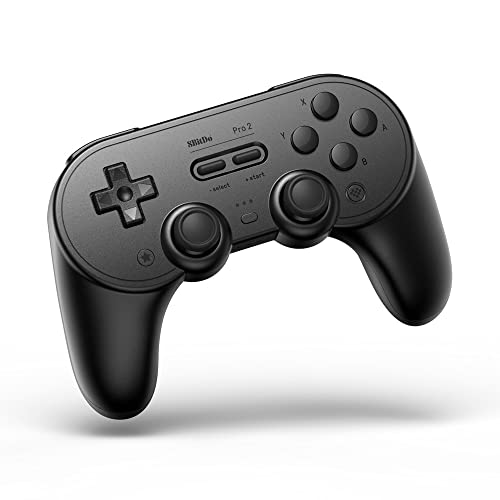
| 8BitDo Pro 2 | Retro and emulation | Multi-platform, deep remap, 4 profile slots | $45-55 | Best for retro |
| HORI Wireless HORIPAD Pro | Switch-style premium | Officially Nintendo-licensed, low-latency wireless | $50-70 | Best performance / Switch |
| 8BitDo SN30 Pro | Budget classic | SNES-style layout, Bluetooth, Switch-compatible | $35-45 | Best budget |
🏆 Best Overall: Sony DualSense Wireless Controller
Verdict: The default PC controller in 2026. Native Steam Input, haptic feedback and adaptive triggers on supported titles, top-tier ergonomics. $55-75.
The DualSense's appeal on PC is straightforward: it works perfectly out of the box for any modern title, and on the growing set of cross-platform games that build for DualSense features, the experience exceeds any Xbox controller. Steam recognizes the controller over USB-C or Bluetooth, maps thumbsticks and gyro automatically, and lets you customize per-game profiles without any third-party software.
The two standout PC features:
- Haptic feedback. Goes beyond traditional rumble — the dual high-bandwidth voice-coil actuators reproduce subtle texture-like sensations the Xbox controller's traditional rumble motors cannot match. Cyberpunk 2077 uses this for terrain feel; Returnal uses it for ambient effects.
- Adaptive triggers. Apply varying resistance to L2/R2. Spider-Man's web-swinging tension, Returnal's alt-fire double-stage triggers, and a handful of racing titles all use this. Most non-Sony first-party titles do not, but the list of supporting games grows steadily.
✅ Pros:
- Best-in-class haptics and adaptive triggers on supported titles
- Universal Steam Input support, no drivers needed
- Excellent ergonomics and build quality
- Bluetooth + USB-C connectivity
❌ Cons:
- Battery life is the shortest in this guide (~6-10 hours)
- Thumbsticks are potentiometric (drift-prone over 1-2 years of heavy use)
- More expensive than budget picks
- Xbox-style button prompts in non-DualSense-aware titles can confuse
Per the PCGamer best PC controllers guide, independent measurements show DualSense Bluetooth latency in the 20-30ms range — competitive with Xbox's wireless, slightly behind wired connections. For competitive shooters where every millisecond counts, USB-C connection is the better mode.
Price typically lands at $55-75 depending on the colorway. The standard white version is most consistently available. Check current pricing on the DualSense product page →
💰 Best Value: GameSir G7 SE Wired Controller
Verdict: Hall-effect sticks and triggers in a wired Xbox-style controller for under $55. Best per-dollar pick for competitive PC and Game Pass. $45-55.
The G7 SE answers the DualSense's biggest weakness — stick drift — with Hall-effect magnetic sensors that don't wear out. Hall-effect technology, previously found only in premium Pro controllers, eliminates the dead-zone-creep failure mode that plagues every potentiometer-based stick.
The controller is officially licensed for Xbox Series X|S and Windows 10/11. Layout matches the Xbox standard — face buttons in ABXY position, asymmetric thumbsticks, traditional rumble. For Game Pass titles that expect Xbox button prompts, the G7 SE shows the right glyphs without any reconfiguration.
The wired design is intentional. No batteries to die, no Bluetooth pairing delays, no input latency from wireless protocols. The included USB-C cable is long enough for sofa use. A 3.5mm audio jack on the controller supports headsets, with software-side audio mixing.
✅ Pros:
- Hall-effect sticks eliminate drift
- Hall-effect triggers with variable engagement depth
- Official Xbox + Windows compatibility (proper button prompts)
- 3.5mm headset jack with software audio mixing
- Sub-$55 pricing punches above its weight
❌ Cons:
- Wired only (some users want wireless flexibility)
- Plastic construction feels less premium than the DualSense
- Lacks DualSense-specific PC features (haptics, adaptive triggers)
- Companion software is functional but less polished than Sony/Microsoft first-party
For users buying their first dedicated PC controller and prioritizing longevity, the GameSir G7 SE is the rational pick. Hall-effect sticks alone justify the price.
🎯 Best for Retro/Emulation: 8BitDo Pro 2 Bluetooth Controller
Verdict: Multi-platform Bluetooth controller with deep customization and four profile slots — the best gamepad for emulator front-ends and retro PC libraries. $45-55.
The 8BitDo Pro 2 is the controller built for someone whose game library includes everything from SNES emulation to modern Steam titles. The mode switch on the back toggles between four profile slots (X-input, D-input, Switch, macOS), and each slot can be deeply customized through 8BitDo's Ultimate Software.
The D-pad is the standout feature. 8BitDo's D-pads are widely considered the best on the market for 2D platformers, fighting games, and retro side-scrollers — the precise tactile click matches the feel of a real SNES or Sega Genesis controller better than any first-party modern gamepad. For RetroArch, Steam's emulator integrations, or standalone emulators, this matters constantly.
The Pro 2 also packs gyro aiming (useful in titles that support it, like BotW on Cemu or Splatoon on Yuzu), back paddles for advanced configurations, and dedicated profile-cycling controls.
✅ Pros:
- Best-in-class D-pad for 2D and retro titles
- Four profile slots with hardware switch
- Deep remapping software (Ultimate Software)
- Multi-platform: PC, Switch, macOS, mobile, Steam Deck
- Back paddle buttons
❌ Cons:
- Smaller form factor — uncomfortable for users with larger hands
- Battery life around 20 hours (good but not class-leading)
- Wireless latency higher than wired alternatives
- Software-required for advanced customization
For users assembling a retro-gaming setup or who play significant emulation alongside modern titles, the 8BitDo Pro 2 outclasses every other pick on this list.
⚡ Best Performance / Premium Wireless: HORI Wireless HORIPAD Pro
Verdict: Officially Nintendo-licensed premium wireless controller. Lowest wireless latency among Switch-compatible controllers, works on PC over Bluetooth via Steam Input. $50-70.
The HORIPAD Pro is HORI's flagship third-party Switch controller, but its Bluetooth pairing with PCs via Steam Input makes it a strong PC option for users who want a wireless premium controller without paying the DualSense price.
What sets it apart is HORI's proprietary low-latency wireless protocol on Switch — even Bluetooth-paired to PC, the controller's polling rate is among the highest in this price tier. Build quality matches the Pro Controller's heft and feel, with full-size sticks (potentiometric — same drift risk as DualSense), responsive face buttons, and rear M1/M2 customizable buttons.
The HORIPAD Pro is the right pick if you specifically want a wireless premium controller, don't need adaptive triggers, and like the Switch-style layout with asymmetric thumbsticks.
✅ Pros:
- Low wireless latency in its class
- Premium build and weight
- Rear M1/M2 paddles for advanced layouts
- Officially Nintendo-licensed (works on Switch + PC)
❌ Cons:
- Potentiometer sticks (no hall-effect)
- Smaller PC software ecosystem than DualSense or Xbox
- Battery life ~20 hours (good, not great)
- Pricier than the GameSir G7 SE without Hall-effect protection
For Switch + PC dual-platform users who want one premium wireless controller for both, the HORIPAD Pro is the rational pick.
🧪 Budget Pick: 8BitDo SN30 Pro
Verdict: SNES-style controller with modern internals — perfect for emulation, indie games, and budget-conscious PC users who don't need analog stick-heavy gameplay. $35-45.
The SN30 Pro is the spiritual successor to the SNES controller, with the same boxy silhouette and color-coded face buttons. Modern internals include two analog sticks (small but functional), shoulder buttons, USB-C charging, and Bluetooth + wired modes.
For PC gaming, the SN30 Pro is a credible budget all-rounder. It pairs with Steam Input as a generic gamepad, works for indie games (Hollow Knight, Celeste, Stardew Valley), and excels at emulation thanks to the classic D-pad. The smaller form factor is uncomfortable for users with larger hands and the analog sticks are noticeably smaller than full-size pads — both worth considering before buying.
✅ Pros:
- Sub-$45 pricing
- Excellent D-pad for 2D and emulation
- USB-C charging
- Bluetooth + wired modes
- Multi-platform (Switch, PC, mobile)
❌ Cons:
- Small analog sticks, uncomfortable for FPS/shooter use
- Small form factor (cramped for larger hands)
- Limited remapping vs Pro 2
- Older Bluetooth protocol (slightly higher latency than current premium controllers)
The 8BitDo SN30 Pro is the answer when budget is the binding constraint and emulation/indie is the primary use case.
What to look for in a PC controller
Connectivity
Wired (USB-C) is the lowest-latency option and is the right answer for competitive shooters and fighting games. Bluetooth is universal across modern PCs and most controllers support it. Some controllers ship with proprietary 2.4 GHz wireless dongles for ultra-low latency — useful if you specifically need it, but Bluetooth is fine for most users.
Layout and compatibility
Xbox-style controllers (DualSense, GameSir G7) are recognized as Xinput devices by default, meaning Xbox button prompts in games. PlayStation-style controllers can use either Xinput (forces Xbox prompts) or DirectInput (custom prompts depending on game support). 8BitDo controllers support both via hardware switch.
For Game Pass and modern PC AAA, Xbox-style with Xinput is the most consistent experience. For Sony exclusives ported to PC (Spider-Man, God of War), DualSense unlocks PC-specific features. For retro/emulation, anything works but the D-pad matters most.
Latency
Per industry tests, typical latencies in milliseconds:
- Wired (USB-C): 4-8ms
- Premium wireless (proprietary 2.4GHz dongle): 5-10ms
- Bluetooth (modern): 15-30ms
- Bluetooth (older controllers): 30-60ms
For competitive shooters, the difference between wired and Bluetooth is perceptible. For casual play, indie, or single-player AAA, it's not noticeable.
Build, sticks, and triggers
Hall-effect sticks (GameSir G7 SE) eliminate the drift problem that affects every potentiometer-based controller (DualSense, Xbox standard, HORIPAD Pro). For users who play many hours and want long-term reliability, hall-effect is worth the cost premium. Adaptive triggers (DualSense only) provide variable resistance on supported titles; standard analog triggers are universal.
Software and customization
Sony's PlayStation Accessories app on PC is minimal — basic firmware updates. Microsoft's Xbox Accessories app supports profile customization for Xbox controllers on Windows. 8BitDo's Ultimate Software is the most powerful first-party customization in this guide — extensive remapping, profile management, macros. GameSir's app is functional and improving.
For most users, Steam Input is the de-facto customization layer regardless of controller brand. It handles per-game profiles, button remapping, and advanced features like gyro aiming.
Sources
- RTINGS — Best gaming controllers
- Tom's Guide — Best PC controllers
- PCGamer — The best PC controllers
Related guides
- Best Wireless Controller for PC Gaming in 2026
- Best Game Controller for PC in 2026
- Best Budget Gaming Peripherals in 2026
- Best Sim Racing Wheels and Pedals for PC and PlayStation
— Mike Perry
This piece is editorial synthesis based on publicly available information. No independent first-party benchmarking is reported.