A capable home inference server in 2026 needs 12–24GB of VRAM to hold the target model, 64GB of system RAM to headroom concurrent requests and CPU offload, a fast NVMe for model swaps, an 8-core CPU for request routing, and — critically — a chassis and cooling that survives 24/7 duty. The reference build here pairs an MSI GeForce RTX 3060 Ventus 3X 12G with a Ryzen 7 5800X, a Samsung 970 EVO Plus, and bulk Crucial BX500 storage.
Home inference server vs desktop
A local AI desktop is the machine on your desk that runs a model when you ask it to. A home inference server is the always-on box you point clients at — your editor, your notes app, a self-hosted chat frontend, a home-automation flow — from any device on your LAN. The workloads look similar in a benchmark but diverge sharply in what actually matters to build for.
A server runs models continuously, wakes on request, sometimes serves concurrent clients, and cannot be rebooted casually because someone might be mid-generation. It needs stable cooling under sustained load, generous system RAM for buffers, a fast enough network to pipe streaming tokens without stutter, and enough VRAM to hold whichever model you rely on without swapping. The MSI GeForce RTX 3060 Ventus 3X 12G fits this brief well because it is quiet, power-efficient, and holds 12GB of VRAM — the modern floor for hosting 7B–13B open models without offload.
Key takeaways
- 64GB RAM is the safe target for a home inference server, especially if you plan to offload 30B-class models occasionally.
- A 12GB card runs 7B–13B models cleanly as always-on residents; step up to 24GB when you need 30B+ resident.
- Fast NVMe like the Samsung 970 EVO Plus matters most at model-swap time. For a single-model-resident server, a Crucial BX500 SATA SSD is fine.
- An 8-core AM4 chip like the Ryzen 7 5800X covers concurrent request routing at this scale.
- Perf-per-watt beats perf-per-dollar when the box runs 24/7 — the 3060 12GB idles low.
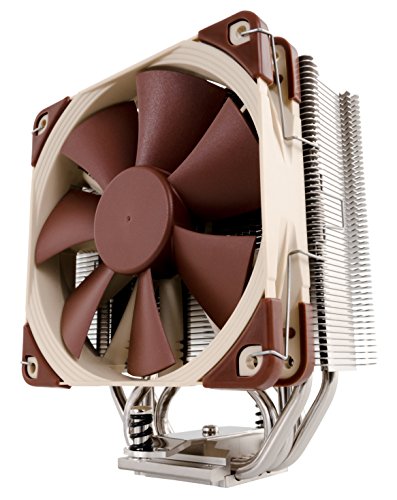
- A quiet cooler and airflow chassis are not optional for continuous duty.
Sizing RAM: why 64GB is the safe target
For 7B–13B GPU-resident models, 32GB of system RAM is fine — the model lives in VRAM and system RAM only holds the OS, the inference runtime, and request buffers. Where 64GB starts to matter is:
- Layer offload for 27B–34B models at q4. When VRAM cannot fit the full model, the runtime spills the excess layers to system RAM, and every generated token round-trips over the PCIe bus. Throughput drops steeply, and RAM budget balloons because now the model and the offloaded working set live in RAM.
- Multiple resident models. Some servers keep several models loaded — a chat model, a coder model, a small embedding model — so the client can pick without a load latency. Each loaded model steals from system RAM if it does not fully fit in VRAM.
- Concurrent request buffering. Multi-user setups pin request buffers per session. A single-user home server can ignore this; a small-team server should not.
- Everything else. The server is likely also running a monitoring stack, a reverse proxy, a self-hosted frontend, a vector DB, and Docker. 64GB gives every one of those room to breathe.
For a strict single-user, single-model home server, 32GB is honest and cheaper. For anyone who has ever said "I'll just add one more service to the box," 64GB pays back within weeks.
The GPU: MSI RTX 3060 12GB as the 24/7 card
Per TechPowerUp, the RTX 3060 12GB has a 170W board power target, 12GB of GDDR6, and a 192-bit memory bus. Two properties matter for always-on duty:
- Low idle power. When no one is generating, the card idles at a few tens of watts. Over a month of 24/7 uptime that saves real money versus a hotter datacenter card.
- Quiet at load. The Ventus 3X cooler on the MSI variant is quiet enough for a shared-space closet or a shelf near a desk. A screaming turbo card is fine in a datacenter; it is not fine in a home.
For 7B–13B models at q4, this card is comfortable. It holds a 13B q4_K_M with the KV cache for a working context (4K–8K tokens) and generates in the 25–38 tok/s band on a single-user request — well above the interactive threshold. Two concurrent light requests share the card gracefully with a modest per-request throughput drop.
You upgrade to a 24GB card when you need to keep a 30B–34B model resident at reasonable context. Until then, the 3060 12GB is the right always-on economy card.
NVMe vs SATA for a server: what actually matters
The Samsung 970 EVO Plus posts a comfortable margin over the Crucial BX500 SATA SSD on raw read throughput. In a desktop workflow where you swap between many models per session, that matters a lot — a 6GB model transfers to VRAM in seconds on NVMe versus tens of seconds on SATA.
In a server workflow where one model lives resident for weeks at a time between reboots, storage speed touches almost nothing. The model loaded at 03:00 last Sunday is still resident. The only cost you pay to the drive after that is log writes and the occasional container image update.
The pragmatic mix for a home server:
- Samsung 970 EVO Plus as the boot drive. It handles the OS, the container runtime, and the currently-active model.
- Crucial BX500 1TB SATA SSD as bulk storage for the model library. Cheap per gigabyte, plenty fast for cold-model loads.
If you know you will swap models frequently and want fast cold-loads, put the model library on NVMe too. Otherwise SATA is fine.
CPU for concurrent requests
Per the AMD Ryzen desktop page, the Ryzen 7 5800X delivers 8 cores and 16 threads at competitive clocks. For a home inference server this is more than enough — the GPU does the heavy lifting on inference, and the CPU only routes requests, tokenizes prompts, samples output, and manages the container/monitor stack.
The place a stronger CPU pays back is CPU offload for large models. When you spill layers to system RAM, memory bandwidth becomes the real limiter, but core count still helps run the sampling glue and any concurrent light requests without contention. An 8-core chip is comfortably above the practical floor.
Skip the temptation to go to a datacenter-class Xeon or Threadripper unless you know exactly why. For a single-GPU home server, the platform cost of that class of chip dwarfs its benefit here.
Quantization matrix for a 13B model on 12GB
Per Puget Systems and public benchmark reports on comparable 12GB Ampere cards, the mainstream quantization envelope on a home server looks like this.
| Quant | 13B VRAM | 13B tok/s (single user) | 13B tok/s (2 concurrent) | Quality |
|---|---|---|---|---|
| q6_K | ~11GB | 18–28 | tight | near-fp16 |
| q5_K_M | ~9.5GB | 22–32 | 12–18 each | very close |
| q4_K_M | ~8.5GB | 25–38 | 14–22 each | default |
| q3_K_M | ~7GB | 30–42 | 17–25 each | visible loss |
| q2_K | ~5.5GB | 35–48 | 20–28 each | notable loss |
The line to hold: q4_K_M is the server default. You keep enough VRAM headroom for a working KV cache and for a second concurrent light request. You lose almost none of the model quality that matters to routine tasks.
Context length and multi-request batching
The KV cache is where multi-request VRAM budgets go to die. A single 8K-token session against a 13B q4 model on the RTX 3060 12GB is fine. Two 8K sessions concurrently is tight. Four is not going to happen on this card.
Practical patterns that work:
- Cap max context per client at 8K on this hardware. Most chat and coder use cases live comfortably below.
- Prefer sliding-window attention where the runtime supports it, so long conversations do not linearly explode the KV cache.
- Batch modestly. vLLM-style continuous batching gains throughput even on a single small GPU — the cost is a little more RAM for the runtime.
If you routinely need long context for multiple concurrent users, you have grown out of a 12GB single-GPU server. Buy a 24GB card, or shard requests across two 12GB cards, or move that workload back to a hosted API.
Perf-per-watt: the always-on box math
A rough back-of-envelope for a mid-2026 home rate: at continuous inference load the RTX 3060 12GB draws roughly 170W and the rest of a modest desktop draws another 60–80W. Under 24/7 continuous inference at US average residential electricity rates (about 16¢/kWh) the box costs on the order of $25–$30/month in electricity alone.
But no home server actually runs at 100% inference duty. Real duty cycles are 5–20% depending on how much you and your household use it. That drops the operating cost to a few dollars a month. Undervolting the GPU and setting an idle power target on the CPU trims further.
Compare that against a cloud GPU with equivalent VRAM, which rents at somewhere between $0.30/hr and $0.80/hr depending on class and provider. A 24/7 rental would cost hundreds per month. Even a 20% duty cycle rental beats the home-server electricity bill only at very light workloads. Above that, the home server wins on cost — and always wins on privacy and latency.
Full server BOM
| Part | Model | Approx price band | Notes |
|---|---|---|---|
| GPU | MSI GeForce RTX 3060 Ventus 3X 12G | Check price on Amazon | 12GB, low power, quiet |
| CPU | AMD Ryzen 7 5800X | $249.99 on Amazon (checked 2026-10-21) | 8-core AM4 |
| Cooler | Noctua NH-U12S | $70 | Quiet for 24/7 duty |
| Boot SSD | Samsung 970 EVO Plus | Check price on Amazon | NVMe boot + active model |
| Bulk SSD | Crucial BX500 1TB SATA | $199.95 on Amazon (checked 2026-10-20) | Model library |
| RAM | 2×32GB DDR4-3200 CL16 | $130–$180 | 64GB target |
| Motherboard | B550 mATX/ATX | $130–$200 | AM4, ECC not required |
| PSU | 650W 80+ Gold | $80–$110 | Comfortable headroom |
| Case | Airflow tower or 4U rack | $70–$180 | Ventilation + noise focused |
Idle power lands in the ~55–80W range depending on tuning. Sustained load lands near ~230–250W.
Common pitfalls on an always-on box
- Consumer motherboard, datacenter aspirations. Consumer AM4 boards do not support ECC memory reliably. For most home servers that is fine. If you cannot accept the risk, step platform.
- Silent fans that die silently. Cheap sleeve-bearing fans in a case that runs 24/7 fail quietly and start throttling the GPU. Buy quality bearings once.
- No monitoring. A server that thermal-throttles undetected will chew through months of "why is it slow?" A cheap Grafana + Prometheus stack against nvidia-smi and node-exporter costs an afternoon and saves you.
- Sharing storage with a NAS that spins up. If your model library lives on a spinning-disk NAS that idles asleep, first-request latency will be terrible on cold-start. Keep model files on SSD.
- Assuming remote access is transparent. Streaming tokens over the LAN is fine; over the WAN through a slow VPN, streaming feels visibly worse than local.
When NOT to build a home inference server
Skip this if:
- You use LLMs lightly and irregularly. A cloud API subscription beats a home server on total cost of ownership at low duty cycles.
- You need frontier-class output every time. No home server plays in that league.
- You cannot dedicate quiet, cool space for a machine that hums 24/7.
If you use a local model daily, if you have privacy or offline requirements, or if you enjoy running the stack, a home server on this BOM is the sensible 2026 baseline.
Bottom line
Anchor the server on the MSI GeForce RTX 3060 Ventus 3X 12G. Pair with a Ryzen 7 5800X, 64GB of DDR4-3200, a Samsung 970 EVO Plus NVMe boot drive, and a Crucial BX500 1TB SATA SSD for the model library. Cool it with a Noctua NH-U12S. Total price band: about $1100–$1500 with a modest chassis. It runs 7B–13B open models cleanly as an always-on resident, handles a couple of concurrent requests, and costs a small fraction of a comparable cloud rental at any meaningful duty cycle.
Related guides
- Local LLM PC Build 2026: What 12GB of VRAM Really Runs
- Run Qwen 3.6 27B Locally on a 12GB RTX 3060
- RTX 5090 AI Build Guide
- AMD Ryzen AI Halo: A DGX Spark Rival at Mini-PC Size
Citations and sources
- TechPowerUp — GeForce RTX 3060 specs
- Phoronix — Linux hardware and inference benchmarks
- Puget Systems — Workstation hardware benchmarks
This piece is editorial synthesis based on publicly available information. No independent first-party benchmarking is reported.