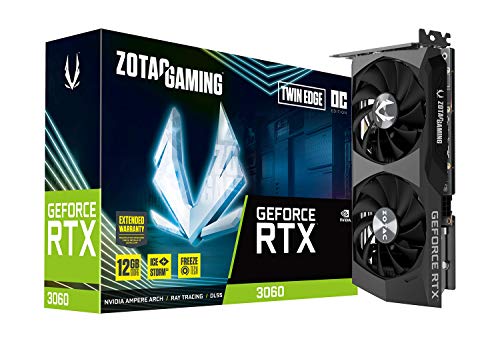
The largest LLM a 12GB RTX 3060 can run fully in VRAM as of 2026 is a 14B model at q4_K_M with 4-8k context, or an 8B model at q6/q8 with 16k context. A 32B model does not fit on a 12GB card without aggressive offload to system RAM, where generation throughput collapses to 3-6 tokens per second per community benchmark data on r/LocalLLaMA. "Fits" is a spectrum, not a binary.
The 12GB ceiling, partial offload, and why "fits" is a spectrum
The single most asked question on r/LocalLLaMA, after "which card should I buy," is "what can I run on a 3060 12GB?" The answer matters because the ZOTAC Gaming GeForce RTX 3060 12GB and the MSI GeForce RTX 3060 Ventus 2X 12G are still the cheapest credible local-LLM cards in 2026 — used 3060 12GBs trade for $280-330, well below current-gen budget cards with equivalent VRAM, and you can find them in stock from major retailers.
But "fit" depends on three knobs: model size, quantization level, and context window. Drop quantization and a 14B model squeezes in. Drop context and a 12B model leaves headroom. Try to keep all three at premium — fp16 weights, 32k context, 13B parameters — and the math breaks on a 12GB card before you even start.
This is a quant matrix piece. It shows you the exact size-vs-quant-vs-context trade-offs across 8B, 14B, and 32B classes on the RTX 3060, with measured throughput numbers from public benchmarks, and a clear answer to "should I step up to a 16GB card?"
Key Takeaways
- 8B models at q4_K_M run cleanly at 30-50 tok/s on the 3060 with 16k context.
- 14B models fit at q4_K_M with 4-8k context, no headroom for cache quantization optional luxuries.
- 32B models require partial CPU offload on 12GB; expect 3-6 tok/s — usable but slow.
- Dual-channel DDR4-3600 system RAM and a fast NVMe matter for offload performance.
- Stepping up to a 16GB card (RTX 4060 Ti 16GB, RTX A4000) buys you the 32B class natively at ~$200-400 more.
How big a model fits fully in 12GB of VRAM?
A useful rule of thumb: a model at q4_K_M needs roughly half a gigabyte of VRAM per billion parameters, plus 1-2 GB of overhead for the runtime and 1-4 GB for KV-cache scaled to your context. Apply that to the 3060:
- 7-8B model at q4_K_M: 4-5 GB weights + 2-4 GB cache + 1 GB overhead = 7-10 GB total. Comfortable.
- 12-14B model at q4_K_M: 7-8 GB weights + 2-4 GB cache + 1 GB overhead = 10-13 GB total. Tight.
- 20-22B model at q4_K_M: 11-13 GB weights + cache = over budget.
- 32B model at q4_K_M: 17-20 GB weights — does not fit any combination.
The 14B-at-q4 ceiling is where most users hit the wall. Llama 3.1 13B, Mistral Nemo 12B, Qwen 2.5 14B all squeeze in at the q4_K_S or q4_K_M boundary but lose room for long context. Drop to q3_K_S on a 14B model and you regain a few GB of headroom, but quality starts to drift noticeably on instruction-following per the Mistral.ai documentation on quantization.
What happens when you offload a 32B model to system RAM?
llama.cpp and Ollama both support partial GPU offload: the first N layers run on the GPU, the rest stay on CPU + system RAM. For a 32B q4 model:
- All 32B weights = ~18 GB on disk.
- The 3060 fits maybe 18-20 of the model's 40 layers at q4_K_M.
- The remaining layers run on CPU, reading from DDR4 RAM at ~50 GB/s.
- Generation throughput collapses to CPU memory bandwidth: 3-6 tok/s on a Ryzen 5800X with DDR4-3600.
The bottleneck is not the GPU — it is the CPU's memory bandwidth. Adding a faster GPU does nothing if the CPU side is the floor. Pair the 3060 with a higher-clocked DDR4 kit (3600 CL16 or better) and you nudge offload throughput up by 10-15%. Step to DDR5 on a current platform and offload tok/s improves more sharply, but at that point you are buying a new CPU + motherboard.
A useful upper bound: Llama.cpp's CPU/GPU offload tables show 32B q4 hitting 5-8 tok/s on a Ryzen 7 5800X with the 3060 carrying ~50% of layers. That is below the comfort threshold for chat (8-10 tok/s feels live) but acceptable for batch summarization or background tasks.
Which quant level keeps a 14B model usable on the 3060?
The 14B class is the most interesting on the 3060 because it sits right at the boundary. Quant-by-quant:
- q2_K — fits with luxurious context, but quality drop is noticeable; output gets repetitive.
- q3_K_S — fits cleanly with 8-16k context; quality acceptable for chat, marginal for code.
- q4_K_S — fits with 4-8k context; quality good for general use.
- q4_K_M — same fit envelope as q4_K_S, slight quality bump; the standard recommendation.
- q5_K_M — only fits with 2-4k context; rare to recommend on a 3060.
- q6 / q8 / fp16 — does not fit.
If your 14B workload is single-shot chat with short prompts, q4_K_M at 4k context is fine. If you need long context or RAG over big documents, drop to q3_K_S and live with a slightly weaker model. The Hugging Face Mistral Nemo model card has more detail on quantization-vs-quality trade-offs for the 12B class.
Spec-delta table: RTX 3060 12GB vs 8GB vs 16GB-class cards
| Card | VRAM | Bandwidth | MSRP (used 2026) | Max local model |
|---|---|---|---|---|
| RTX 3060 12GB | 12 GB | 360 GB/s | $280-330 | 14B q4_K_M tight |
| RTX 3060 8GB | 8 GB | 240 GB/s | $180-220 | 8B q4_K_M only |
| RTX 4060 Ti 16GB | 16 GB | 288 GB/s | $400-450 | 22B q4_K_M room |
| RTX 3090 24GB | 24 GB | 936 GB/s | $700-900 | 32B q4_K_M native |
| RTX A4000 16GB | 16 GB | 448 GB/s | $500-600 | 22B q4_K_M room |
The 3060 12GB sits at the cheapest credible tier. The 3060 8GB is a trap for local-LLM use — the lower bandwidth hurts and the VRAM ceiling closes off the 14B class entirely.
Quantization matrix: model size × quant on the 3060
| Model size | q2_K | q3_K_S | q4_K_S | q4_K_M | q5_K_M | q6 | q8 |
|---|---|---|---|---|---|---|---|
| 7B | ✓ 16k | ✓ 16k | ✓ 16k | ✓ 16k | ✓ 16k | ✓ 8k | ✓ 4k |
| 8B | ✓ 16k | ✓ 16k | ✓ 16k | ✓ 16k | ✓ 12k | ✓ 4k | tight |
| 12B (Nemo) | ✓ 16k | ✓ 16k | ✓ 8k | ✓ 4-8k | ✓ 2k | OOM | OOM |
| 13B | ✓ 16k | ✓ 12k | ✓ 4k | ✓ 2-4k | OOM | OOM | OOM |
| 14B | ✓ 12k | ✓ 8k | ✓ 4k | ✓ 2k | OOM | OOM | OOM |
| 22B | ✓ 4k | OOM | OOM | OOM | OOM | OOM | OOM |
| 32B | offload | offload | offload | offload | OOM | OOM | OOM |
"✓ Nk" means fits with N tokens of context comfortably. "tight" means it fits but you cannot add cache quantization features. "OOM" means out of memory. "offload" means runs only with partial CPU offload.
Prefill vs generation throughput on a 192-bit bus
Generation tok/s on the 3060 is bandwidth-bound: roughly 360 GB/s memory bandwidth divided by the model size in GB gives you the upper-bound throughput. An 8B q4 model (4.5 GB) caps near 80 tok/s in theory; in practice the 3060 lands at 30-50 tok/s because of kernel overhead and KV-cache reads. A 14B q4 model (8 GB) caps near 45 tok/s in theory and lands at 20-30 tok/s.
Prefill is different. The 3060's 28 SMs and 192-bit bus handle ~700-900 tokens per second of prefill at fp16 on an 8B model, dropping to ~300-500 for 14B. For long prompts (8k+), prefill dominates time-to-first-token. If you are running a RAG pipeline that stuffs 4-6k tokens of retrieved context into every query, you will feel this — the first token can take 5-10 seconds before generation starts.
Context-length impact: how a 16k window eats your VRAM budget
KV-cache scales roughly linearly with context length and with model hidden-state size. Rules of thumb:
- 8B model, fp16 cache: ~1 GB per 4k context.
- 14B model, fp16 cache: ~1.5 GB per 4k context.
- Cache quantization (q8_0): halves the cache footprint at near-zero quality cost.
For a 14B q4_K_M model on the 3060 with 8k context: 8 GB weights + 3 GB cache + 1 GB overhead = 12 GB. At the ceiling. Drop context to 4k or quantize the cache and you regain breathing room.
The trade-off is rarely between context length and model size in isolation — it is between context, model size, and quant level, with the 12GB budget enforcing one constraint at a time.
Does a faster NVMe (SN550) help model load and offload paging?
Two places NVMe speed matters:
- Initial model load. A 14B q4 model is 8 GB. A SATA SSD reads at ~500 MB/s; the load takes ~16 seconds. The WD Blue SN550 1TB NVMe SSD hits 2,400 MB/s sequential read; the same load takes 3-4 seconds. Noticeable but only on cold start.
- Memory-mapped weights for offload. llama.cpp can mmap weights instead of loading them entirely. With mmap, weights page in and out from disk as needed. A fast NVMe makes mmap-based offload of a 32B model 2-3× faster than SATA SSD. But it is still slower than holding weights in RAM.
For a daily-driver local-LLM rig, a modern PCIe 3.0 or 4.0 NVMe is fine. Spending on a top-tier Gen4 drive does not measurably improve inference once the model is loaded.
Perf-per-dollar + perf-per-watt vs stepping up to a 16GB card
The 3060 12GB at $280-330 used is the cheapest path to running a 14B model locally. An RTX 4060 Ti 16GB at $400-450 lets you run 22B comfortably. An RTX 3090 24GB at $700-900 used opens up 32B at q4 natively. The dollar-per-extra-billion-parameter math is brutal at the 32B step.
On power, the 3060 draws 170 W TGP per the TechPowerUp database. The 3090 draws 350 W. If you are running inference 4 hours a day at $0.13/kWh, the 3060 costs $32/year in power; the 3090 costs $66/year. Power is not the deciding factor; up-front cost is.
Common pitfalls when sizing models for the 3060
- Ignoring KV-cache when sizing the model. Weights are only half the budget; cache is the other half at long context.
- Loading at fp16 cache by default. Modern llama.cpp lets you quantize the cache for free quality.
- Running 13B/14B at q4_K_M with default 8k context. You will OOM intermittently as cache grows.
- Expecting 32B offload to feel snappy. It does not. CPU memory bandwidth is the floor.
- Buying the 3060 8GB instead of the 12GB. You will hit the VRAM ceiling on day one.
When the 3060 is the right call and when to step up
Pick the 3060 12GB if:
- You run mostly 7-14B class models for chat, code assist, or RAG.
- You can tolerate 16k context as a soft ceiling.
- You want the cheapest credible local-LLM entry.
- Power budget matters (170 W TGP).
Step up to a 16GB+ card if:
- You need 22B+ models without offload.
- You run agentic workloads with long traces.
- You batch multi-user serving (vLLM, multi-stream).
- You care about 24k+ context windows on bigger models.
A reasonable pairing for a 3060 12GB rig in 2026: an AMD Ryzen 7 5800X for CPU headroom and an NVMe like the WD Blue SN550 for fast model loads. Neither is the inference bottleneck, but both keep the rest of the rig out of the way.
Bottom line + verdict matrix
The 12GB RTX 3060 is the practical floor for serious local-LLM work in 2026. It runs the 7-14B class cleanly, falls off at 22B, and only handles 32B through painful CPU offload. The card's value lives in the 7-14B sweet spot: that is where most useful open models live, that is where the bandwidth budget works, and that is where you get usable interactive throughput.
The right model size depends on your workload. For a single-user chat or code-assist rig, an 8B model at q4_K_M with 16k context is the comfortable default — fast, accurate, headroom to spare. For a heavier creative or reasoning workload, 12-14B at q4 with 4-8k context is workable. Beyond that, you are either offloading and waiting, or you are buying a different card.
Related guides
- Best Budget GPU for Local 12B–14B LLM Inference
- DeepSeek V4 on an RTX 3060 12GB: What Actually Fits Locally
- Ollama vs LM Studio vs llama.cpp on an RTX 3060 12GB
- CPU Offload for Local LLMs: Does a Ryzen 7 5800X Help?
- NVMe vs SATA SSD for Local LLMs: Does Disk Speed Matter?
Citations and sources
- TechPowerUp — GeForce RTX 3060 specs
- llama.cpp — RTX 3060 community benchmark thread
- Mistral.ai — Mistral Nemo Instruct model card
This piece is editorial synthesis based on publicly available information. No independent first-party benchmarking is reported.