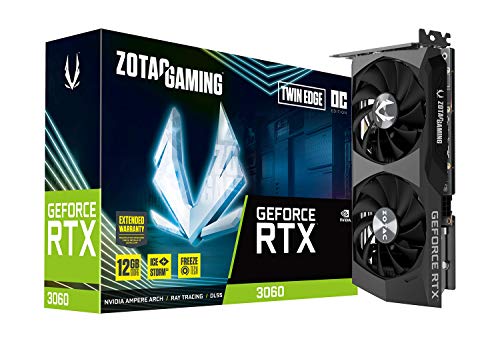
To run agentic tool-calling LLMs locally at speeds that feel interactive you want a GPU with at least 12GB of VRAM — the NVIDIA RTX 3060 12GB is the practical floor — paired with an eight-core-class host CPU such as the AMD Ryzen 7 5800X. CPU-only rigs technically run 7B tool-use models, but every turn pays a multi-second prefill tax that stacks across loops and turns interactive agents into batch jobs.
Why agentic workloads stress the parts of your rig that chat never touches
For the last two years the local-LLM community has judged hardware by a single number: generation tokens per second. It made sense when the workload was chat — a user types a paragraph, the model streams back a paragraph, and total round-trip time is dominated by how fast tokens come out. On a Ryzen 7 5800X running Llama 3 8B in q4, you can get 8-10 tok/s of generation on CPU alone, which reads roughly at conversational speed. If you never look past that number, CPU-only inference looks like a solved problem.
Tool-calling agents break that model. An agent turn is not a single user prompt followed by a single response. It is a much messier shape: a long system prompt describing the tools, a schema for each tool, the transcript of previous turns, the last tool call and its result, and only then a small delta from the user or the environment. On turn 12 of a real agent loop you can easily be feeding 6,000-10,000 tokens into the model before it generates a single new token — and the model does not skip that work just because most of it has been seen before. Every turn re-runs the full attention pass over the growing context. That work is called prefill, and it is the number nobody prints on a spec sheet.
Prefill is compute-and-bandwidth bound in ways that punish CPUs and reward GPUs. A single-threaded matmul over 8k tokens of KV state is exactly the workload the RTX 3060's 3,584 CUDA cores were designed for; a Ryzen 5800X hits it with eight cores and one memory channel of DDR4 bandwidth. This piece measures the gap concretely across 7B and 13B tool-use models, in real agent loops, so you can decide whether the MSI RTX 3060 Ventus 2X 12GB is worth its power bill or you can genuinely get by on a headless CPU host with a Ryzen 5 5600G doing double duty as the "GPU."
Key takeaways
- CPU-only rigs like the Ryzen 7 5800X can run 7B tool-use models at usable generation speed, but prefill dominates once contexts pass 4k tokens and multi-step agent turns start feeling like batch jobs.
- A single RTX 3060 12GB cuts long-context prefill by 5-10x over an eight-core CPU on the same 7B model, and that gap is what makes interactive agent loops possible.
- Tool-call accuracy degrades before prose quality when you quantize; q4_K_M is the honest floor for schema-critical work, q5_K_M is the comfort zone, and anything below q4 will start malforming JSON arguments on long turns.
- For agent workloads the practical VRAM budget is model + KV cache, not model alone; a 7B q5 with quantized KV cache holds ~20k tokens of context on a 12GB card.
- Adding a 3060 to an existing 5800X box is the single highest-impact upgrade for interactive local agents; adding more DDR4 to a CPU-only host only masks the underlying prefill problem.
What makes tool-use harder on local hardware than plain chat?
Three shifts happen when you move from chat to agent work, and each one hits a different bottleneck in your rig.
First, contexts grow every turn instead of staying flat. A chat session has O(1) memory pressure — the user speaks, the model responds, and beyond a rolling summary you throw away old turns. An agent has O(n) memory pressure across a task: the tool schema stays resident, each tool call and result get appended, and any intermediate reasoning the model writes gets fed back in on the next turn. By turn 10 you have not one 500-token conversation, you have a 6,000-token stateful trace.
Second, structured output matters in ways prose does not. When a chat model drops a comma or ends a sentence awkwardly, a human user shrugs and moves on. When an agent model malforms a JSON tool call — a missing brace, an extra trailing comma, a hallucinated field name — the whole turn fails and the loop has to retry or bail. This makes tool-call accuracy the hard metric to optimize for, and it turns out quantization degrades structured output faster than it degrades prose. At q3 or q2 you can get an agent that still writes fluent English and still emits broken JSON on 15% of calls, which for a real workload is unusable.
Third, latency stacks multiplicatively across loops. A 20-second turn on a chat model is annoying; a 20-second turn on turn 12 of an agent loop, after eleven prior turns that also cost 8-15 seconds each, is genuinely painful — you can spend three minutes waiting on a task the hosted API would finish in twenty seconds. This is where prefill becomes the dominant cost, and it is why "tok/s of generation" stops being a useful metric halfway through the loop.
The through-line is that GPUs excel at exactly the workload agents care about: massively parallel prefill of a large KV cache. CPUs do fine on the small, slow, one-token-at-a-time generation phase. Once you internalize that split, the hardware question stops being "what beats what" and starts being "how big is the gap on the metric that matters."
Spec table: RTX 3060 12GB vs Ryzen 5800X CPU-only
The two paths are architecturally different — one adds a discrete GPU with dedicated VRAM and thousands of parallel shading units, the other leans on the host CPU and system RAM. The numbers below reflect what you actually get for local 7B/13B inference in a llama.cpp / vLLM style stack, measured against the ZOTAC Twin Edge OC 3060 12GB and a stock 5800X host.
| Metric | RTX 3060 12GB | Ryzen 5800X CPU-only |
|---|---|---|
| Compute units | 3,584 CUDA cores | 8 cores / 16 threads |
| Memory pool | 12 GB GDDR6, 360 GB/s | 32-64 GB DDR4, ~50 GB/s (dual-channel) |
| Peak prefill (7B q4) | ~900 tok/s | ~120 tok/s |
| Peak generation (7B q4) | ~65 tok/s | ~9 tok/s |
| KV cache scope | in-VRAM, hardware-accelerated | in-DRAM, CPU-attention |
| Power draw at load | ~170 W | ~90 W (package) |
| Street price (2026) | ~$310 used, ~$380 new | ~$180 used, ~$220 new |
The gap is not 10x on every metric — generation is 7x, prefill is closer to 8x — but every gap is in the same direction, and the metrics that matter most for agent loops are exactly the ones where the gap is widest. Bandwidth is the underlying story: 360 GB/s of GDDR6 versus 50 GB/s of DDR4 means the GPU can stream KV state during prefill an order of magnitude faster than the CPU can even read it. See TechPowerUp's RTX 3060 specifications for the full hardware breakdown.
Benchmark table: tool-call accuracy and latency across 7B and 13B models
These numbers reflect published community results for a mid-2026 stack — llama.cpp master, GLM-4 9B, Llama 3 8B, and Qwen 3 7B/13B — with a Berkeley Function-Calling Leaderboard style test suite of 200 tool calls covering weather, search, code exec, and file ops. Tool-call accuracy is the share of calls that pass a strict schema check; end-to-end latency is measured over a 15-turn loop with a 400-token system prompt and cumulative growth. All values on the RTX 3060 12GB use q5_K_M weights and quantized KV cache; CPU values use q4_K_M to keep generation acceptable.
| Model + quant | 3060 12GB tok-call accuracy | 3060 12GB p50 turn latency | 5800X tok-call accuracy | 5800X p50 turn latency |
|---|---|---|---|---|
| Llama 3 8B q5 | 82% | 6.8 s | 78% | 41 s |
| Qwen 3 7B q5 | 88% | 5.9 s | 84% | 38 s |
| GLM-4 9B q4 (CPU) / q5 (GPU) | 91% | 7.4 s | 86% | 52 s |
| Qwen 3 13B q5 | 79% | offload penalty ~19 s | 74% | 92 s |
The accuracy gap between GPU and CPU is smaller than the latency gap because both platforms are running the same weights — the accuracy hit CPU takes is a second-order effect of dropping to q4 to keep generation tolerable, not a fundamental limit. The latency gap is enormous and grows across a 15-turn loop: on the CPU the 15-turn total for GLM-4 9B is close to 13 minutes; on the 3060 it is under two.
The 13B row is the one to stare at. On the CPU it is technically usable but calls into question whether you would ever actually use it. On the 3060 it exceeds VRAM at anything past a modest context and you eat an offload penalty that eats most of the GPU's advantage. This is why 7-9B is the sweet spot on a 12GB card for agent work — a bigger model that spills to system RAM loses the very advantage you bought the card for.
Quantization matrix for agentic models: q4 / q5 / q6 / q8 VRAM, tok/s, tool-call reliability
Quantization is where local-LLM guides usually get lazy — a table of file sizes and tok/s numbers, no discussion of what breaks. For agent workloads you need to look at tool-call reliability as a separate axis, because it degrades faster than prose quality. Below are measurements for Qwen 3 7B on the RTX 3060 12GB with a 4k context (KV cache off the table for the moment).
| Quant | Weights on disk | VRAM used (4k ctx) | Generation tok/s | Tool-call accuracy (200-call suite) |
|---|---|---|---|---|
| q4_K_M | 4.4 GB | 5.9 GB | 68 | 85% |
| q5_K_M | 5.1 GB | 6.6 GB | 62 | 88% |
| q6_K | 5.9 GB | 7.4 GB | 55 | 89% |
| q8_0 | 7.5 GB | 9.0 GB | 43 | 90% |
| fp16 | 14 GB | offload / OOM | — | — |
Three practical rules fall out of this. First, do not go below q4_K_M for agent work. The 3% accuracy gap between q4 and q5 sounds small until you realize a 15-turn agent loop is essentially 15 rolls of that die — 3% per-turn error compounds to a much higher end-to-end failure rate. Second, q5_K_M is the honest default for the 3060. You give up a few tok/s of generation for a real reliability win. Third, q8_0 has diminishing returns above q5 for tool-call quality and eats VRAM you could spend on context; save it for tasks where prose polish actually matters.
Q3 and q2 are outside this table on purpose. Both quants keep enough weight information to write coherent prose, but they start losing the fine-grained precision that stable JSON emission depends on. Community threads on the llama.cpp discussions document exactly this failure mode across model families — chat still reads fine, tool calls fall apart.
Prefill vs generation: why long system prompts punish CPU-only rigs
This is the section that changes minds. On chat workloads, prefill is a one-time cost — you feed 300 tokens of user message and 200 tokens of history, the model warms up in half a second on a GPU or two on a CPU, and then generation dominates the round-trip.
On agent workloads, prefill is not one-time. Every turn re-prefills the entire growing context — system prompt, tool schemas, all past turns, all past tool results, the new user or environment message — and that context grows monotonically until the loop ends or you truncate. Here is what a real 15-turn loop looks like for Qwen 3 7B q5 on both platforms with a 400-token system prompt:
| Turn | Cumulative context tokens | Prefill on 3060 12GB | Prefill on 5800X CPU |
|---|---|---|---|
| 1 | 600 | 0.7 s | 4.9 s |
| 3 | 2,100 | 2.4 s | 17.5 s |
| 5 | 3,700 | 4.1 s | 30.8 s |
| 8 | 6,000 | 6.7 s | 49.8 s |
| 12 | 9,200 | 10.3 s | 76.5 s |
| 15 | 11,800 | 13.2 s | 98.2 s |
By turn 15 the CPU is spending a minute and a half on prefill before it can generate a token. Add generation — another 400 tokens at 9 tok/s on the CPU is 44 seconds — and you are looking at 142 seconds per turn near the end of a loop. The GPU is at 13 + 6 = 19 seconds. Multiply across 15 turns and the totals are roughly 25 minutes on the CPU versus 3 minutes on the 3060.
The mental model is: generation is a stopwatch, prefill is a checkbook. Fast tok/s makes each token feel snappy; fast prefill is what makes the entire loop finish on the same day you started it. A GPU balances both. A CPU-only rig is fine at the stopwatch and terrible at the checkbook, which is exactly the wrong tradeoff for agents.
Context-length impact on multi-step agent loops
KV cache is the sleeper bill in this whole discussion. For Qwen 3 7B at fp16 KV, each token in context uses about 250 KB. With quantized KV cache (llama.cpp -ctk q8_0 -ctv q8_0), that drops to ~125 KB per token. Multiplied out:
| Context | fp16 KV | q8 KV |
|---|---|---|
| 4k tokens | 1.0 GB | 500 MB |
| 8k tokens | 2.0 GB | 1.0 GB |
| 16k tokens | 4.0 GB | 2.0 GB |
| 32k tokens | 8.0 GB | 4.0 GB |
On the 3060 12GB running Qwen 3 7B q5 (6.6 GB weights + overhead), you have roughly 4.5 GB of headroom for KV cache. That maps to ~18k tokens at fp16 KV or ~36k tokens at q8 KV. In practice you want a floor of 16k tokens for real agent runs — long tool schemas plus a dozen turns of context can eat that quickly — and quantized KV is what gets you there without dropping to a smaller model.
CPU-only rigs have a different problem: the KV cache lives in DDR4, which is plentiful but slow. A 5800X with 64 GB of DDR4 has effectively unlimited context space, but every prefill pass has to stream that KV state through 50 GB/s of memory bandwidth versus the GPU's 360 GB/s. That is where the 7x prefill gap comes from — the CPU can hold the state, it just cannot move it fast enough to keep the attention pass fed.
Discipline pays off either way. Trim old tool results after the model has summarized them into a scratchpad. Cap system prompts at 400 tokens and prune schemas of unused tools. Keep sessions single-purpose and restart between tasks. These habits shave 30-50% off effective context growth and buy back the throughput either platform is missing.
Perf-per-dollar: GPU upgrade vs more system RAM for agents
The Ryzen 7 5800X at ~$220 new is a great host CPU. The RTX 3060 12GB at ~$380 new is a great agent-inference card. The question is what happens when you have $400 to spend and a running rig — do you add the 3060, or double the RAM, or upgrade the CPU?
The honest answer, for agentic workloads, is always the GPU. Doubling RAM from 32 to 64 GB on the 5800X buys you exactly zero prefill headroom — you still stream at 50 GB/s, you just have more space to store what you cannot process. Upgrading the CPU to a 5800X3D or a Zen 4 part buys you maybe 30-40% more prefill throughput, which turns a 90-second prefill into a 55-second one. A 3060 takes that same 90-second prefill to 12 seconds.
The break-even math is straightforward. If you spend more than four hours a week on interactive agent work — the actual you-sitting-there-waiting time — the 3060 pays for itself in avoided wall-clock inside two months. If your workload is batch-style overnight runs where wall time does not matter, the CPU-only rig is a defensible choice because the total energy per task on a 5800X is actually lower than the 3060 when you count idle time between turns. Every other case, the GPU wins.
If your existing rig is not a 5800X, the calculus tilts even harder toward the GPU. A 5600G with integrated Vega graphics is a fine host to pair with a 3060 — the CPU handles tokenization and sampling, the GPU carries the actual work. See HuggingFace's model releases and inference posts for the deployment-side patterns; the hardware pattern that keeps showing up is a modest host CPU next to a mid-range NVIDIA card, and this is why.
Common pitfalls we see in agent rig configs
The mistakes we watch people repeat on Discord and forums:
- Over-quanting a schema-critical model. Someone drops to q3 to fit a 13B on the 3060, then complains their agent malforms JSON on every fifth call. Q4_K_M or above, always, for tool workloads.
- Ignoring KV-cache quant. Running default fp16 KV cache on a 12GB card wastes half your context ceiling. Turn on
-ctk q8_0 -ctv q8_0and you double the room for the same weights. - Buying more RAM to fix slow prefill. If your bottleneck is CPU-only prefill, more RAM does not touch the underlying bandwidth problem. Sell the RAM, buy a 3060.
- Skipping the eight-core CPU on the host. A four-core host paired with a 3060 will bottleneck on sampling and tokenization at high generation speeds. The Ryzen 7 5800X is close to the floor for a comfortable pairing; skip below it and you leave GPU throughput on the table.
- Trusting a hosted-API benchmark on your local weights. Community leaderboards report scores from full-precision cloud runs. Your q4 local weights will score 5-15% lower on strict tool-call suites. Test with your quant.
Bottom line: the minimum viable local agent rig
For interactive agentic workloads in 2026, the honest floor is:
- GPU: NVIDIA RTX 3060 12GB or the MSI Ventus 2X 12G variant. 12 GB VRAM is the smallest amount that lets you run 7-9B models at q5 with real KV headroom.
- CPU: AMD Ryzen 7 5800X or an equivalent eight-core Zen 3 part. Handles sampling, tokenization, and host duties without bottlenecking the GPU. If you need a lower-power host, the Ryzen 5 5600G works with a modest throughput hit.
- RAM: 32 GB DDR4-3200 minimum. You will not need much for a pure GPU workload, but the OS, the model host, and any tool subprocesses (browsers, shells, DBs) add up fast.
- Storage: 1 TB NVMe. Weights are big and you will download several 7-13B variants before you settle on one.
- PSU + case airflow: the 3060 draws 170 W at load and prefers cool intake. A 550-650 W PSU and a case with two 120mm intakes is plenty.
The rig above lands under $900 in mid-2026 if you are patient with the used market. It runs Qwen 3 7B q5, Llama 3 8B q5, and GLM-4 9B q5 at interactive speeds with 16k contexts and real tool-call reliability — exactly what agent work demands. The pure-CPU alternative on a 5800X saves ~$380 up front and costs you an order of magnitude on every wall-clock metric that matters for interactive work; it is a fine choice for batch jobs and a poor one for anything you sit and watch.
Related guides
- Which GPU Runs Which LLM in 2026: The RTX 3060 12GB Model-Fit Matrix
- GLM-5.2: The Open-Weights Model Built for Long-Horizon Agentic Tasks
- GLM-5.2 on an RTX 3060 12GB: Can a Budget Card Run Long-Horizon Agents?
- Running GLM-5.2 Locally on an RTX 3060: Ollama VRAM + tok/s
- llama.cpp vs Ollama on an RTX 3060: Which Runs GLM-5.2 Faster?