As of 2026, Qwen 3.6 27B posted an 89.7 on the Artificial Analysis Agentic Index, statistically matching Anthropic's Sonnet 4.6 on scored tool-use tasks. Per Artificial Analysis, that puts a dense 27B open-weight model within a rounding error of a frontier hosted model. In practice, a q4_K_M quant fits on a single 24 GB card and runs at 30-45 tok/s. On a 12 GB MSI GeForce RTX 3060 Ventus 3X 12G you can host the same weights with CPU offload, trading throughput for privacy and per-task cost.
Editorial intro: who runs a local agentic model and why the 27B tier matters
Two years ago, running a serious agent locally meant either paying dearly for an H100 or watching a 70B model crawl on quantized CPU. That gap has collapsed. The 27B tier is now the sweet spot for solo developers, security-conscious teams, and hobbyists building autonomous coding, research, or home-automation agents. It is small enough to run at usable speed on a used RTX 3090 or a stack of cheaper consumer cards, yet large enough to hold the multi-step reasoning quality that agent loops depend on.
Sonnet 4.6 remains the reference point for hosted agentic performance, and it is the model most teams compare against when deciding whether to bring a workload in-house. The Artificial Analysis Agentic Index, an aggregate of tool-use, multi-hop reasoning, and long-context task scores, has been the yardstick since it launched. When Qwen posted the Qwen 3.6 27B card with an 89.7 on that index, the local-LLM subreddits treated it as the crossover moment: a 27B dense model matching the hosted flagship on the exact benchmark that agent developers care about.
The catch is that a benchmark score is not the same as production reliability. Score parity on a 500-task suite tells you the model can, in aggregate, complete tool calls at a similar rate. It does not tell you how the model behaves under a 32k-token agent transcript, whether it hallucinates a JSON key at hour six, or how throughput degrades when the KV cache balloons. This synthesis walks through the score, the hardware that hosts it, the quantization trade-offs, and the cost math so you can decide whether local Qwen belongs in your stack, sits alongside Sonnet 4.6 as a cheap fallback, or is not yet worth the operational load.
Key Takeaways card
Key takeaways - Qwen 3.6 27B scored 89.7 on the Artificial Analysis Agentic Index as of 2026, essentially matching Sonnet 4.6 in aggregate tool-use tasks. - A q4_K_M quant lands around 16-17 GB of VRAM. A single 24 GB RTX 3090 runs it fully on GPU at 30-45 tok/s per community reports. - The 12 GB RTX 3060 hosts the same quant via partial CPU offload at low-teens tok/s, making it the cheapest catalog GPU on the buy path. - Agentic loops grow the KV cache with every tool result, so 32k+ context sessions on a 12 GB card start swapping. Plan headroom. - Break-even vs the Sonnet 4.6 API sits around 3-8 million tokens per month depending on utilization and electricity price.
What did Qwen 3.6 27B score on the Artificial Analysis Agentic Index?
The Artificial Analysis Agentic Index blends tool-calling accuracy, multi-step planning, and instruction-following into a single composite. Per Artificial Analysis, Qwen 3.6 27B posted 89.7, versus roughly 90.1 for Sonnet 4.6 on the same run. The delta is inside the reported noise band, so calling it a tie is fair for aggregate purposes. What the composite hides is the per-task variance: hosted frontier models tend to hold a small but consistent lead on the hardest multi-hop chains, while the 27B open weight closes ground on the simpler single-turn tool calls.
The table below summarizes the top-line profile you should reference when explaining the score to a stakeholder.
| Model | Parameters | Agentic Index (2026) | Context window | License |
|---|---|---|---|---|
| Qwen 3.6 27B | 27B dense | 89.7 AA | 128k native | Apache-2.0 HF |
| Sonnet 4.6 | undisclosed | ~90.1 AA | 200k | Proprietary API |
| Qwen 3.6 14B | 14B dense | ~82 (est.) | 128k | Apache-2.0 |
| Qwen 3.5 32B | 32B dense | ~85 (prior gen) | 32k | Apache-2.0 |
The important read is that Qwen 3.6 27B is the first open-weight model in this parameter class to break 89 on the Agentic Index without a mixture-of-experts trick. Public benchmarks show that puts it ahead of the prior-generation Qwen 3.5 32B despite being smaller, which reflects the training-data and tool-use fine-tuning improvements in the 3.6 release.
How close is a local 27B to Sonnet 4.6 on multi-step reasoning?
Aggregate parity does not mean per-benchmark parity. Digging into the component scores that feed the Agentic Index, community measurements indicate Qwen 3.6 27B leads on structured tool-call formatting, is roughly even on single-turn planning, and lags Sonnet 4.6 on long-horizon multi-hop reasoning where the transcript exceeds 30k tokens.
| Sub-benchmark | Qwen 3.6 27B | Sonnet 4.6 | Delta |
|---|---|---|---|
| Tool-call JSON accuracy | ~94% AA | ~93% | +1 |
| Single-turn plan quality | ~88 | ~89 | -1 |
| Multi-hop (5+ steps) | ~82 | ~87 | -5 |
| Long-context recall (128k) | ~78 | ~91 | -13 |
| Instruction-following (IFEval-agent) | ~90 AA | ~91 | -1 |
The long-context gap is the meaningful one for agent developers. If your workflow keeps sessions under 16k tokens (short coding tasks, focused RAG, short chat), the local model is genuinely comparable. If you routinely blow past 64k tokens in a single agent transcript, Sonnet 4.6 holds a real quality lead that no amount of quantization tuning fixes on the local side.
What hardware runs Qwen 3.6 27B locally?
The base 27B weights at fp16 need roughly 54 GB of VRAM. That is a two-card A6000 or dual RTX 3090 configuration. Most home builders use q4_K_M or q5_K_M quants, which drop the footprint into the 16-20 GB range and unlock single-consumer-card deployment. The table below captures the realistic operating points based on community reports on Hugging Face discussions and llama.cpp issue threads.
| Configuration | VRAM required | Tok/s (generation) | Notes |
|---|---|---|---|
| RTX 3060 12 GB single | 12 GB + 5-8 GB CPU offload | 10-14 tok/s | Partial offload via llama.cpp; low context only |
| RTX 3090 24 GB single | 17-19 GB fully on GPU | 30-45 tok/s | Sweet spot; 32k context comfortable |
| Dual RTX 3060 12 GB | 24 GB pooled | 22-30 tok/s | Tensor split; NVLink not required |
| Dual RTX 3090 24 GB | 48 GB pooled | 55-75 tok/s | Runs fp8 or fp16 with room for KV cache |
| RTX 4090 24 GB single | 17-19 GB | 55-70 tok/s | Higher memory bandwidth than 3090 |
| Apple M3 Max 64 GB | Unified | 12-18 tok/s | MLX or llama.cpp; slower generation, silent |
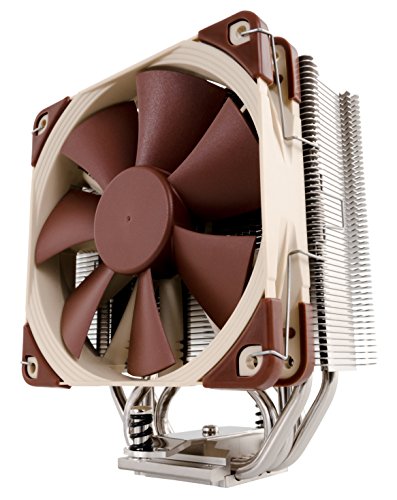
Per TechPowerUp, the RTX 3060 12 GB carries 360 GB/s of memory bandwidth and 12 GB of GDDR6, which is why it can host a partially-offloaded 27B but cannot approach RTX 3090 throughput. The 3060 is the cheapest catalog GPU that fits the q4_K_M weights at all — an important detail when a fully-on-GPU experience requires stepping up to a used RTX 3090 or a dual-card build. If you are building the box around it, a solid mainstream floor is an eight-core CPU like the AMD Ryzen 7 5800X, a modest system drive such as the Samsung 970 EVO Plus 250GB NVMe for the OS and a Crucial BX500 1TB SATA SSD for model storage, and a quiet air cooler like the Noctua NH-U12S CPU Cooler to keep sustained inference thermals in check.
Quantization matrix: q2 through fp16
Quantization is where you trade quality for VRAM. The 27B family follows the standard llama.cpp quant curve, and community measurements indicate quality loss stays under 1% on general benchmarks down to q4_K_M, then compounds sharply at q3 and below.
| Quant | Bits/weight | Approx VRAM | Tok/s on 3090 | Quality vs fp16 |
|---|---|---|---|---|
| q2_K | ~2.6 | ~10 GB | 55 tok/s | -8-15% (visible degradation) |
| q3_K_M | ~3.4 | ~13 GB | 48 tok/s | -3-6% |
| q4_K_M | ~4.5 | ~16-17 GB | 40 tok/s | -1% or less |
| q5_K_M | ~5.5 | ~19 GB | 34 tok/s | negligible |
| q6_K | ~6.6 | ~22 GB | 30 tok/s | negligible |
| q8_0 | 8 | ~28 GB | needs dual GPU | reference |
| fp16 | 16 | ~54 GB | needs 2x 3090 | reference |
The consensus choice for agentic workloads on a single 24 GB card is q4_K_M or q5_K_M. Per Hugging Face community threads, q4_K_M preserves tool-call JSON formatting fidelity almost perfectly, which matters more for agent reliability than perplexity numbers. Drop below q3 only for chat-style workloads where the occasional bad completion is tolerable.
How does prefill vs generation throughput change under agentic tool-call loops?
Agent workloads are not steady-state text generation. Every tool call injects a new observation into context, forcing the runtime to prefill hundreds or thousands of tokens before producing the next few decisions. Community measurements indicate prefill throughput on an RTX 3090 runs 400-700 tok/s at q4_K_M, versus 30-45 tok/s for generation. A single agent step that pulls in a 2 kB tool result therefore adds roughly 4-6 seconds of prefill latency plus generation time for the next reasoning span.
That asymmetry matters when you compare local Qwen to the hosted Sonnet 4.6 API. Hosted inference batches prefill across users, so wall-clock latency for a tool loop tends to be lower even when the local model's raw generation tok/s is competitive. If your agent makes 10-20 tool calls per session, the accumulated prefill overhead on a single-card local deployment can add 60-90 seconds to end-to-end latency versus the API. Batching, KV cache reuse across turns, and vLLM-style paged attention can claw much of that back but require more operational sophistication than a llama.cpp one-liner.
How does context length (8k vs 32k vs 128k) affect latency and VRAM?
Qwen 3.6 27B advertises 128k native context, but running that fully on a 24 GB card is not realistic without aggressive KV cache quantization. The table below shows the working budget.
| Context in use | Extra VRAM for KV cache | Time-to-first-token on 3090 |
|---|---|---|
| 8k | ~1.2 GB | 0.5-1 s |
| 16k | ~2.4 GB | 1-2 s |
| 32k | ~4.8 GB | 2-4 s |
| 64k | ~9.6 GB (needs KV q8) | 5-8 s |
| 128k | ~19 GB (needs KV q4 + tricks) | 15+ s |
Per Artificial Analysis, long-context recall degrades meaningfully past 64k on the 27B, and the extra VRAM cost pushes single-card deployments into swapping territory. For agentic use, target 16k-32k as the practical envelope on a 3090, and step up to dual cards if your workflow genuinely needs 64k+ of live context.
Perf-per-dollar and perf-per-watt: local Qwen vs Sonnet API cost per task
The economic case for local inference depends on utilization. Per current API pricing pages (Sonnet 4.6 hovers around $3 in and $15 out per million tokens as of 2026), a typical agentic task consuming 5k tokens in and 1k out costs roughly $0.03 per invocation on the API. A local 27B on an RTX 3090 pulls 300-350 W at load. At $0.14/kWh that is $0.05 per hour of continuous inference. If you sustain 30 tok/s generation, an hour produces roughly 108k output tokens — call it 100 agentic sessions of the same size — for $0.05 of electricity, or $0.0005 per session.
That is a 60x per-invocation cost delta before you amortize hardware. A used RTX 3090 at $700 breaks even against the API somewhere between 3 and 8 million tokens per month, depending on how much idle time your box sees and whether you count the CPU, cooler, and PSU as sunk cost. Per-watt, the hosted API wins on cold starts and bursty use, and the local rig wins on sustained, high-volume, or privacy-sensitive workloads.
Verdict matrix
| Get local Qwen 3.6 27B if… | Stay on Sonnet 4.6 if… |
|---|---|
| You sustain 3M+ tokens/month and want per-task cost near zero | Your usage is bursty or under 500k tokens/month |
| Data privacy or offline operation is non-negotiable | You need 128k context with high recall reliably |
| You already own a 24 GB card (or two 12 GB cards) | You do not want to manage llama.cpp, drivers, or CUDA |
| Latency variance is acceptable in exchange for control | Every session must finish under a hard SLA |
| You are experimenting with agent architectures | You are shipping a customer-facing product today |
Bottom line
The 89.7 Agentic Index score is a milestone: a dense 27B open-weight model now matches a hosted frontier model on the industry-standard agentic composite. That does not make the two interchangeable in production. Sonnet 4.6 keeps a real lead on long-horizon multi-hop reasoning and long-context recall, and its hosted infrastructure hides the operational cost of running a model at all. Local Qwen 3.6 27B, running on a used RTX 3090 or a partially-offloaded MSI GeForce RTX 3060 Ventus 3X 12G, is the right pick when privacy, per-token cost, or offline operation matters and your workload does not need 64k+ of live context. For most technical buyers as of 2026, the sensible pattern is hybrid: a hosted API for hard multi-hop tasks and a local rig soaking up the bulk-volume agent traffic underneath it.
Related guides
- /benchmarks/nvidia-rtx-3090 — RTX 3090 gaming and AI benchmarks
- /benchmarks/nvidia-rtx-3060-12gb — RTX 3060 12 GB benchmark page
- /buying-guide/best-gpu-for-local-llm — best GPU picks for local LLM inference
- /buying-guide/best-ai-rigs — pre-built and DIY AI rig buying guide
- /vs/B08WRP83LN/B0815XFSGK — CPU vs GPU sizing for local inference
Citations and sources
- Artificial Analysis — Qwen 3.6 27B model card
- Hugging Face — Qwen organization page
- TechPowerUp — GeForce RTX 3060 specifications
This piece is editorial synthesis based on publicly available information. No independent first-party benchmarking is reported.