As an Amazon Associate, SpecPicks earns from qualifying purchases. See the SpecPicks review methodology.
Step 0 — diagnose what you actually need
Three questions decide this before any benchmark does.
1. Model size and quantization. An 8B model at Q4_K_M is about 4.6 GiB of weights. At Q8_0 it is about 8 GiB. At FP16 it is about 15 GiB. If "8B" means "8B at Q4 for chat", your VRAM target is roughly 6 GB including context. If it means "8B at Q8 for coding or extraction where quantization errors show up", your target is 9–10 GB and dual 1050 Ti is out before you start.
2. Context length. Llama 3.1 8B uses grouped-query attention with 8 KV heads of dimension 128 across 32 layers. At FP16 that is 128 KiB of KV cache per token: 512 MiB at 4k context, 1 GiB at 8k, 4 GiB at 32k. Long-context RAG or agent loops eat VRAM faster than the weights do.
3. Your motherboard's second slot. Most budget ATX boards have a second x16-length slot, but it is often wired x4 from the chipset, and on older boards it can be PCIe 2.0 x1. Check the block diagram in the manual. Also check spacing: two dual-slot 1050 Ti cards in adjacent slots leave the top card's fans pressed against the bottom card's backplate.
If you need Q8 quality, more than 8k context, or you have a board with no usable second slot, stop here: buy the 12 GB card.
Spec delta: EVGA GTX 1050 Ti FTW vs ZOTAC RTX 3060 Twin Edge OC
Specifications are from TechPowerUp's GTX 1050 Ti database entry, TechPowerUp's RTX 3060 12 GB entry, Wikipedia's GeForce 10 series table and NVIDIA's RTX 3060 product page. Street prices are Amazon new-stock listings in the SpecPicks catalog as of 23 September 2026.
| Card | VRAM | Memory bandwidth | Rated board power | Street price band |
|---|---|---|---|---|
| GTX 1050 Ti (single) | 4 GB GDDR5, 128-bit | 112 GB/s | 75 W | $139 launch MSRP; $199–$369 new-old-stock on Amazon; far less used |
| GTX 1050 Ti ×2 (layer split) | 2 × 4 GB, not pooled | 112 GB/s per card, used one card at a time | 150 W | two used cards |
| RTX 3060 12GB (single) | 12 GB GDDR6, 192-bit | 360 GB/s | 170 W | $329 launch MSRP; ~$480–$500 new on Amazon |
The realistic second-card buy is the EVGA GTX 1050 Ti SSC — same GP107 chip, same 4 GB, same 112 GB/s. Do not pay new-old-stock prices for it; the used market is where these cards make sense. On the other side, the MSI GeForce RTX 3060 Ventus 2X 12G is the price-alternate to the ZOTAC: identical GA106 silicon and 12 GB, differing only in cooler and length. The MSI Gaming GeForce RTX 3060 12GB Twin Fan is a third interchangeable option; buy whichever fits your case and is cheapest the day you order.
The single most important number in that table is bandwidth. Token generation on a local LLM is memory-bandwidth-bound: every generated token reads the whole set of active weights once. The RTX 3060 has 3.2× the bandwidth of a single GTX 1050 Ti, and layer split does not add the two 1050 Ti bandwidths together.
Does 4GB + 4GB equal 8GB?
No, for three reasons.
Layer-split mechanics. llama.cpp's layer mode "splits layers and KV across GPUs (pipelined)", per the llama.cpp CLI reference. Card 0 holds, say, layers 0–15 and their KV cache; card 1 holds layers 16–31 and theirs. To generate a token, card 0 runs its 16 layers, sends a single hidden-state vector (4,096 values for Llama 3.1 8B — 16 KB at FP32) across the PCIe bus, and card 1 runs the rest. The split has to fall on a layer boundary; --tensor-split 1,1 or 3,2 shifts the boundary but cannot split a layer in half.
KV cache is split, not free. The good news: in layer mode the KV cache for each layer lives on the card that owns that layer, so it is divided rather than duplicated. The bad news: both halves still come out of 4 GB budgets, and whichever card also drives your monitor loses another 200–400 MB to the desktop compositor.
The compute-buffer tax. Each GPU allocates its own CUDA context and its own scratch/compute buffers sized for the prompt batch. That overhead is paid once per card, so two cards pay it twice. llama.cpp's own <code>--fit</code> logic defaults to leaving a 1,024 MiB margin per device when it auto-sizes context — a hint at how much headroom the maintainers expect each card to need.
Add it up: 8,192 MiB of raw VRAM, minus two CUDA contexts, two compute buffers and a desktop, leaves roughly 6.5–7 GB for weights plus KV cache. That is enough for 8B at Q4_K_M with 8k context, and not a lot more.
Quantization matrix for an 8B model
Weight sizes are typical GGUF file sizes for Llama 3.1 8B Instruct. "VRAM needed" adds 512 MiB of KV cache for 4k context plus roughly 0.5 GB of runtime overhead.
| Quant | Weight size | VRAM needed (4k ctx) | Runs on dual 1050 Ti? | Runs on one 12GB card? | Quality note |
|---|---|---|---|---|---|
| q3_K_M | ~3.7 GiB | ~4.7 GB | Yes, with room for 16k context | Yes, 64k+ context | Noticeable degradation on reasoning and code |
| q4_K_M | ~4.6 GiB | ~5.6 GB | Yes, up to ~8k context | Yes, 32k+ context | The standard chat default |
| q5_K_M | ~5.3 GiB | ~6.3 GB | Barely; 2k–4k context | Yes, 32k context | Hard to distinguish from q8 in chat |
| q6_K | ~6.1 GiB | ~7.1 GB | No in practice | Yes, 16k+ context | Near-lossless |
| q8_0 | ~8.0 GiB | ~9.0 GB | No | Yes, 8k–16k context | Effectively lossless |
| fp16 | ~15 GiB | ~16 GB | No | No — needs offload | Reference quality |
| CPU offload | any | spills to system RAM | Yes, but slow | Yes, but slow | Quality set by quant, speed set by DDR4 |
The pattern is simple. Dual 1050 Ti tops out one to two quant levels lower than the 3060 at the same context, and the 3060 can trade that headroom for much longer context instead. Hardware Corner's RTX 3060 12GB tables show Qwen3 8B at Q4_K scaling to 64k context fully in VRAM on that card — a figure dual 1050 Ti cannot approach.
Throughput: prefill versus generation
The rows below are for an 8B-class model at 4-bit. Measured rows are cited to the public result page they came from. The dual-card and offload rows are SpecPicks estimates derived from those measured rows plus memory-bandwidth arithmetic; no public dual-GTX-1050-Ti llama-bench result for an 8B model existed as of 23 September 2026.
| Config | Prefill tok/s | Generation tok/s | Max context that fits |
|---|---|---|---|
| Single GTX 1050 Ti (Llama 2 7B Q4_0, fully on GPU) | 207 — llama.cpp CUDA thread | 15.2 — same thread | ~2k (7B Q4_0 only; 8B Q4_K_M does not fit) |
| Dual GTX 1050 Ti, layer split (Llama 3.1 8B Q4_K_M) | est. 160–190 — derived from the single-card row | est. 12–14 — derived from 112 GB/s ÷ 4.6 GiB at the single-card efficiency | ~8k |
| Single RTX 3060 12GB (Llama 3.1 8B Q4_K_M) | 1,483 — LocalScore RTX 3060 page | 51.3 — LocalScore RTX 3060 page | 32k–64k (Hardware Corner) |
| RTX 3060 with CPU offload (8B at fp16, ~5 GB in system RAM) | est. 300–600 — prompt still batched on GPU | est. 5–7 — bounded by dual-channel DDR4 | 8k+ |
The same llama.cpp thread lists the RTX 3060 at 2,138 tok/s prefill and 75.6 tok/s generation on Llama 2 7B Q4_0, so the like-for-like gap on generation is about 5× and on prefill about 10×.
Why the split config loses more on prefill than on generation. Generation is bandwidth-bound. The 1050 Ti's 112 GB/s versus the 3060's 360 GB/s is a 3.2× gap on paper and ~5× in practice. Prefill is compute-bound: the prompt is processed as one large matrix multiply per layer. The 1050 Ti has about 2.1 TFLOPS of FP32 and no tensor cores; the RTX 3060 has about 12.7 TFLOPS of FP32 plus 112 tensor cores. Splitting across two 1050 Ti cards doesn't help because, for a single prompt, layer mode still runs card 0 then card 1 — and each hop now carries 512 hidden-state vectors instead of one. In practice that means a 4,000-token RAG prompt takes around 20–25 seconds to ingest on dual 1050 Ti versus under 3 seconds on the 3060. LocalScore's GTX 1050 Ti page shows what happens when a model doesn't fit at all: Qwen2.5 14B Q4_K_M at 37 tok/s prefill, 1.2 tok/s generation and a 34.58-second time to first token.
The Pascal problem
The GTX 1050 Ti's GP107 is a Pascal part (compute capability 6.1). That matters in two ways.
No usable FP16 throughput. Wikipedia's GeForce 10 series table lists the 1050 Ti at about 2,138 GFLOPS FP32 and only 33 GFLOPS FP16 — a 1:64 ratio. Any runtime path that assumes fast half precision (FP16 cuBLAS, many PyTorch inference stacks, vLLM, ExLlamaV2) either refuses to run or crawls. llama.cpp survives because its quantized MMQ kernels use integer dot-product instructions that Pascal supports, which is why the 207/15.2 figures above are respectable for a 75 W card.
The CUDA support window has closed. NVIDIA's CUDA Toolkit 13.0 release notes, §2.6.2 state: "Architecture support for Maxwell, Pascal, and Volta is considered feature-complete. Offline compilation and library support for these architectures have been removed in CUDA Toolkit 13.0 major version release." In practice, as prebuilt llama.cpp and Ollama binaries move to CUDA 13, the 1050 Ti drops out of the default build targets. You will be pinning CUDA 12.x, building from source with CMAKE_CUDA_ARCHITECTURES=61, or switching to the Vulkan backend. Buying a second Pascal card in 2026 doubles down on a platform with no new-toolkit future. The RTX 3060 (Ampere, compute capability 8.6) is supported by CUDA 13.
What about power, heat and slot space?
Board power. Two GTX 1050 Ti cards draw 150 W combined at their 75 W rating. One RTX 3060 is rated at 170 W. NVIDIA specifies a 550 W system supply and one PCIe 8-pin connector for the 3060 on its product page. The power difference is a wash — about 20 W.
Connectors. Reference 1050 Ti cards run from slot power alone, which is their best trick; they fit OEM towers with no PCIe power cable at all. Factory-overclocked variants such as the FTW add an auxiliary power connector. If your PSU has no PCIe cables, dual reference-style 1050 Ti is actually the easier power story. If it has one 8-pin, either path works.
Airflow. This is what usually bites. Two dual-slot cards stacked in adjacent slots leave the top card breathing the bottom card's exhaust with a few millimetres of clearance. Expect the top card to run noticeably hotter and to clock down under sustained generation. A mid-tower with only one front intake makes it worse.
Slot count. Dual cards consume four slot widths and your only second x16-length slot. That is the slot you would otherwise use for a 10 GbE NIC, a capture card or a second NVMe adapter.
Performance per dollar and per watt
Use the measured and estimated generation rates above.
Per watt. Dual 1050 Ti: ~13 tok/s ÷ 150 W ≈ 0.09 tok/s per watt. RTX 3060: 51.3 tok/s ÷ 170 W ≈ 0.30 tok/s per watt. The 3060 is about 3.5× more efficient, and since only one 1050 Ti computes at a time, you pay for idle silicon too.
Per dollar — worked example 1: you already own one 1050 Ti. The marginal cost is one used card. If you pay $70 for it, you are spending $70 to go from "8B doesn't fit" to ~13 tok/s. That's the best-case argument for the dual setup.
Worked example 2: you own nothing yet. Two used 1050 Ti cards against one 3060 at roughly $480 new (as of September 2026). Two used cards at $70 each is $140 for ~13 tok/s, about 0.09 tok/s per dollar. The 3060 is ~0.11 tok/s per dollar at $480 — and much better at the used-market prices 3060s also trade at — plus 4× faster prefill-to-first-token and 50% more VRAM.
Worked example 3: resale. A 1050 Ti is near the floor of its depreciation curve and has no CUDA-13 future. A 3060 12GB holds value because 12 GB remains the minimum useful local-LLM tier. Money put into the 3060 is partially recoverable; money put into a second 1050 Ti mostly isn't.
Verdict matrix
Add the second GTX 1050 Ti if…
- the second card is free or under ~$60 and you already own the first,
- the box is a secondary machine where 12–14 tok/s is acceptable,
- you run 7B–8B models at Q4 with short prompts (chat, not RAG),
- your PSU has no PCIe power cables and you can't replace it.
Buy the RTX 3060 12GB if…
- you want Q5–Q8 quality or more than 8k context,
- you paste long documents, run RAG, or use agent loops where prefill dominates,
- you want to stay on current CUDA and current prebuilt binaries,
- you might move up to 12B–14B models later.
Do neither and use CPU offload if…
- you have 32 GB or more of fast DDR4/DDR5 and one 1050 Ti,
- you only need occasional 8B answers and can wait for a single-digit tok/s rate,
- the real bottleneck is budget, not VRAM — a RAM kit is cheaper than either GPU path.
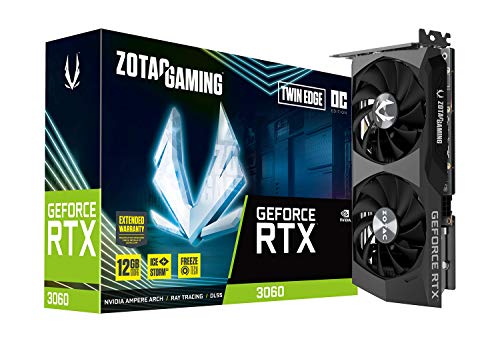
Recommended pick: the ZOTAC RTX 3060 Twin Edge OC 12GB (or the MSI Ventus 2X if it is cheaper that day). It is about 4× faster on generation than a dual-1050-Ti split, about 8× faster on prefill, runs Q8_0 with room for context, and keeps you on a supported CUDA stack. Keep the old 1050 Ti for a display output or a small embedding model.
Common pitfalls
- Monitor on the wrong card. Put the display on card 1 or use integrated graphics, or card 0 loses 200–400 MB and the model no longer fits.
- Default even split. The card with the display needs fewer layers. Try
--tensor-split 45,55rather than1,1. - Chipset slot at PCIe 2.0 x1. Generation survives; prefill and model load times suffer. Check the manual.
- Prebuilt CUDA 13 binaries. They may not include compute capability 6.1. Pin a CUDA 12.x build or use Vulkan.
- Ollama silently offloading. If one card is short on memory, Ollama moves layers to the CPU and speed collapses. Check
ollama psfor the GPU/CPU split.
When NOT to do the dual-card build
If you have to buy both 1050 Ti cards, don't. If you want anything larger than 8B, don't. If you care about time to first token on long prompts, don't. The dual setup is a salvage project for a card you already own, not a build plan.
Bottom line
Two GTX 1050 Ti 4GB cards can run an 8B model that one cannot, and that's all they do. Layer split gives you capacity, not speed: generation stays around single-card pace (est. 12–14 tok/s), prefill is roughly 10× slower than the 3060, and the Pascal platform has left CUDA's forward roadmap. One RTX 3060 12GB runs Llama 3.1 8B Q4_K_M at 51.3 tok/s with 1,483 tok/s prefill and fits Q8_0 with room to spare. Buy the 3060. Add a second 1050 Ti only if it costs you close to nothing.
Related guides
- RTX 3060 12GB benchmark page
- GTX 1050 Ti benchmark page
- Best Local LLM You Can Run on 12GB of VRAM in 2026
- Best Budget GPU for Local LLMs in 2026
- Best GPU Upgrade From a GTX 1050 Ti for Local LLMs
- Dual RTX 3060 24GB Local LLM Build
Citations and sources
- llama.cpp discussion #15013 — Performance of llama.cpp on Nvidia CUDA — GTX 1050 Ti and RTX 3060 llama-bench pp512/tg128 rows on Llama 2 7B Q4_0 (accessed 2026-09-23)
- LocalScore — RTX 3060 accelerator page — Llama 3.1 8B Q4_K_M prompt and generation speed (accessed 2026-09-23)
- LocalScore — GTX 1050 Ti accelerator page — Qwen2.5 14B Q4_K_M offload figures and TTFT (accessed 2026-09-23)
- llama.cpp CLI reference —
--split-mode,--tensor-splitand--fitbehaviour (accessed 2026-09-23) - TechPowerUp — GeForce GTX 1050 Ti specifications (accessed 2026-09-23)
- TechPowerUp — GeForce RTX 3060 12 GB specifications (accessed 2026-09-23)
- NVIDIA — GeForce RTX 3060 / 3060 Ti product page — board power, PSU and connector requirements (accessed 2026-09-23)
- Wikipedia — GeForce 10 series — GTX 1050 Ti launch date, bandwidth, FP32/FP16 throughput and MSRP (accessed 2026-09-23)
- NVIDIA — CUDA Toolkit 13.0 release notes — §2.6.2 on removal of Pascal support (accessed 2026-09-23)
- Hardware Corner — RTX 3060 12GB Local LLM Benchmarks — Qwen3 8B context scaling (accessed 2026-09-23)
This piece is editorial synthesis based on publicly available information. Rows marked "est." are SpecPicks estimates derived from the cited measurements; no independent first-party benchmarking is reported.
Live price comparison
See the canonical head-to-head for current prices: ZOTAC RTX 3060 12GB vs EVGA GTX 1050 Ti FTW. Prices change daily; the figures in this article were captured on 23 September 2026 and may be out of date by the time you read this.
— Mike Perry · Last verified 23 September 2026



