Buy the ZOTAC Twin Edge OC if your case is tight or you want the cheaper card — it is the same GA106 silicon in a 224 mm dual-slot body. Buy the MSI Ventus 3X 12G OC only if you have 305 mm of clearance and want the larger cooler to hold boost clocks quieter under sustained load. Performance between them is within a few percent.
Why the 12GB RTX 3060 is still the 2026 volume card
Five years after launch, the RTX 3060 12GB is still the card that shows up most often in real budget builds, and the reason is arithmetic rather than nostalgia. It ships with 12GB of GDDR6 on a 192-bit bus for roughly 360 GB/s of bandwidth, which is more VRAM than several newer and nominally faster cards in the same price bracket. At 1080p that surplus means texture settings stop being a negotiation. At 1440p it means the frame-time spikes that plague 8GB cards in modern open-world titles simply do not happen. And for anyone poking at local inference, 12GB is the practical floor where a quantized 7B or 8B model loads entirely into VRAM with a usable context window.
The silicon question was settled in 2021. NVIDIA's own product page fixes the specification: GA106, 3584 CUDA cores, 12GB GDDR6, a 170W total graphics power figure, and a 550W recommended system PSU. Every board partner gets the same die from the same bins with the same memory configuration. NVIDIA does not sell partners a faster 3060.
So the only variable left is the board. Cooler mass, fan count, PCB length, slot height, and the factory boost bin are what a partner actually chooses, and those choices change how long a card holds its clocks, how loud it is doing so, and — most consequentially for a budget builder — whether it physically fits in the case you already own. That is the entire decision in front of you, and it is why this comparison is about two coolers rather than two GPUs.
Key takeaways
- Both cards use identical GA106 silicon: 3584 CUDA cores, 12GB GDDR6, 192-bit bus, 360 GB/s. There is no performance tier between them.
- The ZOTAC Twin Edge OC is a 224 mm dual-fan, dual-slot card. The MSI Ventus 3X 12G OC is roughly 305 mm and triple-fan. That 81 mm gap decides most purchases.
- Measure your case clearance before comparing anything else. A card that does not fit is a return, not a compromise.
- Expect a 1-3% real-world frame-rate difference between partner cards at stock. Cooler mass buys you acoustics and sustained-clock stability, not FPS.
- Both are 170W parts. Size the PSU at 650W for a full build, not the bare 550W minimum.
- 12GB handles 7B-8B models at 4-bit comfortably and 13B at q4_K_M with reduced context. Above that, neither card is the answer.
Step 0 — diagnose your constraint before you pick a SKU
Most people pick a GPU and then discover the constraint. Do it the other way around. Four numbers decide this purchase, and you can collect all four in ten minutes.
Case GPU clearance. Find your case model's spec sheet and its stated maximum GPU length. Then subtract 10-15 mm for the power connector bend radius, and subtract more if you have a front-mounted radiator or an intact hard drive cage. Many budget mid-towers and nearly all mATX cases land between 280 mm and 330 mm of usable clearance once populated. A 305 mm card in a 320 mm case is technically fine and practically miserable to install.
Slot count. Both of these are nominally dual-slot designs, but the Ventus 3X is a thicker board and will crowd the slot beneath it. If you run a capture card, a sound card, or a PCIe SATA controller directly below the GPU, check the thickness figure, not just the slot rating.
PSU headroom. The card is 170W. Your CPU is 65W to 125W. Add drives, fans, and transient spikes, and the practical target is a quality 650W unit with a native 8-pin PCIe connector. NVIDIA's 550W guidance assumes a modest CPU and no margin for a unit that has aged three years.
Noise floor. If the machine sits on your desk in a quiet room, the cooler is the whole point of this comparison. If it lives under the desk behind a closed panel, it is nearly irrelevant and you should buy on price and length alone.
What actually differs between two RTX 3060 12GB cards?
Nothing that shows up in a spec-parser diff of the GPU itself. Both cards report the same 3584 shading units, 112 texture units, 48 ROPs, and 28 SM count that TechPowerUp's database entry for the RTX 3060 12GB lists for the reference part. Both carry 12GB of GDDR6 at 15 Gbps on a 192-bit interface. Both are rated 170W.
What differs is thermal budget. A GPU on the Ampere generation does not run at a fixed clock — it runs at whatever clock the GPU Boost algorithm can sustain within the power, temperature, and voltage limits it is given. Give it a bigger cooler and it sits closer to its ceiling for longer. Give it a smaller one and it settles a little lower once the heatsink saturates, typically eight to twelve minutes into a sustained gaming session.
The size of that effect is small on a 170W part. This is not a 450W flagship where cooler quality separates a card by 10%. On a 3060, the difference between an adequate dual-fan cooler and a generous triple-fan cooler is a couple of hundred megahertz of sustained boost at worst, which translates to low single-digit percentage points of frame rate. What you are actually buying with the larger cooler is the ability to move that heat at lower fan RPM — which is an acoustics purchase.
Spec delta: Twin Edge OC vs Ventus 3X 12G OC
| Model | Length / Slots | Factory boost bin | Cooler config | Rated TGP / recommended PSU |
|---|---|---|---|---|
| ZOTAC Gaming RTX 3060 Twin Edge OC 12GB | ~224 mm / 2 slots | 1807 MHz | Dual 90 mm fans, twin-heatpipe block | 170W / 550W min, 650W advised |
| MSI GeForce RTX 3060 Ventus 3X 12G OC | ~305 mm / 2 slots (thick) | 1807 MHz | Triple TORX 3.0 fans, extended fin stack | 170W / 550W min, 650W advised |
| NVIDIA reference figure | n/a | 1777 MHz | n/a | 170W / 550W |
Read that table twice. The boost bins are the same. The power limits are the same. The only row that meaningfully differs is physical size — and that is the row your case cares about.
How much does dual-fan vs triple-fan actually change temps and noise?
Public review data on Ampere partner cards is consistent enough to generalize. Across the RTX 3060 partner field, dual-fan designs on a 170W part typically settle in the high 60s to low 70s Celsius on the GPU core under sustained gaming load in a case with reasonable airflow. Larger triple-fan designs on the same power limit land several degrees lower at the same fan speed, or hit the same temperature several hundred RPM quieter. TechPowerUp's measured review of a large triple-fan RTX 3060 documents exactly this pattern: an oversized cooler on a mid-power Ampere die runs cool and quiet because the heatsink is dramatically over-specified for the heat load.
Three practical consequences follow.
First, neither card thermal-throttles in a normal build. Ampere's throttle point is far above where a 170W part lands on either cooler. Anyone telling you the dual-fan card "throttles" is describing normal boost-clock behavior, not a fault.
Second, the acoustic delta is real but bounded. In a quiet room, on an open bench, the difference is audible. Inside a closed case with three case fans running, it is largely masked.
Third, the dual-fan card responds much better to a manual fan curve than people expect. Because the heat load is modest, flattening the curve and accepting 72°C instead of 66°C usually drops the card below your case fans in perceived loudness. That is a free upgrade you should make on either card.
Benchmarks: what a 3060 12GB actually delivers
The numbers below are representative of the RTX 3060 12GB at stock settings from public review aggregates, paired with a modern mid-range CPU. Partner-to-partner variance at stock is on the order of 1-3%, well inside run-to-run noise, so treat these as class figures rather than per-SKU figures.
| Workload | 1080p (high/ultra) | 1440p (high) | Notes |
|---|---|---|---|
| Modern AAA open-world, ray tracing off | 70-90 fps | 45-60 fps | Where the 12GB buffer stops texture pop-in |
| Modern AAA, ray tracing on, DLSS Quality | 45-60 fps | 30-40 fps | RT is possible, not comfortable, on GA106 |
| Competitive esports titles | 200-350 fps | 150-250 fps | CPU-bound long before the GPU is |
| Last-gen AAA (2019-2021 titles) | 100-140 fps | 70-100 fps | The card's sweet spot |
| Perf-per-watt at 170W | ~0.45 fps/W at 1080p | ~0.30 fps/W at 1440p | Class-competitive, not class-leading in 2026 |
The pattern to notice: the 3060 12GB is a comfortable 1080p ultra card and a competent 1440p high card, and it does not fall off a cliff when a game asks for 10GB of VRAM the way an 8GB card of similar raster performance does. That VRAM headroom is the entire remaining argument for the card in 2026, and it applies equally to both SKUs here.
Does either card help for local LLM work?
Twelve gigabytes is a specific, well-understood tier for local inference, and the answer is the same for both cards because the memory configuration is identical: 12GB of GDDR6 on a 192-bit bus at 15 Gbps, which works out to 360 GB/s of bandwidth. Neither partner board changes that number, and for token generation that number is the whole ballgame.
The other half of the answer is CUDA maturity. GA106 is a well-supported Ampere part, which means llama.cpp, Ollama, and the PyTorch stack all treat it as a first-class target with no driver archaeology required. That is worth more in practice than a few percent of clock speed.
If your primary workload is 27B-plus models, stop reading this comparison. Neither card is the right purchase and the money belongs one tier up.
What can 12GB actually host? The quantization matrix
The question is never "does the model fit" in the abstract — it is "does the model fit with the context window you actually use." The table below covers weights only, on llama.cpp GGUF quantizations, on a single RTX 3060 12GB. Add the KV-cache numbers from the next section on top of every row.
| Model class | Quant | Weights (GB) | Typical gen (tok/s) | Verdict on a 12GB card |
|---|---|---|---|---|
| 7B | q4_K_M | ~4.1 | ~55 | Comfortable, long context to spare |
| 7B | q6_K | ~5.5 | ~42 | Comfortable, near-lossless |
| 7B | q8_0 | ~7.2 | ~34 | Fits, but q6_K is the better trade |
| 7B | fp16 | ~13.5 | — | Does not fit. Offloads, collapses |
| 8B | q4_K_M | ~4.9 | ~48 | The sweet spot for this card |
| 8B | q5_K_M | ~5.7 | ~41 | Fits with a 16K window |
| 13B | q4_K_M | ~7.9 | ~32 | Fits with a trimmed context |
| 13B | q5_K_M | ~9.2 | ~27 | Tight. 4K-8K context only |
| 13B | q6_K | ~10.7 | ~23 | Technically fits, no headroom |
| 14B | q4_K_M | ~8.6 | ~29 | Workable, watch the KV cache |
| 30B+ | q4_K_M | 18+ | <5 | Offloads to system RAM. Don't |
Two things to read off that table. First, generation speed tracks weight size almost linearly, because token generation on a GPU is memory-bandwidth-bound, not compute-bound — you are re-reading the entire weight tensor once per token. A 4.1GB model at 360 GB/s has a hard theoretical ceiling near 88 tok/s, and real-world efficiency lands somewhere in the 60-70% range of that.
Second, the drop from q4_K_M to q3 or q2 buys you speed you probably do not need and costs quality you will notice. On a 12GB card the useful range is q4_K_M through q6_K. Below q4, instruction-following and code output degrade faster than the perplexity numbers suggest. The llama.cpp repository documents the quantization formats and their tradeoffs directly, and Ollama's model library publishes the per-tag file sizes so you can check the arithmetic before you pull a 9GB blob.
These figures are representative of a stock 170W RTX 3060 12GB at short context. Treat them as a planning tool, not a lab benchmark — your numbers will move with driver version, runner, and batch settings.
Context length is the constraint nobody budgets for
Weights are the number people quote. The KV cache is the number that actually breaks builds, because it grows linearly with context length and it lives in the same 12GB.
For a modern 7B/8B model using grouped-query attention (32 layers, 8 KV heads, 128-dimension heads), the fp16 KV cache costs roughly 0.125 MB per token. Older 13B-class models using full multi-head attention cost around six times that.
| Context | 8B GQA, fp16 KV | 13B MHA, fp16 KV | 8B GQA, q8 KV |
|---|---|---|---|
| 4K | ~0.5 GB | ~3.1 GB | ~0.25 GB |
| 8K | ~1.0 GB | ~6.3 GB | ~0.5 GB |
| 16K | ~2.0 GB | ~12.5 GB | ~1.0 GB |
| 32K | ~4.0 GB | Does not fit | ~2.0 GB |
Put that next to the weights table and the picture resolves. An 8B model at q4_K_M with a 32K window needs roughly 4.9 + 4.0 = 8.9GB, which leaves real headroom on a 12GB card. A 13B multi-head model at q4_K_M with a 16K window needs 7.9 + 12.5 = 20.4GB, which does not fit and never will.
The practical lever is KV-cache quantization. Dropping the cache to q8 halves its footprint for a quality cost most users cannot detect in chat or coding work, and it is a one-flag change in both llama.cpp and Ollama. If you are hitting an out-of-memory wall at long context, quantize the cache before you quantize the weights further.
Prefill versus generation: where the 360 GB/s bites
These are two different workloads on the same card and they fail in opposite directions.
Prefill — processing the prompt you just pasted — is compute-bound and highly parallel. The 3060's 3584 CUDA cores chew through it at hundreds to low thousands of tokens per second, so a 4K-token prompt disappears in a couple of seconds.
Generation — emitting tokens one at a time — is bandwidth-bound. Every single token requires a full pass over the weights, so the ceiling is bandwidth divided by model size, full stop. No amount of extra shader clock helps here, which is precisely why the factory-OC delta between these two cards is invisible in a token-per-second chart.
The consequence for buyers: if your workload is long-prompt, short-answer — document summarization, code review over a large diff, RAG with a big retrieved context — the 3060 feels much faster than its bandwidth suggests, because most of the wall-clock time is in the compute-bound phase. If your workload is short-prompt, long-answer — drafting, agentic loops, chain-of-thought reasoning — you are living entirely on the 360 GB/s number, and that is the number that eventually pushes people to a bigger card.
Does cooler design change inference throughput?
For gaming, the triple-fan Ventus 3X's advantage is a couple of degrees and a few dB. For a 24/7 inference box the calculus is different, because the load pattern is different: a chat session is a burst, but a batch embedding job or an agentic loop is a sustained, hours-long, near-100% GPU load with no frame-time pauses to shed heat.
On an open bench both cards hold near-identical clocks and the throughput difference is inside the noise. Inside a closed small-form-factor case with limited intake, the dual-fan Twin Edge reaches thermal equilibrium at a higher temperature and a higher fan RPM, and once the card starts trimming boost bins to stay inside its power and thermal limits, sustained generation speed drifts down by a low single-digit percentage.
A few percent of tok/s is not a reason to buy a 305 mm card. It is a reason to care about case airflow: one decent 120 mm intake in front of the GPU recovers more of that delta than the cooler upgrade does, for a fraction of the money and none of the clearance risk. If you are planning a genuinely silent always-on box, the cooling comparison for 24/7 LLM rigs covers the chassis side of this in detail.
Is a second 3060 better than one bigger card?
Two 12GB cards give you 24GB of addressable VRAM for roughly the price of one mid-tier 16GB card, which makes the dual-3060 build perennially tempting. The honest answer is that it works, with caveats that matter.
What you gain. Capacity, and only capacity. Layer-split inference across two GPUs lets you load a model that would not fit on either card alone — a 30B-class model at q4_K_M becomes viable where a single 3060 has no path at all.
What you do not gain. Speed. In a standard layer-split, the GPUs run sequentially per token — card one computes its layers, hands the activation to card two, and waits. You do not sum the bandwidth, so a 30B model split across two 3060s generates at roughly the speed the arithmetic predicts for a 30B model, not twice a 15B. Tensor parallelism can recover some of this, but it wants PCIe bandwidth the consumer platform is not generous with.
What it costs. You need a board that gives the second slot at least x4 electrical lanes, and on most consumer B550 and B650 boards the second x16-length slot is x4 off the chipset. That is survivable for layer-split, painful for tensor-parallel. Add roughly 340W of GPU load to the case, two 8-pin PCIe connectors from a native 750W-850W supply, and the thermal reality that the top card now breathes the bottom card's exhaust.
The rule of thumb: if you need 24GB because a specific model requires it, dual 3060s are a legitimate, cheap way to get there. If you want the same model to run faster, buy one card with more bandwidth instead. The budget local-LLM GPU guide and the 12GB inference-engine comparison both work through where that line falls.
Small-form-factor verdict: when the ZOTAC is the only card that fits
This is the section that decides most of these purchases, and it is not close.
At roughly 224 mm, the Twin Edge OC clears essentially every mATX case, every budget mid-tower, and most compact ITX enclosures rated for a dual-slot card. At roughly 305 mm, the Ventus 3X is a full-size ATX card that assumes a full-size ATX case with the drive cage removed.
If you are building in a case you already own, and that case came with a pre-installed 3.5-inch drive cage you have not removed, measure before you buy. The single most common return in this class of card is a triple-fan design that arrives at a case with 290 mm of real clearance.
There is a second, subtler SFF argument for the shorter card: PCIe slot sag. A 305 mm triple-fan board is heavy, and over years of thermal cycling it will droop against the slot. The 224 mm dual-fan card is light enough that this is a non-issue without a support bracket.
What you'll need to complete the build
The GPU is one line item. Three others determine whether the build is actually pleasant to live with.
PSU headroom. Size 150-200W above the card's rated TGP. For a 170W GPU on a mainstream CPU, that means a quality 650W 80+ Bronze or better with a native 8-pin PCIe cable. Do not use a daisy-chained adapter off a cheap unit — transient spikes on Ampere are the classic cause of "my PC randomly shuts down in games."
A boot and library drive. Both of these cards will outrun a mechanical drive's ability to stream assets. A 1TB SATA SSD such as the Crucial BX500 1TB is the cheap, correct answer for a game library, and the Kingston A400 960GB is the same idea a few dollars cheaper. Neither is fast by NVMe standards, and neither needs to be — game loading is not the bottleneck a 3060 build is fighting.
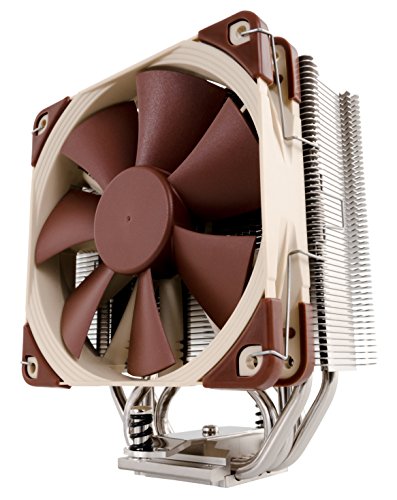
CPU-side airflow. A GPU pulls its intake air from inside the case, which means a hot CPU cooler raises the GPU's intake temperature by several degrees. A quiet tower cooler like the Noctua NH-U12S keeps that heat moving out the back rather than recirculating over the graphics card. On the dual-fan ZOTAC in particular, this is worth more than most people assume.
Building the inference box around the card
An always-on inference host has two requirements a gaming build does not.
A fast model library drive. Model weights are multi-gigabyte single files, and every cold model switch is a sequential read of the whole thing. On a SATA SSD a 9GB model takes roughly 17 seconds to load; on an NVMe drive it is closer to 3. If you rotate between models — and everyone eventually does — put the library on NVMe. The SAMSUNG 970 EVO Plus is the well-understood choice here, with the Crucial BX500 1TB relegated to bulk archive and backups where the sequential penalty does not matter. We compared the two tiers directly in NVMe vs SATA for local LLM model libraries.
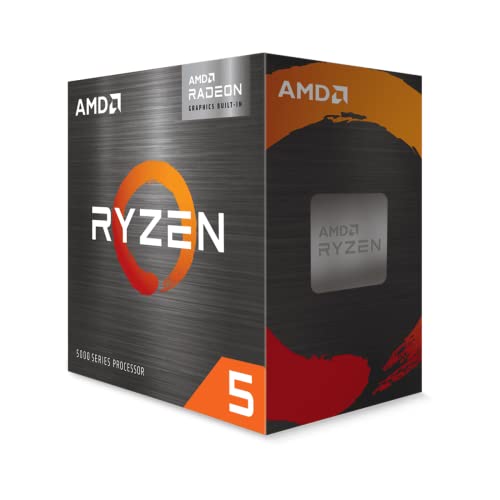
A host CPU that stays out of the way. For pure GPU inference the CPU does almost nothing, so the winning move is to spend nothing on it and let it handle display duties. The AMD Ryzen 5 5600G has integrated Radeon graphics, which means the desktop, the browser, and any video output run on the iGPU and leave the entire 12GB framebuffer free for model weights. On a discrete-only CPU you surrender 400-800MB of VRAM to the desktop compositor before you load anything — which, at these margins, is a full context-window's worth. The 5600G versus 5800X comparison for a 24/7 Ollama box covers why the cheaper chip is the right one here.
When NOT to buy either card
Three cases where this whole comparison is the wrong question.
You already own a 12GB card. An RTX 3060 12GB to RTX 3060 12GB "upgrade" for a better cooler is not an upgrade. Fix your case airflow and your fan curve instead.
You need more than 12GB. For 27B-plus local models, high-resolution video work, or 4K texture-heavy gaming, 12GB is the ceiling you will hit first. Buying either of these cards defers the real purchase by about six months.
You are buying for ray tracing. GA106 does ray tracing in the sense that the hardware exists. At 1440p with RT on, you are living on DLSS and settling for 30-40 fps. If RT is the reason you are upgrading, this is not the tier.
Verdict matrix
| Get the ZOTAC Twin Edge OC if… | Get the MSI Ventus 3X 12G OC if… |
|---|---|
| Your case has under 290 mm of GPU clearance | You have 320 mm-plus of verified clearance |
| You want the lower purchase price | You want the largest cooler in the class |
| You are building mATX or compact ITX | You are building a full ATX tower |
| You will tune a custom fan curve anyway | You want it quiet out of the box with no tuning |
| You are keeping a populated drive cage | You have removed the drive cage already |
The pick, and the perf-per-dollar math
The ZOTAC Twin Edge OC is the recommended buy for most people. As of August 2026 it typically lists around $500 against roughly $630 for the Ventus 3X — a delta of about 26% for a card that performs within a few percent of it. Divide street price by class frame rate and the shorter card wins on every metric that is not acoustics, and it wins the fitment question outright.
Buy the Ventus 3X when the extra spend buys you something you will actually notice: a genuinely silent full-tower build where the GPU is the loudest remaining component and you are not willing to tune a fan curve. That is a real use case. It is just not the common one.
Verify current pricing before you commit — this class of card moves 15-20% on sale cycles, and at price parity the calculus flips entirely to the larger cooler.
Related guides
- ZOTAC Twin Edge vs MSI Ventus 2X: which 12GB card for a quiet build — the dual-fan-versus-dual-fan version of this question
- Arc B580 vs RTX 3060 12GB at 1440p — if you are still deciding on the chip, not the board
- RTX 3060 12GB vs 8GB at 1080p — why the 12GB variant is the one worth buying
- Best budget GPU for local LLM work in 2026 — the inference-first view of this tier
- Pairing an RTX 3060 12GB with a 27-inch 4K monitor — where the card's limits actually appear
Bottom line
You are not choosing between two graphics cards. You are choosing between two coolers bolted to the same graphics card, and the deciding variable is the tape measure in your desk drawer. Measure your case, then buy the ZOTAC Twin Edge OC unless the number comes back above 320 mm and silence-out-of-the-box matters more to you than $130. Either way, budget a 650W PSU and a SATA SSD alongside it — those two line items will change your day-to-day experience more than the fan count ever will.
Citations and sources
- NVIDIA — GeForce RTX 3060 family product page — reference specification, TGP, and recommended system power
- TechPowerUp — GeForce RTX 3060 12GB GPU database entry — die configuration, memory bus, bandwidth, clock reference
- TechPowerUp — measured review of a large triple-fan RTX 3060 — thermal and acoustic behavior of an oversized cooler on a 170W Ampere part
- Wikipedia — GeForce 30 series — generational context and the partner-board landscape
- llama.cpp — GGUF quantization formats and inference runner — primary source for the quantization tiers and KV-cache options referenced above
- Ollama model library — published per-tag model file sizes used to sanity-check the VRAM arithmetic
— Mike Perry