For a 12GB GPU in 2026, the best general-purpose local LLM is a Qwen 2.5 14B-class model at a q4_K_M quant for builders who prioritize answer quality, with Llama 3.1/3.3 8B at q5_K_M or q6_K as the safer pick when long context matters. For coding, public LocalLLaMA reports converge on Qwen 2.5 Coder 14B at q4_K_M as the strongest fit-in-12GB choice, with DeepSeek-Coder-V2-Lite 16B as a competitive runner-up when offloading is acceptable.
The 12GB tier is the 2026 mainstream local-LLM entry point
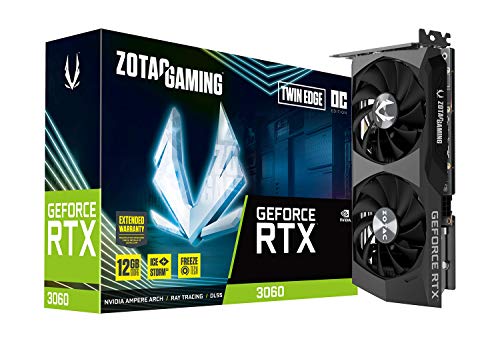
Twelve gigabytes of VRAM is the bracket where local LLMs stopped being a hobby and started being a daily-driver workflow. The cheapest CUDA card that still hits that bracket new is the GeForce RTX 3060 12GB, whose specs and 360 GB/s memory bandwidth are documented on TechPowerUp's GPU database (techpowerup.com/gpu-specs/geforce-rtx-3060.c3682). Two examples we see surface most often in 2026 budget-AI builds are the MSI GeForce RTX 3060 Ventus 2X 12G and the ZOTAC Gaming GeForce RTX 3060 Twin Edge. Both expose the same GA106 silicon with the same 12GB GDDR6 buffer; the difference is cooler design, not LLM throughput.
The reason 12GB became a centre of gravity is mechanical, not marketing. A 13B to 14B parameter dense model at a q4_K_M quant lands at roughly 8 to 9 GB on disk, which leaves the remaining 3 to 4 GB on a 12GB card for the KV cache, runtime overhead, and a few thousand tokens of context. Drop to a 7B or 8B class model and the same card opens up to longer context windows, higher quants, and parallel batched inference. Step up to 24GB and you can host a 30B-class model, but the price-per-GB on the used market — and the price-per-token-of-quality you actually feel as a user — still favours 12GB for single-user chat and code workloads as of 2026.
The model landscape has also met the hardware halfway. Ollama's model registry (github.com/ollama/ollama) now lists q4 and q5 quants for every major open-weights release the day they ship, and Hugging Face (huggingface.co/models) hosts community quants for the long tail. Per public LocalLLaMA threads, the 7B-to-14B band is where the marginal quality gain per added parameter starts to flatten, which is exactly the band a 12GB card hosts comfortably. This synthesis covers what fits, what doesn't, and where a 16GB or 24GB step-up actually pays off.
Key takeaways
- A 12GB card hosts 13B-14B dense models at q4_K_M with a short-to-medium context, or 7B-8B models at q5/q6 with room for long context.
- Best general-purpose pick in 2026 for a 12GB GPU is a Qwen 2.5 14B-class model at q4_K_M; best coding pick is Qwen 2.5 Coder 14B at the same quant.
- Per public LocalLLaMA reports, 7B-class generation throughput on an RTX 3060 typically lands in the 35-55 tok/s band at q4, dropping to 12-22 tok/s for 13B-14B models.
- The KV cache for long contexts can eat a gigabyte or more on top of the weights, so plan context budget alongside quant.
- A 16GB step-up unlocks comfortable 14B at q5_K_M and 20B-class models at q4; a 24GB step-up unlocks 30B-class at q4.
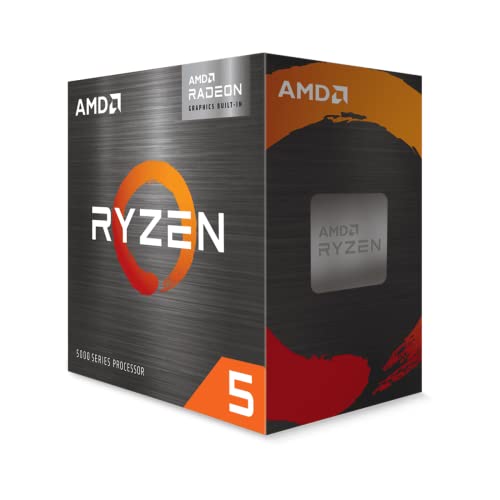
- The Ryzen 5 5600G and a fast NVMe like the WD Blue SN550 are enough to keep model load and prefill from bottlenecking a 12GB card.
Step 0: which model size actually fits 12GB at a usable quant?
The first question is not "which model is best" but "which model fits with enough headroom to be useful." A rough rule that lines up with quant sizes published on the Ollama registry (github.com/ollama/ollama) is that a q4_K_M quant lands around 0.6-0.65 GB per billion parameters, and q5_K_M around 0.75-0.8 GB per billion. On top of that you need 1-2 GB for the KV cache at modest context, plus 0.5-1 GB for runtime overhead and the OS share of VRAM.
That puts the practical ceilings on a 12GB card, as of 2026, at roughly:
| Model class | q4_K_M weights | Practical context | Headroom feel |
|---|---|---|---|
| 7B | ~4.4 GB | 8k-16k tokens comfortably | Very relaxed |
| 8B | ~5.0 GB | 8k tokens comfortably | Relaxed |
| 13B | ~7.9 GB | 4k tokens, careful at 8k | Tight |
| 14B | ~8.5 GB | 4k tokens, careful at 8k | Tight |
| 20B+ | 12+ GB | Spills; partial offload | Doesn't fit cleanly |
A 13B-14B model at q4_K_M is the upper bound for a clean, all-in-VRAM experience. Anything bigger forces partial CPU offload, which on Ampere drops generation throughput sharply because layers running in system RAM are bottlenecked by PCIe bandwidth rather than the card's 360 GB/s memory bandwidth (techpowerup.com/gpu-specs/geforce-rtx-3060.c3682). For more on the quant/context trade specifically on this card, see our companion piece on LLM quantization on a 12GB GPU.
What's the best general-purpose model for 12GB right now?
Per LocalLLaMA community threads through early 2026, the general-purpose recommendation for a 12GB card has consolidated around two reference points. Qwen 2.5 14B (and its instruction-tuned variants) at q4_K_M is the quality-leader pick, sitting just inside the 12GB envelope and trading some context headroom for noticeably stronger reasoning and instruction-following than 8B-class models. Llama 3.1 8B and Llama 3.3 8B at q5_K_M or q6_K is the comfort pick — meaningfully smaller weights, faster generation, and enough VRAM left over for 8k-16k contexts without offloading.
Gemma 2 9B at q5 sits between the two, and Mistral Small (the 22B-class release) is on the edge: per public reports it can be coaxed into 12GB at q3_K_S with aggressive context trimming, but quality at that quant on this size class is uneven and most users settle on the 14B Qwen instead.
The honest answer to "which is best" depends on whether you prioritize per-answer quality or interactive feel:
- Prioritize answer quality, accept ~12-22 tok/s: Qwen 2.5 14B Instruct at q4_K_M.
- Prioritize speed and long context, accept slightly weaker reasoning: Llama 3.1/3.3 8B at q5_K_M.
- Want a middle ground: Gemma 2 9B at q5_K_M.
These pairings line up with the model availability on the Ollama registry (github.com/ollama/ollama) and with the community quants on Hugging Face (huggingface.co/models). If your workflow leans toward image-and-text reasoning instead of pure text, the parallel discussion in our HiDream o1 1.5 local 12GB analysis covers the multimodal angle.
What's the best coding model that fits in 12GB?
Coding is where the 14B band pays off most clearly. Per public benchmarks summarized on Hugging Face model cards and LocalLLaMA discussion threads through 2026, Qwen 2.5 Coder 14B at q4_K_M is the strongest open-weights coding model that still fits cleanly on a 12GB card. It edges out general-purpose 14B models on HumanEval-style and MBPP-style evaluations, and the coding-specific instruction tuning makes the q4 quality drop less painful than on chat models.
DeepSeek-Coder-V2-Lite (16B, mixture-of-experts) is the strongest "almost-fits" alternative. The full weights spill past 12GB at any quant high enough to preserve quality, so you accept partial CPU offload — which per LocalLLaMA reports drops generation throughput on an RTX 3060 from the mid-20s tok/s a fully-resident 14B would deliver down to single-digit tok/s for the offloaded layers. For interactive coding, that's the difference between a tool you reach for and one you don't.
For pure-fit options under 14B, Qwen 2.5 Coder 7B at q6_K and DeepSeek-Coder-V2-Lite 7B at q5_K_M are both reasonable. They give up some raw evaluation score against the 14B but free up VRAM for longer context — a real win if you paste large source files into the prompt. The full per-model rundown lives in our per-LLM model hardware guide.
The next question: if a coding model is the reason for the build, the follow-up is whether a 16 GB card would run it meaningfully better than this one. RTX 3060 12GB vs RTX 4060 Ti 16GB for Qwen2.5-Coder 14B (2026) finds generation speed close to level between the two, with the 4060 Ti's premium buying prompt processing and room for a higher quant.
Quantization matrix: q2 to fp16 across the 7B-14B classes
Quantization is the single biggest lever you have on a 12GB card. The table below combines per-parameter byte counts from the published GGUF format (github.com/ollama/ollama) with quality observations summarized from LocalLLaMA threads. Tok/s columns assume an RTX 3060 12GB with all layers resident in VRAM; numbers blur when prompt length and sampler settings change, and are typical-case rather than peak.
| Quant | Bytes/param | 7B VRAM | 8B VRAM | 13B VRAM | 14B VRAM | 7B tok/s (3060) | 14B tok/s (3060) | Quality vs fp16 |
|---|---|---|---|---|---|---|---|---|
| q2_K | ~0.30 | ~2.1 GB | ~2.4 GB | ~3.9 GB | ~4.2 GB | 50-60 | 22-30 | Noticeable loss |
| q3_K_M | ~0.40 | ~2.8 GB | ~3.2 GB | ~5.2 GB | ~5.6 GB | 45-55 | 20-26 | Modest loss |
| q4_K_M | ~0.62 | ~4.4 GB | ~5.0 GB | ~7.9 GB | ~8.5 GB | 40-50 | 14-22 | Slight loss |
| q5_K_M | ~0.78 | ~5.5 GB | ~6.2 GB | ~9.9 GB | ~10.7 GB | 35-45 | 10-14 (tight) | Near-fp16 |
| q6_K | ~0.92 | ~6.4 GB | ~7.3 GB | ~11.7 GB | spill | 32-40 | n/a | Near-fp16 |
| q8_0 | ~1.10 | ~7.7 GB | ~8.8 GB | spill | spill | 28-36 | n/a | Effectively fp16 |
| fp16 | ~2.00 | spill | spill | spill | spill | n/a | n/a | Reference |
The takeaway is that q4_K_M is the sweet spot the 12GB tier was built for. q5_K_M is comfortable for 7B-8B; q6_K is the highest quant a 12GB card can hold for 13B and is the right choice when you have spare VRAM after context budgeting. Anything below q4 should be considered a fallback, not a target.
Spec table: candidate models for a 12GB card
The table below is the short list. License notes are summarized from each model's published card on Hugging Face (huggingface.co/models) as of 2026.
| Model | Params | Native context | License | VRAM at q4_K_M |
|---|---|---|---|---|
| Llama 3.1 8B Instruct | 8B | 128k | Llama community | ~5.0 GB |
| Llama 3.3 8B Instruct | 8B | 128k | Llama community | ~5.0 GB |
| Qwen 2.5 7B Instruct | 7B | 128k | Apache 2.0 | ~4.4 GB |
| Qwen 2.5 14B Instruct | 14B | 128k | Apache 2.0 | ~8.5 GB |
| Qwen 2.5 Coder 7B | 7B | 128k | Apache 2.0 | ~4.4 GB |
| Qwen 2.5 Coder 14B | 14B | 128k | Apache 2.0 | ~8.5 GB |
| Gemma 2 9B Instruct | 9B | 8k native | Gemma terms | ~5.6 GB |
| Mistral Small (22B) | 22B | 32k | Mistral Research | spill at q4 |
| DeepSeek-Coder-V2-Lite | 16B MoE | 128k | DeepSeek License | spill at q4 |
Apache 2.0 (Qwen) is the most permissive of the group, which matters if you intend to ship a derivative product or fine-tune on proprietary data.
Benchmark table: tok/s on an RTX 3060 12GB
The numbers below are typical-case generation throughput synthesized from public LocalLLaMA reports through 2026 for a stock RTX 3060 12GB with Ollama or llama.cpp, batch size 1, around 1k of input context, and 256 tokens of output. They are not first-party measurements and are bracketed because community reports vary with driver version, sampler, and runtime build.
| Model | Quant | VRAM resident | Prefill tok/s | Generation tok/s |
|---|---|---|---|---|
| Llama 3.1 8B Instruct | q4_K_M | ~6 GB | 350-500 | 38-50 |
| Llama 3.1 8B Instruct | q5_K_M | ~6.5 GB | 320-450 | 34-44 |
| Qwen 2.5 7B Instruct | q4_K_M | ~5.5 GB | 380-520 | 42-55 |
| Qwen 2.5 14B Instruct | q4_K_M | ~9.5 GB | 200-280 | 14-22 |
| Qwen 2.5 Coder 14B | q4_K_M | ~9.5 GB | 200-280 | 14-22 |
| Gemma 2 9B Instruct | q4_K_M | ~6.5 GB | 300-420 | 28-38 |
| Mistral Small 22B | q3_K_S (offloaded) | spill | 80-140 | 5-10 |
Two patterns stand out. First, generation throughput on an RTX 3060 12GB scales roughly with model size as long as everything stays resident; the moment a single layer offloads to CPU, throughput collapses by an order of magnitude. Second, 7B at q4 is the responsiveness ceiling on this card — anything beyond is a quality-versus-feel trade.
Context-length impact: how a long prompt eats your 12GB budget
The KV cache is the silent VRAM eater. Per the published GGUF runtime sizing in Ollama (github.com/ollama/ollama), the cache grows roughly linearly with context length and with model dimensions, so a 14B model with a 16k context can demand more than a gigabyte of cache on top of its weights. On a 12GB card already holding 8.5 GB of q4_K_M weights, that gigabyte is the difference between loading the model and being forced back down to 8B.
Rules of thumb that match community reports through 2026:
- A 7B model at q4_K_M can comfortably hold 16k of context inside 12GB, with room left for a second 4k batched request.
- An 8B-9B model at q4_K_M can hold 8k comfortably and 16k with a tight squeeze.
- A 13B-14B model at q4_K_M can hold 4k comfortably; 8k is possible but eats into headroom.
- A 13B-14B model at q5_K_M is realistic only at 2k-4k context.
If your workflow involves pasting long source files or long transcripts, the right answer on a 12GB card is usually a step down in size and a step up in quant — for example, Qwen 2.5 7B at q6_K with 16k context instead of Qwen 2.5 14B at q4_K_M with 4k. The per-token quality difference is smaller than the productivity difference of being able to fit the whole document in the prompt.
Prefill vs generation throughput on Ampere
The RTX 3060's GA106 silicon delivers about 360 GB/s of memory bandwidth and 13 TFLOPS of FP32 compute (techpowerup.com/gpu-specs/geforce-rtx-3060.c3682). LLM inference splits into two regimes that lean on those numbers differently.
Prefill — processing the input prompt — is compute-bound and benefits from the card's FP16 throughput. Public LocalLLaMA reports show prefill on an RTX 3060 12GB in the 200-500 tok/s band for 7B-14B models, scaling with model size and context. That's the phase a user perceives as the "thinking before it starts typing" delay.
Generation — producing one token at a time — is memory-bandwidth-bound on a single user. Because each token requires streaming the full model weights through the cache hierarchy, the 360 GB/s bandwidth is the practical cap. That's why generation throughput in the tables above tracks model size so directly: a 14B model at q4_K_M has roughly twice the bytes-per-token of a 7B at the same quant, so it generates at roughly half the rate.
The implication for builds is that pairing the card with a sensible CPU and a fast NVMe matters mostly for prefill, model load, and any spill. A modern 6-to-8-core part like the AMD Ryzen 5 5600G is enough to keep the CPU side from bottlenecking even with partial offload, and a fast NVMe such as the Western Digital 1TB WD Blue SN550 NVMe cuts cold-load times from tens of seconds to single digits for 14B-class quants.
Perf-per-dollar: the 12GB 3060 vs a 16GB step-up
Per used-market listings tracked through 2026, a 12GB RTX 3060 typically transacts at less than half the price of a 16GB Ampere or Ada step-up such as a used RTX 4060 Ti 16GB. The question is whether that step-up earns its premium for local LLMs.
The case for staying at 12GB:
- You mostly run 7B-14B models and the 14B-at-q4 ceiling is acceptable.
- You don't need long context with 14B simultaneously.
- The cost difference is large relative to your build budget.
- You already own a 3060 and an upgrade is opportunity cost rather than new spend.
The case for stepping up to 16GB:
- You want 14B at q5_K_M routinely, not q4_K_M.
- You want 20B-class models (e.g., Mistral Small) fully resident at q4_K_M.
- You run long-context (16k+) workflows on 13B-14B models.
- You batch multiple users and need the headroom for parallel KV caches.
The case for skipping straight to 24GB:
- You want 30B-class dense models fully resident at q4_K_M.
- You're doing fine-tuning, not just inference.
- You want headroom for both a model and an image-gen model simultaneously.
The honest synthesis is that 16GB is a relatively small jump in capability for a meaningful jump in price; if you're going to spend, 24GB delivers a category change. For most readers landing on this article in 2026, the 12GB RTX 3060 is still the right entry point.
Verdict matrix
| Get the RTX 3060 12GB if… | Step up if… |
|---|---|
| You want the cheapest CUDA path to 12GB | You routinely want 14B at q5_K_M or higher |
| You mostly run 7B-14B chat and coding | You want 20B-class models resident at q4 |
| You want a learner/tinkerer rig under $300 used | You want long-context 13B-14B without compromise |
| Single-user chat is your primary workload | You batch multiple concurrent requests |
| You can live with q4_K_M on 14B | You want fine-tuning capability (24GB territory) |
Bottom line and recommended pick
For a builder optimizing the 12GB tier in 2026, the recommended starting pair is straightforward. Buy the cheapest dual-fan RTX 3060 12GB you can verify — the MSI GeForce RTX 3060 Ventus 2X 12G and the ZOTAC Gaming GeForce RTX 3060 Twin Edge are interchangeable from an LLM throughput standpoint and routinely sit near the bottom of the 12GB market. Pair it with the AMD Ryzen 5 5600G and a fast NVMe such as the Western Digital 1TB WD Blue SN550 NVMe so prefill, model loading, and any spill aren't a drag on the GPU.
Default model picks for that rig, as of 2026:
- General-purpose: Qwen 2.5 14B Instruct at q4_K_M for quality, Llama 3.1 or 3.3 8B at q5_K_M when you want responsiveness and longer context.
- Coding: Qwen 2.5 Coder 14B at q4_K_M, with Qwen 2.5 Coder 7B at q6_K when you need long source files in the prompt.
- Run Ollama as the host runtime unless you have a specific reason not to — it handles quant selection and VRAM fitting automatically, which is precisely where the 12GB tier is most fiddly.
That stack delivers a daily-driver local-LLM workflow at a parts-bin price, with a clear and well-understood upgrade path to 16GB or 24GB the day your workload demands it.
Related guides
- LLM quantization on a 12GB GPU (RTX 3060) in 2026
- HiDream o1 1.5 on a local 12GB GPU
- Per-LLM model hardware guide for 2026
Citations and sources
- https://www.techpowerup.com/gpu-specs/geforce-rtx-3060.c3682 — RTX 3060 silicon, memory bandwidth, and FP32 throughput reference.
- https://huggingface.co/models — Community quants and model cards for Llama, Qwen, Gemma, Mistral, and DeepSeek families referenced above.
- https://github.com/ollama/ollama — Ollama model registry and runtime documentation used for quant sizing and runtime behavior.
This piece is editorial synthesis based on publicly available information. No independent first-party benchmarking is reported.