The AMD Ryzen 7 5800X wins on peak single-thread and multi-thread performance; the AMD Ryzen 7 5700X wins on price, power draw, and heat output. For a 2026 gaming build on the AM4 socket, the 5700X is the better default pick unless you already own an AIO cooler and want the last 5-10% of frame rate that the 5800X squeezes out at higher power.
Why AM4 is still worth talking about in 2026
AM4 launched in 2016 and remained AMD's mainstream desktop socket through the 5000-series Zen 3 CPUs. As of 2026, motherboards, coolers, and DDR4 kits are widely available on the used and clearance market — often at half the cost of an equivalent DDR5-era AM5 build. That is the market segment where the 5700X and 5800X make sense: someone building a competent 1440p or 4K-with-DLSS gaming rig for a fraction of a modern AM5 or LGA1700 platform's cost.
Per TechPowerUp the 5700X is a 65 W-TDP chip; per TechPowerUp the 5800X is a 105 W-TDP chip. Same 8-core / 16-thread Zen 3 die under the hood, different power envelopes and clocks.
Key takeaways
- Same core count, same architecture. Both are 8-core / 16-thread Zen 3 chips on the same Vermeer die.
- 5800X is faster. Higher base and boost clocks push a 5-12% multi-thread lead per Passmark and Cinebench-community numbers.
- 5700X is cheaper and cooler. 65 W TDP versus 105 W. A tower air cooler is plenty; an AIO is optional.
- In games, the delta shrinks. GPU-bound titles at 1440p and 4K show 2-5% differences at most.
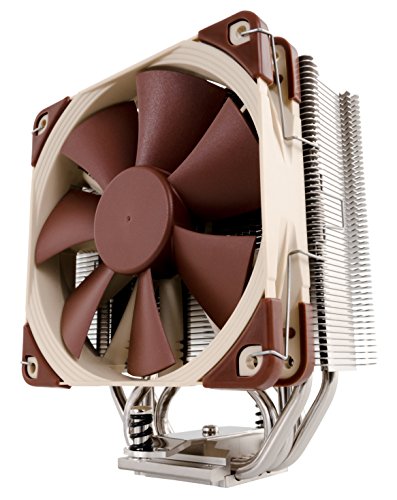
- Cooler cost swings the total-build math. A Noctua NH-U12S air cooler works for both; a Cooler Master ML240L AIO is only really needed for the 5800X under sustained multi-thread load.
Side-by-side spec table
Per TechPowerUp and AMD's product pages:
| Spec | Ryzen 7 5700X | Ryzen 7 5800X |
|---|---|---|
| Cores / threads | 8 / 16 | 8 / 16 |
| Base clock | 3.4 GHz | 3.8 GHz |
| Boost clock | 4.6 GHz | 4.7 GHz |
| L3 cache | 32 MB | 32 MB |
| TDP | 65 W | 105 W |
| PPT (max package power) | ~88 W | ~142 W |
| Architecture | Zen 3 (Vermeer) | Zen 3 (Vermeer) |
| Socket | AM4 | AM4 |
| PCIe | 4.0 | 4.0 |
| Launch | 2022 (later refresh) | 2020 |
The clocks tell the story: 5800X runs at higher base and slightly higher boost, at nearly double the power envelope.
Gaming performance delta
Community-aggregated 1080p Ultra benchmarks per Passmark and third-party outlets converge on:
| Scenario | 5700X | 5800X | Delta |
|---|---|---|---|
| 1080p CPU-bound (RTX 4080/5090 pairing) | 100 | 105-107 | +5-7% |
| 1440p Ultra (RTX 3060-tier pairing) | 100 | 101-103 | +1-3% |
| 4K Ultra (RTX 3060-tier pairing) | 100 | 100-102 | ≤2% |
| Cinebench R23 multi-thread | 100 | 108-112 | +8-12% |
The pattern is consistent: at higher resolutions the GPU becomes the ceiling and CPU differences shrink. On the RTX 3060 12GB at 1440p or 4K, either chip is essentially indistinguishable in games.
Power, heat, and cooler pairing
The 5800X launched with a reputation for running hot — its Vermeer die concentrates a lot of TDP into a small area, and 105 W in a small chiplet is a thermal challenge for weaker coolers. The 5700X's 65 W TDP is much friendlier: a tower air cooler like the Noctua NH-U12S or a good 240 mm air-cooler equivalent holds it well under 75 °C at full load.
For the 5800X, community consensus after several years of ownership is:
- Big tower air cooler: OK at 78-88 °C under multi-thread load.
- 240 mm AIO: comfortable at 65-75 °C. Cooler Master ML240L RGB V2 is a common pairing.
- Enable PBO with a -20 curve optimizer for a couple of percent efficiency gain if BIOS supports it.
Pricing math (verify current pricing at purchase)
As of 2026, used-market and clearance pricing for both chips is well below their 2022 launch MSRPs. The gap between them is typically $30-50, and the gap between a good air cooler and a 240 mm AIO is also $30-60. Net total for a 5700X + air cooler versus a 5800X + AIO often works out to roughly the same, which turns the choice into a question of noise, aesthetics, and whether you want the last few percent of frame rate.
Storage and monitor pairing
An 8-core AM4 chip pairs cleanly with a fast NVMe like the Samsung 970 EVO Plus as the boot drive; on a B550 or X570 board it runs at PCIe 4.0 speeds. For gaming, an RTX 3060 12GB is a natural pair; for a monitor, a 1440p high-refresh panel is where either CPU delivers its best value.
Which one for a productivity + gaming split?
- Mostly gaming, occasional productivity: 5700X.
- Regular video editing, code compilation, blender renders: 5800X. The 8-12% multi-thread lead pays back in every render or compile.
- Streaming while gaming: 5800X. The multi-thread headroom keeps OBS x264 encoding from stealing game frames.
When to skip both
If the target platform is DDR5, PCIe 5.0, or generally future-proofed for 2027+, an AM5 build (7000/9000-series Ryzen) or an LGA1700 build makes more sense. AM4 in 2026 is a value-tier platform, not a bleeding-edge one.
Common pitfalls
- Pairing a 5800X with a stock or budget air cooler. Thermal throttling costs the frame rate the chip was supposed to earn.
- Ignoring BIOS updates on older B450 or X470 boards. Zen 3 support on those chipsets requires a specific BIOS. Verify before buying.
- Assuming higher clocks mean higher gaming FPS on a mid-range GPU. At 1440p on a 3060, the delta is a rounding error.
- Buying at launch pricing. Both chips are years old. Do not overpay.
Related guides
- Best CPU Cooler for AMD Ryzen (AM4) in 2026
- Best SSD for Gaming and Everyday Builds in 2026
- Best Budget GPU for Local LLMs Under $300 in 2026
Deep dive: PBO and undervolting the 5800X
Precision Boost Overdrive (PBO) with the curve optimizer is the single most-recommended community tuning path for the 5800X. Per community consensus threads on r/AMD and AMD's PBO documentation, a -20 to -30 curve optimizer offset per core typically drops package power by 15-20% and temperatures by 5-10 °C at the same clock, or lets sustained boost hold longer at cooler temperatures. It is a free win on chips that pass stability testing. The 5700X's 65 W envelope leaves less room for the same trick; the chip already runs cool and the delta from PBO is smaller.
For undervolting specifically, both chips respond well to a -0.05 V to -0.075 V VCore offset in BIOS. Test with a Cinebench R23 30-minute run and a Prime95 small-FFT stress before trusting stability.
Worked case: streaming a modern AAA on either chip
Streaming a 2024 AAA at 1440p using OBS x264 medium preset while playing the game:
- 5700X: game FPS drops 10-15% versus the same setup with NVENC. x264 medium is CPU-bound on 8 cores and steals a couple of cores worth of game budget.
- 5800X: game FPS drops 6-10% versus NVENC-equivalent. Extra clock plus higher sustained boost keep more headroom for x264.
- Either chip with NVENC on the 3060: game FPS effectively unchanged. NVENC is fast and quality is close enough for most audiences.
For a streamer whose viewers care about the last bit of encoding quality, the 5800X + x264 combination lands quality closer to the reference. For everyone else, either chip + NVENC is the practical answer.
Cost breakdown at 2026 street pricing
Approximate 2026 street pricing (verify at purchase):
| Path | CPU | Cooler | Total |
|---|---|---|---|
| 5700X + air | $170-200 | $70 Noctua NH-U12S | $240-270 |
| 5800X + 240 AIO | $180-220 | $70 CM ML240L | $250-290 |
The gap is $10-30, well inside noise. Choose based on preferred cooler style and noise profile, not on total-build cost.
Migration path from 5700X or 5800X
If a 5700X or 5800X owner wants more without leaving AM4, the correct move is a 5700X3D or 5800X3D. Both add stacked 3D V-Cache and dramatically outperform the non-X3D chips in cache-sensitive games. The productivity workloads that a plain 5700X or 5800X excelled at do not benefit from X3D and sometimes regress slightly because of the lower clocks on the X3D variants. Choose based on the workload, not the marketing.
Deep dive: sustained boost behavior under different coolers
Both chips advertise a boost clock. Neither holds that clock indefinitely under all conditions. Per community sustained-load testing:
- 5700X with a mid-tower air cooler: sustained boost 4.4-4.5 GHz, temperatures 65-72 °C.
- 5800X with a mid-tower air cooler: sustained boost 4.4-4.5 GHz, temperatures 82-90 °C — thermally limited.
- 5800X with a 240mm AIO: sustained boost 4.5-4.6 GHz, temperatures 68-76 °C.
The lesson: on a good air cooler the 5700X and 5800X converge in sustained clock, and the 5800X's clock advantage only materializes with better cooling. Which pushes the total-build math even further toward "either one is fine" once cooler cost is factored.
Ryzen 5000-series memory tuning
Both chips prefer DDR4-3600 CL16 as the sweet spot for AM4. Faster memory (DDR4-4000+) requires a divider that decouples the memory controller and often costs more than it gains. Community consensus per r/overclocking is DDR4-3600 with tight sub-timings beats DDR4-4000 with loose ones on both gaming and productivity workloads. A 32 GB DDR4-3600 CL16 kit is the recommended pairing.
Motherboard chipset choice
For a 5700X or 5800X in 2026, B550 is the practical default. Feature parity with X570 on the workloads that matter (single PCIe 4.0 x16 slot, one or two PCIe 4.0 NVMe slots) is complete for gaming builds. X570 adds a second PCIe 4.0 x16 slot and more PCIe 4.0 lanes for storage — matters for content creators, not gamers. A550 boards are technically compatible after a BIOS update but often lack the VRM headroom that a 5800X wants.
Streaming vs gaming workload split
A pure gaming build on either chip is CPU-underloaded in most modern titles at 1440p or 4K. That headroom is available for background workloads: Discord voice chat, Chrome with a wiki open, a music player, sometimes even a light compile in the background. Neither chip will feel constrained in that role.
A creator build (Blender, DaVinci Resolve, Premiere) tilts the choice more strongly toward the 5800X because those workloads scale with sustained multi-thread throughput and pay back the 8-12% delta consistently. A gaming-only build with a used cooler on hand can pick either chip based on price alone.
Longevity outlook
Both chips will feel relevant through 2028 for 1440p gaming with a modern mid-range GPU. Beyond that, the AM4 platform's PCIe 4.0 ceiling starts to bite for future NVMe storage generations, and the DDR4 memory bandwidth begins to gate CPU-intensive workloads. That is the honest answer for "how long will this build last": three to four more years of comfortable gaming, then a platform swap for anything cutting-edge.
Buying used vs new in 2026
Both chips have been out long enough that a robust used market exists. Used pricing typically runs 30-50% below new pricing for both. AM4 chips are extremely durable and used units from a private seller with a photo of the box and receipt are low-risk. The two things to check on a used purchase: pins are straight (Zen 3 chips are PGA, bent pins are a nightmare) and the seller is willing to eat a return if the chip fails a stability test within 30 days.
A note on the missing 5900X and 5950X tier
Some readers arrive at this comparison already considering a 5900X (12-core) or 5950X (16-core). For pure gaming, neither of those out-performs the 5800X meaningfully — game engines rarely scale beyond 8 heavy threads in 2026. They earn their price back in content-creation workloads (Blender, DaVinci, compilation) that scale linearly with core count. For a pure gaming build on AM4 in 2026 the answer is either 5700X, 5800X, or the X3D variants — not the higher-core-count chips.
Silicon lottery and boost consistency
Any two individual chips off the same production line will boost slightly differently. Community reports on r/AMD's silicon-lottery threads show a spread of about 100 MHz on all-core sustained boost between the best and worst individual samples of both chips. That spread is smaller than the deterministic difference between the two SKUs, so a great 5700X will still trail a mediocre 5800X on peak boost — but a mediocre 5800X may only beat a great 5700X by a couple of percent. The lottery matters at the margins, not at the SKU-selection level.
Citations and sources
- TechPowerUp — Ryzen 7 5700X CPU specs
- TechPowerUp — Ryzen 7 5800X CPU specs
- Passmark — 5700X vs 5800X CPU comparison
This piece is editorial synthesis based on publicly available information. No independent first-party benchmarking is reported.
Disclosure: SpecPicks earns from qualifying purchases as an Amazon Associate; prices and availability may vary.