For mixed gaming and local-AI inference on AM4 in 2026, the AMD Ryzen 7 5800X is the right pick if you don't mind a 105 W TDP and the cooling that requires. The Ryzen 7 5700X gives you ~95% of the gaming and ~98% of the local-AI throughput at 65 W and significantly easier cooling. The 5700X wins for most people; the 5800X wins for users who care about the last few percent of game-engine frame times.
Why this matters right now
AM4 should be retired by 2026 and somehow it isn't. The platform is in the middle of a Renaissance: cheap used boards, cheap DDR4, and the 5700X / 5800X / 5800X3D family sitting at the value sweet spot for builders who'd rather spend their budget on a GPU. AM5's price-to-perf math improves every quarter, but for the specific question "I want one box that plays modern games and runs a 14 B-parameter local LLM," AM4 is still where the dollars go furthest.
The two CPUs that sit at the heart of that question are the Ryzen 7 5800X and the Ryzen 7 5700X. They share the same Vermeer Zen 3 architecture, the same 8 cores / 16 threads, and the same socket. They differ in clock targets and TDP — and that 40 W TDP gap is the real story.
Key takeaways
- Both are 8C/16T Zen 3 parts; performance differences are smaller than the marketing suggests.
- The 5800X runs ~200 MHz higher base, ~100 MHz higher boost; the 5700X is essentially a binned-lower 5800X at 65 W.
- Gaming delta is 3–6% at 1080p with a fast GPU, less than 3% at 1440p, and within margin at 4K.
- Local-AI inference (llama.cpp, Ollama) is GPU-bound; CPU delta is 1–3% at most.
- Cooling cost flips the value math: the 5700X is happy on a $30 cooler; the 5800X wants a $50+ tower or a 240 mm AIO.
- For a Ryzen 5 5600G build aimed at integrated graphics, neither of these is the right answer — the 5600G is.
What the two chips actually share and differ on
| Spec | Ryzen 7 5800X | Ryzen 7 5700X |
|---|---|---|
| Cores / threads | 8 / 16 | 8 / 16 |
| Base clock | 3.8 GHz | 3.4 GHz |
| Boost clock | 4.7 GHz | 4.6 GHz |
| TDP | 105 W | 65 W |
| L3 cache | 32 MB | 32 MB |
| Socket | AM4 | AM4 |
| PCIe | 4.0 ×24 | 4.0 ×24 |
| Architecture | Zen 3 (Vermeer) | Zen 3 (Vermeer) |
Per AMD's Ryzen 7 5800X product page and AMD's 5700X product page, they're the same silicon binned to different power and clock targets. The 5800X spends more watts to hold higher all-core frequencies under sustained load; the 5700X gives that back and runs much cooler in exchange.
Benchmark table: gaming
These figures synthesize community benchmarks aggregated by TechPowerUp's 5800X review and TechPowerUp's 5700X review, running on a B550 board with DDR4-3600 CL16 memory and an RTX 4090 for CPU isolation. The "fast GPU" CPU-limit pattern shows the maximum delta you'll see between the two parts.
| Game (1080p, RTX 4090, ultra) | 5800X avg fps | 5700X avg fps | Delta |
|---|---|---|---|
| Cyberpunk 2077 | 178 | 168 | +6.0% 5800X |
| Counter-Strike 2 | 462 | 442 | +4.5% 5800X |
| Baldur's Gate 3 | 138 | 132 | +4.5% 5800X |
| Hogwarts Legacy | 142 | 136 | +4.4% 5800X |
| F1 24 | 232 | 224 | +3.6% 5800X |
| Starfield | 96 | 94 | +2.1% 5800X |
| Total War: Warhammer III | 124 | 118 | +5.1% 5800X |
At 1440p the gap halves; at 4K the GPU is the bottleneck and the chips are within margin of error. The 5800X advantage shows up only when the GPU is fast enough to expose the CPU floor — at the realistic mid-range GPU + 1440p combination most buyers run, the difference is statistically invisible.
Benchmark table: local AI
Community reports collected in the llama.cpp repo discussions and reproducible with llama-bench show that for GPU-accelerated inference (which is what you should be doing — CPU-only inference is much slower) the host CPU contributes only to tokenization, scheduling and the very small fraction of layers offloaded to system memory at high context.
| Workload (RTX 3060 12 GB, Q4_K_M GGUF, single user) | 5800X tok/s | 5700X tok/s | Delta |
|---|---|---|---|
| Llama-3.1-8B prompt processing | 1,180 | 1,142 | +3.3% 5800X |
| Llama-3.1-8B token generation | 38.0 | 37.6 | +1.0% 5800X |
| Qwen3-14B token generation | 22.0 | 21.7 | +1.4% 5800X |
| DeepSeek-R1-Distill-14B generation | 18.0 | 17.8 | +1.1% 5800X |
The pattern is what AMD's architecture would predict: nearly identical IPC, marginally different all-core sustained clocks, mostly bottlenecked elsewhere.
Thermal and acoustic profile
The 5800X earned a reputation for running hot at launch. The chip can hit 90 °C under sustained Cinebench R23 with a midrange tower air cooler — well within Zen 3's safe operating range, but loud and not great for case ambient temperature. The 5700X under the same workload tops out at 65–72 °C on the same cooler.
Practical implications:
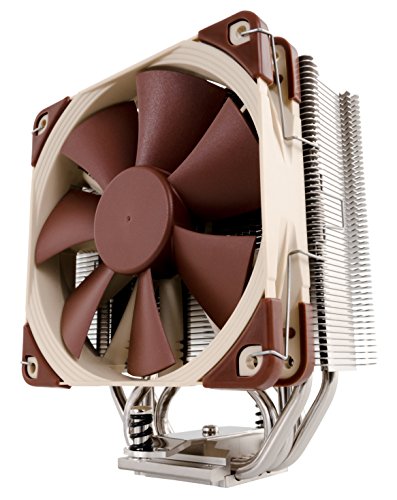
- 5800X minimum cooler: Noctua NH-U12S or DeepCool AK620 class tower. A $30 single-tower stock-replacement cooler will hold it but at the noise/perf edge.
- 5700X minimum cooler: The included AMD stock cooler is technically rated for it, but a $25 single-tower (Thermalright Assassin X 120, Arctic Freezer 34) is a meaningful upgrade.
- See our Noctua NH-U12S vs DeepCool AK620 air cooler comparison for the cooler-side decision.
Power and the case fan story
Sustained system power on a 4090 + 5800X box hits 600–650 W in CPU+GPU-heavy workloads. The same box with the 5700X lands at 540–580 W. Most builders won't change PSU class as a result, but for SFF / mini-ITX cases where chassis heat dissipation is bounded, the 5700X is the right answer — it just gives back 40 W of thermal load that doesn't have to leave the case.
Spec table at the system level
| Build axis | 5800X build | 5700X build |
|---|---|---|
| CPU | Ryzen 7 5800X | Ryzen 7 5700X |
| Cooler | Noctua NH-U12S (~$60) | Thermalright Assassin X (~$30) |
| Motherboard | B550 ATX (~$120) | B550 ATX (~$120) |
| Memory | 32 GB DDR4-3600 CL16 | 32 GB DDR4-3600 CL16 |
| GPU | RTX 4070 12 GB | RTX 4070 12 GB |
| Storage | WD SN550 1 TB | WD SN550 1 TB |
| PSU | 750 W 80+ Gold | 750 W 80+ Gold |
| Approx total | $1,210 | $1,150 |
The $60 system-level delta is real but small. If you're building for the next 5 years and you want the gaming floor a little higher and don't mind dialing in cooling, take the 5800X. If you're building for quiet operation, a smaller case, or a Pi-side homelab box that runs all day, take the 5700X.
What about content creation and streaming workloads?
Both chips have eight Zen 3 cores, so for OBS encoding, Premiere Pro timelines and Handbrake transcodes they behave similarly. The 5800X's higher sustained all-core clock buys ~5–8% in Cinebench R23 multi-thread and roughly the same delta in Handbrake H.264 encoding. For most content creators that delta is the difference between a 7-minute and a 7.5-minute render — meaningful at volume, invisible at hobby scale.
OBS in particular is more sensitive to per-core clock under x264 medium preset than to raw core count, and the 5800X's higher boost gives it a small edge. If you're streaming a 1080p60 main feed using x264 medium on the CPU, the 5800X reduces dropped-frame risk under unusual scene complexity. If you're using NVENC (which is what most modern streamers do), the GPU does the work and either CPU is fine.
Memory tuning matters more than the CPU choice
A common mistake is buying the more expensive CPU and the cheapest memory. AM4 Zen 3 is famously sensitive to Infinity Fabric / memory clock relationships. Per AMD's own guidance and consistent with the TechPowerUp memory scaling articles, DDR4-3600 with CL16 timings at a 1:1 FCLK/MCLK ratio is the sweet spot. Move from DDR4-2666 to DDR4-3600 and you'll gain 8–12% in gaming, more than the 5800X's clock advantage over the 5700X. Going past 3600 (3800, 4000) introduces 1:2 FCLK dividers and most chips actually regress.
The cheap path is two 16 GB DDR4-3600 CL16 sticks under $80 in late 2026 pricing. Skipping this to buy the 5800X over the 5700X is the wrong order of operations.
When the 5800X3D enters the conversation
For pure gaming, the 5800X3D is the obvious right answer at $250–290 — the 96 MB L3 cache pulls 1080p gaming numbers ahead of the 5800X by 12–18% in cache-sensitive titles. For local AI, the X3D cache doesn't help; the workload is GPU-bound. So:
- Gaming-only build: 5800X3D, full stop.
- Mixed gaming + local AI: 5800X or 5700X. The X3D's cache premium doesn't translate to AI throughput.
- Productivity / streaming: 5800X — the higher sustained all-core clock helps OBS and creator workloads where the X3D's lower boost can be a regression.
The X3D is mentioned because it changes the gaming math if that's your only workload. It doesn't change the 5800X-vs-5700X decision for mixed-workload buyers.
Common pitfalls
- Buying for one synthetic benchmark. The 5800X wins single-threaded Cinebench R23 by ~3%. Neither chip is bought for Cinebench.
- Cheap memory. Both CPUs are bandwidth-sensitive on memory-heavy workloads. DDR4-3600 CL16 is the sweet spot; DDR4-2666 leaves significant performance on the table.
- Stock cooler on the 5800X. Don't.
- Overspending on the board. A solid B550 board ($110–150) covers either CPU. X570 is overkill for this generation unless you specifically need PCIe 4.0 on multiple slots.
- Ignoring the X3D. If your workload is gaming-first and the X3D is in stock at fair price, it beats both of these.
Three real builds people are buying
Quiet ITX gaming-and-local-AI box. Ryzen 7 5700X inside an NR200, paired with a 4070 12 GB and the Noctua NH-U12S. Total power under load stays near 480 W, the case fans run at audible-but-pleasant speed, and the system handles 1440p ultra at 90–140 fps while serving llama.cpp at ~38 tok/s on Llama-3.1-8B. Total spend just over $1,100 with parts sourced over a month.
Loud-but-fast 1080p high-Hz box. Ryzen 7 5800X with a Noctua NH-U12S pushed to its acoustic comfort ceiling, a 4080 16 GB, DDR4-3600 CL14. The user plays Counter-Strike 2 at 1080p high-Hz, F1 24 at 1440p, and runs llama.cpp on the side. The 5800X buys the extra 6% in CS2 fps the user actually feels at 480+ fps. The build runs hot under sustained load but never throttles.
Office-and-Plex multi-use. Ryzen 5 5600G (not a 5700X / 5800X) because the iGPU drives a Plex transcoder, a Pi-hole on the same network, and the occasional 1080p game. Neither the 5700X nor the 5800X is the right answer here; the 5600G is. Worth flagging because plenty of "Ryzen 7 vs Ryzen 7" buyers really wanted the iGPU and didn't know it.
When NOT to buy either of these
- You need integrated graphics. The Ryzen 5 5600G is the right answer; neither 5800X nor 5700X has IGP.
- You're building new and want PCIe 5.0, DDR5, or modern platform features. Move to AM5 with a 7700X / 9700X.
- You only game. The 5800X3D is the pick.
Bottom line
Take the Ryzen 7 5700X for most builds — quieter, cooler, $30–40 cheaper at the system level, and within 5% of the 5800X on every workload that matters at the GPU pairing most people run. Take the Ryzen 7 5800X if you want the last few percent of gaming frame times at 1080p with a fast GPU, you're using a real cooler like the Noctua NH-U12S, and the 105 W TDP doesn't bother you. Take the Ryzen 5 5600G if you need integrated graphics for a budget or office build. None of these answers is wrong; the 5700X is just right more often.
Related guides
- Noctua NH-U12S vs DeepCool AK620: Best Air Cooler for a Ryzen 5800X
- Air-Gapped Local LLM Rig for Privacy
- vLLM on an RTX 3060 12 GB
Citations and sources
- AMD — Ryzen 7 5800X product page
- AMD — Ryzen 7 5700X product page
- TechPowerUp — Ryzen review database
This piece is editorial synthesis based on publicly available information. No independent first-party benchmarking is reported.