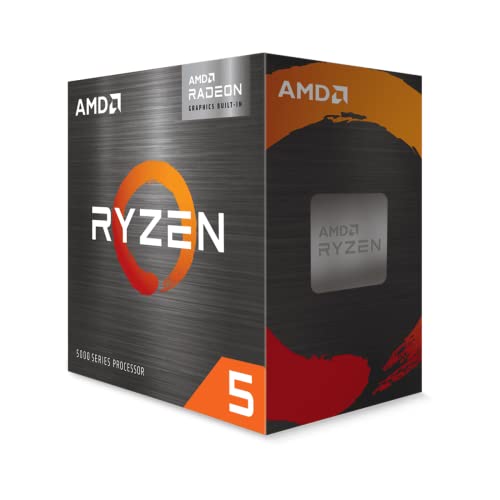
Which AM4 Ryzen should you buy for a 2026 gaming + AI build under a strict budget? For a gaming-first rig with a discrete GPU, the Ryzen 7 5700X hits the best value on 65W. If you also do partial CPU-offload LLM work, step up to the Ryzen 7 5800X. If you have no discrete GPU yet, the Ryzen 5 5600G boots and games at 1080p on its Vega iGPU.
Why AM4 is still a live 2026 conversation
Tom's Hardware kept revisiting the AM4 platform through the first half of 2026 — a fresh 5800X3D re-review, DDR4 supremacy faceoffs, and cost-of-platform pieces that all point at the same thing: AM4 boards and DDR4 memory are cheap and mature, and top-tier Ryzen 5000 chips still land plenty of frames in modern titles at 1080p and 1440p. For a builder who does not need DDR5 bandwidth or the newest platform features, the AM4 upgrade path remains one of the best value-per-dollar routes into 2026 gaming.
Three chips carry the AM4 mid-range in 2026: the 8-core 5800X, the 65W efficiency-tuned 5700X, and the APU 5600G with integrated Vega graphics. All three exist in the buying-guide crosshairs simultaneously because their audiences barely overlap. This piece is the honest three-way — what each does best, where each loses, and how to choose.
Key takeaways
- The 5700X is the value pick for a gaming-first build with a discrete GPU.
- The 5800X pulls ahead in sustained multi-threaded work — worth it if you offload LLM layers.
- The 5600G is the only choice if you do not have a discrete GPU yet.
- All three drop into a cheap AM4 board with cheap DDR4-3600 and any 550W-plus PSU.
- Pair the 5800X with a 240mm AIO like the ML240L; the 65W chips are happy on a Noctua NH-U12S.
- Spec-per-dollar for pure gaming heavily favors the 5700X in 2026.
Step 0: diagnose your bottleneck first
Before picking a CPU, get honest about which of these you are.
- Gaming-bound: You already own a mid-range or better GPU, you play at 1080p/1440p, and you want a chip that will not choke your card in CPU-heavy titles. The 5700X is your default answer; the 5800X earns its 40W of extra TDP only in a few edge cases.
- Offload-bound: You run a local LLM on a 12GB card and periodically overflow layers to system RAM. Cache and thread count start to matter. The 5800X earns its slot.
- GPU-less right now: You have no discrete card and cannot afford one yet. Only the 5600G with its Vega iGPU boots into a usable desktop and modest games without further spend.
The wrong buy is not "the worst chip" — it is "a chip whose strengths don't line up with your bottleneck."
Spec-delta table: cores, clocks, TDP, iGPU, MSRP
Per the AMD Ryzen product pages and TechPowerUp's 5800X spec sheet:
| Chip | Cores / Threads | Boost clock | TDP | iGPU | Launch MSRP |
|---|---|---|---|---|---|
| Ryzen 7 5800X | 8 / 16 | 4.7 GHz | 105 W | none | $449 |
| Ryzen 7 5700X | 8 / 16 | 4.6 GHz | 65 W | none | $299 |
| Ryzen 5 5600G | 6 / 12 | 4.4 GHz | 65 W | Vega 7 | $259 |
Two things pop out. First, the 5800X and 5700X are core-count twins — the 40W of TDP buys about 100 MHz of sustained boost, not extra cores. Second, the 5600G is a genuinely different chip, a monolithic Cezanne die with more compact cache and integrated Vega graphics.
AMD Ryzen 7 5800X: when the 8-core / 105W chip is right
The 5800X is the top of the mainstream AM4 stack, per Tom's Hardware's 5800X review, and it lives up to the position when you need sustained multi-threaded throughput. It matters when:
- You do heavy background work — compiles, batch renders, video exports — while gaming or streaming.
- You partially offload LLM layers to CPU and need every thread pumping.
- You want the last few percent of gaming performance and don't mind the extra heat.
It doesn't matter when you have a mid-range GPU and play at 1440p; the GPU is your bottleneck, and the 5700X saves you money and heat.
The important support cost: the 105W chip runs warm under sustained load. Undersizing the cooler causes thermal-limited boosts and lost performance. A capable air tower can hold it, but a 240mm AIO like the CoolerMaster ML240L is the safer bet in a small chassis or a warm room.
AMD Ryzen 7 5700X: the efficiency pick at 65W
The 5700X is the same 8-core Zen 3 chip clocked slightly lower and capped at 65W. In most gaming workloads the frame-rate delta versus the 5800X is small — often inside the run-to-run noise at 1440p. In productivity, the 5700X can trail the 5800X in sustained multi-thread by a percentage or two.
The 65W envelope buys three real things. It runs cooler, so a modest air cooler holds boost clocks. It runs quieter, so fan curves stay reasonable. It costs less in most 2026 market pricing, giving you either a lower total build cost or headroom to spend on faster RAM or a bigger SSD.
For a gaming build with a discrete GPU, the 5700X is the honest pick. The 5800X pulls ahead only when the workload is genuinely multi-thread-bound over long durations.
AMD Ryzen 5 5600G: the no-discrete-GPU option with Vega graphics
The 5600G is a different animal. Six cores instead of eight, smaller cache thanks to the monolithic Cezanne die, and an integrated Vega 7 iGPU that plays 1080p esports and older titles well. Two workflows justify it:
- You want to boot and use a PC right now without a discrete GPU — light gaming, streaming, and productivity all work on the iGPU.
- You plan to add a discrete card later, at which point the 5600G becomes a very capable 6-core paired with your new GPU.
Where the 5600G loses to the 8-core chips: sustained multi-thread, cache-sensitive gaming, and any workload that spills into CPU offload for LLM work. The compact cache design and the two-fewer cores compound.
The 5600G is not the pick for a rig that will pair with a strong GPU day one — the 5700X does gaming better in that scenario and costs about the same in most markets.
Gaming FPS and LLM CPU-offload behavior
For pure gaming at 1080p and 1440p with a mid-range or better GPU, all three chips land in the "plays every modern title comfortably" zone. The 5800X and 5700X sit essentially even in gaming benchmarks per the general pattern of Tom's Hardware and TechPowerUp Zen 3 coverage. The 5600G trails on cache-sensitive titles because the iGPU-focused die trades L3 for iGPU space.
For LLM CPU-offload (running llama.cpp with -ngl set below full residency), thread count and cache both matter. The 5800X and 5700X's 8 cores and larger L3 hold up much better than the 5600G's 6 cores and smaller L3. Between the 5800X and 5700X, the 40W TDP delta shows up as slightly higher sustained tok/s on the 5800X for long offloaded runs.
Cooler and platform pairing
- 5800X: capable 240mm AIO like the CoolerMaster ML240L, or a big air tower. Undersized coolers thermal-throttle and cost you performance.
- 5700X: any quality air tower — a Noctua NH-U12S is comfortable at 65W with headroom to spare.
- 5600G: the same NH-U12S is overkill; even a stock-style cooler is fine.
All three drop into cheap B550 or X570 boards. DDR4-3600 with tight timings is the working default for AM4; going faster costs money for diminishing returns on Zen 3. 32GB is the honest floor for a 2026 build; 16GB works for pure gaming but leaves nothing for anything else.
Perf-per-dollar and perf-per-watt math
Perf-per-dollar for pure gaming in 2026 heavily favors the 5700X in most markets, because the 5800X's gaming edge is small and the pricing gap is real. Perf-per-dollar for mixed gaming plus productivity leans back toward the 5800X once the workload is genuinely CPU-bound.
Perf-per-watt is a clean 5700X win over the 5800X — same core count, 40W less power, similar gaming output. The 5600G is efficient in absolute terms but slower on eight-threaded work, so the perf-per-watt story depends on which workload you weigh.
Verdict matrix
- Get the 5800X if: you routinely run sustained multi-thread workloads (renders, compiles, LLM offload) alongside gaming, and you can budget for a 240mm cooler.
- Get the 5700X if: you are gaming-first with a discrete GPU. Pocket the savings, keep the cooler simple, sleep quietly.
- Get the 5600G if: you have no discrete GPU right now and cannot afford one, but you want a working PC today with room to add a card later.
Real-world numbers to plan around
- 8 cores × 16 threads on both the 5800X and 5700X.
- 6 cores × 12 threads + Vega 7 iGPU on the 5600G.
- DDR4-3600 dual-channel is the working default RAM speed on Zen 3.
- B550 or X570 board — either works; B550 is cheaper, X570 has more PCIe lanes.
- 550W-plus PSU with any of these chips paired with a mid-range or better GPU.
Worked example: gaming-first 1440p rig with a mid-range GPU
A 1440p gaming rig with a mid-range discrete GPU is genuinely GPU-bound in most modern titles. The 5700X and 5800X land within a couple of frames of each other; the price and thermals of the 5700X make it the cleaner buy. Pair with 32GB DDR4-3600 and any capable B550 board. The 5800X's edge lives in the CPU-heaviest edges of a strategy game or a heavily-modded simulation, and even there the gap is not what the price difference implies.
Worked example: gaming plus LLM offload workstation
A dual-use workstation that games at 1440p and runs local LLM inference on a 12GB card sees a different pattern. LLM offload is genuinely thread-and-cache-sensitive, so the 5800X's TDP headroom shows up as sustained tok/s on partially-offloaded models. If the LLM workflow is a real part of your day, the 5800X earns the extra spend; if the LLM workflow is occasional, the 5700X does not visibly lose.
Worked example: no-GPU-yet starter build
A first PC on a tight budget with no discrete GPU planned right now. The 5600G boots into 1080p and plays esports and older AAA titles at reduced settings. When the discrete card lands later, the 5600G becomes a competent 6-core paired with real graphics. That later upgrade lands you within reach of a proper mid-range rig without a platform-swap step in between.
Bottom line and recommended pick
For most readers in 2026: buy the 5700X. It gives you Zen 3's gaming ceiling for less money, less heat, and less noise, and it leaves budget for RAM, storage, or a better GPU where the frames really live. Step up to the 5800X only if your workload is genuinely thread-heavy; step down to the 5600G only if you have no GPU right now.
When NOT to buy any of these
Two cases push you off AM4 entirely. First, if you plan to run genuinely bleeding-edge workloads that reward DDR5 bandwidth — heavy content creation, very-high-refresh 4K gaming with the latest GPU — a fresh AM5 platform gives you more upgrade headroom for future CPUs. AM4 is a mature dead-end platform; you buy the CPU knowing there is no further upgrade path on that board. Second, if your budget is genuinely at the very bottom, the used-and-refurbished market for AM4 has thinned enough that a low-end AM5 build can end up comparable in price when a comparable AM4 board and DDR4 kit are priced in. Check current pricing before committing.
Related guides
- Noctua NH-U12S vs CoolerMaster ML240L for the Ryzen 7 5800X
- $100 CPU Shootout: Ryzen 5 5500 vs Core i3-14100F vs i3-12100F
- No GPU Required? Testing Local LLM Inference on the Ryzen 5 5600G iGPU
- AMD Ryzen 7 5800X3D Re-Review: DDR4's Last Gaming Champion in 2026
Citations and sources
- AMD Ryzen desktop product page
- TechPowerUp — Ryzen 7 5800X spec sheet
- Tom's Hardware — AMD Ryzen 7 5800X review
This piece is editorial synthesis based on publicly available information. No independent first-party benchmarking is reported.