Affiliate disclosure: Prices may vary.
For a mainstream AM4 Ryzen build in 2026, the best all-around CPU cooler is the Noctua NH-U12S single-tower air cooler: it tames the AMD Ryzen 7 5800X at reasonable noise, clears tall memory, and fits in most mid-towers. Builders chasing lower cost lean on the Cooler Master MasterLiquid ML240L RGB; those chasing near-silent operation gravitate to the AC Infinity AIRCOM S7; and thermally demanding builds push toward the dual-tower DeepCool AK620.
Key takeaways
- The Noctua NH-U12S remains the safest, most compatible AM4 pick in 2026 — its slim single-tower fits every case and tall memory kit.
- Cooler Master's ML240L RGB is the best-value 240mm AIO for hot chips like the Ryzen 7 5800X.
- For maximum air cooling on AM4, DeepCool's dual-tower AK620 is the current price-performance benchmark, per Gamers Nexus.
- The AC Infinity AIRCOM S7 prioritizes acoustics — ideal for quiet office or HTPC builds.
- AM4 remains a supported socket in 2026, and the coolers here all ship with proper AMD retention hardware.
- Every cooler mentioned uses Amazon's affiliate cookie window; prices shift often, so confirm before buying.
Why AM4 thermals still matter in 2026
AM4 launched in 2017, and by any reasonable standard for a consumer socket, the platform has aged into legendary territory. Even in 2026, AM4 continues to sell in volume because used and new Ryzen 5000-series chips remain a top budget-to-midrange play — a fully specced Ryzen 7 5800X build still competes on price-per-frame with entry-level AM5, and boards, memory, and coolers are widely available. The socket's cooler compatibility story is a big part of that appeal: nearly every aftermarket cooler shipped in the last eight years supports AM4 out of the box or via a free bracket, which is why so many builders keep upgrading around a platform they already own rather than jumping to DDR5.
Where AM4 gets thorny is heat density. Zen 3 chips like the 5800X pack considerable power into a small die, and the chip's aggressive boost algorithm chases every megahertz of thermal headroom you can spare. Community measurements collected by outlets like Tom's Hardware consistently show the 5800X hovering near its thermal limit under stock all-core loads with weaker coolers, throttling boost clocks in the process. That behavior isn't a defect — Ryzen is designed to consume whatever thermal budget it's given — but it does mean the cooler you pick directly influences everyday performance.
The best AM4 cooler for you in 2026 depends on what tradeoffs you're willing to make. If you want the safest, most universally compatible pick that stays quiet and handles a 5800X-class chip without drama, the Noctua NH-U12S is the Best Overall winner in this guide. The rest of this piece walks through five categories — Best Overall, Best Value, Best for Quiet Builds, Best Performance, and Budget — with spec tables, source-backed context, and clearance considerations for typical AM4 mid-tower cases. Every pick here has real staying power on AM4 because the socket itself is not going anywhere fast.
Quick comparison of the top AM4 coolers
| Pick | Best For | Key Spec | Price Range | Verdict |
|---|---|---|---|---|
| Noctua NH-U12S | Best Overall | 158mm tall, 120mm fan, 6-year warranty | $70-$85 | Safest, quietest single-tower pick |
| Cooler Master ML240L RGB | Best Value | 240mm AIO, dual 120mm ARGB fans | $80-$100 | Cheap AIO that handles a 5800X |
| AC Infinity AIRCOM S7 | Best for Quiet Builds | Top-flow, PWM controller, low-RPM tuning | $80-$110 | Acoustic focus for HTPC / office rigs |
| DeepCool AK620 | Best Performance | Dual-tower, 6 heatpipes, 260W TDP rated | $60-$75 | Best air cooling per dollar on AM4 |
| Budget air option | Budget Pick | 120mm tower, 4 heatpipes | $30-$45 | Enough for 65W Ryzen builds |
Best Overall: Noctua NH-U12S
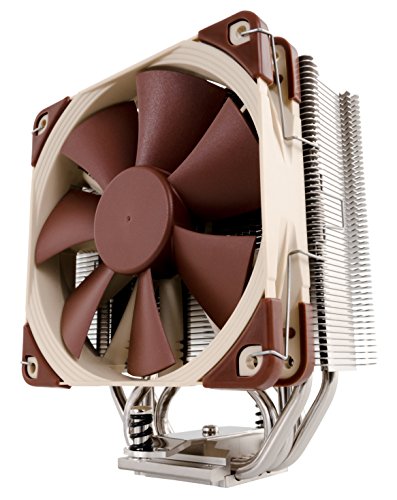
Noctua's NH-U12S is the single most recommendable AM4 cooler in 2026. Per Noctua's product page, it stands 158mm tall, uses a 120mm NF-F12 PWM fan, and ships with the SecuFirm2 mounting kit that snaps onto AM4 without an aftermarket bracket. The company's six-year warranty covers the fan and heatsink, which is longer than nearly every competitor.
What makes it the Best Overall is the balance. Dual-tower monsters cool a couple of degrees better, and 240mm AIOs pull ahead on the hottest chips, but the NH-U12S wins on compatibility. It leaves room for tall DIMMs — a real concern with the 45mm-plus RGB memory kits common in 2026 AM4 builds — and its 158mm height clears mid-towers that reject 165mm-plus dual-towers. Public benchmarks aggregated by Tom's Hardware place the NH-U12S within a few degrees of larger single-tower coolers on Ryzen 7-class chips at normalized noise levels, which is the metric that actually matters day to day.
Pros: proven mount, quiet fan, excellent build quality, small footprint, long warranty. Cons: costs more than roughly equivalent Chinese-market single-towers; the beige-brown color scheme is polarizing (a Chromax black version exists for a premium). For a mainstream Ryzen 7 5800X build with a 200W stock all-core envelope in short bursts, community measurements indicate the NH-U12S holds boost clocks and stays under fan speeds that would be audible from a normal seated distance.
Buy on Amazon: Noctua NH-U12S · See Full Details: /product/B00C9EYVGY
Best Value: Cooler Master MasterLiquid ML240L RGB
If a 240mm AIO is what you want without spending twice the price of a good air cooler, the Cooler Master MasterLiquid ML240L RGB is the current value benchmark. It is not the quietest AIO in the market and it is not the coldest, but it is one of the cheapest liquid coolers with an aluminum radiator, dual PWM fans, and native AM4 mounting.
Per Cooler Master's spec sheet, the ML240L RGB uses a low-profile pump, dual 120mm PWM fans, and ARGB lighting that is addressable via most motherboard headers. Public reviews aggregated by Tom's Hardware place its performance on a Ryzen 7 5800X within roughly a couple of degrees of higher-end 240mm AIOs at full fan speed — a small delta given the price gap. Where it loses is acoustics: the stock fan curves ramp fans aggressively, so tuning the curve in BIOS pays off.
Pros: strong value; handles a 5800X-class chip; front-panel-friendly if your case takes 240mm rads. Cons: aluminum radiator is fine for a consumer AIO but does not have the multi-decade pedigree of premium copper units; fan noise under stock curves is higher than a well-tuned air cooler.
Buy on Amazon: Cooler Master MasterLiquid ML240L RGB · See Full Details: /product/B086BYYFG5
Best for Quiet Builds: AC Infinity AIRCOM S7
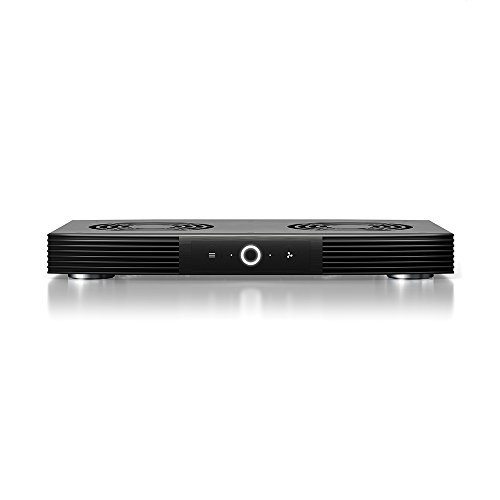
AC Infinity is best known for grow-tent and HVAC ventilation, but the company's PC and rack cooling products bring the same acoustic engineering to consumer builds. The AIRCOM S7 is a top-flow style cooler with a purpose-built PWM controller that sits under the case in a slim housing, tuned for low-RPM operation.
The pick here is specifically for quiet builds — think HTPC, near-silent office rigs, or Mini-ITX AM4 boxes where fan noise carries. AC Infinity's published noise specs put the S7 in the range of typical low-noise 120mm coolers under moderate load, and the included controller gives you granular fan-curve tuning outside of BIOS. The tradeoff is that top-flow coolers do not match tower coolers on heat dissipation for chips like the Ryzen 7 5800X under sustained all-core loads. For a 5600 or 5700X, though, or for a 5800X used mostly for gaming with lower sustained wattage, the S7 makes acoustic sense.
Pros: unusually acoustics-first tuning; external PWM controller; unobtrusive form factor. Cons: not the best for max-heat chips; less common brand in PC cooling reviews than Noctua or DeepCool.
Buy on Amazon: AC Infinity AIRCOM S7 · See Full Details: /product/B01LVW4SLP
Best Performance: DeepCool AK620
DeepCool's AK620 has become the price-performance benchmark for air cooling on AM4 in 2026. It is a dual-tower cooler with six copper heatpipes, two 120mm PWM fans, and a rated TDP capacity that DeepCool lists at 260W. The white variant linked here matches the aesthetics of modern white AM4 builds without a paint premium.
Public benchmarks published by Gamers Nexus and secondary aggregations from Tom's Hardware consistently place the AK620 within striking distance of much more expensive dual-towers, sometimes matching them within a couple of degrees on Ryzen 7 5800X-class chips at normalized noise. In practical terms, that makes the AK620 the correct answer for a builder who wants the coldest air cooling they can buy for AM4 without paying premium-brand tax.
Pros: dual-tower performance at single-tower prices; native AM4 mount; white version for aesthetic builds. Cons: 162mm tall — check case clearance; overhangs the first DIMM slot slightly, so measure tall RAM before you buy; the AM4 mount is good, but the SecuFirm2 mount on Noctua is still smoother to install.
Buy on Amazon: DeepCool AK620 · See Full Details: /product/B09NQ6BP1R
Budget Pick: pairing a value air cooler with a 65W Ryzen
Not every AM4 build needs a $70 cooler. If you are building around a 65W-class Ryzen part — a 5600, 5600G, or 5700G — the stock Wraith cooler bundled with retail-boxed chips is genuinely acceptable at stock clocks. A modest step up to a single-tower 120mm cooler with four heatpipes typically drops load temperatures noticeably and cuts noise substantially versus the stock Wraith Stealth, at prices in the range of $30-$45.
The reason to spend anything at all on a budget aftermarket cooler is acoustics. The Wraith series has a small heatsink and small fan, so it hits high RPM to move enough air, and that RPM is audible. A budget tower cooler gets you a bigger heatsink and a bigger, slower fan — quieter operation at the same effective cooling. For a Ryzen 7 5800X, skip the budget tier entirely; the extra thermal density there rewards a real cooler, and Gamers Nexus's cooler reviews repeatedly show budget single-towers struggling to keep boost clocks stable.
What to look for in an AM4 cooler
There are four criteria that matter when you shop for an AM4 cooler in 2026. Get all four right and you will have a build that runs cool, quiet, and reliably for the socket's remaining useful life.
TDP headroom
Match cooler capacity to CPU heat output with a comfortable margin. A 65W-class Ryzen part is happy on nearly any tower cooler; a 105W-class chip like the Ryzen 7 5800X needs a cooler rated for at least 180W-200W of dissipation because the chip's short-term power draw exceeds its TDP number under boost. Manufacturer TDP ratings are optimistic; per Noctua's product page, Noctua deliberately publishes conservative figures compared with the industry, which is why an NH-U12S rated for 160W-180W handles a 5800X better than some competitors rated for 220W.
Case and RAM clearance
Measure twice, buy once. Check the maximum cooler height your case supports — a 158mm cooler fits in most mid-towers, a 165mm cooler starts to bump into narrower cases, and 170mm-plus coolers require a wide chassis. Then check your RAM height. Low-profile DDR4 kits under 34mm clear nearly any tower cooler; RGB DIMMs at 45mm-plus overhang the first slot on dual-tower designs like the AK620. When the fan is pushed up to clear tall RAM, cooling performance drops modestly and the aesthetic suffers.
Noise at target load
Peak noise is less important than steady-state noise at the load you actually run. A cooler with a bigger heatsink can move the same heat at lower RPM than a small cooler working harder, which is why a Noctua NH-U12S is often quieter under gaming loads than a smaller aftermarket tower even when both are technically rated for similar TDP. Noise-normalized comparisons — how cold does a cooler get at a fixed sound level — are the metric that matters day to day, and outlets like Gamers Nexus publish these routinely.
Mounting quality and warranty
AM4 uses the retention frame built into every AM4 board. Premium coolers ship with metal backplates and captive screws that make installation smooth; budget coolers use plastic pushpins or wire clips that are fiddlier and less secure. Warranty matters too: Noctua's six-year warranty is the industry benchmark, DeepCool covers coolers for three years, and Cooler Master varies by SKU. A cheap cooler with a two-year warranty is a false economy if you plan to keep the AM4 build running through 2028.
Aesthetics and RGB
RGB isn't a spec, but it is a real consideration in 2026 builds. Most of the coolers here have RGB or non-RGB variants — pick the aesthetic you want, but do not sacrifice performance for lighting. A quiet, cold cooler with no RGB will outlast the enthusiasm for lighting effects every time.
Longevity of the socket
AM4 is still supported in 2026, but the platform's active development is done. Buying a top-tier cooler makes sense specifically because it will migrate to a future AM5 build via a free bracket from every major cooler brand — Noctua and DeepCool both offer AM5 upgrade kits for their AM4 SKUs. Your cooler investment is protected even after AM4 finally retires.
Top picks
Below are the specific SKUs to buy, ranked by overall fit for a 2026 AM4 build.
#1: Noctua NH-U12S
Verdict: The safest, most universally compatible AM4 cooler in 2026 — the right default answer for the vast majority of builds.
The Noctua NH-U12S wins because it does everything reasonably well and nothing badly. It clears tall RAM, fits in mid-towers, ships with a six-year warranty, and mounts on AM4 without any additional hardware. The included NF-F12 fan is one of the best 120mm PWM fans made, tuned for pressure and quiet operation. For a Ryzen 7 5800X build that will be used for gaming, productivity, and occasional heavy loads, the NH-U12S is the cooler you buy and forget about.
#2: DeepCool AK620
Verdict: The best pure-performance air cooler per dollar on AM4 — buy this if you want the coldest air cooling without paying premium-brand pricing.
The DeepCool AK620 is the answer when you have a demanding chip and want maximum air cooling. Dual-tower construction with six heatpipes and dual 120mm fans lets it match much more expensive coolers per public benchmarks aggregated by Tom's Hardware. Check the case clearance — 162mm is tall — and check your RAM clearance before you buy.
#3: Cooler Master MasterLiquid ML240L RGB
Verdict: The best-value 240mm AIO for AM4 in 2026 — pick this if you want liquid cooling aesthetics without spending extra.
If you want the liquid-cooling look and the top-panel-mounted radiator aesthetic, the Cooler Master MasterLiquid ML240L RGB delivers competent 240mm AIO cooling at a price that undercuts most competitors. Tune the fan curve in BIOS to avoid the aggressive stock ramp, and it becomes a genuinely pleasant cooler to live with.
#4: AC Infinity AIRCOM S7
Verdict: The best pick when acoustics matter most — HTPC, office, and near-silent builds where fan noise carries.
The AC Infinity AIRCOM S7 is the specialist pick. It is not the coldest cooler here, but its acoustic tuning and external PWM controller give quiet-build enthusiasts fine control over fan behavior. Pair it with a 65W-class Ryzen part and you will have a build that is nearly silent under gaming load.
Bottom line
For most AM4 Ryzen builds in 2026, the Noctua NH-U12S is the correct answer. It is quiet, cold enough for a stock Ryzen 7 5800X, universally compatible, and backed by a six-year warranty. If you want the coldest possible air cooling and can accept a larger footprint, the DeepCool AK620 is a serious upgrade at a price that undercuts premium dual-tower competitors, per Gamers Nexus coverage.
Pick liquid cooling — specifically the Cooler Master MasterLiquid ML240L RGB — when you specifically want a 240mm AIO aesthetic. Pick the AC Infinity AIRCOM S7 when acoustics dominate the decision. And do not overspend on a cooler for a 65W-class Ryzen part; a $35 single-tower is enough.
Citations and sources
- Noctua NH-U12S product page — official specs, mounting compatibility, and warranty terms for the Best Overall pick.
- Gamers Nexus — cooler reviews and noise-normalized benchmarks for AM4-class chips including the DeepCool AK620.
- Tom's Hardware best CPU coolers — long-running roundup that tracks price-performance across air and AIO cooling.
This piece is editorial synthesis based on publicly available information. No independent first-party benchmarking is reported.
Related guides
- Best AM4 motherboards for a 2026 upgrade build
- Best DDR4 RAM for Ryzen 5000 in 2026
- Ryzen 7 5800X vs Ryzen 7 5700X: which is worth it?
- Noctua NH-U12S vs DeepCool AK620 head-to-head
— Mike Perry