The direct answer
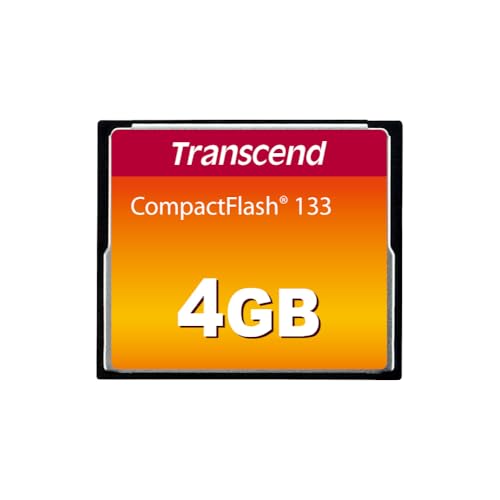
Kill the loudest component first: replace the period hard drive with a Transcend CF133 CompactFlash card on a passive CF-to-IDE adapter, or a Crucial BX500 1TB SATA SSD behind a bridge if you need capacity. Then pick a period tier — 1998 Voodoo2, 2001 GeForce 3, or 2004 Athlon 64 — and match the cooling to the socket. The build succeeds or fails on how you handle storage noise and the two Win98-era gotchas: the 512 MB RAM limit and the 137 GB LBA ceiling.
Retro-PC builds are usually pitched on authenticity. The build that gets kept and used for years is almost always pitched on quietness. A period-correct machine that produces the hard-drive clack and the 5000-RPM chassis-fan whine that people remembered when they were 14 is charming for an afternoon and unbearable as a daily driver. This piece walks the full parts list for a Win98 gaming PC that stays silent enough to sit next to, with real notes on which components to keep period-correct, which to replace with modern silent alternatives, and which of the era's specific gotchas (RAM, storage addressing, driver installation) to plan around before you start.
Step 0: pick your era before you pick your parts
There is no single "Windows 98 gaming PC." The OS shipped in 1998 and remained relevant through the DirectX 8 era; a build targeting 1998 Voodoo-era games is a different machine than one targeting 2001-era GeForce 3 games or a very-late 2004 Athlon 64 build.
The 1998 Voodoo2 SLI tier targets Glide-era games — Quake II, Unreal, the original Half-Life. A Pentium II 400 or Pentium III 500 pairs with two Voodoo2 cards in SLI (passthrough for the 2D signal from a separate 2D card). This tier is the strongest argument for real hardware over emulation, because Glide is genuinely not reproducible with a modern substitute.
The 2001 GeForce 3 tier covers Return to Castle Wolfenstein, Serious Sam, Max Payne, Diablo II. A Pentium III 1 GHz or an early Athlon on a 440BX or KT133 board with a GeForce 3 or Radeon 8500 is the classic build. This is the easiest build — parts are more available, the RAM and storage situations are more forgiving.
The 2004 Athlon 64 tier stretches Win98's usable life to Doom 3, Far Cry, Half-Life 2. Motherboard driver support for Win98 on this era is thin and requires patched drivers, but it works. The reward is running late DX8 / early DX9 titles on real hardware.
Pick the tier that matches the games you actually want to play. Building for an era whose game library you have not touched in twenty years is how retro rigs end up on shelves.
Why noise, not hardware, kills most retro builds
The three loud things in a 1998-2004 tower were the hard drive, the CPU fan, and the chassis fans. All three can be replaced with modern silent alternatives without changing what the software sees or how the machine plays games. That is the entire silent-build argument in one sentence.
The specific noise floors: a period 7200-RPM hard drive produces a low thrum plus intermittent clacking that a modern ear registers as broken. A 60 mm CPU fan spinning at 5000 RPM on a Slot 1 heatsink produces a high whine that is period-authentic and daily-driver hostile. Case fans of the era were rarely PWM and rarely quiet. Together they push a tower into the 40+ dBA range at idle — audibly louder than most modern desktops under load.
Replace the drive with silent flash. Replace the CPU fan with a period-compatible slow-spin fan or, on later-era sockets, a modern low-noise cooler. Replace or undervolt the case fans. The machine plays Quake II identically and sounds like a modern computer.
Key takeaways
- Storage is the loudest component and the easiest to replace — Transcend CF133 for IDE-only builds, Crucial BX500 behind a bridge when capacity matters.
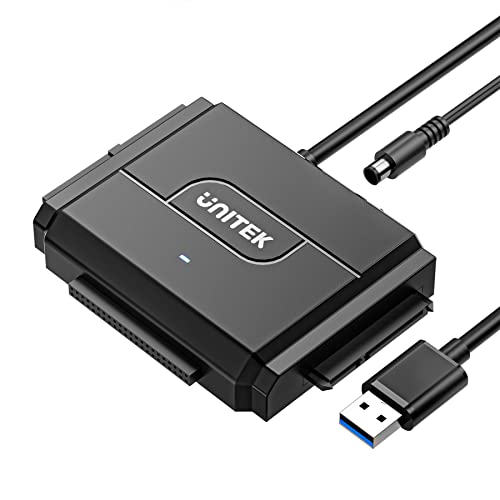
- The Unitek SATA/IDE to USB 3.0 Adapter does the imaging on your modern PC before the drive ever enters the retro box — buy this with the build.
- Win98's 512 MB RAM ceiling is a VCACHE issue with a documented SYSTEM.INI fix; do not accept "Win98 crashes above 512 MB" as immutable.
- The 137 GB LBA-28 boundary is a hard BIOS-level limit — partition modern drives down accordingly.
- Cooling: an ARCTIC P12 PWM PST five-pack undervolted as intake handles most airflow needs; on later-era sockets, a Noctua NH-U12S is overkill you may still want.
- Keep the GPU and sound card period-correct — they define the experience. Everything else, replace with silent modern parts.
What you'll need: the full checklist
Working end-to-end for a mid-tier build:
- Board: Slot 1, Socket 370, Socket A (462), or Socket 462 depending on tier. Check the BIOS supports the specific CPU stepping you plan to run.
- CPU: Pentium III, early Athlon, or later Athlon XP depending on tier. Buy a matching stock cooler as fallback even if you replace it.
- RAM: 256-512 MB PC133 SDRAM for early tiers; DDR for later Athlon builds. Do not exceed 512 MB on Win98 without applying the VCACHE fix.
- GPU: Voodoo3, GeForce 2/3/4, Radeon 7500-9700 depending on tier. This is the one component to keep period-correct.
- Sound: Sound Blaster Live! or Audigy for the classic Win98 experience. Onboard AC97 works but sounds worse.
- Storage: Transcend CF133 CompactFlash plus passive adapter, or Crucial BX500 1TB SATA SSD behind an IDE bridge on IDE-only boards.
- Cooling: undervolted ARCTIC P12 PWM PST fans as intake, a period-compatible slow CPU fan or Noctua NH-U12S on later sockets.
- PSU: modern fanless or semi-fanless PSU with the era's connectors (a 24-to-20-pin adapter is fine).
- Display: modern LCD with a VGA input, or a period CRT if you want the phosphor look.
- Imaging bridge: Unitek SATA/IDE to USB 3.0 Adapter — you will use it every time you touch this machine.
Storage: killing the loudest component
The period 7200-RPM hard drive is the loudest thing in a Win98-era tower and the easiest to replace. Two paths work.
The CompactFlash path uses a Transcend CF133 CompactFlash card on a passive CF-to-IDE adapter. CompactFlash speaks a subset of the ATA/IDE command set natively, so the BIOS sees the card as an ordinary IDE drive and Win98 needs no driver. Cards from the Transcend CF133 line have a long retro-community track record for enumerating cleanly on the widest range of adapters — a Win98 install goes on smoothly and boots as fast as the CPU can post.
The SATA-SSD path uses a Crucial BX500 1TB behind an IDE bridge. Same silent, cool behavior; much more capacity for less money per gigabyte. The tradeoff is the bridge itself — one more component that has to enumerate cleanly on your specific board. If the machine has native SATA (any board from ~2004 onward), skip the bridge and treat the drive as a normal SATA install.
Spec-delta: CompactFlash vs SATA SSD vs period HDD
| Path | Noise | Heat | Capacity ceiling (era-typical) | Win98 compatibility | Cost per usable GB |
|---|---|---|---|---|---|
| CompactFlash + passive adapter | silent | none | 4-64 GB in typical retro sizing | native, no drivers | mid |
| SATA SSD + IDE bridge | silent | none | 137 GB effective (LBA-28) | native, bridge transparent | best |
| Period 7200-RPM HDD | loud | notable | 4-40 GB typical | native | worst (used-market scarcity) |
Read this as a decision framework. The interface caps both flash paths well below the flash silicon's native throughput, so raw "SSD is faster" arguments do not carry — both flash options feel identical in daily use.
Cooling: what needs a fan, what doesn't
Modern retro-tower cooling is easier than it sounds. Most Slot 1 and Socket 370 chips do not need aggressive cooling by 2026 standards — they were rated for airflow that a single ARCTIC P12 PWM PST fan at 700-900 RPM provides comfortably. Undervolt the intake fan, add a matched exhaust, and you have a case that maintains negative pressure without producing measurable noise.
The CPU cooler is where the era matters. Slot 1 and early Socket 370 chips use unusual heatsink form factors that limit modern-cooler options — you are picking between a period stock cooler with a slower fan swap, or a specific retro-compatible replacement from the enthusiast market. Later-era sockets (Athlon XP, and especially Athlon 64) accept modern coolers directly, at which point a Noctua NH-U12S is overkill you may still want for the acoustic profile. The Noctua's mounting kit has covered a wide range of AMD sockets for years; check current compatibility for the specific board you have.
Case fans: five ARCTIC P12 PWM PST fans in a pack is more than most cases need. Use one to two as intake and one as exhaust, and put the rest on the shelf for the next build.
The imaging workflow: Unitek adapter as the bridge
The Unitek SATA/IDE to USB 3.0 Adapter is the single most useful tool for retro-PC storage work. It exposes any 2.5", 3.5", or IDE drive as USB mass storage on a modern PC, which turns "install Windows 98 on a period machine" from a multi-hour boot-media exercise into "prepare the drive on your modern host, then drop it into the retro box."
The workflow: attach the target drive (CF card via CF-to-IDE-to-USB stacking, or SATA SSD via the adapter directly) to your modern PC. Partition it appropriately (keeping the LBA ceiling in mind). Format FAT32 with the appropriate cluster size. Copy Windows 98 installer files or restore an existing image. Detach and install into the retro box. Same tool works in reverse: image the original period HDD before you replace it, and you have a preservation-quality backup on your modern host.
Why Win98 breaks above 512 MB of RAM
This is the era's best-documented gotcha and the first thing to check when a modern-hardware Win98 install refuses to start. The failure lives in the disk-cache subsystem: VCACHE sizes itself proportionally to installed memory and, past roughly 512 MB, allocates itself out of the address space the system needs, producing an out-of-memory error during boot on a machine with plenty of memory.
The fix is a MaxFileCache entry in SYSTEM.INI that caps the cache at a workable size. Add a [vcache] section (or extend the existing one) with MaxFileCache=524288 — that is 512 MB worth of kilobytes, expressed the way the era's tooling expects. The specific number can be tuned lower for machines with less RAM, but 512 MB is the classic safe cap. Do this before booting a machine with more than 512 MB installed, or the first boot fails and the fix has to be applied from a boot disk.
The 137 GB LBA ceiling and partition sizing
The classic LBA-28 boundary sits at 137 GB and bites on most period hardware regardless of the drive attached. A 1 TB SSD in an IDE slot is a 137 GB drive with 863 GB of stranded capacity. FAT32's own tooling on Win98 has additional partition-size ceilings well below a terabyte.
The workaround is to partition a modern large drive down to sizes both the BIOS and the OS accept, leaving the remainder unallocated. This is the most-missed step in a modern-storage retro build — a lot of "why won't Win98 see my drive?" threads trace back to a builder trying to use the full capacity of a modern drive that the BIOS cannot address.
Do the partitioning on a modern host using tooling that supports the small partition sizes cleanly. Trying to convince Win98's fdisk to size a large drive is one of the era's classic afternoon-eaters and there is no reason to do it in 2026.
Benchmark table: expected performance by era tier
| Tier | 3DMark2001 (typical range) | Quake 3 timedemo (typical range) |
|---|---|---|
| 1998 (Pentium II + Voodoo2 SLI) | 1,000-2,500 | 40-70 fps at 640x480 |
| 2001 (Pentium III 1 GHz + GeForce 3) | 5,000-8,000 | 100-140 fps at 1024x768 |
| 2004 (Athlon 64 + Radeon 9700) | 12,000-16,000 | 200+ fps at 1024x768 |
Numbers are ballpark ranges across published community benchmarks — treat as directional, not precise. Actual results depend on the specific parts, the driver stack, and whether the game engine was tuned for the era's hardware. What the table shows cleanly is the generational scaling; the reason to build an era-appropriate tier is that a lower-tier build cannot deliver the visual and framerate experience the games of that later tier expect.
Verdict matrix
Build the 1998 tier if: Glide-era games are the actual draw; you want the Voodoo2 SLI experience genuinely; you accept the RAM and storage complexity as part of the character; the games you want to play do not run at all in modern software emulation.
Build the 2001 tier if: you want the strongest overall build with the easiest sourcing; the DirectX 8 era's games are your target library; you want a machine that will boot fast, run cool, and play a huge game library.
Build the 2004 tier if: you want to stretch Win98 to its late-DirectX 8 / early-DirectX 9 limits; you are okay with patched drivers and thinner Win98 board support; the games you want are Doom 3, Far Cry, and Half-Life 2.
Common pitfalls
Three failure modes catch first-time silent-build attempts.
Cheap CF cards that do not enumerate. Not every CompactFlash card supports True IDE mode reliably. The Transcend CF133 line does; a generic card from an unknown listing may not. If a CF card fails to enumerate, the failure mode is usually "BIOS does not see it at all," which reads as "adapter is broken" but is almost always the card.
Skipping the VCACHE fix on a >512 MB install. The first boot fails hard. The fix is trivial to apply beforehand and painful to apply from a Win98 boot disk after the fact.
Trying to use the full capacity of a modern drive. LBA-28 is not negotiable — partition down, or the machine will not boot from the drive at all.
Bottom line
A silent Win98 gaming PC in 2026 is a well-understood build with a few specific gotchas. Kill storage noise first with flash. Match cooling to the socket, not to modern desktop assumptions. Apply the two well-documented OS-era workarounds (VCACHE cap, partition sizing) before the first boot rather than after. Keep the GPU and sound card period-correct because that is where the era actually lives. Replace everything else with silent modern parts. The result is a machine that boots and plays like the era intended and sits on your desk quietly enough to use every day.
Related guides
- Best SSD for a Retro PC Build in 2026: CompactFlash vs SATA vs Period HDD
- CompactFlash-to-IDE Boot Drive: The Silent Win98 Build Upgrade
- Mount a 90s Big-Box CD-ROM ISO on Win98 Without a CD Drive
- Using an LLM to Fix Win98 Voodoo & TNT Driver Installs
Citations and sources
- Transcend — CF133 CompactFlash product page
- TechPowerUp — 3dfx Voodoo retrospective
- Noctua — NH-U12S product page
This piece is editorial synthesis based on publicly available information. No independent first-party benchmarking is reported.