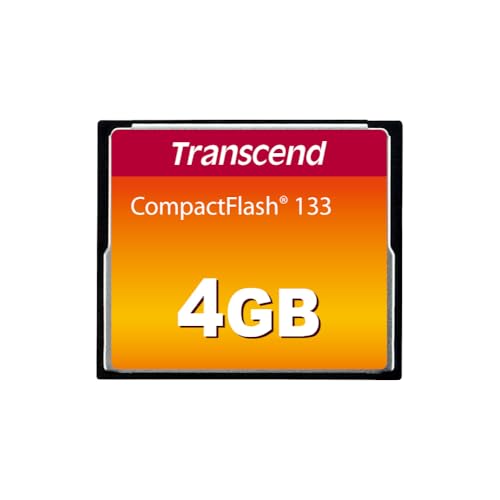
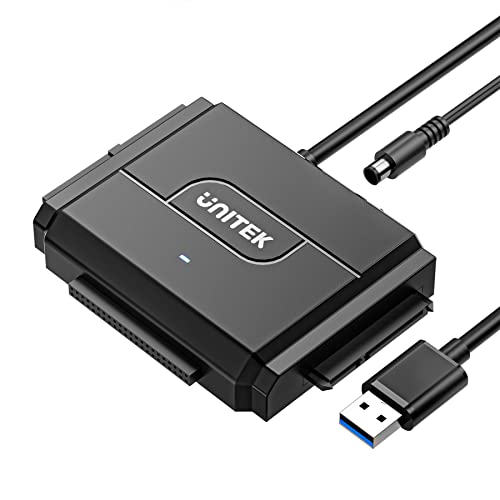
The period-correct recipe: a socket-370 or socket-A motherboard, a Pentium III or Athlon in the 800MHz to 1.4GHz band, 256-512MB of PC133 SDRAM, a GeForce 3 or GeForce 3 Ti card, a period sound card (Sound Blaster Live! or Audigy), a CD-ROM drive, and a boot drive. Modern builders can pair the era's silicon with a silent solid-state boot disk — a Transcend CF133 CompactFlash card in an IDE-to-CF adapter — and use a Unitek SATA/IDE-to-USB 3.0 adapter on a modern PC to image the OS onto it. For a larger modern SSD via IDE adapter, a Crucial BX500 1TB SATA SSD plus an IDE-to-SATA bridge is the roomier path.
The 2001 GeForce 3 era is a sweet spot for period builds. The card introduced programmable shaders and hit the market alongside a mature Windows 98 SE driver stack, so its target software works well without the fiddliness of earlier eras (Voodoo drivers, VESA modes, Sound Blaster IRQ juggling) or the awkwardness of the era immediately after (early XP, DirectX 9 transitional titles that don't quite feel period). This guide is a working build log — sourcing the parts today, using CompactFlash as a silent boot drive, imaging period drives with a modern adapter, and the Win98 SE setup gotchas that trip everyone the first time.
What you'll need
- Era motherboard (socket-370 for Pentium III, or socket-A for Athlon XP)
- Era CPU: Pentium III 800-1400MHz, or Athlon/Athlon XP in a comparable band
- 256-512MB PC133 SDRAM
- GeForce 3 or GeForce 3 Ti card (32-64MB VRAM)
- Sound card: Sound Blaster Live! or Audigy
- AT or early ATX PSU (period-correct)
- CD-ROM drive for install media
- Boot drive: era HDD, or a Transcend CF133 CompactFlash in an IDE-CF adapter, or a modern SSD via IDE bridge
- Unitek SATA/IDE-to-USB 3.0 adapter for imaging drives on a modern PC
- Windows 98 SE install media and period drivers
Step 0: pick your target year and game list
Retro builds fail most often because the builder tries to be everything at once. Pick a year — 2001 is our target — and a short list of games from that year. The BOM follows the game list. If you want to play the launch of Serious Sam, Return to Castle Wolfenstein, Max Payne, and Black & White, a GeForce 3 with 128MB RAM is comfortable. If you want to push into 2002 titles at their launch settings, a GeForce 3 Ti or GeForce 4 Ti and 512MB RAM is closer to the mark. Don't chase the ceiling; chase the year.
Editorial intro
There's a reason experienced retro builders keep circling the GeForce 3 + Windows 98 SE combo. Programmable shaders arrived with the GeForce 3, which means the era's shader-native games (early DirectX 8 titles) actually get to use the card as intended. Windows 98 SE has mature driver support for the whole 2001 stack — NVIDIA released solid Detonator drivers for it, Creative had well-behaved Sound Blaster drivers, and the era's IDE/BIOS combinations are boring in the good sense. XP is fine too, but XP-era builds drift past the 2001 games and pick up transitional issues; Windows 98 SE anchored on a GeForce 3 sits precisely in the 2001 gaming window without effort.
Modern builders have one nice advantage over the actual 2001 experience: silent solid-state storage. CompactFlash in an IDE adapter, or a modern SATA SSD via an IDE-SATA bridge, gives you fast, quiet, reliable boot media where the original spinning drive would have been the loudest and least reliable part of the system. The tradeoffs are minor — CF cards have finite write cycles and Windows 98 tends to write a lot — but for anything short of a permanent daily driver they are fine and the silence and reliability are genuinely worth it.
Key takeaways
- The GeForce 3 + Win98 SE combo hits the 2001 sweet spot cleanly.
- Sourcing a GeForce 3 in 2026 means eBay listings; expect prices in the tens to low hundreds of dollars for tested cards.
- CompactFlash on IDE is a silent, reliable boot drive; a modern SSD on an IDE-SATA bridge is the roomier variant.
- Win98 SE misbehaves with more than ~512MB RAM unless you cap vcache in
system.ini. - Period benchmarks (3DMark2001, Quake 3 timedemo) are the honest measure of a period build.
Sourcing a GeForce 3 today
GeForce 3 cards are firmly in the retro-collector market. Reference GeForce 3 and Ti200/Ti500 variants surface regularly on eBay and specialist retailers. Prices in 2026 for tested, working cards typically land in the $60-200 band depending on variant and condition. Watch for:
- Bulging or leaking capacitors — a 2001 card has 20+ years of thermal cycling behind it.
- Missing or damaged VGA connectors — a common shipping-damage failure.
- Fan condition on Ti500 variants — the original fans are often dead; small modern 40-50mm fans replace them cleanly.
- Confirmed testing in a period board — "unpowered untested" is a coin flip.
Per the TechPowerUp GeForce 3 spec sheet, the card's 64MB VRAM and DDR memory make it comfortable at 1024×768 in period titles; higher resolutions are on the table for the Ti variants. The AnandTech launch review remains a good period reference for the card's positioning at the time.
Silent boot: CompactFlash on IDE
The Transcend CF133 CompactFlash card in an IDE-to-CF adapter presents to the motherboard as a plain IDE disk. Windows 98 SE installs on it as it would on any spinning drive, with the practical benefits of instant seeks, silent operation, no thermal load, and no shock sensitivity. Points to know:
- Capacity matters. Win98 SE handles drives up to 128GB with the right BIOS; smaller CF cards (4-32GB) are the safer target.
- Write cycles matter more. Win98 writes to swap file and registry heavily. Move the swap file to a separate drive if you plan on daily use, or size it aggressively so the CF card lasts longer.
- Boot geometry can be tricky. Some CF-to-IDE adapters and cards report unusual CHS geometry that Win98 doesn't like. If your fresh install won't boot, the article's setup section covers the common fixes.
Imaging drives with a modern PC
The Unitek SATA/IDE-to-USB 3.0 adapter lets you connect an old IDE drive, a CompactFlash card, or a modern SATA SSD to a current PC over USB. That's the tool that turns "prepare the retro boot drive" from "boot a temporary install in the retro machine and iterate" into "clone a working image once, drop it into the retro box."
Workflow:
- Prepare a golden Windows 98 SE install in a VM or on a spare drive using an era CD image.
- Attach the target CF card or SSD to the modern PC via the Unitek adapter.
- Clone the image byte-for-byte using a tool that handles Win98 boot sectors correctly (dd on Linux; Clonezilla; a Win98-aware imager).
- Drop the drive into the retro machine and confirm it boots.
- If it doesn't boot, adjust geometry or reinstall the boot sector via a Win98 boot floppy.
This approach saves hours of trial-and-error in the retro box itself, where iterating means rebooting a slow BIOS every time.
Spec delta: original IDE HDD vs CompactFlash vs modern SSD-on-adapter
| Media | Noise | Reliability | Capacity | Authenticity | Cost |
|---|---|---|---|---|---|
| Original IDE HDD | Loud, mechanical | Aging; risk of failure | Limited to era caps | Highest | Free if you have one; scarce otherwise |
| CompactFlash on IDE | Silent | Excellent (limited write cycles) | 4-64GB comfortable | Modern-feeling | Low |
| Modern SSD on IDE bridge (e.g. BX500 1TB) | Silent | Excellent | Very large | Modern | Medium |
The CF path is the sweet spot for most Win98 builds — silent, cheap, reliable, and small enough that write-wear is manageable. The modern-SSD-on-IDE-bridge path is the right choice if you want a large data partition for period ISOs and game installs.
Period-correct driver and Win98 SE setup gotchas
The list every builder eventually memorizes:
- vcache and >512MB RAM. Windows 98 mishandles memory above ~512MB and may fail to boot with a
Fatal Exceptionat startup. Cap the disk cache: addMaxFileCache=524288andChunkSize=512under[vcache]insystem.ini, or use the KernelEx / patchmem solutions the retro community maintains. This is the single most-common setup failure. - AGP driver order. Install the chipset AGP driver before the GeForce 3 driver. Reverse order produces ugly display artifacts and unstable 3D.
- Detonator driver version. Use a late 40- or 50-series Detonator that officially supports the GeForce 3 under Win98 SE. Later drivers dropped Win98 support and later still dropped the GeForce 3.
- PCI ID matching. Some clone cards report unusual PCI IDs; the driver install may refuse or install with reduced feature parity. Check the PCI ID against the driver INF file.
- Ghost devices. After swapping hardware, Windows 98 keeps ghosts of the old devices in Device Manager; clean them out before installing new drivers to avoid IRQ conflicts.
- Sound Blaster Live! versus Audigy. Both work well in Win98 SE with period drivers; the Audigy is the fancier card but the Live! is often cheaper and more available.
- BIOS date sanity. Old BIOSes with a broken RTC will hand Windows 98 a bad system date and confuse the install. Check the BIOS setup date before installing.
Benchmark targets
The 2001 canonical benchmark suite: 3DMark2001 and the Quake 3 timedemo demo001 run. Reference figures from period reviews put a stock GeForce 3 with a 1GHz-era Pentium III at roughly:
| Benchmark | Approx expected score |
|---|---|
| 3DMark2001 (1024×768 defaults) | 5,500-7,500 |
| Quake 3 timedemo (1024×768 high quality) | 130-160 fps |
| Serious Sam First Encounter (1024×768) | Comfortable playable |
Ti200/Ti500 variants scale roughly 10-25% above the reference GeForce 3 in these tests. Numbers vary with CPU, RAM speed, and driver version, which is why the article cites bands rather than a single number.
Verdict matrix
Go CompactFlash boot if… you want a silent, reliable, low-thermal boot drive for a build that will run occasionally; you don't need a huge boot partition; you want a modern-feel storage layer without giving up the era's software stack.
Keep a period HDD if… you want maximum authenticity, are willing to accept the noise and reliability risk, and can source a tested drive with good SMART numbers.
Use a modern SSD on IDE bridge if… you want a large data partition for period installers, ISOs, and archives on the same rig, and you're OK with the "not quite period" nature of the storage tier.
Bottom line
A 2001 GeForce 3 + Windows 98 SE build in 2026 is a well-supported, period-clean recreation of a specific moment in gaming history. The parts are sourceable on the collector market at reasonable prices, the software stack is mature and well-documented, and the CompactFlash boot path — imaged from a modern PC via the Unitek IDE-USB adapter — turns storage from the weakest link into a silent, reliable foundation. Pick your year, pick your game list, and build the rig to match the target. That's the whole recipe.
Related guides
- Build a 2002 GeForce 4 Ti Windows 98 PC with CompactFlash
- 3dfx Voodoo2 SLI Build with Glide and CompactFlash
- 3dfx Voodoo Glide Drivers on Windows 98: 2026 Walkthrough
- 1999 Voodoo3 + Pentium III CompactFlash Build Log
Citations and sources
- TechPowerUp — GeForce 3 specifications
- Vogons — retro PC community reference
- AnandTech — GeForce 3 launch review
This piece is editorial synthesis based on publicly available information. No independent first-party benchmarking is reported.