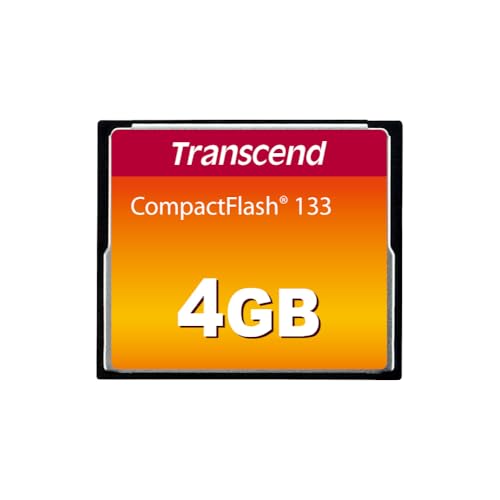
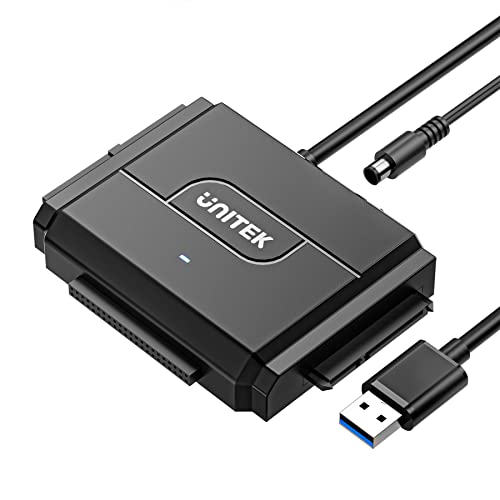
To boot a retro PC from a CompactFlash card you need three things: a card that presents itself in fixed-disk mode, a decent CF-to-IDE adapter that maps CHS/LBA correctly for the era, and a way to image the card from a modern machine — a versatile Unitek SATA/IDE-to-USB 3.0 adapter is the standard workshop bench. With those, DOS, Windows 98, and early NT install and boot on 90s hardware exactly as a period IDE drive would, with none of the noise, heat, or mechanical failure risk.
Why builders swap dying IDE drives for CompactFlash
Original mechanical IDE drives are the failure point of every 20-plus-year-old PC. Bearings dry. Heads land at power-off in unpredictable places. Cache RAM fails silently. The click of an ATA drive giving up is the signature retro-gaming sound of the modern era. The problem is not the platter itself — it is that every consumable in the drive has been running or waiting to run for two decades.
CompactFlash solves this. It has no moving parts, generates no heat, draws next to nothing from the PSU, and — critically — presents itself over IDE cleanly to unmodified BIOSes when configured correctly. It is not the only silent solid-state option (SD-to-IDE, mSATA-to-IDE, mSATA in a period case) but it is the one closest to a drop-in replacement in terms of connector, form factor, and BIOS compatibility.
There are two tradeoffs. CompactFlash has finite write cycles, so a period OS that hammers a swap file will age the card faster than a mostly-read-only setup. And not every card works — the fixed-disk mode problem below trips most first attempts.
Key takeaways
- The Transcend CF133 is the reference retro-boot card. Fixed-disk mode, wide BIOS compatibility, plenty of write endurance for boot use.
- A CF-to-IDE adapter is required. Passive is fine for most 3.5-inch bays; active/powered adapters exist for edge cases.
- Image the card on a modern PC through a versatile adapter like the Unitek SATA/IDE-to-USB 3.0 — do not install fresh on the retro system if you can help it.
- BIOS CHS/LBA settings matter on 90s boards. Wrong translation mode = boot failure or corrupt filesystem.
- Disable or shrink the swap file on DOS/Win98 to extend card life.
- Keep a backup image. If the card ever fails, reflash and boot again — no data lost.
What you'll need
- The card. Transcend CF133 CompactFlash. The 133x speed rating comfortably tops what a 90s IDE bus can push; card capacity of 4–16 GB is generous for a period OS.
- A CF-to-IDE adapter. Simple 40-pin passive adapters slot into any 3.5-inch bay. Buyers with 2.5-inch laptop bays pick a 44-pin variant.
- Bench workshop adapter. Unitek SATA/IDE-to-USB 3.0 adapter. This is what you plug the CF-to-IDE adapter into on your modern PC when imaging the card.
- An emergency modern SSD. A SanDisk SSD PLUS 480GB is what you use as the modern-side target when creating install images from an ISO, and it doubles as a rescue drive to test the retro build on modern hardware first.
- A period-correct OS install source. DOS floppies, a Win98 CD image, or an NT 4 install disk.
- Imaging tools. Rufus or Ventoy for boot media,
ddon Linux, or a Windows imaging utility for card cloning.
Step 0: which CF cards work as boot media
Two failure modes trip new builders:
Removable-media flag. Some CF cards identify themselves to the host as removable — the equivalent of a USB thumb drive — rather than as fixed disks. Many 90s BIOSes flatly refuse to boot from removable media. A card that presents itself in fixed-disk mode is required for boot use.
Small hidden geometry differences. Rarely, a card and adapter combination confuses a specific BIOS about drive geometry and boots partway before crashing. The 133x-rated cards like the Transcend CF133 line have been used successfully in retro builds for years for exactly this reason — behavior is well understood.
The 133x rating (roughly 20 MB/s sustained on a modern reader) is comfortably above the 33 MB/s peak of the ATA-33 buses common on late-90s boards, so speed is never the bottleneck — the bus is. Higher-speed cards do not make boot faster on this hardware; they just cost more.
Imaging the card from a modern PC
The workshop procedure is the same shape whether you are building DOS, Win98, or early NT.
- Connect the CF card to a modern PC. Plug the CF card into its CF-to-IDE adapter. Connect the adapter to the Unitek SATA/IDE-to-USB 3.0 adapter, plug in the 12V brick, plug the USB cable into your modern PC.
- Verify the card enumerates as fixed disk. On Windows it should show up as a normal disk in Disk Management, not as a removable drive.
- Partition and format. For DOS/Win98, FAT16 (small partitions) or FAT32 (larger). For NT 4, FAT or NTFS depending on your install path. Match the era's expectations — modern default cluster sizes work fine.
- Install the OS to the card using a modern virtual machine, or copy a prebuilt image from your archive. The safest path is to prepare the entire install on your modern PC (via VM), image the card, then move the card into the retro system.
- Take a backup image immediately while the card is still on the modern PC.
ddor a Windows imaging tool. Store it somewhere durable. - Move the card into the retro rig. Insert into the target CF-to-IDE adapter, connect to the retro system's IDE ribbon, boot.
Doing the OS install on modern hardware inside a VM is dramatically less painful than installing directly on the 90s system. You skip floppy fatigue, avoid failing period optical drives, and get a rig you can rebuild in minutes from your backup image if anything goes wrong.
Configuring the BIOS: CHS vs LBA, geometry gotchas
Late-90s BIOSes present a few options for how they translate drive geometry to the OS. The three you care about:
- Auto. The BIOS asks the drive for its geometry and uses that. Modern flash usually reports geometry the BIOS can accept.
- LBA. Logical Block Addressing. Any drive larger than the CHS ceiling of ~504 MB needs LBA; every card you would use in 2026 will.
- Large / ECHS. A CHS-with-translation mode used for drives between about 504 MB and 8 GB on older BIOSes. Rare to need in a CF setup, but occasionally the working mode when Auto misbehaves.
The failure mode: install works, first boot works, but the OS reports random file corruption a few days in. That is almost always a geometry-translation mismatch — one mode was set for the install, another for use. Pin the setting after install and never change it while the OS is running.
Installing DOS or Win98 to CompactFlash
Common failure modes and their fixes:
- "Non-System disk" on boot. The card was formatted but not made bootable. Run
sys c:after copying the OS files, or use FDISK's/mbroption to write the master boot record. - Setup crashes late in Win98 install. Usually memory-related on a real 90s machine, not the card. Cap the memory Win98 sees to 512 MB via
system.iniif you have more. - Random write errors after weeks. Almost always the swap file thrashing the card. Disable or move the swap file to a second drive.
- Card unbootable after a power-off. Cheap CF-to-IDE adapters occasionally corrupt the boot sector under mid-write power loss. Reflash from your backup image; buy a better adapter.
- Slow copy speeds. Expected. The ATA-33 or ATA-66 bus caps at well below what the card can do modern-side.
For NT 4 and early Win2K, the same rules apply plus one: install service packs from a slipstreamed image on the modern PC before flashing the card. You will thank yourself.
Spec-delta table: CF vs mechanical IDE vs SD-to-IDE
| Property | CompactFlash (fixed-disk) | Mechanical IDE (period) | SD-to-IDE adapter |
|---|---|---|---|
| Noise | Silent | Audible | Silent |
| Heat | None | Yes | None |
| Power draw | Very low | Real | Very low |
| BIOS compatibility | Excellent (with fixed-disk cards) | Native | Mixed |
| Write endurance | Finite; fine for boot use | Mechanical failure risk after 20+ yrs | Finite; SD wears faster |
| Random access | Fast | Slow (seek) | Fast |
| Sustained speed on ATA bus | Bus-limited | Bus-limited | Bus-limited |
| Cost | Low | Free if you have one that works | Very low |
| Retro authenticity | Modern replacement | Period-correct | Modern replacement |
For a build that has to look, sound, and behave like the period target — but survive — CompactFlash is the pragmatic replacement. Cases with front-panel CF slots exist for the same reason.
Wear and write-cycle reality
CompactFlash cards have finite program/erase cycles per NAND cell, and the wear-leveling firmware on retro-friendly cards is not as sophisticated as modern SSDs. Practical durability rules:
- Disable Windows swap or move it off the CF card if you have any second storage. A DOS/Win98 machine hammering a 128 MB swap file every second is what kills cards fast.
- Turn off filesystem write caching that flushes frequently. Default settings are usually fine.
- Suppress unnecessary logging. NT's event log and Win98's various diagnostic files are the second-largest wear source.
- Take periodic image backups. If the card fails in five years, you reflash and move on. If you never backed it up, you rebuild from scratch.
With those in place, a quality CF card lasts years as a DOS/Win98 boot drive. Retro users routinely report multi-year successful runs on the same Transcend CF133 part.
Is CompactFlash faster than a period IDE drive?
Yes for random access — no seek latency, effectively instant. Boot times drop from tens of seconds to a handful; application launches feel visibly snappier. For sustained throughput, the ATA-33 or ATA-66 bus caps everything below what modern flash can do — a mechanical drive of the era hit similar peaks. The practical result inside the retro rig is a machine that feels faster because everything responds instantly, without changing the top-line transfer rate.
Sourced measurements on retro benchmarks show boot-to-desktop times on Win98 with CF dropping to under 20 seconds on late-Pentium III class hardware, compared to the 30–60 seconds a healthy period IDE drive took. See TechPowerUp and AnandTech storage archives for baseline SSD-in-legacy-bus behavior, which the CF-on-ATA case broadly mirrors.
Common pitfalls
- Buying a random cheap CF card. Many present as removable and refuse to boot on period BIOSes. Stick to known-good cards like the Transcend CF133.
- Cheap CF-to-IDE adapters. The passives are mostly fine; the ones to avoid are the ones with no manufacturer marking and a fake-branded chip.
- Installing directly on the retro machine. Slow, brittle, and painful when floppies fail. Use a modern PC and image the card.
- Skipping the backup image. The whole point of solid-state boot is disaster-proofing; do not undermine it by not saving a backup.
- Modifying working geometry settings after install. Pin the BIOS translation mode and leave it alone.
When NOT to use CompactFlash
- You want maximum authenticity. A working period-correct IDE hard drive delivers the sound and feel that CF cannot. If you have one that works, keep it.
- You need a large boot drive. CF over IDE tops out at capacities well below modern SATA SSDs. For a big retro rig with lots of period games, add a SanDisk SSD PLUS 480GB on a SATA-to-IDE bridge as a secondary drive.
- You are targeting NT 5 / Win2K on demanding workloads. The wear characteristics start to matter more.
Bottom line
CompactFlash is the practical 2026 boot medium for a retro PC. Buy a Transcend CF133, a passive CF-to-IDE adapter that fits your target bay, and a Unitek SATA/IDE-to-USB 3.0 adapter for the bench. Image the card on modern hardware, back it up, pin the BIOS translation mode, disable or move the swap file, and enjoy a silent, cool, near-indestructible retro boot drive. For big secondary storage, a SanDisk SSD PLUS 480GB over a SATA-to-IDE bridge covers the rest of the library.
Related guides
- Rescue a Dying Vintage IDE Drive with a USB-to-IDE Adapter
- Building a Silent Windows 98 Gaming PC in 2026
- CRT Monitor vs TV for Retro Gaming
Citations and sources
This piece is editorial synthesis based on publicly available information. No independent first-party benchmarking is reported.