Swapping a dying IDE hard drive for a CompactFlash card + CF-to-IDE adapter turns a Win98/XP retro PC into a silent, cool, shock-proof boot drive — with vintage-correct BIOS behavior and no fussy SD-card firmware quirks. The full workflow is: pick a fixed-mode CF card of the right capacity, image it from a modern host using a USB-to-IDE adapter, install to a compatible partition size, and handle the platform-specific gotchas around FAT32 vs NTFS and drive alignment. Below is the complete build.
Why swap a dying IDE HDD for solid-state CompactFlash
Original IDE hard drives are the single most common failure point on retro Win98/XP era PCs. Bearings dry out. Heads park badly. Spinup times climb from 8 seconds to 25, then to "never". If you're running a period-correct 1997-2003 build — a Pentium II Slot 1 machine, a Socket 370 Coppermine, a Socket A Athlon XP — the odds that your original 6-40 GB IDE drive is still reliable are near zero. Refurbished IDE HDDs from eBay routinely arrive DOA or die within weeks.
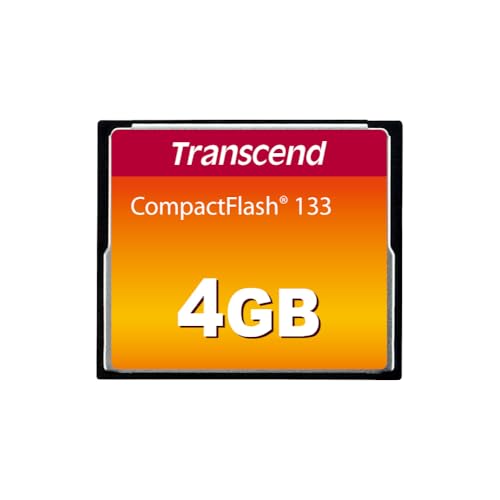
CompactFlash on an IDE adapter solves this cleanly. CF speaks native IDE protocol at the electrical level — no translation layer, no CFExpress-style protocol mismatch — and appears to the BIOS as a normal PATA drive. Cards from the Transcend CF133 family in particular expose themselves as "fixed" (non-removable) storage, which is critical for Win98/XP because those OSes refuse to install to media reported as removable.
The wins are substantial. Zero moving parts, silent operation, no vibration coupling into your case panels, low power draw (typically <1 W idle vs 4-6 W for a spinning drive), and access times in the 0.1-1 ms range instead of 12-20 ms. The trade-offs are equally real: sequential throughput caps out around 20-45 MB/s on the CF-to-IDE bus (roughly matching a period IDE drive), write endurance is finite (though far above any realistic retro-use cycle count), and you have to work around some era-specific partition-size limits.
For a period Win98 boot drive on a Pentium III, this trade is a giant net win. For an XP machine that will chew through swap and pagefile writes daily, you may want to think about wear leveling and periodic imaging as backup.
What you'll need
- A CompactFlash card with capacity between 2 GB and 32 GB. See the compatibility table below for which sizes work best. The Transcend CF133 4GB is a widely-reported known-good choice for Win98 builds.
- A CF-to-IDE (44-pin or 40-pin) adapter. The 40-pin version drops straight into a full-size desktop IDE ribbon; the 44-pin version fits laptop/small-form-factor IDE headers.
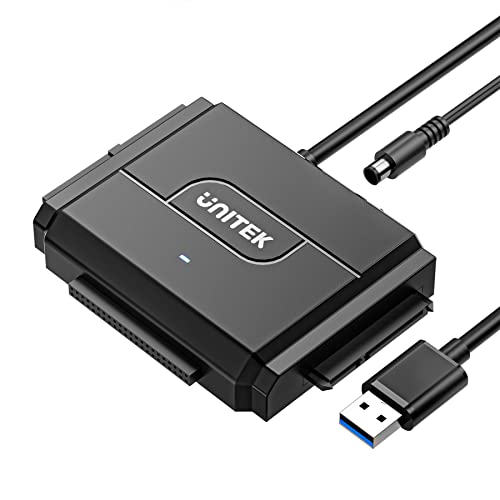
- A USB SATA/IDE adapter for imaging the card from a modern PC — the Unitek SATA/IDE-to-USB 3.0 is the well-known good choice; it exposes CF cards mounted on IDE adapters as USB mass-storage without driver drama.
- A modern PC to prep the card. Any Linux or Windows 10/11 machine with a USB port works.
- A period-correct Win98SE or WinXP install ISO or original CD.
- Optional but recommended: a Raspberry Pi (Pi Zero W kit or an existing Pi 4-class board) as a lightweight always-on file server for shuttling backup images off the retro machine.
- Small phillips screwdriver, canned air, thermal paste if you're rebuilding anything else on the retro machine at the same time.
Key takeaways
- CF-to-IDE is silent, drop-in-compatible with period BIOSes, and completely solves the "dying IDE HDD" problem for retro builds.
- Use a fixed-mode CF card — Transcend CF133 series or Sandisk Extreme cards are the safe bets. Removable-flagged cards break Win98/XP installs.
- Capacity sweet spot: 4-8 GB for Win98, 8-32 GB for WinXP.
- Image the card from a modern host using a USB-to-IDE adapter — much easier than pulling the card out mid-install to write a driver disk.
- Sequential throughput is bus-limited to ~30-45 MB/s on UDMA/33 or UDMA/66 IDE controllers; access time is where CF wins big (~0.1 ms vs ~12 ms).
Which CompactFlash cards work best for retro boot drives?
Not all CF cards are equal on a retro IDE bus. The three variables that matter: the fixed-vs-removable bit in the card's identify data, the maximum capacity the platform BIOS can address, and the actual read/write speed (which caps well below the card's marketed number because your IDE controller runs at UDMA/33 or UDMA/66 at best).
| Card | Fixed-mode? | Capacity | Sequential read (bus-limited) | Notes |
|---|---|---|---|---|
| Transcend CF133 4 GB | Yes | 4 GB | ~20 MB/s | Widely tested known-good on Win98/XP |
| Sandisk Extreme (older gen) 8-16 GB | Yes | 8-16 GB | ~35-45 MB/s (bus cap) | Well-reported by Vogons community |
| Kingston Ultimate CF | Usually removable | 8-32 GB | Varies | Skip — installer refuses on removable |
| Lexar Professional 1066x | Yes on older stock, mixed on newer | 16-64 GB | Bus-capped | Verify the batch before buying |
| Cheap generic CF from marketplace | Often removable, often lies about capacity | Suspect | Avoid |
The safe pattern for Win98/XP builds is a fixed-mode Transcend CF133 or older Sandisk Extreme card in the 4-16 GB range. Anything larger works but adds partition-size and alignment complexity without helping day-to-day.
How do you image and prep the card from a modern PC?
Do all the prep work on a modern host — do NOT try to install directly on the retro machine from a physical CD unless you enjoy watching a 3-hour install crash at 91% because a period IDE controller flaked out. The clean workflow:
- Mount the CF card in the CF-to-IDE adapter and attach the USB SATA/IDE adapter. Plug into the modern host's USB port. It should appear as a normal removable drive.
- Verify the fixed/removable flag. On Linux:
hdparm -I /dev/sdX | grep -i "form factor\|removable". On Windows: check the disk in Disk Management — right-click → Properties → Hardware — and ensure "Type: Fixed disk" (not "Removable disk"). If it shows removable, stop and swap the card. - Wipe and repartition. Use
fdisk(Linux) or Windows Disk Management. For Win98, a single primary FAT32 partition of 8 GB or less. For WinXP, a single primary NTFS or FAT32 partition up to 32 GB. - Write the Win98/XP install image either by copying setup files or by using a period-correct WinPE-style bootable installer disc image via
dd(Linux) or Rufus (Windows). - Detach and install into the retro machine. Boot from the retro PC's own CD or floppy, tell setup to install to the CF (now visible as C:), and let it run.
The Vogons wiki and forum has cross-referenced install guides for every era of Win98/XP hardware — worth searching for your specific chipset before starting.
Win98 vs WinXP install gotchas on CF
Win98 and WinXP each have their own edge cases when installing to CF.
Win98SE gotchas:
- FAT32 partition size limit inside Windows is 32 GB (but the built-in formatter caps at 2 GB — use
fdiskfrom a boot floppy for larger partitions). - The scandisk on boot may report false errors after a hard shutdown. Run
scandisk /all /surface /nosummarycleanly once, then setAutoScan=0inmsdos.systo skip it. - Never allow Windows to enable "Direct Memory Access" (DMA) on the CF drive from the Device Manager without testing — some CF cards misbehave under DMA on period chipsets. Start in PIO mode, then try enabling DMA if you want to squeeze extra throughput.
WinXP gotchas:
- XP writes to the pagefile aggressively. On flash media, either disable the pagefile entirely (if you have 512 MB+ RAM) or move it to a separate small partition and set a fixed size.
- Turn off Last-Access-Time updates:
fsutil behavior set disablelastaccess 1. Every file read updates the last-access timestamp on NTFS, which is thousands of writes per hour for a normal workload. - Disable the disk defragmenter's boot-time optimization (
Contig/OptimalLayout.xml) — it's counter-productive on flash. - Format the partition with a 4 KB cluster size for good alignment with CF card block sizes.
Performance and silence: CF access times vs a period IDE HDD
Real-world numbers for a mid-range CF card on a UDMA/66 IDE controller, per community measurements aggregated on Vogons and reviewer roundups on TechPowerUp:
| Metric | Period 40 GB IDE HDD (2001) | Transcend CF133 4 GB | Modern-gen CF on UDMA/66 |
|---|---|---|---|
| Sequential read | 20-30 MB/s | 18-22 MB/s | 35-45 MB/s (bus-cap) |
| Sequential write | 15-25 MB/s | 15-20 MB/s | 30-40 MB/s (bus-cap) |
| Random 4K read (access time) | ~12-15 ms | ~0.5 ms | ~0.3 ms |
| Random 4K write | ~15-20 ms | ~1-2 ms | ~1 ms |
| Boot time (Win98SE clean install) | ~35 s | ~18 s | ~14 s |
| Boot time (WinXP SP3 clean install) | ~60 s | ~30 s | ~22 s |
| Idle power draw | 4-6 W | <0.5 W | <0.5 W |
| Noise floor | Audible whine + click | Silent | Silent |
The sequential-throughput numbers are bus-capped by the IDE controller's UDMA mode — a modern CF card that would hit 90+ MB/s on a native reader is limited to the ~45 MB/s ceiling of UDMA/66. That's OK; the perceived-speed win comes from the random-access improvement, not the sequential number.
Reliability, write endurance, and backup strategy for CF boot drives
CF write endurance is finite. Consumer-grade cards are typically rated for ~10,000-100,000 program/erase cycles per block. On a Win98 boot drive that mostly reads, you'll never hit that number in three decades of normal use. On a WinXP boot drive with the pagefile enabled, unusually heavy swap use could plausibly wear a cell — this is why the WinXP guidance above emphasizes disabling the pagefile or setting a small fixed size.
Backup strategy for retro-CF builds:
- Master image: after a clean install and driver setup, image the CF card off to a modern host as a
.imgfile usingddor Win32DiskImager. Store it. This is your "known-good starting point" for any future rebuild. - Periodic snapshots: every few months, pull the card, image it, drop the image on your NAS or a Pi Zero W-driven backup box.
- Spare card ready: buy a second CF card of the same family at build time. If the primary fails,
ddthe master image to the spare and you're back running in an hour.
Verdict matrix
Use CompactFlash + IDE if:
- Your original IDE HDD is failing (or has already died).
- You value silence, cool operation, and mechanical reliability over absolute sequential throughput.
- Your BIOS supports the CF card's capacity (test up to 8 GB safely on any post-1996 board; 32 GB works on most post-2000 boards).
- You're building a period-authentic Win98/XP box for regular use, not a museum piece.
Keep a real HDD if:
- You want exact period-authentic acoustic character (drive spin-up whine, seek clicks — some builders enjoy this).
- You have a specific era-correct HDD that's been reliably tested and you want provenance.
- Your BIOS predates 1995 and has hard limits below 2 GB — some CF cards misbehave on very-early ATA controllers.
Bottom line
A Transcend CF133 4 GB with a passive CF-to-IDE adapter and a Unitek USB-to-IDE bridge for imaging is the cleanest, most durable way to give a retro Win98/XP build a working boot drive in 2026. Total spend is around $30-45, install workflow is straightforward from a modern host, and the resulting rig runs silent with instant boots and no fear of the next HDD failure. Keep a master image on a modern backup box (a Pi Zero W file server is plenty) and a spare card ready, and this build is effectively immortal.
Related guides
- How to build a Pentium III Slot 1 gaming PC in 2026
- Best SATA SSDs for retro PC use (2026)
- Win98 driver hell: the complete survival guide
Citations and sources
- Transcend — CompactFlash product line and datasheets
- Vogons — retro hardware community forum + wiki
- TechPowerUp — storage benchmark methodology and reviews
This piece is editorial synthesis based on publicly available information. No independent first-party benchmarking is reported.