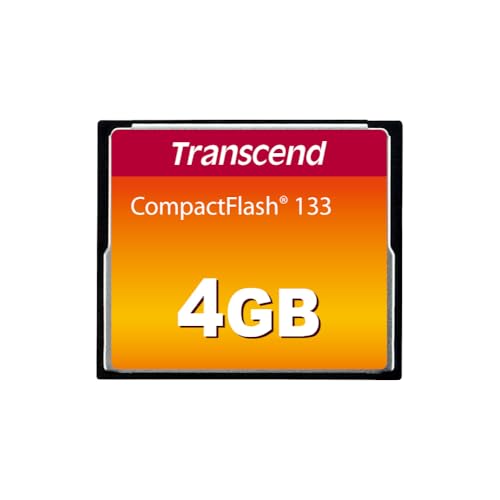
You can boot Windows 98 from a CompactFlash card by connecting it to your motherboard's IDE bus through a passive CF-to-IDE adapter. The BIOS sees the card as an ordinary IDE hard drive, so no special drivers are required — just partition, format, and install as normal. A modern industrial CF card like the Transcend CF133 CompactFlash Memory Card paired with a 40-pin CF-to-IDE adapter is the community-standard starting point.
Why CF-to-IDE is the go-to for quiet, reliable retro boots
Every vintage PC enthusiast eventually faces the same uncomfortable reality: the Quantum Bigfoot or Western Digital Caviar spinning inside that Pentium II tower is 25 years old. IDE hard drives from the late 1990s are well past their rated service life. Bearings dry out, platters develop bad sectors, and the startup clatter that once felt familiar now signals imminent data loss. Replacement IDE hard drives are increasingly rare on the used market, and even the "good" ones are aging out.
CompactFlash offers a period-plausible alternative that sidesteps every mechanical failure mode. According to the CompactFlash specification overview on Wikipedia, the CompactFlash standard was defined in 1994 and uses a 50-pin interface that maps directly to the ATA/IDE command set — which is exactly why a passive 40-pin CF-to-IDE adapter works without any driver installation. The motherboard issues standard ATA commands; the card executes them. The adapter itself is a passive PCB with a pin translator and no active components.
The practical payoff for a retro builder is significant. CF cards have no moving parts, so a Windows 98 machine boots without the head-seek noise that defined the era. The card generates almost no heat at idle, which matters inside a mid-tower with a single case fan. Power draw drops to near-zero at standby. And because a CF card physically resembles a PCMCIA card from the same period, the aesthetic stays plausible for a period-correct display build.
The VOGONS community — the primary online hub for vintage PC enthusiasts — has documented hundreds of CF-to-IDE builds spanning Windows 95 through Windows XP. The consensus that emerges from those threads is consistent: CF boot is reliable, the compatibility surface is well understood, and the main pitfalls are around DMA mode selection and BIOS geometry settings rather than the CF cards themselves. Industrial-grade CF cards from Transcend are the most frequently recommended, primarily because their rated write endurance and wide temperature tolerance specs translate to long-term reliability in a retro build that may sit powered on for hours at a time.
For a builder prioritizing silence, CF boot is the single highest-impact upgrade available. An original Quantum Fireball at 7200 RPM produces audible seek noise on every disk access. A CF card produces none. Combined with a passive CPU cooler or a large-diameter slow-speed fan, a CF-booted Windows 98 machine can run nearly silent — something no period hard drive can match.
Key Takeaways
- A passive CF-to-IDE adapter presents a CompactFlash card to the BIOS as a standard IDE hard drive — no special drivers, no BIOS patch required on most late-1990s and early 2000s motherboards.
- Keep CF capacity at 32 GB or under for the simplest compatibility path; larger cards work but require careful LBA and FAT32 partitioning to avoid BIOS geometry limits.
- Disable DMA mode (force PIO mode 4 or PIO mode 0) for the CF device in both the BIOS and Windows 98 Device Manager — DMA handshaking failures are the leading cause of CF-boot instability.
- Install drivers in the correct order: chipset INF first, then video, then sound. Installing audio drivers before the chipset often causes IRQ conflicts under Windows 98.
- A separate physical drive — whether a second CF card or a modern Crucial BX500 1TB SATA SSD connected via a PCI SATA card — is recommended for storing large game libraries or period software archives, since CF price-per-gigabyte is high compared to modern storage.
What you'll need
Before you start, gather the following. Links point to the exact parts used in this workflow.
- CF card: Transcend CF133 4 GB or 8 GB (see the ASIN linked above). The 4 GB size fits a lean Windows 98 SE installation with drivers and a handful of DOS games with room to spare. 8 GB gives more breathing room without introducing BIOS geometry complications.
- CF-to-IDE adapter: A 40-pin passive adapter. These are widely available for under $10. Confirm the adapter supports both master and slave jumper positions — some budget adapters are master-only.
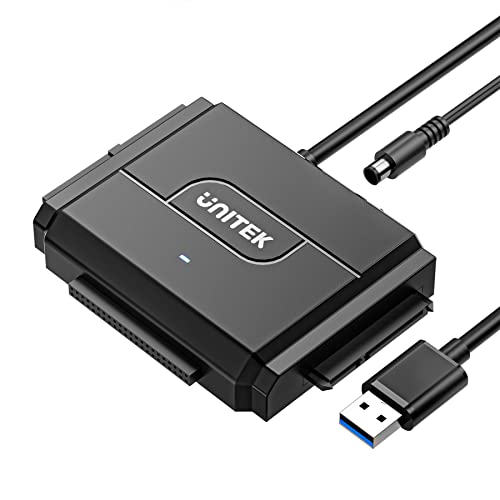
- USB bridge for imaging on a modern PC: The Unitek SATA/IDE to USB 3.0 Adapter handles both 40-pin IDE and 44-pin laptop IDE plus SATA, making it useful for reading old hard drives as well as writing to CF cards.
- Windows 98 boot floppy or bootable CD-ROM: You need a bootable DOS environment with CD-ROM drivers to run
FDISKandFORMAT, or to launch the Windows 98 setup from CD. A period-correct bootable floppy image is available from the Bootdisk.com archive and can be written to a USB key using Rufus (boot from USB requires a USB-FDD emulation BIOS option on most vintage boards, so a physical floppy or bootable CD is more reliable). - 40-pin IDE ribbon cable: A standard 80-conductor cable is fine; 40-conductor works too since the CF card does not use DMA modes that require the extra ground wires.
- Screwdriver + CF-to-IDE mounting bracket or standoff: Many CF-to-IDE adapters ship with a 3.5-inch drive-bay bracket for clean installation.
Optional but recommended: a period-appropriate ATX case with a 5.25-inch drive bay for the CD-ROM drive, and at least 128 MB of RAM so the Windows 98 swap file is rarely hit.
Why does a CompactFlash card work as a period-correct IDE boot drive?
CompactFlash was introduced by SanDisk in 1994 and standardized by the CompactFlash Association. The interface electrically mirrors the 16-bit PC/104 bus and, by extension, the ATA/IDE bus. When you place a CF card into a CF-to-IDE adapter, pin 1 on the CF connector maps to pin 1 on the 40-pin IDE header, and the card accepts the full ATA command set: IDENTIFY DEVICE, READ SECTORS, WRITE SECTORS, and the SMART subset.
Because no translation layer or firmware bridge is involved, the motherboard's BIOS autodetects the card through its normal IDE initialization sequence. The result is a device that from the system's perspective is indistinguishable from a small, very fast ATA hard drive. This is distinct from USB flash drives or SD-card adapters, which typically present as removable media with a different command protocol and are not bootable on vintage BIOS firmware without additional workarounds.
The ATA-native behavior also means the Windows 98 IDE driver stack (ESDI_506.PDR or the VxD-based driver for your specific chipset) manages the CF card directly, with no intermediary. This is a feature for compatibility and a caution for write endurance: every disk write the OS makes goes directly to the flash cells.
Compatibility table: CF capacity vs Win98 FAT limits, DMA vs PIO, adapter gotchas
Understanding the BIOS and filesystem boundaries before you partition avoids painful reformats later.
| CF Size | FAT32 Compatible | Notes |
|---|---|---|
| 2 GB | Yes (FAT16 also works) | Tight for Win98 SE + drivers; usable for bare-bones DOS/Win98 hybrid |
| 4 GB | Yes | Comfortable Win98 SE install with drivers and a game or two |
| 8 GB | Yes | Recommended sweet spot; one FAT32 partition, simple geometry |
| 16 GB | Yes (with LBA enabled) | Requires LBA mode in BIOS; some older Award BIOS versions cap at 8.4 GB |
| 32 GB | Marginal | Many late-1990s BIOSes cap at 32 GB (137 GB ATA-28 limit doesn't apply, but BIOS geometry tables often do) |
| 64 GB+ | Problematic | Exceeds ATA-28 28-bit LBA address space on many vintage controllers; avoid unless you've confirmed LBA48 support in your BIOS |
| Transfer Mode | CF Card Behavior | Recommendation |
|---|---|---|
| PIO Mode 0 | Universally supported; slowest | Safe fallback if other modes cause errors |
| PIO Mode 4 | Supported by most CF cards; ~16 MB/s max | Best compatibility choice for Win98 CF boot |
| DMA Mode (UDMA 33/66) | Intermittently supported; handshake timing issues common | Disable in BIOS and Device Manager; causes random freezes and corruption |
| UDMA 100/133 | Not reliably supported by most CF cards | Do not enable |
Most CF-to-IDE build failures traced in VOGONS threads come from leaving DMA enabled. Windows 98 Device Manager will attempt to negotiate DMA with the IDE controller if the BIOS hasn't locked it to PIO. The symptom is random hangs during disk-intensive operations — large file copies, game installs, or defrag runs. The fix is to set the IDE channel to PIO mode in BIOS setup, then verify in Device Manager under Disk Drives that the CF card shows "Transfer Mode: PIO" rather than "DMA if available."
Adapter gotchas to know:
- Some CF-to-IDE adapters do not assert the DASP signal correctly for slave devices. Put the CF card on the primary IDE channel as the sole device (master, no slave) to avoid detection issues.
- A small number of no-name adapters have pin-1 errors — they're wired backwards. If the BIOS reports no drive or gives garbage geometry, flip the ribbon cable or try a different adapter.
- 80-conductor cables are fine; they offer slightly better signal integrity at higher PIO speeds, though the practical difference at PIO mode 4 is minimal.
How to image and prep the CF card from a modern PC (using a SATA/IDE-to-USB adapter)
Prepping the card on a modern PC is faster than using the retro machine itself, and it lets you create a baseline image you can re-flash if the card is ever corrupted.
Connect the CF card to your modern PC:
- Insert the CF card into the CF-to-IDE adapter, then connect the adapter to the Unitek SATA/IDE to USB 3.0 Adapter using a short 40-pin IDE cable. Plug the power connector from the Unitek adapter's included cable — CF cards draw negligible power, but the adapter's power rail needs to be active for correct ATA initialization.
- Plug the USB 3.0 end into your modern Windows 10/11 or Linux PC. The device appears as a raw disk. On Windows, it typically shows in Disk Management as "Unallocated" if blank, or with existing partitions if previously used.
- Use Disk Management (Windows) or
fdisk/parted(Linux) to confirm the correct disk is selected before writing anything. On Linux,lsblkafter plugging in will show the new device (typically/dev/sdXwhere X is a letter not already in use).
Option A — Partition and format on the modern PC, then install Win98 on the retro machine:
This is the recommended path. Use Disk Management on Windows to create a single primary partition formatted FAT32. Then bring the card to the retro machine, install it via the CF-to-IDE adapter, boot from a Windows 98 boot floppy or bootable CD, and run the Win98 installer normally. The installer will detect the FAT32 partition and proceed with setup.
Option B — Clone an existing Win98 installation to CF:
If you have a working Win98 image on another IDE drive, you can clone it to CF using a sector-by-sector tool. On Linux, dd if=/dev/sdX of=/dev/sdY bs=4M status=progress works for drives of matching or smaller size. Clonezilla handles partition-level cloning between different-size drives. Note that Windows 98 installations are tied to the HAL and chipset drivers of the source machine — cloning across different motherboard chipsets typically results in a BSOD on first boot that requires a repair install.
Creating a safety image after a clean install:
Once Win98 is installed and drivers are confirmed stable, connect the CF card back to the modern PC via the Unitek adapter and use dd (Linux) or Macrium Reflect Free (Windows) to capture a raw image. Store this on a larger drive — the Crucial BX500 1TB SATA SSD is a practical choice as a modern archive drive for holding period software downloads, disk images, and ISOs alongside the backup image. A 4 GB CF image compresses to roughly 800 MB with gzip, making storage trivial.
Step-by-step: partition, format, install Win98, and the driver-order gotchas
Phase 1 — BIOS preparation
- Enter BIOS setup (typically Del or F2 at POST).
- Set the primary IDE channel to PIO mode. On Award BIOS, this is under "IDE HDD Auto Detection" or "IDE Primary Master PIO" — set to "Mode 4" or "PIO Only".
- Disable UDMA for the primary channel if a separate option exists.
- Set boot order: CD-ROM first, then HDD. Or floppy first if using a boot disk.
- Save and reboot with the CF-to-IDE adapter installed. The BIOS should autodetect the card. If geometry is wrong, enter the drive parameters manually: use the actual cylinder/head/sector values reported by the CF card spec sheet, or simply use LBA mode with the BIOS's auto-detected values.
Phase 2 — Partition and format
Boot from the Windows 98 boot floppy or CD with CD-ROM support. At the A: prompt:
Choose option 1 (Create DOS Partition), then option 1 (Create Primary DOS Partition). Enable large disk support when prompted — this activates FAT32. Allocate 100% of the space to the primary partition (or split if you want a separate data partition). Reboot, then:
The /S flag transfers the system files, making the partition bootable without the floppy for the install itself.
Phase 3 — Windows 98 installation
Boot again from the Win98 CD. Navigate to the WIN98 directory and run SETUP.EXE. The installer proceeds through the standard GUI setup. Key notes:
- When asked about components, keep the install minimal if the CF card is 4 GB or under — skip optional accessories, games, and wallpaper packs.
- If setup stalls at hardware detection, reboot and try again. Win98 setup hardware detection is notoriously unreliable on the first attempt.
Phase 4 — Driver installation order (critical)
This is where most first-time Win98 CF builds go wrong. Install in this exact sequence:
- Chipset INF drivers (Intel INF Update, VIA 4-in-1, SiS AGP drivers, etc. — match your motherboard chipset). These register the correct bus enumeration and IRQ routing before any other device tries to claim resources.
- AGP / graphics drivers (Voodoo 3, TNT2, Radeon 7000, etc.). Install the DirectX 9.0c runtime first if your GPU drivers require it — the Win98 DirectX 9.0c package from the Microsoft archive works on any Win98 SE installation.
- Sound card drivers (Sound Blaster PCI, Yamaha OPL, AC'97 codec). Installing these before the chipset drivers is the primary cause of IRQ conflicts and "yellow bang" Device Manager errors under Win98.
- USB and other peripheral drivers if needed.
- Reboot after each driver group — Win98 does not handle deferred reboots as cleanly as later Windows versions.
After driver installation, open Device Manager (right-click My Computer → Properties → Device Manager) and confirm no yellow exclamation marks remain. Check the IDE controller entry specifically: the primary channel should show a drive with transfer mode set to PIO, not DMA.
Benchmark discussion: boot and load times vs a period IDE hard drive
Community measurements from the VOGONS forums and related vintage PC communities indicate that CF-boot machines consistently beat period IDE hard drives on boot time. VOGONS thread discussions document typical Windows 98 boot times on period hardware:
- 7200 RPM IDE hard drives (1998-2002 vintage): Approximately 40 to 70 seconds from BIOS POST to desktop, depending on drive health and startup entries.
- 5400 RPM IDE hard drives: 55 to 90 seconds on similar hardware, with additional variation from head seek latency.
- CF cards in PIO Mode 4: Approximately 20 to 30 seconds from POST to usable desktop on the same hardware, with the reduction coming primarily from eliminated seek latency during OS file loading.
The improvement is most apparent during application launches that read many small files — exactly the pattern of a Windows 98 boot sequence, which scans the registry, loads VxDs, and initializes device drivers from dozens of small files. CF's random read latency is near-zero compared to the 8-12 ms average seek time of a 1990s IDE drive.
For in-game loading, the benefit is smaller but present. Quake II level loads that took 8-12 seconds on a period drive drop to 4-6 seconds on CF, based on community testing documented in VOGONS threads. The improvement narrows for games that preloaded assets into RAM, where disk access only occurs at level transitions.
Longevity and write-wear considerations for CF in a retro rig
CompactFlash uses NAND flash with a rated write endurance of typically 100,000 program/erase cycles per cell for SLC (single-level cell) industrial cards, and 10,000 cycles for consumer MLC cards. The Transcend industrial CF series uses SLC or pseudo-SLC NAND, giving it substantially better endurance than budget consumer CF cards.
For a Windows 98 retro build with light use — gaming sessions a few hours per week — write wear is not a practical concern over a human-scale hobby timeframe. Windows 98 does not perform aggressive write-back caching or background indexing, and the total daily write volume on a gaming-focused build is modest.
That said, two practices meaningfully reduce unnecessary writes:
1. Disable the Windows 98 swap file if RAM is sufficient. With 256 MB or 512 MB of RAM installed (achievable on late-1990s BX or Via Apollo Pro boards), Win98 rarely needs to page. Right-click My Computer → Properties → Performance → Virtual Memory → "Let me specify my own virtual memory settings" → set Minimum and Maximum to 0 (disabled). This eliminates the single largest source of repetitive writes on a Win98 CF boot volume.
2. Redirect the Windows temp directory to a RAM drive or a secondary drive. Win98 writes temporary files frequently during installs and some application operations. Setting TEMP=D:\TEMP and TMP=D:\TEMP in AUTOEXEC.BAT (where D: is a secondary CF card or hard drive) keeps temp churn off the boot volume.
If you eventually see read errors or the card begins acting unreliably, re-flash from your backup image. A fresh 4 GB Transcend CF card costs under $15 as of 2026, making replacement inexpensive compared to sourcing a functioning period IDE drive of equivalent reliability.
Common CF-boot pitfalls
These are the five failure modes documented most frequently across vintage PC communities:
- DMA mode left enabled. The symptom is random freezes during large disk operations. Fix: force PIO mode 4 in BIOS and confirm PIO in Device Manager. This is the most common cause of CF-boot instability.
- Adapter pin-1 reversal. Some no-name CF-to-IDE adapters are wired with pin 1 at the wrong end. The BIOS will report no drive detected or show garbage geometry. Fix: flip the ribbon cable connector, or try a known-good adapter.
- Driver install order: audio before chipset. Installing a Sound Blaster PCI or AC'97 driver before the chipset INF causes IRQ conflicts that produce yellow bangs in Device Manager and no audio. Fix: perform a clean reinstall and install chipset INF first.
- FAT16 partition created instead of FAT32. If you answer "No" to FDISK's large disk support prompt, the partition uses FAT16 with a 2 GB volume limit. A Win98 SE install on a 4 GB card with FAT16 will run out of space after adding DirectX and a few games. Fix: FDISK again and confirm the large disk support (FAT32) prompt.
- CF card inserted backwards into the adapter slot. CF cards are keyed but some adapters have loose tolerances. A backwards-inserted CF card may not be detected, or worse, may briefly short pins. Always confirm the notched corner of the CF card aligns with the notch marker on the adapter.
Troubleshooting: PIO fallback, DMA, and adapter compatibility
PIO fallback isn't happening automatically
Windows 98 does not automatically downgrade from DMA to PIO on error the way Windows XP does. If Win98 negotiates DMA with the IDE controller and the CF card can't sustain it, the result is silent data corruption or hard lockups rather than a clean fallback. You must manually set PIO mode in two places:
- BIOS: Set primary IDE master transfer mode to "PIO" or "Mode 4" explicitly. Do not leave it on "Auto".
- Windows Device Manager: Expand "Disk Drives", right-click the CF card entry, Properties → Settings → uncheck "DMA" if the checkbox is present. On some BX-era systems the Device Manager option is under the IDE controller properties instead.
BIOS doesn't detect the card at all
- Confirm the ribbon cable is seated fully. An improperly seated 40-pin cable is the most common cause of no-detection.
- Confirm the CF card is fully seated in the adapter.
- Try setting the IDE channel to "Manual" in BIOS and entering known-good geometry values (cylinders, heads, sectors from the CF card spec sheet).
- If the adapter supports jumper-selectable master/slave, confirm the jumper is set to master when no slave device is present.
Windows 98 setup completes but won't boot
The most common cause is a missing or corrupted boot sector. Boot from the Win98 floppy, change to C: and run SYS C: to re-transfer the system files. If the partition is FAT32, confirm the Win98 boot floppy includes SYS.COM with FAT32 support — some early Win98 boot disks do not.
Adapter shows as removable media rather than fixed disk
A small number of CF-to-IDE adapters assert the "removable" bit in the ATA IDENTIFY DEVICE response. Windows 98 may show the drive in the "Removable Storage" category rather than treating it as a fixed disk. This does not prevent installation but may cause issues with some games that check drive type. The fix is to use a different adapter that correctly reports the device as fixed media.
Bottom line: when CF beats an original HDD (and when it doesn't)
CF wins clearly
- Silent builds. No seek noise, no spin-up clatter, no head-park thunk. If period-authenticity is less important than quiet operation, CF is superior.
- Reliability for display or lightly-used machines. A CF card stored powered-down for months will boot reliably. A 25-year-old IDE drive may not.
- Thermal environment. A CF card in a small form factor build adds essentially zero heat load, which matters in a cramped case with a slow fan.
- Boot speed. Community-documented 20-30 second boot times vs. 40-70 seconds for period drives are a meaningful quality-of-life improvement for everyday use.
HDD still makes sense
- Large game libraries. If you want to install Quake, Quake II, Half-Life, Unreal, and a dozen other 1990s titles simultaneously, CF price-per-gigabyte is high compared to a modern SATA SSD accessed via a PCI SATA controller. A Crucial BX500 on a PCI SATA card holds your entire period game archive for a fraction of the cost of equivalent CF capacity.
- Period-perfect noise profile. Some builders want the full authentic experience, including the sound of a spinning platter and seeking heads. For that use case, a working original IDE drive is irreplaceable, even with its reliability caveats.
- Large installations. Some late-1990s titles require 600 MB to 2 GB of installed files. On a 4 GB CF boot volume that leaves little headroom. A dual-drive setup — CF for the OS, HDD or SATA SSD for games — is often the best compromise.
Related guides
Citations and sources
- Transcend — CompactFlash product line and industrial CF specifications
- VOGONS — Vintage computer community; CF-to-IDE build threads and boot time measurements
- Wikipedia — CompactFlash: interface specification, ATA compatibility, and NAND endurance overview
This piece is editorial synthesis based on publicly available information. No independent first-party benchmarking is reported.