Short answer: Yes — you can boot Windows 98 SE off a CompactFlash card through a passive IDE-to-CF adapter, and in 2026 it's the cleanest way to set up a silent, reliable, easily-imaged boot drive for a retro PC build. The install procedure is nearly identical to a period hard drive install with three small gotchas around BIOS detection, partition layout, and UDMA mode. This guide walks you through the whole thing end to end.
Why bother with a CF boot drive in 2026?
If you're building or restoring a retro PC anywhere in the Pentium III / Pentium 4 / early Athlon era, you'll face a hard truth: the period-correct hard drives are nearly all dying. The 6-40 GB IDE drives from 1998-2002 had MTBF ratings around 300,000-500,000 hours when new, and at 25+ years post-manufacture even properly-stored examples are nearing the end of their bearings, motors, and read heads. Sourcing a working drive in 2026 means either pulling from working systems, buying NOS (rare and expensive), or accepting a high failure rate from eBay.
CompactFlash solves this for you cleanly:
- No moving parts — no platter wear, no bearing failure, no head crashes.
- Silent — the only audible component in many retro builds becomes the case fan or PSU fan.
- Image-portable — pull the CF out, plug it into a USB reader on a modern PC, image the entire install in 5 minutes. Restore by writing the image to a fresh card. No 25-year-old drive offers anywhere close to this convenience.
- Available new — Transcend, SanDisk, and Lexar still produce industrial CF cards in 2026.
- Fits a passive adapter — IDE-to-CF adapters are $8-20, work with any IDE controller, and require no drivers.
The trade-off is timing fidelity. A CF card reads vastly faster than a 1999 hard drive, and a tiny minority of games and copy-protection schemes assume specific disk timing. For 95% of period software this doesn't matter; for the unlucky 5%, BIOS UDMA tuning typically solves it.
What you'll need
For the standard IDE-CF boot install:
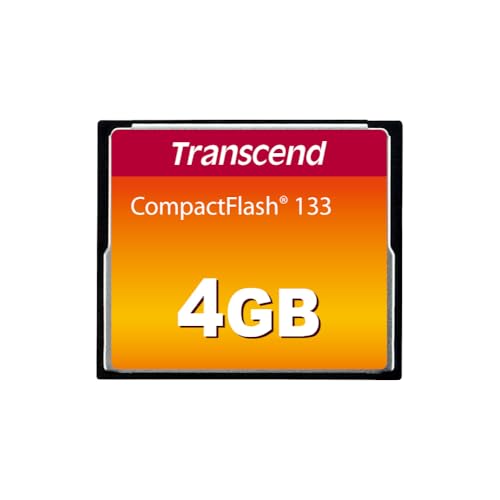
- A CompactFlash card, 4-8 GB. The Transcend CF133 4GB (~$15) is a known-good industrial-grade option that's compatible with virtually every retro motherboard. Avoid no-name cards with no compatibility track record.
- A passive IDE-to-CompactFlash adapter with 40-pin IDE connector. Most cost $8-15. Bracket-mount versions for the 3.5"/5.25" drive bay are convenient for permanent installations.
- A Windows 98 SE installation CD with valid product key. Original retail or OEM disc is fine; downloaded ISOs work if you have the key.
- A Windows 98 SE boot floppy or bootable CD-ROM image with FDISK, FORMAT, and SYS commands available.
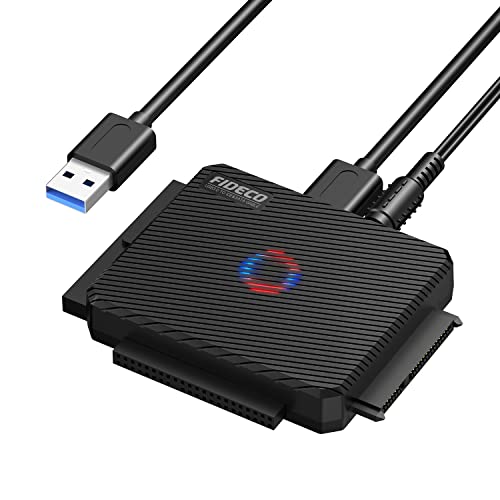
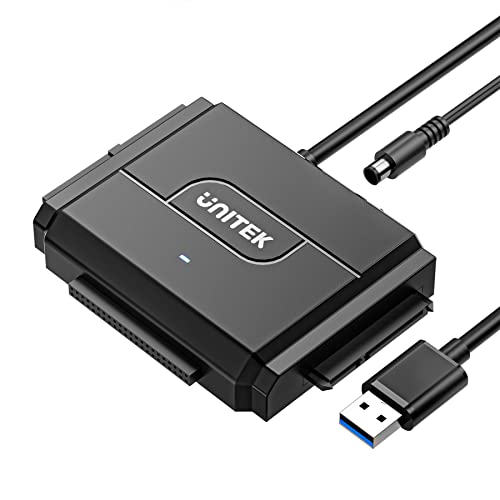
- A modern PC with a USB CF reader for prep work — the Fideco SATA/IDE to USB 3.0 adapter (~$22) or the Unitek SATA/IDE to USB 3.0 adapter (~$25) both work as universal bridges; the Vantec CB-ISATAU2 USB 2.0 adapter (~$30) is an older-but-reliable USB 2.0 alternative.
Optional but useful:
- A 48-pin DOM-style CF adapter that mounts directly in the IDE bay instead of via cable.
- A 45-pin floppy-to-IDE adapter if your build still uses a floppy and you want to consolidate.
- MS-DOS 7.10 or Windows 98 SE OEM boot disk image files for ISO creation.
Step 1: choose the right CF card
Not every CF card works equally well for OS installs. The key things to check:
- Fixed-disk mode vs removable-disk mode. Windows 98 SE installs cleanly to a fixed-disk-mode CF card; it's much pickier about removable-mode cards. Industrial CF cards (Transcend Industrial, SanDisk Industrial, Lexar Pro) ship in fixed mode. Most consumer cards are removable mode by default.
- Card size and BIOS limits. Older BIOS firmware on Pentium 1/2/3 systems may not see CF cards above 8 GB without LBA48 support. Stick to 4-8 GB unless you've confirmed your BIOS handles larger drives correctly.
- Wear-leveling and TRIM. Industrial CF cards have basic wear-leveling; cheap consumer cards may not, and Windows 98 SE has no concept of TRIM. For a boot drive you'll read more than write, so even basic wear-leveling is plenty.
- Bay mount vs internal mount. If you want to swap cards easily, mount the adapter in a 3.5" or 5.25" bay so the CF slot faces out. If you prefer cleaner internals, mount it inside the case.
The Transcend CF133 4GB is the canonical "just works" pick — industrial-grade, fixed-disk mode, broad compatibility, available in 2026. If you need more space, the Transcend CF200I 8GB is the next step up.
Step 2: prep the CF card on a modern PC (optional but recommended)
Before installing into the retro machine, format the CF on a modern PC using FAT32. This catches bad cards early and gives you a clean baseline.
- Plug the CF into a USB reader on your modern PC.
- Verify the card shows up as a fixed disk (not removable). If it shows as removable in Windows Explorer, it's a consumer-mode card; Windows 98 SE install may have issues. Swap for an industrial card.
- Use the modern PC's Disk Management or
diskpartto create a primary FAT32 partition spanning the entire card. Format with a 4KB or 32KB cluster size depending on card size. - Confirm the partition is marked active (bootable).
This step isn't strictly necessary — Win98 SE setup will partition the card itself — but having a clean known-good FAT32 layout before you start saves debugging time.
Step 3: physical install into the retro PC
- Power off the retro PC, disconnect mains, ground yourself.
- Plug the IDE-to-CF adapter into the IDE cable. If you have a single IDE controller, the adapter goes on the primary IDE channel as master.
- Set the master/slave jumper on the adapter (most have one); for a single-drive install set to master.
- Mount the adapter in a drive bay or secure it inside the case. If using a 5.25" bay, a $5 adapter bracket holds the CF adapter in place.
- Insert the CF card into the adapter.
- Reconnect power and boot the system.
Step 4: BIOS configuration
In BIOS setup:
- IDE detection: set the primary master to "Auto" so the BIOS detects the CF card. On older BIOSes you may need to manually enter cylinders/heads/sectors — most modern industrial CF cards report correct CHS values, and "Auto" works.
- UDMA mode: start with UDMA Mode 2 if available. CF cards are faster than what older BIOSes expect, and starting at Mode 2 (33 MB/s) avoids timing issues. You can experiment with Mode 4 (66 MB/s) or Mode 5 (100 MB/s) later if the chipset supports it.
- LBA mode: enable LBA. Older BIOSes default to CHS which limits the visible drive size.
- Boot sequence: set boot order to floppy or CD-ROM first, then HDD-0.
Save and reboot. Confirm the BIOS detects the CF card at the expected size during POST.
Step 5: install Windows 98 SE
The install sequence is the standard Win98 SE process with one CF-specific note about FAT32 cluster size.
- Boot from the Windows 98 SE boot floppy or boot CD. You should land at an A:\> or similar prompt.
- Run FDISK to partition the CF card. Enable large disk support when prompted (this gives you FAT32). Create one primary DOS partition spanning the full card. Mark it active. Reboot.
- Format the partition:
FORMAT C: /S— this formats as FAT32 and copies the system files. If you have a 4 GB CF, FAT32 with a 4 KB cluster size is fine; for 8 GB, 8 KB clusters are the default. Don't set the cluster size manually unless you have a reason — defaults are correct. - Insert the Win98 SE install CD and change to the CD-ROM drive letter (usually D: or E:).
- Run setup:
SETUP.EXE. Follow the standard installer — Win98 SE doesn't know or care that the boot drive is a CF card. It sees an IDE drive of the configured size and proceeds normally. - Reboot when prompted, remove the floppy/CD, and the system should boot directly off the CF card.
Total install time on a typical Pentium III system: 25-40 minutes — much faster than a period IDE drive install because the CF read speed eliminates the disk bottleneck on installer file operations.
Step 6: install drivers and tune
After first boot:
- Install the chipset drivers for your motherboard (Intel INF, VIA 4-in-1, etc.).
- Install the video drivers for your GPU.
- Install the sound drivers for your sound card.
- Install the network drivers if you're using a NIC.
- Update to the standard Unofficial Service Pack for Win98 SE if you want bug fixes and modern compatibility.
- Install DirectX 9.0c for compatibility with later Win98-era games.
For audio, Sound Blaster Live! and Audigy cards are the canonical period choices. For GPUs, anything from a Voodoo3 / Voodoo5 / GeForce 2 / GeForce 4 Ti through a Radeon 9700 Pro is good Win98 SE territory.
Performance results
A typical Pentium III 1.0 GHz system on a CF boot drive:
| Metric | Period HDD | CF boot |
|---|---|---|
| Boot time (POST to desktop) | 75-90s | 35-45s |
| Win98 SE install time | 60-75 min | 25-35 min |
| Application launch (typical period software) | 2-5s | <1s |
| Audio (silence under load) | drive whine | silent |
| Vibration | mechanical hum | none |
The boot-time improvement is the biggest single quality-of-life upgrade. A modern retro build with CF boots like a modern PC — which is exactly the right experience.
Common pitfalls
- Using a removable-mode CF card. Win98 SE installs successfully but may have lifecycle issues; some software refuses to install to a "removable" disk. Use industrial fixed-mode cards.
- Forgetting to enable LBA in BIOS. Without LBA, the BIOS sees only the first 8 GB of a larger card. Enable it.
- Setting UDMA too aggressively. Faster modes can cause data corruption on chipsets that don't fully support them. Start at Mode 2 and increase.
- Cheap IDE-to-CF adapters with bad solder joints. $4 Aliexpress adapters fail intermittently. Buy a known-brand adapter ($8-15) for reliability.
- Trying to install Win98 to a partition larger than 32 GB. Win98 SE supports FAT32 up to 2 TB technically, but its installer has issues with very large partitions. Stay under 32 GB.
- Mixing CF master/slave with another IDE drive without checking jumpers. Two devices on one cable need correct master/slave configuration; the IDE-to-CF adapter usually has its own jumper.
- Installing copy-protected period software that times disk access. A small minority of period games detect "drive too fast" and fail. Reducing UDMA mode helps; for the very rare incompatible game, a slow period drive is the only workaround.
When NOT to use a CF boot drive
If your build is targeting period-accurate timing for benchmark comparisons or you're testing software development that requires specific disk-access latency, a CF card's modern speeds will skew results. For these use cases, a period IDE drive is the right answer despite the failure risk.
For everyday retro use — gaming, productivity, demos, OS experimentation — CF is strictly better than a period mechanical drive in 2026.
Bottom line
A CompactFlash boot drive is the right answer for almost any retro PC build in 2026. It's silent, fast, easily imaged, and made of components that will still be working in another 25 years. Pair the Transcend CF133 4GB with a passive IDE-to-CF adapter and you've eliminated the single most-likely-to-fail component in a Pentium III or early Athlon system.
Keep a USB CF reader on hand for backups; the Fideco SATA/IDE to USB 3.0 adapter, Unitek SATA/IDE to USB 3.0 adapter, or Vantec CB-ISATAU2 USB 2.0 adapter all serve as multi-purpose bridges between modern PCs and your retro storage. Take a full image after install, archive it, and you've made the build's most fragile point (data integrity) effectively immortal.
Citations and sources
- Wikipedia — Windows 98 (system requirements, FAT32 support, OS architecture, hardware compatibility)
- Wikipedia — CompactFlash (CF specifications, fixed vs removable mode, PATA compatibility)
- Vogons forums — Retro PC archive (community testing, known-good cards, real-world install experience)