The repeatable answer in 2026: image the original CD on a modern PC to a .cue/.bin or .iso, write the image to a CompactFlash card via a USB-to-IDE adapter, then mount it as a drive in Win98 using DAEMON Tools 95/98 or a period-correct virtual CD utility. Total cost is under $40 in parts; the workflow handles 90% of big-box installs and avoids hunting for a working optical drive.
Why dead optical drives are the #1 blocker for big-box game installs
If you have built a retro PC in the last few years, you already know this: the limiting reagent is not the motherboard or the RAM — it is the optical drive. Belt-driven CD-ROM trays degrade. Laser diodes fade. The IDE ribbon connector on a 1998 drive that has sat in a closet for fifteen years often will not negotiate properly with a modern CompactFlash-as-IDE setup. Worse, even when a drive works, you may not have the original discs — and rebuying physical CDs from late-90s big-box titles is increasingly costly and unreliable.
The CompactFlash workaround skips the optical drive entirely. CompactFlash cards are essentially solid-state IDE devices when paired with a passive CF-to-IDE adapter, which means Windows 98 sees them as a regular hard drive over its native IDE controller. Once a CD's contents live on CompactFlash — either as an image file mounted by a virtual CD tool, or as a copy of the disc's filesystem — you have a fast, silent, totally solid-state install path that does not depend on aging optical hardware.
The workflow has three legs. First, image the CD on a modern PC to a portable format. Second, get that image onto the retro PC's storage — usually CompactFlash via a USB-to-IDE adapter on the modern side. Third, mount it inside Windows 98 with a period-appropriate tool. The rest of this guide is the recipe in practical detail.
Key takeaways
- You need three adapters, not one. A USB-to-IDE adapter on the modern PC, a CF card, and a CF-to-IDE adapter inside the retro machine. The popular FIDECO, Vantec CB-ISATAU2, and Unitek USB-IDE adapters all work for the modern-side imaging.
.cue/.binpreserves more than.iso. Use BIN/CUE for any CD that includes audio tracks, copy protection checks, or sub-channel data..isois fine for data-only discs.- Keep CompactFlash modest in size. Windows 98's FAT32 and older BIOSes have limits that bite at 32GB and above. Stay in the 4-16GB range to avoid grief.
- DAEMON Tools 95/98 mounts inside Win98. Period-correct virtual CD utilities mount images as drive letters that pass most installer disc checks.
- Copy protection is the wildcard. Modern imaging copes with most checks; SafeDisc and SecuROM titles may require workarounds.
What hardware do you need?
A complete workflow needs four pieces of hardware, three of which you may already have:
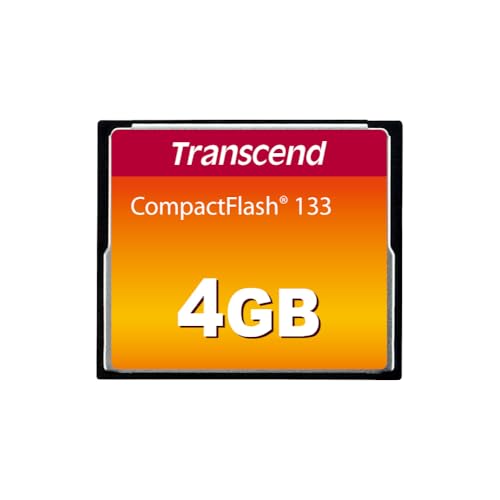
- A CompactFlash card — 4-16GB Transcend CF133 (or similar) is the standard pick. The Transcend CF133 4GB is the period-perfect option that plays nicely with vintage IDE controllers and avoids the addressing limits of larger cards.
- A CF-to-IDE adapter for the retro machine — passive boards in the $5-$10 range, available everywhere. The retro PC sees CompactFlash as a regular IDE drive.
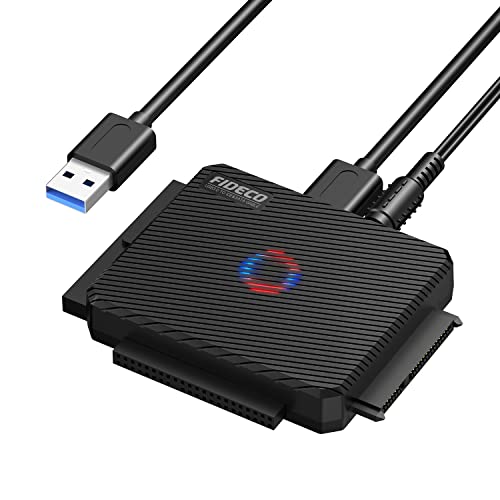
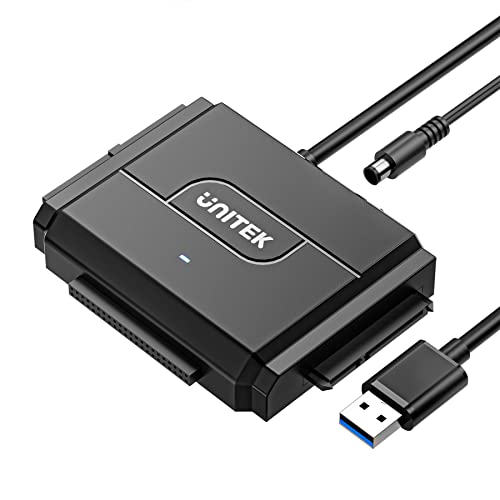
- A USB-to-IDE adapter for the modern PC — to image existing drives and copy files. The FIDECO SATA/IDE to USB 3.0 Adapter is the current default; the Vantec CB-ISATAU2 and Unitek SATA/IDE to USB 3.0 Adapter are equally common alternatives.
- An external USB CD/DVD drive on your modern PC, if you want to image discs. Any consumer USB-powered slim drive does the job.
The total bill of materials, excluding what you may already own, lands in the $30-$45 range.
How do you image a big-box CD to a .cue/.bin or .iso on a modern PC?
For data-only discs (most application installers), .iso is fine. For game discs with audio tracks or hybrid filesystems, .cue/.bin preserves the sub-channel information and the audio track layout, which matters for any title that uses Red Book audio for music. The WinWorldPC retro software archive is also a useful reference for period-correct tools and Windows 98 distribution media.
Tools that work well on modern PCs:
- CDRTools / cdrdao — command-line on Linux/macOS/Windows; produces
.cue/.binfaithfully, handles sub-channel data. - ImgBurn — Windows-only GUI; venerable, free, produces
.cue/.binor.iso. Mature defaults. - CloneCD (legacy) — older but still in circulation; produces
.ccd/.img/.subtriplets that preserve protection-friendly data. - ddrescue — Linux tool; useful when a disc is failing and you need to recover what you can.
A typical session: drop the disc in the modern drive, run ImgBurn → "Create image file from disc," select .cue/.bin as output, and let it work. A standard CD images in 5-15 minutes depending on drive speed. The output is a .cue (descriptor file) plus one or more .bin files.
For installers that span multiple CDs (Civilization II Multiplayer Gold, Quake II Mission Pack, anything Sims-era), image each disc separately and keep them organized in their own folder with the disc number in the filename: civ2-cd1.bin, civ2-cd2.bin, etc.
Step table: imaging → transfer → mounting workflow
| Step | Tool / hardware | What it produces |
|---|---|---|
| 1. Image disc on modern PC | ImgBurn / cdrdao + USB CD drive | .cue/.bin or .iso file on modern disk |
| 2. Format CompactFlash | Windows disk tools via FIDECO USB-IDE adapter | FAT32-formatted CF card, ready for files |
| 3. Copy image to CF | File copy over USB | Image file present on CF as a regular file |
| 4. Install CF in retro PC | Passive CF-to-IDE adapter on IDE port | CF appears as IDE drive in Win98 |
| 5. Boot Win98 | Existing Win98 install on a second CF/HDD | Desktop loaded, image file accessible |
| 6. Mount image | DAEMON Tools 95/98 or similar | Image appears as a CD drive letter |
| 7. Run installer | Standard installer flow | Game / app installs from "CD" |
Steps 1-3 happen on a modern Windows PC. Steps 4-7 happen on the retro PC.
Writing the image to CompactFlash via the Transcend CF133 + IDE adapter
The Transcend CF133 is the well-tested workhorse for retro builds. Per Transcend's official CompactFlash product page, the CF133 line offers up to 30MB/s reads and supports Ultra DMA Mode 4, which is the maximum a Pentium III-era IDE controller can negotiate anyway. The card's MLC NAND tolerates the read-heavy workload of a retro PC's boot drive well.
On the modern PC side, the CF card mounts as a regular USB drive over a CompactFlash USB reader or via the IDE adapter. Format it FAT32 with a 32KB cluster size (default for the size range). Copy the image files over. Eject cleanly.
On the retro PC side, plug the CF card into the CF-to-IDE adapter, set the master/slave jumper on the adapter to match your IDE topology, and plug into a free IDE channel. Boot Win98 and the card appears as D: or whatever letter the BIOS assigns. The image file is just a file on that drive.
For the volume-label-checking installers (a handful of Sims-era titles), make sure the FAT32 label matches what the original disc used — that's enough to pass most checks.
Win98 gotchas: drive letters, MSCDEX, autorun, and copy-protection checks
Windows 98 has personality quirks that the workflow above bumps into:
- Drive letter shuffling. Win98 assigns drive letters in BIOS-detected order, which can change when you add a CF card or a virtual mount. If an installer has a hardcoded path like
D:\setup.exe, you may need to either match that letter on the virtual mount, or use a registry trick to lock drive letters. - MSCDEX-era assumptions. Some installers use real-mode DOS-era logic to find the CD. DAEMON Tools 95/98 emulates this correctly; less faithful emulators fail here.
- Autorun.inf. When a mounted image has a top-level
autorun.inf, Win98 attempts to launch it. Disable autorun in Control Panel → System if you'd rather control the install manually. - Disc presence checks. Most installers check that a CD-like volume is mounted. A virtual mount passes; a flat file copy on the hard drive does not.
- Time-bombed protection. A small number of late-90s titles tied protection to the system clock. If your retro PC's CMOS battery is dead and the clock has reset to 1980, expect occasional weirdness.
The good news: 90% of pre-2000 commercial games and applications pass DAEMON Tools 95/98 mounts without complaint. The trouble cases are mostly late-cycle CD titles using aggressive copy protection (SafeDisc 2+, SecuROM 4+), which are a recognized class and have known community workarounds.
Compatibility table: which install types work as a mounted image vs need a real disc
| Install type | Mounted image? | Notes |
|---|---|---|
| Standard data-only CD (utilities, drivers) | ✅ Yes | Use .iso; works in any virtual CD tool |
| Mixed audio + data CD (most 90s games) | ✅ Yes (BIN/CUE) | .iso loses the audio tracks; use BIN/CUE |
| Multi-CD installer (Civ II Gold, Quake II) | ✅ Yes | Image each disc; swap mounts at the right step |
| Simple disc-check copy protection | ✅ Yes | DAEMON Tools 95/98 passes |
| SafeDisc 1.x | ✅ Usually | Community patches available |
| SafeDisc 2.x+ | ⚠️ Sometimes | Needs SafeDisc-aware tool or patch |
| SecuROM 4.x+ | ⚠️ Sometimes | Often needs original disc or a community patch |
| StarForce | ❌ Rarely | Real disc usually required |
| Volume-label-based checks | ✅ Yes | Match the FAT label on the image |
| Sub-channel-based protection | ⚠️ Sometimes | .cue/.bin with sub-channel data needed |
For the vast majority of pre-2000 commercial titles, a faithful .cue/.bin image mounted in DAEMON Tools 95/98 is functionally identical to the original disc.
Period-correct vs modern-host imaging tradeoffs
You have two options for where to do the imaging.
On the modern host: faster, more reliable optical drives, better tools, and the workflow above. Downsides are zero for most users. This is what most retro PC builders actually do.
On the retro PC itself: technically possible — boot Win98, run a period imaging tool, image to the CF card. Slower, more failure-prone, and only worth doing if your goal is a 100% period-correct workflow with zero modern PC involvement. For anyone who just wants installs working, do the imaging on the modern PC.
Bottom line: a repeatable no-optical-drive install workflow
Once the parts are in hand and the toolchain is set up, the workflow is fast and repeatable. A typical "I just want to install this game" session takes 15-30 minutes start to finish: 10-15 minutes to image the disc, a few minutes to copy the file to CF, a few seconds to mount it inside Win98, and a normal installer run.
The total parts bill is under $40 if you already have a USB optical drive. The toolchain is mature, free, and well-documented. And it sidesteps the failing-optical-drive problem that kills more retro builds than any other component issue. If you're rebuilding a 1998 PC in 2026 and the optical drive is questionable, build the CF workflow first and never look at an optical drive again unless a specific title demands it.
For the CompactFlash boot-drive setup that pairs with this image-mounting workflow, see our dedicated guide; together they form a fully solid-state, fast, low-maintenance Win98 build with no moving parts.
Related guides
- CompactFlash Boot Drive for Windows 98 Retro PC: The 2026 Transcend CF133 Recipe
- FIDECO vs Unitek vs Vantec: The Best IDE-to-USB Adapter for Rescuing Retro Drives in 2026
- How to Archive Your Old IDE and CompactFlash Retro PC Drives in 2026
- Sound BlasterX G6 for Retro Gaming PC Audio in 2026
Citations and sources
- Transcend — CompactFlash Cards product line
- Tom's Hardware — how-to guides
- WinWorldPC — Windows 98 retro software library
This piece is editorial synthesis based on publicly available information. No independent first-party benchmarking is reported.