

Samsung
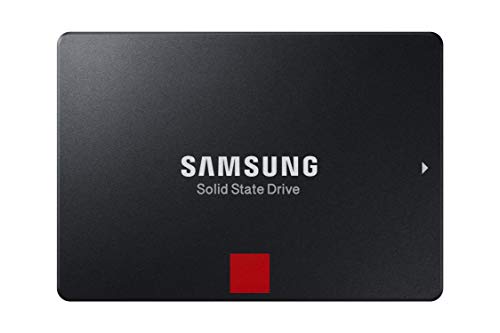
Samsung 860 PRO SSD 4TB
Bottom line: The Samsung 860 PRO SSD 4TB ($1934.45 on Amazon as of 2026-10-07): MLC V-NAND instead of TLC - built for sustained writes, not just burst speed; main trade-off: SATA III caps it at 560MB/s - NVMe drives are several times faster.
As an Amazon Associate, SpecPicks earns from qualifying purchases. Full disclosure →
*Price sourced from Amazon.com. Last updated 2026-10-07. Price and availability subject to change.
Pros & Cons
Pros
- ✓ MLC V-NAND instead of TLC - built for sustained writes, not just burst speed
- ✓ 4TB in one 2.5-inch bay, no M.2 slot or heatsink clearance needed
- ✓ 560MB/s read and 530MB/s write saturates the SATA III interface
- ✓ Runs on Windows 7/8, Server 2003, Vista SP1+, XP SP2+, macOS and Linux, 32- and 64-bit
Cons
- ✗ SATA III caps it at 560MB/s - NVMe drives are several times faster
- ✗ Highest cost-per-TB tier; 860 EVO gives the same interface speed for less
- ✗ Windows 10 and 11 are not named in the stated compatibility list
- ✗ 0-70 C operating range is narrower than industrial-rated drives
Manufacturer description
The Samsung 860 PRO 4TB is the top-capacity model in Samsung's MLC-based SATA line, built around V-NAND and an algorithm-driven controller aimed at sustained rather than burst workloads. Sequential reads reach up to 560MB/s and writes up to 530MB/s, which is effectively the ceiling of the SATA III interface -- so the value here is not peak speed but how consistently the drive holds it. Samsung positions the 860 PRO for high-end PCs, workstations, and NAS enclosures where heavy multitasking and long write sessions are routine, which is why it uses MLC V-NAND instead of the cheaper TLC found…
SpecPicks Verdict
SpecPicks scored Samsung 860 PRO SSD 4TB using a rating × review-volume × price-fit model applied to published specs and reviews across the ssds & storage category. Samsung's ssds & storage lineup sits within the broader category mid-tier; price and specs are the deciding factors over brand loyalty here. Judge it on the specification table and the price rather than on sentiment: check the figures that decide your use case, then put it side-by-side with two or three close alternatives in the Compare tool before clicking through.
Common buyer scenarios for ssds & storage of this kind: matching it to an existing build, replacing a failing part, or upgrading from a previous-generation equivalent. Check the spec table below against your current setup — particularly socket / form-factor / power-rating fields — and confirm compatibility on the retailer's listing before purchase. Prices and stock are set by the retailer and may have moved since this page was last updated.
Frequently Asked Questions
How fast is the Samsung 860 PRO 4TB?
Samsung rates it at sequential read speeds up to 560MB/s and sequential write speeds up to 530MB/s. That is essentially the maximum the SATA III interface allows, so expect similar figures from any quality SATA SSD.
Is the 860 PRO faster than an NVMe SSD?
No. The 860 PRO is a SATA III drive rated up to 560MB/s read, while NVMe drives use the PCIe bus and run several times faster. Choose the 860 PRO when you need a 2.5-inch SATA bay filled, not maximum throughput.
What is the difference between the 860 PRO and the 860 EVO?
The 860 PRO uses MLC V-NAND, which Samsung positions for the heavy sustained workloads of high-end PCs, workstations, and NAS units. The EVO line uses TLC. Both share the same SATA III interface, so peak sequential speeds are similar.
Will the 860 PRO work with my operating system?
Samsung lists Windows 8, Windows 7, Windows Server 2003, Vista (SP1 and above), and XP (SP2 and above) in both 32-bit and 64-bit, plus macOS and Linux. Newer Windows releases are not named in that list -- check the product listing for current OS support.
Can I use the 860 PRO in a NAS?
Samsung specifically names NAS units alongside high-end PCs and workstations as target systems, citing consistent speeds under heavy workloads and multitasking. Operating temperature range is 0 to 70 degrees C, so confirm your enclosure stays inside that window.
Key Features
- Powered by Samsung V-NAND Technology. Optimized Performance for Everyday Computing
- Enhanced Performance: Sequential Read/Write speeds up to 560MB/s and 530MB/s respectively
- Ideal for mainstream PCs and laptops for personal, gaming and business use. Operating temperature: 0 - 70 ℃
- Hardware/Software Compatibility: Windows 8/Windows 7/Windows Server 2003 (32-bit and 64-bit), Vista (SP1 and above), XP (SP2 and above), MAC OSX, and Linux
Full Specifications
| Brand | Samsung |
|---|---|
| Color | Black |
| Model Name | 860 Pro |
| Read Speed | 560 megabytes_per_second |
| Unit Count | 1 Count |
| Form Factor | 2.5-inch |
| Media Speed | 530 megabytes_per_second |
| Model Number | MZ-76P4T0BW |
| Compatibility | Mac, Linux |
| Built-In Media | 2.5" (7mm) SATA III (6Gb/s) SSD & User Manual (All Other Cables, Screws, Brackets Not Included). |
| Item Type Name | Samsung 860 PRO 4TB 2.5 Inch SATA III Internal SSD (MZ-76P4T0BW) |
| Hard-Drive Size | 4 TB |
| Mfr Part Number | MZ-76P4T0BW |
| Number of Items | 1 |
| Special Feature | Portable |
| Hardware Platform | PC, Mac |
| Installation Type | Internal Hard Drive |
| Compatible Devices | Laptop, PC |
| Data Transfer Rate | 560 megabits_per_second |
| Additional Features | Portable |
| Full listing title | Samsung 860 PRO SSD 4TB - 2.5 Inch SATA III Internal Solid State Drive with MLC V-NAND Technology (MZ-76P4T0BW) |
Ready to buy?
Samsung 860 PRO SSD 4TB - 2.5 Inch SATA III Internal Solid State Drive with MLC V-NAND Technology (MZ-76P4T0BW) is listed on Amazon. Price, availability, shipping and returns are set by Amazon and its sellers — check the listing for current terms. SpecPicks earns a small commission on qualifying purchases — thank you for supporting independent review work.
*Price sourced from Amazon.com. Last updated 2026-10-07. Price and availability subject to change.
Related SSDs & Storage



More guides & deep dives from the SpecPicks archive
Browse all articles & guides →- Best Budget Gaming PC Build 2026 — ~$1,000 ($800 on Sale)
- How to Build a Windows 98 Retro PC in 2026
- Emulation Hardware in 2026: FPGA, Software, and Cart-Reader Ecosystems
- Best 1440p Gaming GPUs in 2026
- RTX 4070 Super vs RX 7800 XT — Which to Buy in 2026
- Best Retro Handhelds in 2026 — From $35 to $500
- The Complete Voodoo5 5500 AGP Driver Guide (2026 Edition)
More reviews from the SpecPicks archive
Browse all reviews →- Ling 2.6 1T on Local Hardware: Can You Actually Run a Trillion-Parameter Model at Home in 2026?
- Does Dual-Channel RAM Matter for Local LLM Inference?
- Do Wireless Keyboards Work in BIOS? Building a Homelab Crash Cart in 2026
- Best SATA SSD to Upgrade Your PS4 Pro in 2026
- How Much VRAM Does 32k Context Use on an RTX 3060 12GB? (2026)
- Best Amazon Workstation Parts for a Quiet Home Office in 2026
- Grok 4.5 Tops AutomationBench at 51%: Cloud Score vs Local-Rig Reality
- Best GPU for ComfyUI and SDXL Under $350 — Why the RTX 3060 12GB Still Wins
- DeepSeek V4 on an RTX 3060 12GB: What Actually Fits Locally
- Best Parts for a Local Speech and Vision AI Box in 2026
- Claude Opus 4.8 Tops GPT-5.5: What Runs Local on a 12GB GPU
- ZOTAC vs MSI RTX 3060 12GB: Which Twin-Fan Card Should You Buy in 2026?
- Raspberry Pi AI HAT+ 2025: TOPS, Price, Setup Guide
- RTX 5090 vs RTX 5070: Specs, Value & Which to Buy
- How to run DeepSeek-R1 32B on Apple M4 Pro
- Best Single-Board Computer Kits for Beginners (2026)
- Best PlayStation Controllers for PC Gaming in 2026
- SATA SSD vs NVMe for a Ryzen 5 5600G Budget Build in 2026
- Ryzen 7 5800X + RTX 5060 Combo Hits $439 With Cooler
- DIY NVIDIA 3D Vision Emitter: Building One with an RP2040
- Best X870E Motherboards for the Ryzen 7 9800X3D in 2026
- Hobbyist Turns a Raspberry Pi and ADS-B Into a Viral Real-Time Airport Tracker
- Best Budget 4K Gaming Monitor Under $400 in 2026: SANSUI vs KOORUI Mini-LED
- Lenovo G02 Retro Handheld Reportedly Ships With Pirated Game Library
Earliest SpecPicks reviews
Browse full archive →- Best GPU for Llama 3.1 8B (2026)
- Best GPU for Qwen 3 14B (2026)
- Best GPU for Qwen 3 32B (2026)
- Best GPU for Llama 3.1 70B (2026)
- Best GPU for DeepSeek-R1 32B (2026)
- Best GPU for Llama 3.1 405B (2026)
- How to run Llama 3.1 8B on NVIDIA GeForce RTX 5090
- How to run Qwen 3 14B on NVIDIA GeForce RTX 5090
- How to run Qwen 3 32B on NVIDIA GeForce RTX 5090
- How to run Llama 3.1 70B on NVIDIA GeForce RTX 5090
- How to run DeepSeek-R1 32B on NVIDIA GeForce RTX 5090
- How to run Llama 3.1 8B on NVIDIA GeForce RTX 4090