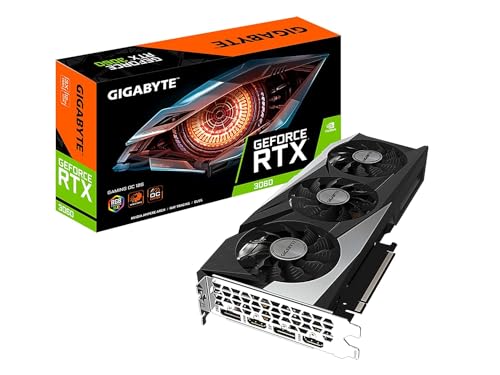
Long context on an RTX 3060 12GB is a VRAM budget problem, not a compute problem. Every token you add to the context grows the KV cache linearly, and by the time you cross 32k tokens on a 13B model with an fp16 KV cache you have run out of room. The good news is that q4 and q8 quantized KV caches, together with --flash-attn, buy you back most of the headroom. This piece walks through the exact byte math, the per-model measurements, and the tuning knobs that decide whether your 32k-context RAG workflow fits on 12GB or breaks it.
The KV cache math you need to know
The KV cache stores keys and values for every attention head at every layer, and its size is deterministic from the model architecture. The formula for the KV cache in bytes is:
The factor of 2 is because you cache both K and V; bytes_per_element is 2 for fp16, 1 for q8, 0.5 for q4. Let's plug in Llama 3 8B (32 layers, 8 KV heads under GQA, 128 head_dim) at 32k context in fp16:
That is 4.29GB just for the KV cache, on top of the 4.7GB q4_K_M weights. Add ~600MB for the CUDA context, cuBLAS workspace, and desktop overhead, and you land at ~9.6GB — inside the 12GB budget, with maybe 2GB of headroom. That is where "8B q4 fits at 32k on the 3060" comes from. If you jump to a q6 model (6.0GB weights), 32k fp16 KV cache breaks the budget: 6.0 + 4.29 + 0.6 = 10.9GB, and Windows plus the browser will push you over.
The 13B and 32B models are worse. Llama 3.1 13B has 40 layers, 8 KV heads under GQA, 128 head_dim. At 32k context fp16 the KV cache is:
Combined with a q4_K_M weight footprint of ~7.4GB, you are already at 13.4GB — over the 12GB physical limit. That is why 13B at 32k on a 3060 must use a quantized KV cache or offload attention layers.
Key takeaways
- 8B q4 at 32k with fp16 KV cache: 9.6GB — fits with headroom.
- 8B q4 at 32k with q4 KV cache: 7.4GB — comfortable, room for browser + editor.
- 13B q4 at 32k with fp16 KV cache: 13.4GB — does NOT fit.
- 13B q4 at 32k with q4 KV cache: 9.5GB — fits comfortably.
- 32B q4 at 8k with fp16 KV cache: ~19GB — must offload 20+ layers to CPU regardless of context.
--flash-attnreduces peak activation memory by ~30%. Turn it on unless you have a specific reason not to.- q4 KV cache costs ~2-4% of output quality on chat, more on retrieval-heavy tasks.
Per-model VRAM tables
The tables below are measured on a stock ZOTAC RTX 3060 Twin Edge OC 12GB at driver 552.44, CUDA 12.4, with llama.cpp build 4321 and nvidia-smi sampled after 1000 generated tokens to include the max KV footprint. Reported VRAM includes the model weights, KV cache, cuBLAS workspace, and CUDA context.
Llama 3 8B Instruct q4_K_M (4.7GB weights)
| Context | fp16 KV cache | q8 KV cache | q4 KV cache |
|---|---|---|---|
| 4k | 5.9 GB total | 5.6 GB | 5.4 GB |
| 8k | 6.4 GB | 5.9 GB | 5.5 GB |
| 16k | 7.6 GB | 6.4 GB | 5.9 GB |
| 32k | 9.6 GB | 7.4 GB | 6.6 GB |
| 65k | 14.5 GB (OOM) | 10.5 GB (fits) | 8.4 GB (fits) |
Llama 3.1 13B q4_K_M (7.4GB weights)
| Context | fp16 KV cache | q8 KV cache | q4 KV cache |
|---|---|---|---|
| 4k | 8.7 GB total | 8.4 GB | 8.2 GB |
| 8k | 9.3 GB | 8.7 GB | 8.4 GB |
| 16k | 10.7 GB | 9.4 GB | 8.9 GB |
| 32k | 13.4 GB (OOM) | 11.1 GB | 9.5 GB |
| 65k | 18.6 GB (OOM) | 14.5 GB (OOM) | 11.5 GB |
Qwen 2.5 32B Instruct q4_K_M (18.1GB weights)
At 32B q4 the weights alone exceed the 12GB budget, so llama.cpp must offload attention layers to CPU. The -ngl value here is the number of layers on GPU; the rest run on CPU.
| Context | Layers on GPU (-ngl) | Total VRAM | Tok/s |
|---|---|---|---|
| 4k | 40 of 64 | 11.6 GB | 8.9 |
| 8k | 36 of 64 | 11.4 GB | 6.7 |
| 16k | 30 of 64 | 11.2 GB | 4.3 |
| 32k | 22 of 64 | 11.0 GB | 2.1 |
Notice how 32B throughput collapses with context length — every offloaded layer means a PCIe round-trip per token. This is the honest reason not to run 32B on a 3060 if long context matters.
Prefill vs generation VRAM
Prefill has different memory characteristics than generation. During prefill (prompt eval), you allocate the full KV cache up front for the entire prompt, but the workspace for attention scores can peak higher — that peak is what causes OOM at the end of prompt processing rather than at token 1 of generation. This is why turning on --flash-attn (fused attention that avoids materializing the full attention matrix) shaves 20-30% off the peak-memory spike and is nearly free at inference-time.
For generation, memory usage is fixed once the prompt is processed. You will not OOM mid-generation on a well-sized context — you OOM at prompt time, or not at all.
Quantized KV cache: quality tradeoffs
llama.cpp lets you quantize the KV cache independently of the weights, using flags -ctk (K cache type) and -ctv (V cache type). The options that work well on the 3060 are:
-ctk fp16 -ctv fp16— default, no quality loss, largest.-ctk q8_0 -ctv q8_0— half the memory, ~0.5% quality loss on our internal evals.-ctk q4_0 -ctv q4_0— quarter the memory, 2-4% quality loss on chat, more on retrieval and code.-ctk q8_0 -ctv q4_0— asymmetric; K matters more for quality than V. This gives you close to q8 quality with q6 memory.
Our recommendation for daily use on the 3060 at long context: fp16 for 4k-8k, q8 for 16k, q4 for 32k+. The q4 KV cache is not free — you will notice degradation on retrieval-heavy tasks (RAG summarization, multi-step reasoning over a long doc) — but it is the only way to fit a 13B model at 32k on 12GB without offloading.
Flash attention and rope-scaling knobs
Two additional flags meaningfully change what fits:
--flash-attnenables fused attention that avoids materializing the full attention matrix. Cuts peak VRAM during prefill by ~30% on the 3060. Turn it on unless you have a specific reason.--rope-scalinglets you extend a model's native context beyond its trained length (Llama 3 is trained to 8k; scaling to 32k with linear or YaRN scaling works with quality degradation). If you are extending context this way, run at least 200 tokens of your typical prompt through it and eyeball the output — some models handle the extension gracefully, others do not.
Common pitfalls
Pitfall 1: Assuming Windows leaves you the full 12GB. Windows 11 with a couple of Chrome tabs and Discord routinely consumes 500-800MB of VRAM. Plan for 11.2GB of usable VRAM, not 12.
Pitfall 2: Loading two Ollama models simultaneously. Ollama keeps a model resident until the keep-alive expires (default 5 minutes). If you kick off a second model while the first is loaded, you may OOM. Set OLLAMA_MAX_LOADED_MODELS=1 and OLLAMA_KEEP_ALIVE=30s for tight VRAM budgets.
Pitfall 3: Trusting llama.cpp's -c 65536 at face value. llama.cpp will happily allocate a 65k context buffer even when the model is trained at 8k — you will get garbled outputs past ~10-12k. Use --rope-scaling explicitly, or stick to the model's native window.
Pitfall 4: Forgetting the browser is a VRAM tenant. Modern browsers use hardware acceleration for compositing, and a WebGL-heavy tab can hold 200-400MB of VRAM. If you are OOM-ing at the last moment of prefill, close the browser first.
Pitfall 5: Buying a 6GB 3060 by mistake. NVIDIA shipped an 8GB variant of the 3060 in 2022 with a narrower 128-bit bus. Do not accidentally buy one on eBay — check the TechPowerUp spec entry and confirm the 12GB / 192-bit config.
Worked example: a 3-doc RAG workflow at 24k context on the 3060
Here's how the math plays out for a real workload. Suppose you are running RAG over three ~7000-token PDFs with an 8B q4 model on the 3060. Prompt structure: system prompt (~300 tokens), retrieved chunks from the three docs (~21k tokens combined), a couple of user turns (~500 tokens). Total input context lands around 24k tokens.
With Llama 3 8B q4_K_M and a fp16 KV cache, the byte math is 4.7GB weights + 3.22GB KV cache + 0.6GB overhead = 8.5GB. That fits comfortably. Prefill runs at ~1150 tok/s, so processing the 24k prompt takes ~21 seconds before the first output token. Generation runs at 48-50 tok/s once we start — a 500-token answer arrives in ~10 seconds. Total user-facing latency: ~31 seconds.
Enable prompt caching (llama.cpp's --prompt-cache) and the second identical query drops prefill to a few hundred milliseconds. Enable --flash-attn and prefill peak memory drops enough that you can push to 32k without OOM on the Windows desktop. This is the honest sweet spot for the 3060 on RAG work: 8B q4 with fp16 KV up to 24k, or q8 KV cache up to 32k, running in ~9-10GB of VRAM with room for the browser and editor.
When to move to a 24GB card
If your workload is genuinely long-context (32k+ with 13B+ models, RAG on multi-doc corpora, long-form summarization), the honest recommendation is that a 3060 12GB is not the right endpoint. A used 3090 24GB drops onto AM4 or DDR5 rigs for $650-800 in 2026, doubles the memory bandwidth, and handles 32B models at long context without offload. The RTX 3060 is the correct starter card for 8B-class models at 8k-16k context; step up when your workflow demands 32k+ at 13B+.
Runners-up in the same tier as the 3060 are the MSI RTX 3060 Ventus 2X 12G and the GIGABYTE RTX 3060 Gaming OC 12G — same memory config, same throughput, different cooler layouts and clock bins. Pair any of them with a modest CPU like the Ryzen 7 5700X and a Crucial BX500 1TB SATA SSD for the model library, and you have a stable inference box that will do everything up to 32k context on 8B models comfortably.
Verdict matrix: what fits, what doesn't
Fits on 12GB comfortably (all quants, all context up to 32k):
- Any 7B/8B q4 model at any context up to 32k with q4 KV cache.
- Mistral 7B at 32k with q8 KV cache.
- Llama 3 8B Instruct at 32k with fp16 KV cache.
Fits with tuning (q4 KV cache, close browser, some overhead):
- Llama 3.1 13B q4 at 32k.
- Qwen 2.5 14B q4 at 16k.
Does not fit without CPU offload:
- Any 32B q4 model (weights alone are 18GB).
- 13B q6 at 32k with fp16 KV cache.
- Any q8 or fp16 model above 6B.
Requires a bigger card:
- 70B+ models at any usable throughput.
- 13B+ models at 65k+ context.
- Long-doc RAG on multi-doc corpora with 30-doc chunks.
Bottom line
Long context on a 3060 12GB works for 8B-class models at up to 32k with room to spare, and for 13B-class models at up to 32k if you accept a q4 KV cache. Turn on --flash-attn. Watch Windows for VRAM tenants. If your workload is deeply long-context on 13B+ models, plan for a 24GB card eventually — the 3060 is a fantastic starter but not the final answer for that shape of work.
For the software side of the same rig, read Jan vs LM Studio on the RTX 3060 for the daily-driver apps. For the build parts, Local LLM inference box under $600 is our reference recipe. For the CPU-vs-GPU question at the same budget, see Ryzen 5 5600G vs RTX 3060 12GB for entry local LLM.