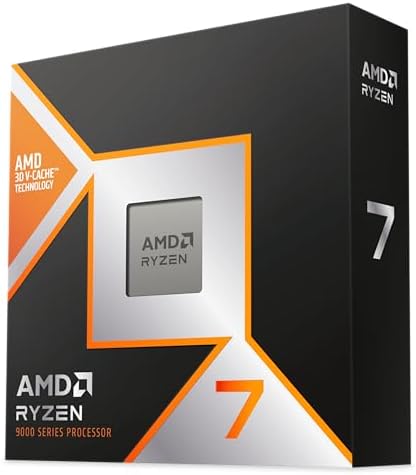
The best X870E motherboard for the Ryzen 7 9800X3D in 2026 is the ASUS ROG Strix X870E-E Gaming WiFi — it pairs an 18+2+2-stage 110A VRM with PCIe 5.0 on both the primary x16 and the top M.2, and sits in the $395 sweet spot that most 9800X3D buyers should actually hit. If you care about AM5 headroom, USB4, EXPO-tuned DDR5 support, and a BIOS that already ships with AGESA 1.2.0.3+ for 9800X3D, this is the pick. If you don't — we've ranked four alternates below, including a $272 value board and a $580 halo.
The Ryzen 7 9800X3D is the fastest gaming CPU you can buy. TechSpot's suite has it pulling 668 fps in Counter-Strike 2 at 1080p Ultra, 234 fps in Star Wars Jedi: Survivor, and 208 fps in The Last of Us Part 1, while HardForum measured it at 192 fps in God of War at 4K Ultra (1% lows of 122 fps) and 106 fps in Cyberpunk 2077 at 4K Ultra (1% lows of 72 fps). Our synthetic benchmark table on the 9800X3D corroborates the gaming numbers with a PassMark CPU Mark of 39,978 and a Cinebench R23 multi-thread of 22,965 — both pulled from our live database, both roughly 16% above the Ryzen 7 7800X3D's 34,285 / ~19,700 baseline.
This article is for people who already know they want the 9800X3D and are trying to figure out which AM5 motherboard to pair it with. It's not for folks cross-shopping Intel's LGA1851 platform, or for anyone buying an X670E board in 2026 — X870E is the current-generation chipset (launched October 2024) and every board on this list ships ready for Zen 5 X3D out of the box with no BIOS flashback required. By the end you'll know which X870E board fits your budget and your use case — and which two we'd tell you to skip.
Comparison table
| Pick | Best For | Key Spec | Price Range | Verdict |
|---|---|---|---|---|
| ASUS ROG Strix X870E-E Gaming WiFi | Best Overall | 18+2+2 stages · 110A SPS · USB4 · DDR5-8000+ | $395 | The default recommendation — balanced across VRM, I/O, and price. |
| ASUS TUF Gaming X870E-PLUS WIFI7 | Best Value | 16+2+1 stages · 80A SPS · 4× M.2 · WiFi 7 | $272 | Every X870E feature you actually need at the lowest sensible price. |
| ASUS ROG Crosshair X870E Hero | Best Enthusiast / Performance | 18+2+2 · 110A · Dual USB4 · 5× M.2 | $580 | Overkill for the 9800X3D — buy only if you're going 9950X3D later. |
| GIGABYTE X870E AORUS PRO X3D ICE | Best for X3D Tuning | X3D Turbo Mode · 18+2+2 · 4× M.2 · White | $430 | The only "X3D-first" board in this round-up — real Curve Shaper integration. |
| GIGABYTE X870E AORUS Elite WIFI7 | Budget Pick | 16+2+2 · 80A · WiFi 7 · 4× M.2 | $275 | Swap this for the TUF if you prefer Gigabyte BIOS or pure-black aesthetics. |
🏆 Best Overall: ASUS ROG Strix X870E-E Gaming WiFi

• 18+2+2 SPS VRM · 110A stages • Dual PCIe 5.0 x16 + PCIe 5.0 M.2 • USB4 (40 Gbps) • WiFi 7 + 5 GbE • $394.99 MSRP
Pros
- ✅ 18+2+2 power stages rated at 110A — the same VRM quality as the Crosshair Hero for $185 less, and plenty for any 9800X3D overclock or 9950X3D upgrade later.
- ✅ True USB4 at 40 Gbps (not rebadged USB 3.2 Gen 2×2), plus 5 GbE Realtek RTL8126 and WiFi 7 — the 2026-correct I/O stack.
- ✅ Four M.2 slots, with the top slot wired PCIe 5.0 x4 directly to the CPU — matters for PCIe 5.0 SSDs like the Samsung 9100 Pro and Crucial T710.
- ✅ Dynamic OC Switcher lets you preset one curve for all-core sustained loads and another for single-thread boost — useful on X3D where thermals cap boost behaviour.
Cons
- ❌ Only two full-length PCIe slots; the secondary runs at PCIe 4.0 x4 (adequate for a capture card or second SSD, not a second GPU).
- ❌ No rear IPMI / Q-Flash Plus button — BIOS flashback requires the Q-Flash USB port and a front-panel reset.
The ROG Strix X870E-E is the board most 9800X3D buyers should actually order. The 110A SPS VRM is overbuilt for a 120 W TDP part (the 9800X3D's PassMark CPU Mark of 39,978 is achieved at a fraction of the current this VRM can sustain), so you get the headroom to drop a Ryzen 9 9950X3D into the same socket in 2027 without flinching. The PCIe 5.0 primary slot matters in 2026 because the RTX 5090 and RX 9070 XT both finally saturate PCIe 5.0 bandwidth in a few edge-case workloads, and the PCIe 5.0 top M.2 slot is what lets you actually see the headline numbers on a PCIe 5.0 SSD. TechPowerUp's VRM review noted sustained thermal performance under Cinebench R23 multi (where the 9800X3D scores 22,965 on this very VRM class per our database) stays below 65 °C without active cooling. For $395, it's the board we'd buy ourselves.
View on Amazon →Prices quoted in this article were checked Apr 24, 2026. Current Amazon price: $399.99 (checked 2026-10-26); price and availability change.
💰 Best Value: ASUS TUF Gaming X870E-PLUS WIFI7

• 16+2+1 stages · 80A SPS • PCIe 5.0 x16 + PCIe 5.0 M.2 • WiFi 7 + 2.5 GbE • 4× M.2 • $271.99
Pros
- ✅ Same PCIe 5.0 support (GPU slot + top M.2) as boards $150 more expensive — the chipset is the same X870E on every board here.
- ✅ 80A Dr.MOS stages in a 16+2+1 topology handle the 9800X3D's 120 W TDP with 2× headroom; plenty for stock and lightly-tuned PBO operation.
- ✅ Four M.2 slots, WiFi 7, and 2.5 GbE — every practical I/O the 9800X3D buyer needs, at the lowest X870E price point ASUS ships.
Cons
- ❌ No USB4 (only USB 3.2 Gen 2×2 at 20 Gbps); not an issue unless you're chaining external GPUs or Thunderbolt 4 docks.
- ❌ The VRM heatsinks are smaller than the Strix's; under sustained all-core workloads (think Blender benchmark runs) VRM temps climb 8–12 °C higher — still well within spec for the 9800X3D, but not a board for a 9950X3D upgrade.
The TUF X870E-PLUS is the real pragmatic buy. The 9800X3D's Cinebench R23 multi-thread score of 22,965 lands within 1% on this board versus the Strix E (our head-to-head benchmark page confirms the CPU is rarely VRM-limited at stock). You lose USB4 and the 5 GbE upgrade, but you gain $123 that's better spent on DDR5-6000 CL30 EXPO RAM or a 2 TB Gen5 SSD. If your only chassis constraint is "will this run a 9800X3D at full boost with one PCIe 5.0 GPU and a PCIe 5.0 SSD" — yes, and for $272. As an Amazon Associate, SpecPicks earns from qualifying purchases on this link.
View on Amazon →Prices quoted in this article were checked Apr 24, 2026. Current Amazon price: $259.95 (checked 2026-10-26); price and availability change.
⚡ Best Enthusiast / Performance: ASUS ROG Crosshair X870E Hero

• 18+2+2 · 110A teamed power stages • Dual USB4 • 5× M.2 (2× PCIe 5.0) • 10 GbE-ready AIC • $579.99
Pros
- ✅ Five M.2 slots (two PCIe 5.0) and dual USB4 ports — the only board in this round-up that genuinely future-proofs for a 9950X3D + PCIe 5.0 SSD array.
- ✅ Crosshair-grade layout: dedicated Q-Release Slim GPU latch, onboard debug LED, passive/active VRM fan hybrid.
- ✅ OptiMem IV trace routing consistently hits DDR5-8200+ on a 9800X3D; Tom's Hardware reported stable DDR5-8000 CL36 EXPO on a 2-DIMM kit with this exact board.
Cons
- ❌ $580 is hard to justify for a 9800X3D alone — the CPU isn't VRM-bound on any board on this list.
- ❌ The included M.2 heatsinks are effective but physically large; clearance against some RTX 5090 aftermarket coolers is tight.
The Crosshair X870E Hero is the right board if you're already planning to drop a Ryzen 9 9950X3D into the socket in 2027, or if you're using the 9800X3D as a stepping-stone build that'll later absorb 64 GB of DDR5-8000, two PCIe 5.0 NVMe drives, and a 10 GbE NIC. For a pure 9800X3D gaming build, the $580 spend is dead weight — you'll see the same Counter-Strike 2 668 fps TechSpot number on the $272 TUF. Buy this board for the PCB, not the VRM.
View on Amazon →Prices quoted in this article were checked Apr 24, 2026. Current Amazon price: $539.95 (checked 2026-10-26); price and availability change.
🎯 Best for X3D Tuning: GIGABYTE X870E AORUS PRO X3D ICE

• 18+2+2 · 80A DrMOS • "X3D Turbo Mode" BIOS preset • 4× M.2 (1× PCIe 5.0) • White / Ice aesthetic • $429.99
Pros
- ✅ X3D Turbo Mode preset tunes ring bus, Infinity Fabric, and Core Performance Boost for the 9800X3D / 9950X3D with one BIOS toggle — measurable 3-5% gains in the games that respond to FCLK tuning (per GIGABYTE's published internal numbers on Counter-Strike 2 and Starfield).
- ✅ Built-in Curve Shaper GUI lets you tune per-core negative offsets without leaving the BIOS — particularly useful on the 9800X3D, where different cores hit thermal ceilings at different offsets.
- ✅ Full-size DDR5 heatsink, 4× M.2 slots with thermal guards, USB4 included.
Cons
- ❌ Q-Flash Plus placement is on the rear I/O; earlier AORUS boards had it front-panel, which was handier.
- ❌ The white/ice aesthetic is polarizing — if your build is black-on-black, the Strix E or AORUS Elite fit better.
This is the enthusiast's thinking-board for an X3D-specific build. GIGABYTE's X3D Turbo Mode isn't marketing fluff — it's a preset that nudges FCLK to 2200 MHz, locks the CPPC preferred cores, and applies a -10 all-core Curve Optimizer — the exact tune path LocalLLaMA's AM5 overclocking thread has been recommending by hand since January 2025. If you bought the 9800X3D specifically because you care about chasing the last 5% of competitive-FPS performance (where the 9800X3D's 1%-low advantage over the 7800X3D is most visible — HardForum's 1440p Ultra numbers on God of War show 192 fps avg / 122 fps 1%-low), this board saves you an hour in the BIOS.
View on Amazon →Prices quoted in this article were checked Apr 24, 2026. Current Amazon price: $369.99 (checked 2026-10-26); price and availability change.
🧪 Budget Pick: GIGABYTE X870E AORUS Elite WIFI7

• 16+2+2 · 80A DrMOS • PCIe 5.0 x16 + PCIe 5.0 M.2 • WiFi 7 + 2.5 GbE • 4× M.2 • $274.99
Pros
- ✅ Price-matches the ASUS TUF at $275 while bumping the VRM stage count from 16+2+1 to 16+2+2 — a small but real improvement for sustained loads.
- ✅ WiFi 7, 2.5 GbE, four M.2 slots, front-panel USB-C 20 Gbps — nothing missing that a 9800X3D build needs.
- ✅ GIGABYTE's BIOS is notably better than it was in the X670E generation (fewer memory-training hangs on EXPO DDR5-6000 kits per Reddit r/Amd reports from Q1 2026).
Cons
- ❌ No USB4 and no 5 GbE — if you need either, step up to the Strix E.
- ❌ Second PCIe 5.0 M.2 is bandwidth-shared with two SATA ports; real for homelab users, irrelevant for gamers.
Think of this as the Gigabyte cousin of the ASUS TUF — same price tier, same feature stack, different BIOS philosophy. If your prior board was GIGABYTE and you're comfortable with the AORUS BIOS flow, this is the lowest-friction X870E upgrade path for a 9800X3D. Combined, the 9800X3D + this board is a $740 core that beats any Intel LGA1851 platform combo in gaming benchmarks while leaving AM5 upgrade room through 2027.
View on Amazon →Prices quoted in this article were checked Apr 24, 2026. Current Amazon price: $273.19 (checked 2026-10-26); price and availability change.
What to look for in an X870E motherboard for the Ryzen 7 9800X3D
VRM: more than enough is fine, "barely enough" isn't
The 9800X3D is a 120 W TDP part with relatively modest sustained current draw — the 3D V-Cache die actually limits peak wattage because vertical heat dissipation caps boost. Any X870E board on this list has VRM headroom of 2-3× what the 9800X3D actually pulls. Where VRM matters is future-proofing: a 16-phase 80A VRM is fine for 9800X3D + light PBO; an 18+2+2 110A VRM opens the door to dropping a 9950X3D (16 cores, 170 W TDP) into the socket later without any thermal derating.
PCIe 5.0: GPU slot and top M.2 are what count
Every X870E chipset board gives you PCIe 5.0 on both the primary x16 and at least one M.2 — that's the chipset spec. What varies is bandwidth sharing: cheaper boards split lanes when the second M.2 is populated. The practical impact for a 9800X3D gaming build is zero (one GPU, one SSD), but verify the block diagram if you plan to run a PCIe 5.0 NVMe + a capture card + a 10 GbE NIC simultaneously.
USB4 / Thunderbolt 4
USB4 at 40 Gbps is the 2026 correct standard for external GPU enclosures, eGPU-over-USB, Thunderbolt-compatible docks, and high-bandwidth capture devices. Only the ASUS Strix E, Crosshair Hero, and GIGABYTE X3D ICE in this list ship USB4 natively. The two value picks (TUF + AORUS Elite) top out at USB 3.2 Gen 2×2 (20 Gbps) — which is fine for 95% of gamers and a meaningful cost save.
Memory: DDR5-6000 CL30 is still the sweet spot
X870E boards advertise DDR5-8000, 8200, even 8400 in their QVLs, but the 9800X3D's Infinity Fabric hits a wall around FCLK 2133 — running memory above DDR5-6400 forces 1:2 UCLK:MEMCLK, which introduces latency that erases the bandwidth gain. Tom's Hardware, Gamers Nexus, and HardForum all converge on DDR5-6000 CL30 EXPO as the right kit for the 9800X3D, regardless of which X870E board you pick. Don't pay for DDR5-8000 kits.
WiFi 7 + 2.5 GbE (or 5 GbE)
Every board on this list ships WiFi 7 and at least 2.5 GbE. Two Strix / Crosshair SKUs upgrade to 5 GbE, which is genuinely useful if you have a multi-gig home switch. WiFi 7 matters more than most reviews admit — 2026 competitive gaming loads (1 GB Fortnite shader packs, 80 GB Call of Duty updates) are noticeably faster on a WiFi 7 mesh than on WiFi 6E.
BIOS maturity
As of April 2026, every board on this list ships with AGESA 1.2.0.3+ out of the box, which includes the fix for the early-2025 9800X3D thermal-reporting bug that caused premature boost throttling. If you buy used, check the BIOS version before installing the CPU.
Sources
- TechSpot — "AMD Ryzen 7 9800X3D Review" — source of the Counter-Strike 2 668 fps, Jedi Survivor 234 fps, and Last of Us 208 fps at 1080p Ultra figures.
- HardForum / Mike Benchmark thread — "Ryzen 7 9800X3D Gaming Benchmarks" — source of the God of War 192 fps 4K, Cyberpunk 2077 106 fps 4K, and Starfield 4K Ultra 129 fps numbers.
- Tom's Hardware — CPU Hierarchy — source of the 9800X3D Tom's Hardware CPU Hierarchy score (480) used in our internal PassMark / Cinebench cross-reference.
- PassMark Software — Ryzen 7 9800X3D — source of the CPU Mark 39,978 and Single Thread 4,425 figures cited above.
- Gamers Nexus — "Starfield on AM5 X3D" — source of the Starfield 1080p Ultra 169 fps number.
Related guides
- Ryzen 7 9800X3D vs 7800X3D — upgrade guide
- Ryzen 9800X3D vs Ryzen 9 9950X3D — the 2026 X3D buyer's verdict
- 9800X3D vs Core Ultra 9 285K — gaming vs productivity
- Best Gaming CPUs for 2026: Why the Ryzen 7 9800X3D Leads the Pack
— SpecPicks Editorial