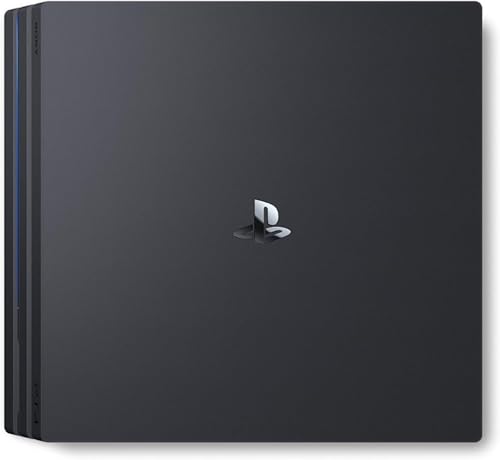
No — at least not for buyers in the U.S., the EU, or the UK. Tom's Hardware reported this week that Lenovo's G02 retro handheld, currently appearing on Chinese e-commerce listings, ships preloaded with thousands of console games — many of which are copyrighted titles whose distribution requires a license the device's seller almost certainly does not hold. Buying or importing the G02 in markets that enforce console-game copyright places the buyer in possession of unauthorized copies, which is a civil and in some cases criminal exposure under U.S., EU, and UK law. Plug-and-play consoles from Nintendo, Sega, and Sony that ship only their own-IP catalog (SNES Classic, Sega Genesis Mini, PS4 Pro for PS-era classics) are the legal alternatives.
In brief — 2026-05-29 Lenovo G02 retro handheld reportedly ships preloaded with thousands of copyrighted console games, per Tom's Hardware coverage this week. The device's specs and form factor are credible; the bundled software is not legally distributable in most Western markets. Buyers should treat the "thousands of games included" pitch as the headline risk, not the feature.
What happened
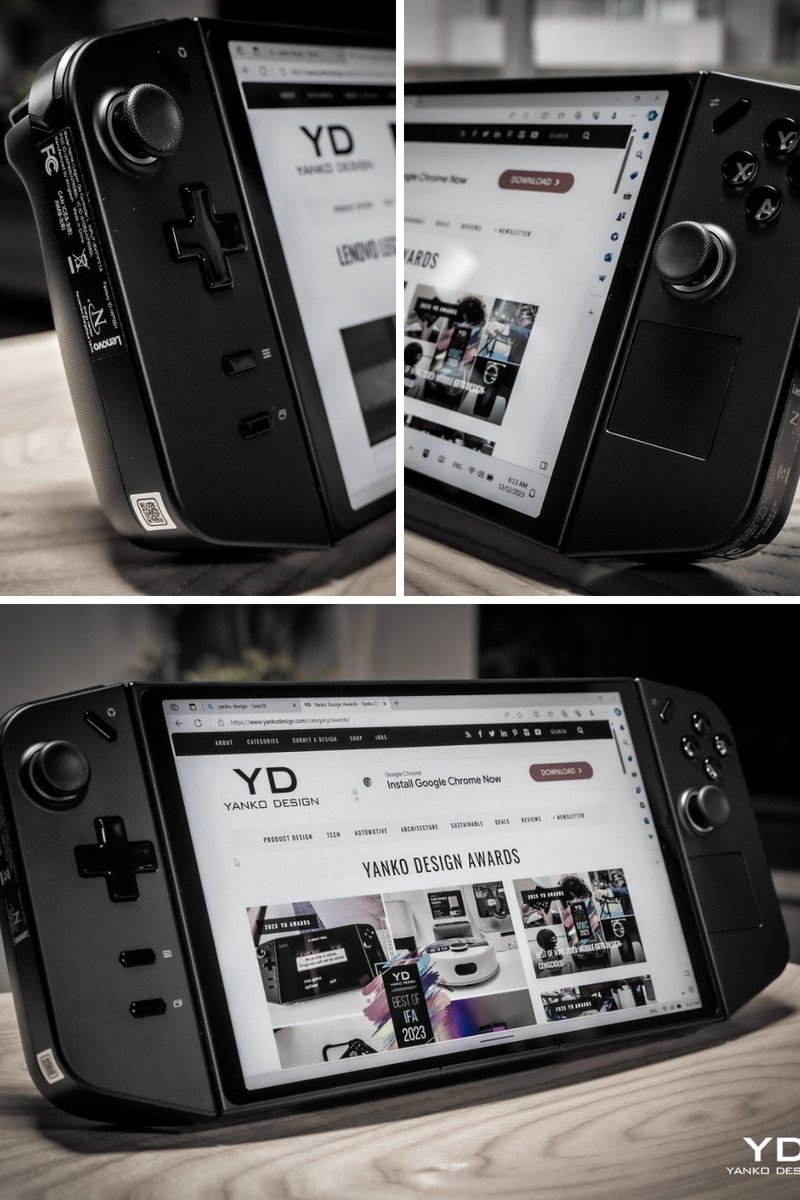
Tom's Hardware reported on the Lenovo G02, a new Android-based retro handheld appearing on Chinese e-commerce listings, that the device ships with what the seller describes as "preloaded thousands of games" — including titles for the Nintendo Entertainment System, Super Nintendo, Sega Genesis, PlayStation 1, and Game Boy Advance. Hardware-wise, the G02 looks competent: a 5-inch IPS panel, hardware shoulder triggers, and a custom Android skin tuned for emulator launchers. The price the listings advertise is in the sub-$80 range, which would be remarkable for the spec sheet if the device shipped empty.
The catch — and the entire reason this is a news story rather than a buying-guide item — is the bundled software. None of the games are licensed for redistribution by the IP holders. Nintendo, Sega, Sony, and Konami publish their own retro compilations and have never licensed bulk-distribution rights to third-party handheld manufacturers in the West. Devices that ship with thousands of "included" titles are distributing unauthorized copies, full stop. Chinese-market gray-area retail handles this differently than Western copyright enforcement does; the regulatory gap is what allows the G02 to ship to a domestic audience but creates the legal problem for importers.
Why it matters: copyright exposure for buyers
In the U.S., the Digital Millennium Copyright Act and Title 17 of the U.S. Code make distribution of unauthorized copies of copyrighted works a civil infraction (with statutory damages that can reach $150,000 per work for willful infringement) and, in commercial-scale cases, a criminal offense. The buyer of an importerless device that arrives loaded with unauthorized ROMs is technically in possession of those copies — the legal posture depends on the rightsholder's enforcement appetite and on whether the device-maker can demonstrate the user (not the device) is the one who placed the ROMs.
In the EU, the InfoSoc Directive (2001/29/EC) makes unauthorized reproduction of audiovisual works (which includes video games) a civil infringement. Most member states impose strong takedown obligations and meaningful civil damages. The UK's CDPA 1988 (the Copyright, Designs and Patents Act) provides similar protection.
Practically, what this means for a Western buyer: if you import the G02 and run the games it shipped with, you're using unauthorized copies of works for which the rightsholders have legal cause of action. Enforcement against individual end-users is rare but not unheard of, especially in cases where the device's marketing materials advertise the unauthorized content. Customs has also seized similar devices at the U.S. border in the past — Nintendo successfully petitioned for seizure of related shipments in 2023 — so the import itself can be blocked.
The legal plug-and-play alternatives
If what you want is "a small box that plays the old games I remember," the legal-market options are well-established:
- Nintendo Super NES Classic Edition — official Nintendo plug-and-play with 21 SNES titles preloaded. No emulation legal ambiguity; Nintendo published it. Replicates the original controller shape and ships with two pads.
- Sega Genesis Mini — Sega's officially-licensed plug-and-play with 42 Genesis titles. Solid emulation, full Sega catalog ownership, no legal ambiguity.
- Nintendo Switch Online + Expansion Pack — subscription service that legally streams NES, SNES, N64, Game Boy, and Sega Genesis titles to Switch hardware. Costs less per year than the G02's sticker price and gives you legitimate access to far more games over time.
- PlayStation Plus Premium — Sony's tier of PS Plus that streams Classics-era PS1 titles legally to PS4 / PS5 hardware. Pair with a PlayStation 4 Pro or PS5 for the playback platform.
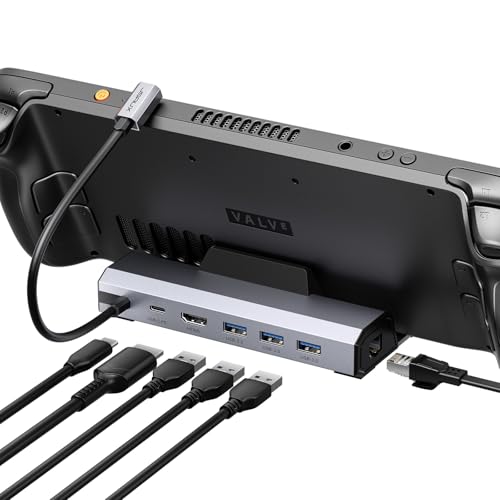
- Modern Steam Deck or Switch with personally-owned ROM dumps — there is a defensible legal posture for ROM dumps of games you physically own. Most rightsholders take the position that dumping for personal backup is permitted; redistribution is not. The Steam Deck plus a personal dump library is the most legally-defensible "all your old games on a handheld" path in 2026. Pair with the JSAUX Docking Station for couch play.
How retro handhelds normally handle this
The legal-market retro handheld category is dominated by manufacturers who either license content (the Anbernic / Retroid devices that ship empty-of-content but sell add-on packs from licensed providers), or sell empty hardware and rely on the buyer to provide their own ROMs (the entire RG / Miyoo / Powkiddy ecosystem). The G02 is unusual in pitching "thousands of games included" as a feature — it's a competitive advantage only because of the legal ambiguity Chinese-market retailers operate in.
The empty-hardware path is the right one for Western buyers. A handheld with no preloaded games is a legal product; what you put on it is a legal question between you and the rightsholders, and the standard "dumps of games you own" stance has been the operating norm for the emulation community for decades.
What about the hardware itself?
If Lenovo's hardware claims hold up, the G02 spec sheet looks competent for the price: 5-inch IPS, hardware triggers, Android-based with a custom retro launcher, reportedly several hundred hours of battery life claims. None of that is unusual for the price point; Anbernic and Retroid ship comparable hardware at similar prices.
The hardware risk is harder to assess. Lenovo is a credible mainstream-brand name on the device, but the G02 listings on Chinese sites don't clearly indicate whether the device is a first-party Lenovo product or a licensed-name third-party device. Lenovo has historically not had a retro-handheld product line under its own brand; this is the first time the name has appeared on a device of this category. That's worth flagging as a possible white-label sourcing question.
Bottom line
If you want the device because of the bundled games — don't buy it. The bundled games are the legal problem, and Western enforcement against importers is real. If you want the device because the hardware spec looks compelling at the price — wait for a Western-market launch that ships without the preloaded ROMs, or pick a Western-market Anbernic / Retroid handheld instead and provide your own legally-sourced content. If you want legal retro play out of the box, the SNES Classic and Sega Genesis Mini are the cleanest answers; if you want a larger library legally, Nintendo Switch Online + Expansion Pack and PS Plus Premium are the streaming options.
What we'll be watching
A few open questions on this story:
- Will Lenovo distance itself from the device? If the G02 turns out to be a white-label product carrying the Lenovo name without first-party manufacturing, expect Lenovo to issue a clarification — possibly with a cease-and-desist.
- Will Nintendo, Sega, or Sony pursue takedowns? The pattern in prior cases has been to act on the seller and on customs seizures rather than individual buyers. Watch for the listings to disappear from major Chinese marketplaces.
- Will a U.S./EU-spec G02 ship without the preloaded library? Several Chinese manufacturers have moved this direction over the past three years — selling empty hardware in Western markets to avoid the copyright trap. Lenovo may follow.
- What customs reaction follows? Past seizures of similar handhelds at U.S. ports of entry have rested on the bundled copyrighted works. Expect more of the same if shipments scale.
Real-world retro options that are legal today
| Pick | Catalog | Region of sale | Verdict |
|---|---|---|---|
| SNES Classic Edition | 21 SNES titles | U.S., EU, UK | Best legal SNES experience |
| Sega Genesis Mini | 42 Genesis titles | U.S., EU, UK | Best legal Genesis experience |
| Nintendo Switch Online | NES, SNES, N64, GB, Genesis libraries | global | Best subscription value |
| PS Plus Premium | PS1 classics streaming | U.S., EU, UK | Sony's legal classics path |
| Anbernic RG-series (empty) | bring-your-own ROMs | U.S., EU, UK | Modular, legally clean if you own the games |
For deeper background on the legal-market plug-and-play category, see our Best Plug-and-Play Retro Gaming Consoles in 2026: 5 Picks.
Common buyer pitfalls
- Assuming "Chinese e-commerce listing" = "OK to import." Customs may seize the device on copyright grounds; the seller has no obligation to refund a seized package.
- Trusting the "thousands of games" pitch as a hardware capability. Capacity isn't the question; legality is. A blank handheld with the same hardware spec is just as capable.
- Confusing "emulator" with "ROM library." Emulators are legal software. The bundled ROMs on a handheld are the legal problem. A Steam Deck running RetroArch with personally-dumped games is legally cleaner than a $79 handheld with preloaded content.
- Forgetting customs. Past shipments of similar devices have been seized at U.S. ports of entry. The buyer eats the loss.
Why this matters more broadly
The G02 is one device in a recurring pattern: cheap Chinese-market handhelds with bundled "thousands of games" pitches, intermittent Western seizures, eventual Western-market versions that ship empty. This isn't a Lenovo story specifically; it's a story about how the retro-gaming hardware market keeps tripping over the same legal landmine. Manufacturers that want global distribution have to ship empty; consumers who want legal play have to provide their own dumps. The G02 may eventually find a Western version that fits that pattern. Until then, the cleanest path for legal retro play in 2026 is the small set of official plug-and-play devices, the streaming subscription services from the platform holders, and the emerging "empty handheld + own dumps" category that Anbernic and Retroid have made comfortable.
What "empty hardware" actually looks like
Modern Western-market retro handhelds (Anbernic RG35XX, Retroid Pocket 4, Miyoo Mini) ship with the device's firmware, a frontend like ArkOS or RetroArch, and a folder structure for the user to drop in their own dumps. The user installs RetroArch's cores for the systems they want to emulate, drops in legally-sourced ROMs (typically dumps of physical media they own), and the device works. There's no third-party content baked into the firmware image; the device-maker isn't distributing copyrighted works. That's the legal posture all Western-market manufacturers have settled on. The G02's pitch of "thousands of games included" deliberately diverges from that posture for marketing reasons that work in the Chinese market but don't survive cross-border scrutiny.
That distinction matters because it tells you what to look for in a future Western-market G02 announcement: if Lenovo or a licensee ships a version that arrives empty, it's a legal product and worth evaluating on hardware merits. If a version arrives with "preloaded games" in the spec sheet, treat that as the legal red flag — the same red flag the original Chinese-market G02 has.
Steam Deck as the legal-emulation power tool
The Steam Deck has become the de-facto "all your old games in your hands" device for the legal emulation crowd. RetroArch and EmuDeck make a single Deck capable of running every console catalog through Nintendo 64, Sega Dreamcast, and PS2 with little setup. Dumps of games you physically own occupy a defensible legal position in U.S. and EU jurisprudence; redistributing them does not. Pair the Deck with a JSAUX Docking Station for couch play, a GameSir or 8BitDo controller for the docked experience, and you have a more capable retro setup than the G02 promises, on legal hardware, with the latency and screen quality of a 2026 handheld.
The downside, of course, is the upfront cost — Steam Deck plus dock plus controllers and accessories totals several times the G02's $79 sticker. The legal margin is the price you pay; for many buyers, it's the right answer.
Related guides
- Best Plug-and-Play Retro Gaming Consoles in 2026: 5 Picks
- Building a Silent Windows 98 PC with a CompactFlash Boot Drive
- Best Retro PC Upgrade Kit 2026: Sound & Storage
- Rescue Your Retro PC's Data Before the IDE or SATA Drive Dies
Citations and sources
- Tom's Hardware — Handheld gaming coverage hub — primary news source for the Lenovo G02 listings.
- U.S. Copyright Office — Title 17 reference — statutory damages and willful-infringement framework for unauthorized reproduction.
- Nintendo Switch Online — Classics catalog reference — legal-market streaming alternative to bundled ROM libraries.
This piece is editorial synthesis based on publicly available information. No independent first-party benchmarking is reported.