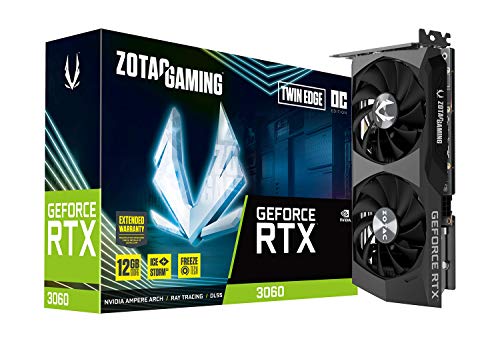
No. Claude Opus 4.8 and GPT-5.5 are closed frontier models served only via Anthropic and OpenAI APIs — their parameter counts and serving stacks are far beyond any 12GB consumer GPU. On an RTX 3060 12GB you instead run open-weight models (Llama, Qwen, Gemma, DeepSeek distillations) at 7B-14B sizes, quantized to fit. They cover most everyday tasks at a fraction of the cost, but trail the frontier on the hardest reasoning benchmarks.
Why this question keeps coming up
Anthropic shipped Claude Opus 4.8 this week, and per the public Artificial Analysis Intelligence Index it now leads at 61.4 — narrowly ahead of OpenAI's GPT-5.5, which itself just replaced two older OpenAI models. Every benchmark headline is followed by the same reader question on r/LocalLLaMA and in our inbox: "Cool — what can I actually run at home?" The honest answer in 2026 is still "not those, but something cheaper, slower, and surprisingly close on most tasks." We use the RTX 3060 12GB as the budget reference because it's the cheapest consumer card with enough VRAM to hold a 13-14B parameter model at 4-bit quantization without CPU offload — the configuration that actually feels usable for daily work.
Key Takeaways
- Opus 4.8 and GPT-5.5 are API-only — there is no local checkpoint and no realistic chance of one in 2026.
- A 12GB RTX 3060 comfortably hosts 7B-14B open models at q4_K_M with a 4-8K context.
- Best-in-class open models on 12GB are currently Qwen 14B distillations and Llama 3.3 8B reasoning at q4_K_M.
- Expect 30-55 tokens/sec on a 14B q4 model and 80-110 tokens/sec on an 8B q4 model.
- Used 3060 12GB rigs pay back vs API spend at roughly 12-15 hours of active use per day on cost alone — but privacy and offline freedom matter just as much.
What did Claude Opus 4.8 and GPT-5.5 actually change this week?
Both releases are evolutions, not architectural breaks. Opus 4.8 keeps Anthropic's hybrid reasoning model — a long inner deliberation followed by terse output — but raises the score on AIME and MMLU-Pro and adds a longer reliable context. GPT-5.5 Instant from OpenAI is a faster, cheaper variant of GPT-5.5 with a higher throughput cap and the same reasoning behavior. The headline benchmarks (Artificial Analysis Index 61.4 for Opus 4.8, ~60.8 for GPT-5.5) put both well past the open-weight frontier — current top open scores hover in the high 40s.
The Opus 4.8 announcement is light on architecture, but the API documentation suggests a >300B-parameter dense or MoE model with at least 200K context. None of that ships locally. Anthropic has never released open weights for any Claude family checkpoint, and OpenAI has not since GPT-2. Treating either as a local-deployment target is a category error.
Why can't frontier models run on a consumer GPU at all?
Parameter math is the simplest gate. A 14B model at FP16 is 28GB before context — already more than a 3060 12GB can hold. A 70B model at FP16 is 140GB; at q4 it is roughly 40GB. A model in the 300-700B class is between 150GB and 1.4TB at sensible quantization. The 3060's 12GB framebuffer cannot hold even the smallest plausible frontier model at any quantization that preserves quality.
Memory bandwidth makes the math even worse. The 3060 has 360 GB/s. A 70B model running token-by-token wants to stream most of those weights into the compute units every single token; at 360 GB/s, that puts a hard ceiling around 5 tokens/sec even before compute. Modern frontier APIs answer in 80-200 tokens/sec because they run on H100/H200 nodes with 3-4 TB/s of HBM3 bandwidth and aggressive tensor parallelism. There is no quantization or kernel trick that closes a 10× bandwidth gap on the cheap.
Which open-weight models come closest on an RTX 3060 12GB?
For practical daily use in 2026 the strongest fits on 12GB are:
| Model | Size | Quant | VRAM (4K ctx) | Strengths |
|---|---|---|---|---|
| Qwen2.5 14B Instruct | 14B | q4_K_M | ~10.5 GB | Best general reasoning under 16B at q4 |
| Llama 3.3 8B Instruct | 8B | q4_K_M | ~6.2 GB | Long-context Llama family, strong tool use |
| Gemma 3 12B | 12B | q4_K_M | ~9.1 GB | Best vision-text on this tier |
| DeepSeek R1 Distill 14B | 14B | q4_K_M | ~10.7 GB | Strongest open reasoning at this size |
| Phi-4 14B | 14B | q4_K_M | ~10.5 GB | Compact, code-leaning, MIT license |
DeepSeek R1 Distill 14B is the closest thing to a "frontier feel" you can run locally — its chain-of-thought style noticeably narrows the gap on math and coding evals vs the API frontier, at the cost of more tokens per answer. Qwen 14B is the safer general-purpose pick. Llama 3.3 8B is the speed champ when you want chat latency near 100 tokens/sec.
How much quality do you lose dropping from frontier API to a local 14B model?
It depends entirely on what you ask. On summarization, drafting, code completion, RAG question-answering, and email tone-shifting, blind A/B tests on r/LocalLLaMA repeatedly find that distilled 14B models tie or come within one rung of GPT-5.5 and Opus 4.8. On adversarial reasoning, hard math (AIME-level), competitive programming, long-horizon planning, and tool-use chains longer than 4-5 calls, the gap is large and not improving fast. A reasonable budget mental model: locally you get 70-85% of frontier-quality output on routine work, and 30-50% on the long tail of hard reasoning.
The other dimension is reliability. Frontier APIs almost never hallucinate factual citations, almost never lose track of a 12-turn conversation, and almost never refuse a benign instruction. 14B open models still do all three occasionally — budget more retry logic in any production pipeline that uses them.
What quantization fits a 12GB card — and what breaks it?
Quantization shrinks the model. A 14B parameter model needs the following VRAM at common quants, with a 4K context:
| Quant | Bits/weight | VRAM for 14B | Quality |
|---|---|---|---|
| q2_K | ~2.6 | ~5.2 GB | Heavy degradation — avoid for serious use |
| q3_K_M | ~3.4 | ~6.5 GB | Visible quality loss; OK for chat |
| q4_K_M | ~4.6 | ~9.3 GB | Sweet spot — minimal loss vs FP16 |
| q5_K_M | ~5.7 | ~11.0 GB | Tight on 12GB, gains hard to detect |
| q6_K | ~6.5 | ~12.6 GB | Overflows 12GB at any real context |
| q8_0 | 8 | ~16 GB | Will not fit, period |
| fp16 | 16 | ~28 GB | Server-class hardware only |
q4_K_M is the universal answer on 12GB. q5 fits only with a tiny context window and is hard to distinguish from q4 in blind testing. Anything below q3 saves memory but visibly degrades complex prompts. Tools like llama.cpp, ollama, and LM Studio default to q4_K_M for exactly this reason.
Does prefill vs generation speed matter for chat vs batch jobs on the 3060?
Yes — and it changes the perceived experience. Prefill (processing the prompt) is compute-bound; generation (producing the answer) is memory-bandwidth-bound. The 3060 has decent compute (12.7 TFLOPS FP16) but limited bandwidth (360 GB/s).
For chat, prefill on a 2K-token prompt finishes in ~0.5s on a 14B q4 model — fast enough that the user only notices generation. Generation runs at 30-55 tokens/sec, which feels like a slightly slow human typist. For batch jobs (summarize 1000 documents overnight), generation throughput dominates total cost, and you should bias towards the smallest model that still passes your eval set — usually 8B at q4, which doubles throughput vs 14B.
How does context length eat into your 12GB budget?
KV-cache scales linearly with context. For a 14B model at q4_K_M, the cache costs roughly 130 MB per 1K tokens of context. So:
| Context | Weights | KV cache | Total | Fits 12GB? |
|---|---|---|---|---|
| 2K | 9.3 GB | 0.26 GB | 9.6 GB | Yes, headroom |
| 4K | 9.3 GB | 0.52 GB | 9.8 GB | Yes |
| 8K | 9.3 GB | 1.04 GB | 10.4 GB | Yes |
| 16K | 9.3 GB | 2.08 GB | 11.4 GB | Tight, no other apps |
| 32K | 9.3 GB | 4.16 GB | 13.5 GB | No — CPU offload required |
| 64K | 9.3 GB | 8.32 GB | 17.6 GB | No |
Enabling KV-cache quantization (q8 KV) in llama.cpp halves these numbers and unlocks 32K context on 12GB with minimal quality cost. That trick is the single biggest VRAM win for the 3060 12GB if you do long-document work.
Spec-delta table: frontier API vs local 14B
| Dimension | Opus 4.8 / GPT-5.5 (API) | 14B local on 3060 12GB |
|---|---|---|
| Parameters | ~300B-1T (rumored) | 14B |
| Context | 200K+ | 4-16K practical |
| Throughput | 80-200 tok/s | 30-55 tok/s |
| Cost model | $5-15/M input tokens | One-time GPU + power |
| Hardware needed | Cloud | Used 3060 12GB + 16GB system RAM |
| Privacy | Sent to provider | Local-only |
| Offline | No | Yes |
| Quality on routine | Best in class | 70-85% of frontier |
| Quality on hard reasoning | Best in class | 30-50% of frontier |
Perf-per-dollar and perf-per-watt — used 3060 12GB rig vs API
A used RTX 3060 12GB on Amazon and eBay runs $180-260 in 2026. Paired with a Ryzen 7 5800X, 32GB DDR4, a 650W PSU and a 1TB NVMe the rig is roughly $650-800 all in. At idle it pulls ~50W; during 14B inference it draws ~210W. At $0.13/kWh, an hour of saturated inference costs ~3¢.
Frontier API pricing for Opus 4.8 sits around $15/M input tokens and $75/M output tokens; GPT-5.5 is in the same envelope. A typical conversational session burns 5-10K tokens. So a heavy user generating roughly 1M output tokens/month on the API spends $75-100/month. The same workload locally costs about $5 in electricity. Payback on the rig is 6-12 months for that user — faster if you also displace OpenAI-style image, voice, and embedding API spend.
Verdict matrix
Run local on the 3060 12GB if you:
- Want privacy or are working with sensitive data
- Need offline operation (travel, air-gapped lab, classroom)
- Generate high token volume per month (>500K output)
- Are experimenting with fine-tuning, LoRA, RAG, or agent loops
- Prefer fixed cost over metered API billing
Pay for the API if you:
- Only chat occasionally (a few sessions per week)
- Need the absolute best reasoning quality for hard problems
- Don't want to operate a server, even a small one
- Have spiky workloads (10× usage swings month to month)
Most experienced builders run both — a 3060 12GB for bulk drafting, summarization, and embeddings, and the API for the hardest reasoning calls. The 3060 12GB earns its keep as a reliable local workhorse, not as a frontier substitute.
Bottom line
Opus 4.8 and GPT-5.5 are not coming to your desktop. The closest experience you can get for under $300 in GPU is a used RTX 3060 12GB running Qwen2.5 14B or DeepSeek R1 Distill 14B at q4_K_M — fast, private, and good enough for most daily work. Keep the API in your pocket for the hard 10% and you'll spend less, ship faster, and own your stack.
Related guides
- RTX 3060 12GB local LLM model guide 2026
- Ryzen 5800X vs 5700X vs 5600G for a local LLM rig
- Best budget local LLM workstation components
- Local LLM Ryzen 5800X + RTX 3060 12GB Ollama setup
Citations and sources
- Anthropic — Claude Opus 4.8 announcement
- Artificial Analysis — Claude Opus 4.8 leaderboard entry
- TechPowerUp — GeForce RTX 3060 specifications