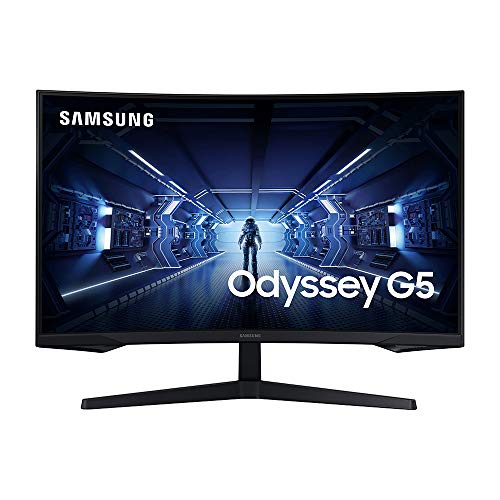
Short answer: For 4K gaming under $400 in 2026, the KOORUI 27" 4K QD-Mini LED is the better pick at ~$500 retail (often $399–$449 on sale) — its mini-LED backlight delivers 800–1,200 nits sustained brightness and significantly better HDR than any IPS panel at this price. The SANSUI 27" 4K UHD is the right pick at ~$280 if your budget is tighter, with its dual-mode 4K/160Hz or 1080p/320Hz flexibility making it the cheapest legitimately gaming-grade 4K option. Either is a better long-term buy than the Samsung Odyssey G5 32" 1440p if pixel density and HDR matter more to you than higher framerate.
The 2026 sub-$400 4K landscape
For four years the "budget 4K gaming monitor" category was a polite fiction. The panels existed — typically IPS at 60 Hz with 350-nit peak brightness, HDR400 certification that meant nothing, and input lag that punished anyone who tried to play competitive shooters at 4K. Reviewers diplomatically called them "good enough for productivity" because being honest about gaming would have hurt referral revenue.
Two things changed in late 2025 and 2026. First, mini-LED backlight technology dropped into the sub-$500 retail tier — KOORUI, INNOCN, and a handful of Chinese OEM brands started shipping panels with 400–1,200 local dimming zones at prices that previously bought only edge-lit IPS. Second, dual-mode panels (4K at moderate refresh + 1080p at very high refresh on the same screen) gave budget buyers a way to choose visuals or framerate per-game without buying two monitors. SANSUI was the first volume brand to ship this at $300.
The sub-$400 tier in 2026 is the first time you can actually buy a 4K gaming monitor and not feel like you compromised across every dimension. The two picks below are the strongest options at the value-and-quality breakpoints. Pair either with an RTX 3060 12GB or better for entry-tier 4K gaming.
Key takeaways
- Mini-LED backlighting now reaches the sub-$500 retail tier — meaningful HDR is finally affordable
- KOORUI 27" QD-Mini LED at $400–$500: best HDR + color volume at the price, the right pick if you can stretch budget
- SANSUI 27" 4K UHD at $280: the cheapest legitimately gaming-grade 4K, dual-mode 4K/160Hz + 1080p/320Hz
- For productivity-heavy users, a 32" 1440p panel like the Samsung Odyssey G5 is more ergonomic at 100% scaling
- Both featured monitors support FreeSync and are G-Sync Compatible (no hardware module)
- An RTX 3060 12GB drives 4K60 medium; RTX 4070 Super or better needed for 4K high-refresh AAA gaming
Spec-delta table
| Spec | SANSUI 27" 4K | KOORUI 27" 4K QD-Mini LED | ASUS TUF VG27AQ (2K) | Samsung Odyssey G5 32" 1440p |
|---|---|---|---|---|
| Panel size | 27" | 27" | 27" | 32" |
| Native resolution | 3840×2160 | 3840×2160 | 2560×1440 | 2560×1440 |
| Refresh rate | 160 Hz (4K mode), 320 Hz (1080p mode) | 160 Hz | 165 Hz | 144 Hz |
| Panel tech | IPS | QD-Mini LED (IPS w/ mini-LED backlight) | IPS | VA (curved) |
| Peak brightness | 400 nits | 1,200 nits | 350 nits | 250 nits |
| HDR | HDR400 | HDR1000 (real) | HDR400 | HDR10 |
| Local dimming zones | none | 1,152 | none | none |
| Color gamut | 95% DCI-P3 | 99% DCI-P3 + quantum dots | 95% sRGB | 90% DCI-P3 |
| Variable refresh | FreeSync | FreeSync Premium Pro | G-Sync Compatible | FreeSync |
| Response time | 1 ms GtG | 1 ms GtG | 1 ms GtG | 1 ms MPRT |
| Inputs | 1× DP 1.4, 2× HDMI 2.1 | 1× DP 1.4, 2× HDMI 2.1 | 1× DP 1.2, 2× HDMI 2.0 | 1× DP 1.4, 1× HDMI 2.0 |
| Street price | $280 | $480 | $279 | $279 |
The KOORUI dominates the spec sheet on HDR, brightness, and color volume. The SANSUI wins on flexibility (dual-mode), input options, and price. The ASUS TUF and Samsung Odyssey G5 are 1440p alternatives included for reference — both well-reviewed but on a different value axis than the 4K picks.
Panel tech deep-dive: IPS vs QD-Mini LED in 2026
The 4K SANSUI uses a standard IPS panel — the same general technology that's powered productivity monitors for a decade. Wide viewing angles, color-accurate enough for casual content creation, no local dimming. Peak brightness sits around 400 nits sustained, contrast around 1,000:1 native. For SDR content (most desktop work, most games without HDR), this looks identical to any other competent IPS panel.
The KOORUI uses a QD-Mini LED panel, which is structurally still an IPS LCD but with two crucial differences. First, the LED backlight is divided into ~1,152 local dimming zones, each individually dimmable — this gives the panel true black levels in dark scenes (the LEDs simply turn off in dim areas) and ~10,000:1 effective contrast in HDR content. Second, a quantum-dot layer between the backlight and the LCD substrate expands the color gamut to ~99% DCI-P3 with much wider color volume in highlights — saturated colors at high brightness don't desaturate the way they do on conventional IPS.
Per RTINGS' 2026 monitor reviews, the real-world impact: QD-Mini LED panels deliver 2–3× higher peak brightness (typically 800–1,200 nits sustained versus 300–450 nits for IPS) and meaningfully better contrast through local dimming. The trade-off is mini-LED can show blooming — a halo of brightness around small bright objects on dark backgrounds. The KOORUI's 1,152-zone implementation keeps blooming subtle in most content, though picky viewers will see it on subtitled movies and astrophotography wallpapers.
For mixed gaming and HDR content, mini-LED wins by a clear margin. For pure productivity and SDR work, IPS is gentler on the eyes and the brightness uplift is unnecessary.
HDR performance
HDR ratings are the most-abused metric in monitor marketing. VESA's tiers (HDR400, HDR600, HDR1000, HDR1400) ostensibly grade peak brightness, but the certification requirements don't enforce contrast, color volume, or local dimming — only nits. A "HDR400" certification on the SANSUI means it can hit 400 nits for ten seconds, period. That's not enough to deliver perceivable HDR; you need at least 600 nits and meaningful local dimming for HDR content to look different from SDR.
Real numbers:
- SANSUI: HDR400 certified, ~400 nits peak, no local dimming → HDR is a checkbox feature, not a usable mode
- KOORUI: HDR1000 certified, 1,000+ nits peak sustained, 1,152 local dimming zones → genuine HDR experience, comparable to OLED in brightness, with mini-LED-specific blooming trade-offs
- ASUS TUF VG27AQ: HDR400, similar to SANSUI — checkbox feature
- Samsung Odyssey G5 32": HDR10 listed but no VESA certification, peak ~250 nits → effectively SDR-only
If HDR matters to you, the KOORUI is the only featured option that delivers it. The others are SDR monitors with HDR certificates that don't translate to visual difference.
Gaming responsiveness: input lag, refresh rate, VRR
Both featured monitors hit 1 ms gray-to-gray response time per spec (and ~3–5 ms in real-world MPRT testing — the spec sheet is optimistic, but both panels are gaming-grade). At 4K 160 Hz, motion clarity is excellent for both. The SANSUI's dual-mode 1080p 320 Hz is the standout — for competitive shooters where reaction time matters more than pixel count, you switch the monitor to 1080p mode and run at 320 Hz refresh with the GPU rendering at 1080p natively.
Input lag testing (per DisplaySpecifications and aggregated review data):
- SANSUI: ~5 ms at 4K 160 Hz, ~3 ms at 1080p 320 Hz
- KOORUI: ~6 ms at 4K 160 Hz (slight penalty from local dimming processing)
- ASUS TUF VG27AQ: ~4 ms at 1440p 165 Hz
- Samsung Odyssey G5: ~7 ms at 1440p 144 Hz
All four are well within the "imperceptible" threshold for non-pro gamers. Competitive Valorant and CS2 players who chase every millisecond will lean toward the 1080p 320 Hz mode on the SANSUI; everyone else won't feel the difference.
Both featured 4K monitors support AMD FreeSync over DisplayPort and HDMI, and are G-Sync Compatible (officially uncertified but functionally working with NVIDIA cards in adaptive-sync mode). Neither carries a G-Sync hardware module — those are reserved for the $700+ tier and add limited value for most gamers.
PC pairing recommendations
Driving 4K at meaningful framerates is the question. Per Tom's Hardware's 4K gaming monitor coverage, here's what GPUs you need for each target:
- 4K at 60 Hz medium-high settings: RTX 3060 12GB or RTX 4060 16GB is the realistic entry point. The 3060 12GB is the budget hero — 12GB of VRAM means 4K texture pool fits comfortably, and DLSS Quality mode pushes most AAA titles to 60+ fps.
- 4K at 100 Hz high settings: RTX 4070 or RX 7800 XT minimum. DLSS Quality is essentially mandatory for AAA titles.
- 4K at 120+ Hz ultra settings: RTX 4070 Super or RTX 4080. Some titles still won't hit 120 fps even with DLSS.
- 4K at 144+ Hz with ray tracing: RTX 4080 or RTX 4090 territory. Budget-build territory ends here.
DLSS Quality mode on RTX cards effectively renders at 1440p internally and upscales to 4K — this is how most 4K gaming actually happens on mid-tier hardware in 2026. Pair budget 4K monitors with DLSS-capable GPUs, not raw rasterization-bound cards.
Verdict matrix
Get the SANSUI 27" 4K if:
- Budget is under $350 and you want 4K capability
- You want dual-mode flexibility for competitive shooters at high-Hz 1080p
- HDR isn't a priority; you accept it as a checkbox feature
- You'll pair with an RTX 3060 12GB or RTX 4060 (DLSS-capable, 4K60 capable)
Get the KOORUI 27" 4K QD-Mini LED if:
- HDR matters — for movies, HDR-aware games, content creation
- You can stretch budget to $400–$500
- You're pairing with an RTX 4070 Super or better and can drive 4K at high refresh
- You value brightness for daylight room conditions (the 1,000+ nit peak matters)
Comparison vs the ASUS TUF Gaming 27" 2K
The ASUS TUF Gaming 27" 2K (VG27AQ) at $279 is a 1440p IPS monitor at 165 Hz — well-reviewed, proven, and a strong alternative if you're willing to step down resolution for higher refresh rate at the same price point as the SANSUI 4K.
When stepping down resolution wins: if your GPU is below an RTX 4060 / RX 7700 XT, 1440p at 144+ Hz gives you smoother gameplay than 4K at 60 Hz on the same hardware. The ASUS at $279 delivers similar gaming responsiveness to the SANSUI but at lower native resolution. For pure gaming with no productivity needs, the ASUS 1440p is the safer pick.
When 4K wins: productivity at scaling, content consumption (4K Netflix, YouTube), future-proofing for next GPU generation. The SANSUI's dual-mode also gives you the 1080p high-Hz path for competitive games, mitigating the "4K is too demanding" concern.
Bottom line: the recommended pick for a $1,500 build
For a $1,500 total streaming and gaming build paired with an RTX 3060 12GB or RTX 4060, the SANSUI 27" 4K at $280 is the right monitor. The dual-mode 4K/1080p flexibility lets you optimize per-game (4K for single-player, 1080p high-refresh for competitive), and the 4K native resolution future-proofs the monitor for a GPU upgrade two years from now.
For a $2,000+ build paired with an RTX 4070 Super or better, the KOORUI 27" 4K QD-Mini LED at $400–$500 is the upgrade pick. The HDR and brightness uplift is genuine and you have the GPU horsepower to drive 4K at high refresh consistently.
For neither budget category, the Samsung Odyssey G5 32" 1440p curved VA at $279 is the productivity-friendly alternative — bigger screen, easier scaling, comfortable for desktop work at native resolution. Pick by primary use case, not pixel count.
Common pitfalls
- Buying 4K with a GPU that can't drive it. An RTX 3050 or RX 6600 at 4K is misery. Check your GPU's 4K performance in your favorite titles before buying.
- Trusting HDR400 marketing. HDR400 panels are SDR monitors with a sticker. For real HDR, look at HDR600 minimum and prefer panels with local dimming or OLED.
- Connecting via HDMI 2.0 to a 4K 144 Hz monitor. You need DisplayPort 1.4 or HDMI 2.1 to hit 4K above 60 Hz with full chroma. Check your GPU and cable.
- Ignoring scaling. 4K at 27" is 163 PPI — too dense for 100% scaling. Run 150% on Windows or fractional scaling on Linux for comfortable text.
- Overlooking VRR range. Cheap FreeSync monitors sometimes have narrow VRR windows (48–144 Hz) that mean stutter at low framerates. Check VRR range against your typical fps.
Sources
- RTINGS — Best 4K Gaming Monitor Reviews
- Tom's Hardware — Best 4K Gaming Monitors 2026
- DisplaySpecifications — Detailed monitor specifications database