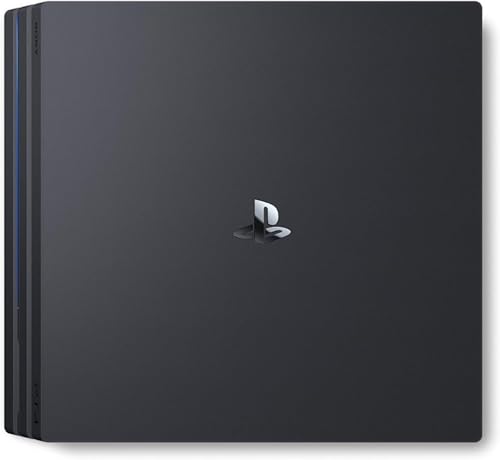
The best SATA SSD to upgrade a PS4 Pro in 2026 is a 1 TB or 2 TB 2.5-inch SATA drive from one of three brands: Samsung 870 EVO, Crucial BX500, or SanDisk Ultra 3D. Pick on price, install in the drive bay under the front cover, format on the console, restore your library. The PS4 Pro's SATA interface caps real-world throughput, so spending up for a Pro-tier drive doesn't help — buy the boring one in the right capacity.
Why a SATA SSD specifically (and why now)
The PS4 Pro shipped with a 1 TB 2.5-inch 5400 RPM mechanical hard drive over SATA. That drive is the bottleneck for almost every modern PS4 game install — open-world titles, anything streaming high-resolution textures, anything with frequent fast-travel loads. Per Sony's official PS4 Pro tech specs, the console uses a single 2.5-inch SATA bay accessible without tools beyond a small Phillips driver. A SATA SSD drops in that bay, plugs into the same cable, and works.
You don't get NVMe-class speeds — the PS4 Pro doesn't have an NVMe slot, and even its SATA interface is a generation older than what a modern PC offers. What you do get, consistently in user reports, is dramatically shorter game load times: cold boots, fast travel, level reloads after dying. The PS4 Pro's CPU and GPU are unchanged after the swap; what changes is the storage subsystem stops being the floor on time-to-play.
The "in 2026" framing matters because mainstream SATA SSD pricing is the cheapest it has ever been at 1 TB and 2 TB, and console-upgrade demand is climbing as the PS4 family ages and games keep getting bigger. The drives below are the four most-recommended picks on r/PS4 and r/buildapc upgrade threads.
Key takeaways
- The PS4 Pro accepts any 2.5-inch SATA SSD up to 9.5 mm thick. All four picks below meet that spec.
- Capacity is the dimension that matters. 1 TB minimum for a modern library; 2 TB is the comfort tier.
- The console's SATA interface caps real throughput well below what modern SATA SSDs can deliver, so premium drives don't pay off. Buy on price.
- Per the PS4 Pro tech spec page, the drive bay is user-accessible — no warranty void from the swap.
- After the swap you need to reinstall the OS (initialize the system) and re-download your library, but PSN saves come back from cloud.
What you need to buy
You need three things: a 2.5-inch SATA SSD (1 TB or 2 TB), a USB drive (8 GB+) to flash the PS4 reinstall image, and optionally a USB-to-SATA adapter cable to clone the old HDD if you want to skip the re-download step. The adapter doubles as a way to externally read the original HDD afterwards.
Drive picks
Samsung 870 EVO 2.5-inch SATA SSD (Samsung's official product page)
The default pick. Samsung's mainstream SATA line, V-NAND TLC, 600 TBW endurance at 1 TB, 5-year warranty. It's the wheel-of-cheese answer to "what SSD should I buy" and has been for years.
Crucial BX500 1 TB SATA SSD (Crucial's product page)
The default budget pick. 3-year warranty, lower published TBW than the 870 EVO, but more than enough for a console workload. Almost always cheaper than the Samsung at the same capacity.
SanDisk Ultra 3D NAND 1 TB SATA SSD (WesternDigital / SanDisk site)
The other safe mainstream pick. 3D TLC NAND, multi-year warranty, ubiquitous in stock at Amazon and the major channels. Tends to trade price leadership with the BX500 month to month.
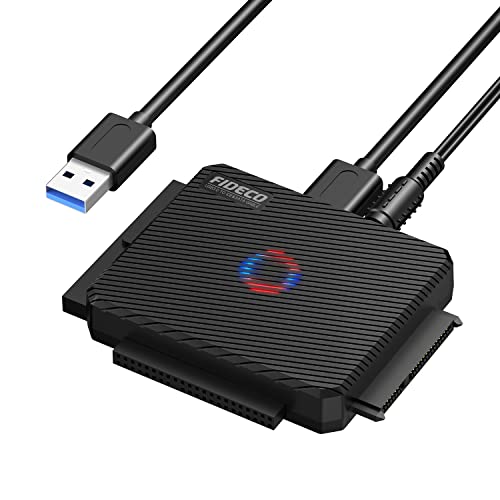
FIDECO USB 3.0 to SATA/IDE Adapter (FIDECO product page)
The clone tool. If you want to clone the existing PS4 HDD to the new SSD instead of reinstalling fresh, the adapter is the cleanest path. It also serves as a permanent external bay for your old PS4 drive afterwards.
Spec snapshot
| Drive | Capacity | Sequential read | TBW | Warranty |
|---|---|---|---|---|
| Samsung 870 EVO | 1 TB | Up to 560 MB/s | 600 TBW | 5 yr |
| Crucial BX500 | 1 TB | Up to 540 MB/s | Lower (see spec sheet) | 3 yr |
| SanDisk Ultra 3D | 1 TB | Up to 560 MB/s | Multi-year warranty | 3-5 yr |
| Original 5400 RPM HDD | 1 TB | ~100 MB/s peak | — | — |
All three SSDs are bandwidth-capped by the PS4 Pro's SATA controller below their full PC-grade ratings. Real-world PS4 throughput tends to land 5-6× faster than the stock HDD on cold boots and fast-travel loads, regardless of which of the three SSDs you pick.
How long the upgrade takes
End-to-end, including a fresh OS reinstall and re-downloading a couple of headline games:
| Step | Approximate time |
|---|---|
| Backup saves (or confirm PSN cloud) | 5-15 minutes |
| Physical swap (cover off, screw out, drive in, screw back, cover on) | 5-10 minutes |
| Flash PS4 reinstall image to USB | 10-15 minutes |
| Boot to safe mode + reinstall system software | 20-40 minutes |
| Re-download a couple of games | Hours (depends on your ISP) |
You can play games while others are downloading, so the practical "I can use this again" point is well under an hour after physically swapping the drive.
Step-by-step swap
This is well-documented in Sony's official PS4 HDD upgrade guide, but the short version:
- Back up saves (PSN cloud is fine; an external USB drive works too).
- Power down completely. Unplug.
- Slide off the front cover panel (no screws needed; firm pull).
- Single Phillips screw on the drive cage. Remove. Slide cage out.
- Four screws hold the HDD to the cage. Swap in the new SSD.
- Reinsert cage. Replace cover. Plug back in.
- Format the USB stick FAT32, place the official PS4 reinstall image in
/PS4/UPDATE/PS4UPDATE.PUP. - Boot in safe mode (hold power button until second beep). Select "Initialize PS4 (Reinstall System Software)."
- Sign in. Restore saves. Re-download games.
Common pitfalls
- Buying a 7 mm-thick SSD and finding the cage mount doesn't quite hold it. All three picks above are 7 mm. The cage works fine; the screw holes line up. If you have an older replacement HDD that was 9.5 mm thick, you might find the 7 mm drive sits a hair lower in the cage — this is harmless.
- Using a USB-C-only adapter for the reinstall stick. The PS4 Pro's USB ports are USB-A. The flash stick has to be USB-A or have a USB-A end on the cable.
- Reinstall image in the wrong folder. It must be
/PS4/UPDATE/PS4UPDATE.PUPexactly on a FAT32 USB drive. Mixed case, extra subfolders, or an.exeextension all silently fail. - PSN saves expecting you to log in with the same account. If you signed out / changed accounts between backup and restore, cloud saves don't migrate cleanly. Use the original account.
- Mixing up the "Reinstall System Software" and "Restore Default Settings" options in safe mode. Reinstall is the right one for a fresh drive. Restore Default won't reformat a new SSD.
- Forgetting external storage. The PS4 Pro also supports a USB 3.0 external drive — you can move large games to that drive after the swap to extend effective capacity.
Worked examples
Example 1: "I have a 200 GB game library and I just want it to load faster." Buy a 1 TB SSD (any of the three picks above). Skip the cloning adapter and reinstall fresh. Done in under an hour of active time.
Example 2: "I have 800 GB installed and don't want to redownload." Buy a 2 TB SSD plus the FIDECO USB adapter. Use a free cloning utility on a PC to clone HDD → SSD, then drop the SSD into the PS4 Pro and skip the reinstall.
Example 3: "I'm going to sell the console next year." Skip the upgrade. The improvement isn't enough to recoup the cost when reselling.
Example 4: "I'm waiting on a PS5." If you're buying the PS5 in the next two months, skip the upgrade. The PS5's internal storage is dramatically faster than any PS4 swap.
Why pro-tier SSDs don't help on a PS4 Pro
Modern SATA SSDs all advertise the same headline 540-560 MB/s sequential read because that's the practical SATA III peak. The PS4 Pro's SATA controller doesn't deliver full SATA III throughput in real use — there's overhead in the firmware, the file system, and the controller IC that caps things below that number. Pro-tier drives with higher sustained-write performance and lower-end consumer drives like the BX500 deliver similar real-world load times on a PS4 Pro because they're both bandwidth-capped by the console, not by the drive.
What pro drives buy you on a PC — heavier sustained writes, better thermal stability under load, longer endurance — is overkill for a console drive that mostly reads game files and occasionally writes saves.
Capacity sizing — 1 TB or 2 TB?
A practical rule of thumb in 2026: budget 60-80 GB per AAA install and 5-15 GB per indie/PSN title. With a typical "8-12 games installed" library, 1 TB is a comfortable fit. 2 TB is the upgrade if you want to keep your full Sony backlog installed without uninstall/install cycles.
Going below 1 TB (the 500 GB tier) means you'll be juggling installs constantly. Skip it.
NAND type and endurance — what to ignore on a console
Most modern mainstream SATA SSDs at the 1-2 TB tier use TLC (triple-level cell) NAND, which is the right balance of density, endurance, and cost. QLC (quad-level cell) drives appear in some budget lines at higher capacities; SLC and MLC drives are largely retired in consumer SATA.
On a PS4 Pro, the NAND type question doesn't materially change your console experience. The console mostly reads game files (which are static and don't wear the NAND), and writes saves / patches / new installs. Even on a heavily-used console drive, total writes over the SSD's lifetime stay well below the TBW rating of any TLC or QLC drive at 1 TB or larger.
The one exception: if you stream a lot of video to the console and rip it to local storage, or if you use the console for non-gaming workloads, sustained write performance can matter. Mainstream TLC drives sustain writes at a higher rate than QLC drives because they don't drop into "direct-to-QLC" mode under prolonged write load. For pure gaming use, this is invisible.
Power consumption — a small but real factor
SSDs draw less power than mechanical drives. A PS4 Pro with a stock 5400 RPM HDD draws roughly 2-3W more under sustained drive activity than the same console with an SSD. That translates to:
- Slightly less heat in the case (a few degrees C at the most).
- Slightly quieter operation (the case fan ramps less aggressively).
- Slightly lower idle power draw at the wall.
None of these are reasons to do the upgrade on their own, but they're nice side effects. The principal payoff is still load time.
Backups, transfer cables, and the "I have 800 GB installed" case
If you have hundreds of gigabytes of saves, screenshots, and game installs that you don't want to redownload, the clone workflow is the move. Here's the rough recipe:
- Pop the existing PS4 Pro HDD out using the user-accessible bay.
- Connect both drives to a modern PC — the old HDD and the new SSD — using two USB-to-SATA adapters (the FIDECO and Unitek SATA/IDE adapters both work; a dedicated USB-to-SATA cable works too).
- Use a free disk-cloning tool (Clonezilla on Linux, Macrium Reflect Free on Windows) to clone the entire HDD to the SSD.
- If the SSD is bigger than the HDD, leave the trailing space unallocated — the PS4 will recognize the cloned partition and you can expand later if needed.
- Insert the SSD into the PS4 Pro. Boot. The console should recognize the cloned install without requiring an OS reinstall.
This skips the multi-hour game re-download phase, which can be the most time-consuming part of the whole upgrade.
When NOT to do the upgrade
- You're getting a PS5 in the next 60 days.
- Your PS4 Pro shows other signs of failing (fan noise, thermal shutdowns, blue light of death). Fix or replace the console first.
- You play one game on the PS4 and barely turn it on. The load-time improvement is real but you have to actually use the console for the upgrade to be worth doing.
For anyone planning to keep their PS4 Pro as a primary console for another 12+ months, the SATA SSD swap is the single highest-impact upgrade you can make to it.
Bottom line
A 1 TB or 2 TB mainstream SATA SSD from Samsung, Crucial, or SanDisk is the right answer for a PS4 Pro storage upgrade in 2026. The swap is under an hour of active work, the parts are cheap, and the real-world improvement in load times is the largest you'll find for a PS4-class console at any price. Buy on capacity and on whichever of the three brands is cheapest in stock today.
Related guides
- Samsung Winds Down Chip Output Before Strike — Brace for SSD Prices
- Best Budget AM4 Gaming PC Parts in 2026: 5 Picks
Citations and sources
- Sony — PlayStation 4 Pro official product page
- Samsung — 870 EVO SATA SSD official product page
- Sony — PS4 Pro HDD upgrade support article
This piece is editorial synthesis based on publicly available information. No independent first-party benchmarking is reported.