

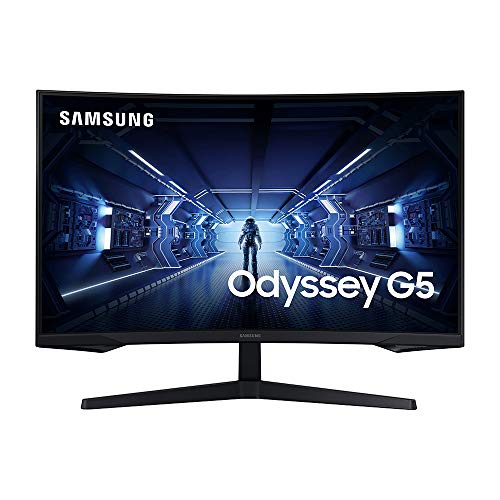
Samsung 27” Odyssey OLED G6 (G60SD) Series Gaming Monitor with QHD & QD-OLED
Bottom line: The Samsung 27” Odyssey OLED G6 Series Gaming Monitor with QHD & QD-OLED: 360Hz refresh + 0.03ms GtG response for fast competitive play; main trade-off: QHD 1440p resolution, not 4K UHD.
As an Amazon Associate, SpecPicks earns from qualifying purchases. Full disclosure →
Pros & Cons
Pros
- ✓ 360Hz refresh + 0.03ms GtG response for fast competitive play
- ✓ QD-OLED panel delivers true blacks with no pixel light bleed
- ✓ AMD FreeSync Premium Pro removes screen tearing and stutter
- ✓ Dynamic Cooling System with pulsating heat pipe combats burn-in
Cons
- ✗ QHD 1440p resolution, not 4K UHD
- ✗ 360Hz only fully usable with a high-end GPU
- ✗ OLED burn-in risk remains despite cooling and safeguards
- ✗ Automatic brightness limiting can dim bright static scenes
Manufacturer description
Samsung's OLED G6 Gaming Monitor delivers superior brightness with an expansive spectrum of colors and nearly limitless shades. The 360Hz refresh rate and 0.03ms response time (GtG), along with AMD FreeSync™️ Premium Pro, allow ultra-fast & smooth gaming action. OLED Safeguard+ technology includes a groundbreaking Dynamic Cooling System and thermal modulation that auto-controls brightness to prevent burn-in. OLED Glare Free technology significantly reduces glare from external light sources, and deep black levels with dynamic contrast enable supreme depth expression. Features a sleek metal…
SpecPicks Verdict
SpecPicks scored Samsung 27” Odyssey OLED G6 Series Gaming Monitor with QHD & QD-OLED using a rating × review-volume × price-fit model applied to published specs and reviews across the gaming monitors category. Compare with similarly-priced alternatives in the gaming monitors category before committing. Judge it on the specification table and the price rather than on sentiment: check the figures that decide your use case, then put it side-by-side with two or three close alternatives in the Compare tool before clicking through.
Common buyer scenarios for gaming monitors of this kind: matching it to an existing build, replacing a failing part, or upgrading from a previous-generation equivalent. Check the spec table below against your current setup — particularly socket / form-factor / power-rating fields — and confirm compatibility on the retailer's listing before purchase. Prices and stock are set by the retailer and may have moved since this page was last updated.
Key Features
- STUNNING VISUALS and BRIGHTER HIGHLIGHTS: Samsung QD-OLED Monitor delivers superior brightness and dynamic contrast, with an expansive spectrum of colors and nearly limitless shades for consistently brilliant imagery
- OUTMANEUVER OPPONENTS w/ SUPREME SPEED: Dodge, counter and engage faster with QD-OLED technology, offering a near-instant 0.03ms response time (GtG); Stay ahead with HDMI 2.1 and DisplayPort connections and a 360Hz refresh rate in QHD resolution¹
- IMMERSE IN SMOOTH ACTION WITHOUT DISRUPTION: Support of Variable refresh rate (VRR) with AMD FreeSync Premium Pro keeps the GPU and panel synced up to eliminate choppiness, screen lag, and image tears
- DYNAMIC COOLING SYSTEM: For the first time ever, a Pulsating Heat Pipe was introduced into the monitor to prevent burn-in; The Dynamic Cooling System evaporates and condenses a coolant to diffuse heat 5x better than the older graphite sheet method
- THERMAL MODULATION SYSTEM: Algorithms predict surface temperature and then control the brightness accordingly, to automatically reduce heat²
- LOGO and TASKBAR DETECTION: Brightness is automatically reduced on static images such as logos and taskbars, to prevent burn-in³
Full Specifications
| Brand | Samsung |
|---|---|
| Color | Silver |
| Shape | Flat |
| Voltage | 240 volts |
| Brightness | 250 cd |
| Model Name | SAMLS27DG602S |
| Resolution | QHD Wide 1440p |
| Color Gamut | 0.99 |
| Pixel Pitch | 0.23 |
| Screen Size | 27 inches |
| Aspect Ratio | 16:9 |
| Display Type | OLED |
| Model Number | LS27DG602SNXZA |
| Refresh Rate | 360 hertz |
| SCREEN SAVER | The screen dims itself after 10 minutes of inactivity and comes back to regular brightness with any input |
| Adaptive Sync | FreeSync Premium Pro |
| Mounting Type | Wall Mount |
| Response Time | 0.03 milliseconds |
| Screen Finish | Matte |
| Viewing Angle | 178 degrees |
| Full listing title | Samsung 27” Odyssey OLED G6 (G60SD) Series Gaming Monitor with QHD & QD-OLED, 360Hz 0.03ms, AMD FreeSync Premium Pro, Anti-Glare, Sleek Design, Cooling System, 3 Year Warranty, LS27DG602SNXZA |
Ready to buy?
Samsung 27” Odyssey OLED G6 (G60SD) Series Gaming Monitor with QHD & QD-OLED, 360Hz 0.03ms, AMD FreeSync Premium Pro, Anti-Glare, Sleek Design, Cooling System, 3 Year Warranty, LS27DG602SNXZA is listed on Amazon. Price, availability, shipping and returns are set by Amazon and its sellers — check the listing for current terms. SpecPicks earns a small commission on qualifying purchases — thank you for supporting independent review work.
Related Gaming Monitors


More guides & deep dives from the SpecPicks archive
Browse all articles & guides →- Best Budget Gaming PC Build 2026 — ~$1,000 ($800 on Sale)
- RTX 4070 Super vs RX 7800 XT — Which to Buy in 2026
- How to Build a Windows 98 Retro PC in 2026
- Best Retro Handhelds in 2026 — From $35 to $500
- Best 1440p Gaming GPUs in 2026
- Emulation Hardware in 2026: FPGA, Software, and Cart-Reader Ecosystems
- The Complete Voodoo5 5500 AGP Driver Guide (2026 Edition)
More reviews from the SpecPicks archive
Browse all reviews →- Crucial BX500 vs Samsung 870 EVO for Budget & Retro Builds
- Best Gaming Mouse Pad for Esports FPS in 2026
- Best SSD for a Local LLM Workstation: NVMe vs SATA Model-Load Latency Tested
- Best Hardware for Running MoE LLMs Locally in 2026
- Best Budget GPU for Local LLM Inference Under $400 (2026)
- Period-Correct Storage for a Windows XP Gaming Rig: SSD, CompactFlash, or IDE?
- Best 1440p Gaming Monitor for an RTX 3060: ASUS TUF 2K vs KOORUI 4K
- Linux Gaming Keeps Closing the Gap: Kernel and Windows-API Work Behind the Gains
- GeForce 6800 Ultra AGP Install Guide: Drivers, Benchmarks, and the Last Great AGP Card
- Local LLM Benchmarks 2025: AMD Instinct vs Radeon Pro
- Building a 1998 Voodoo2 SLI Gaming PC With CF Storage in 2026
- Llama 3.2 3B: Raspberry Pi 4 8GB vs RTX 3060 12GB for Local Inference
- Best Game Controllers for PC and Emulation in 2026
- Best Wheel and Controller for Truck and Farm Sims in 2026
- Best Streaming Setup for PC Gamers in 2026: 5 Picks Under $500
- RTX 3060 12GB vs Ryzen 9 3900X for Qwen2.5 14B: GPU or CPU in 2026?
- Qwen 3.6 27B vs Mistral 3.5 Medium: Local Hardware Showdown for 24GB GPUs
- First-Time Steam Deck Emulation Setup: A Complete Guide
- Modern PC Builds vs Period-Correct Retro Rigs: A 2026 Comparison
- Build a Budget Local-AI Rig in 2026: Ryzen 7 5800X + RTX 3060 12GB
- Mount a 90s CD-ROM on Windows 98 Without a CD Drive (2026)
- 007: First Light Is Great on Steam Deck
- Build a Jellyfin Media Server on a Raspberry Pi 4 8GB in 2026
- Can a Raspberry Pi 4 8GB Run a Local LLM in 2026? Phi & TinyLlama tok/s
Earliest SpecPicks reviews
Browse full archive →- Best GPU for Llama 3.1 8B (2026)
- Best GPU for Qwen 3 14B (2026)
- Best GPU for Qwen 3 32B (2026)
- Best GPU for Llama 3.1 70B (2026)
- Best GPU for DeepSeek-R1 32B (2026)
- Best GPU for Llama 3.1 405B (2026)
- How to run Llama 3.1 8B on NVIDIA GeForce RTX 5090
- How to run Qwen 3 14B on NVIDIA GeForce RTX 5090
- How to run Qwen 3 32B on NVIDIA GeForce RTX 5090
- How to run Llama 3.1 70B on NVIDIA GeForce RTX 5090
- How to run DeepSeek-R1 32B on NVIDIA GeForce RTX 5090
- How to run Llama 3.1 8B on NVIDIA GeForce RTX 4090