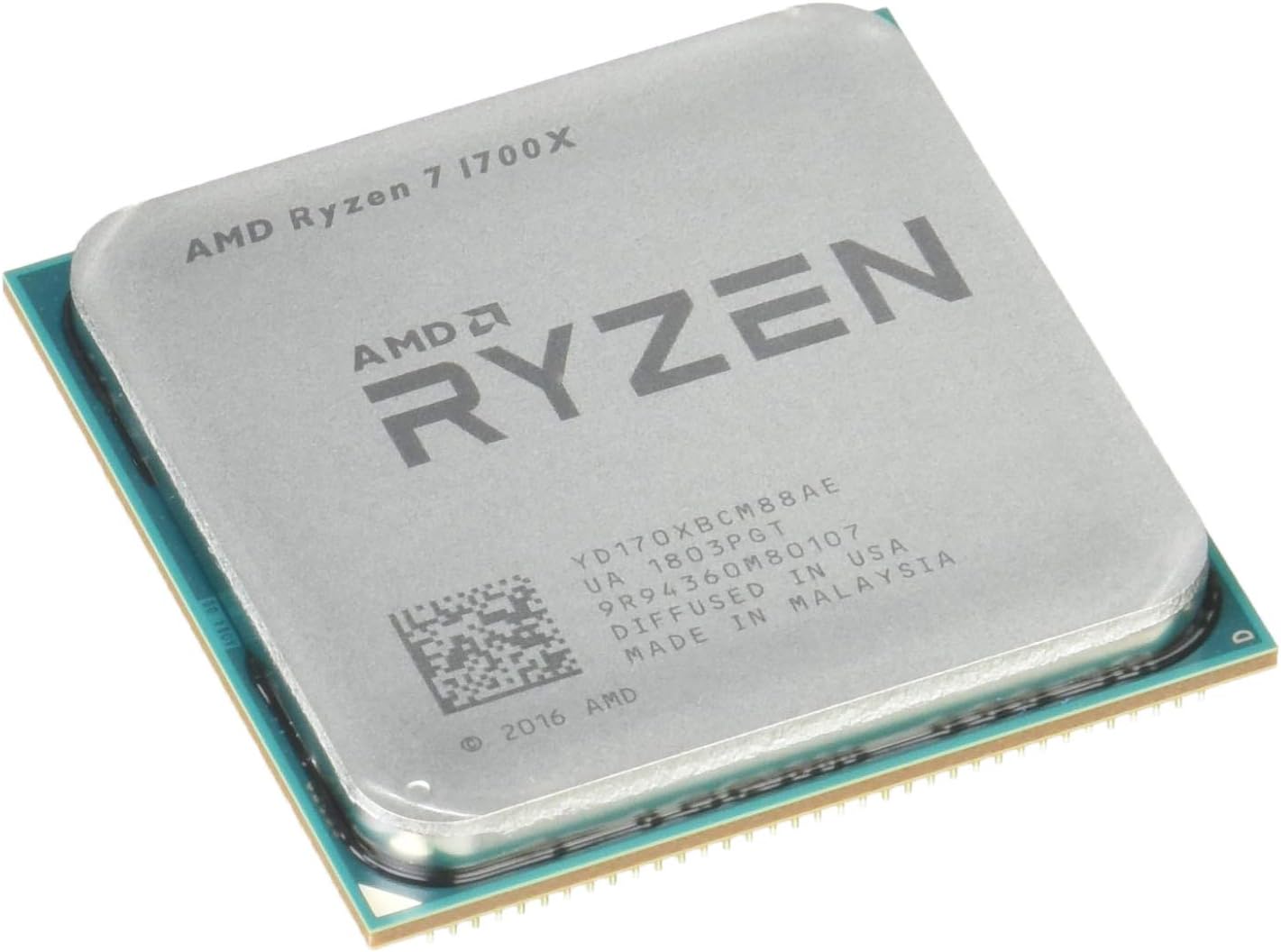
BOSGAME VTA-439: AMD Ryzen AI 9 HX 470 Mini PC — A Linux-Ready Contender
The BOSGAME VTA-439 targets a niche that larger OEMs have historically underserved: users who want modern AMD silicon, genuine Linux compatibility, and a footprint small enough to mount behind a monitor. Powered by AMD's Ryzen AI 9 HX 470 from the Strix Point family, the VTA-439 enters a growing category of x86 mini PCs that treat Linux as a first-class citizen rather than a supported afterthought.
This synthesis draws on AMD's published platform documentation, Linux kernel changelogs, and community-reported compatibility data across Phoronix, the Arch Linux wiki, and r/LocalLLaMA to assess where the VTA-439 stands for prospective buyers.
What Is the Ryzen AI 9 HX 470?
The Ryzen AI 9 HX 470 belongs to AMD's Ryzen AI 300 series — codename Strix Point — a mobile SoC family built on the Zen 5 microarchitecture. Per AMD's published product documentation, the Ryzen AI 300 HX tier uses a hybrid core arrangement combining high-performance Zen 5 cores with efficiency-oriented Zen 5c cores, with 12 cores total in the top HX configurations.
Three silicon blocks define the platform's appeal for power users:
| Component | Architecture | Publicly Stated Capability |
|---|---|---|
| CPU | Zen 5 + Zen 5c hybrid | 12 cores; AMD cites meaningful IPC gain over Zen 4 |
| iGPU | Radeon 890M (RDNA 3.5) | Up to 16 Compute Units per AMD spec sheets |
| NPU | XDNA 2 | Up to 50 TOPS AI performance (AMD Ryzen AI 300 series figure) |
The XDNA 2 NPU is the headline specification for AI inference workloads — AMD's published TOPS comparisons place it well above prior-generation mobile NPUs from both AMD and Intel. The Radeon 890M represents AMD's most capable integrated graphics to date, built on the same RDNA 3.5 architecture as the Radeon RX 7000M series but implemented as an on-die iGPU drawing from system DDR5 bandwidth.
Linux Compatibility: Where Does Strix Point Stand?
AMD has maintained an upstream-first policy for GPU and system management drivers across multiple product generations. For Strix Point specifically, the AMDGPU kernel driver — the open-source graphics stack — gained initial support in mainline Linux during the 5.x kernel series, with continued refinements in the 6.x cycle per AMD's public driver roadmap and Phoronix's ongoing kernel-coverage reporting.
What works out of the box on current distributions:
- Ubuntu 22.04 LTS and later: AMDGPU loads automatically; Wayland compositors function with the open-source stack without proprietary driver installation
- Fedora 40+: Ships recent enough kernels for full Strix Point iGPU support; the AMDGPU-Pro optional stack is available for specific compute workloads
- Arch Linux and derivatives: Rolling release means the current kernel is always available; the Arch Linux AMDGPU wiki documents any required kernel parameters and firmware blobs
- Debian 12 (Bookworm): iGPU support is available but may require a backport or HWE kernel to reach sufficiently recent AMDGPU revisions
NPU support on Linux:
Per AMD's open-source documentation and upstream kernel mailing list activity, NPU support for the XDNA 2 architecture has been progressing through the amdxdna driver project. Community tracking on Phoronix shows active development, with the driver targeting mainline kernel inclusion. Users planning to target NPU-accelerated inference — Ollama with NPU backends, OpenVINO, or Windows AI PC–style workloads ported to Linux — should verify the kernel version shipped with their chosen distribution and consult AMD's public amdxdna repository for current build status.
Distribution compatibility at a glance:
| Distribution | iGPU (RDNA 3.5) | NPU (XDNA 2) | Notes |
|---|---|---|---|
| Ubuntu 24.04 LTS | Full | Improving | HWE kernel tracks upstream faster than GA kernel |
| Fedora 41+ | Full | Improving | Bleeding-edge kernel packages available via COPR |
| Arch Linux | Full | Community-verified | Rolling; check Phoronix for driver milestone updates |
| Debian 12 (Bookworm) | Partial | Requires backport | Use HWE or linux-image-6.x from backports |
Memory, Storage, and I/O: Platform Ceiling
The VTA-439's Ryzen AI 9 HX 470 supports DDR5, with BOSGAME offering configurations up to 64 GB. DDR5's higher bandwidth benefits both the RDNA 3.5 iGPU — which draws from shared system memory — and AI inference tasks that shuttle large model weights repeatedly through the memory bus.
Storage is handled via M.2 NVMe over PCIe 4.0, which is sufficient for current high-end SSDs. The Strix Point platform's USB4 40 Gbps ports extend connectivity options for external GPU enclosures, high-bandwidth docks, or fast external storage — all of which are relevant for users who outgrow the built-in NPU or need more iGPU VRAM than shared system memory allows.
For users setting up the VTA-439 as a primary workstation, a purpose-built peripheral kit rounds out the experience. An ergonomic mouse pad such as the MROCO Ergonomic Mouse Pad with Gel Wrist Rest reduces wrist fatigue during extended development sessions, while a dedicated USB condenser microphone like the HyperX SoloCast handles video calls and local audio recording without imposing meaningful CPU overhead on a machine whose CPU cycles are better spent elsewhere.
AI Inference: NPU vs. iGPU Tradeoffs
For users interested in running local LLMs or image-generation pipelines, the Strix Point platform offers two hardware-acceleration paths with distinct Linux maturity levels:
RDNA 3.5 iGPU (Radeon 890M): Supported today via ROCm 6.x on Linux for select compute workloads. Per community reports on Phoronix and r/LocalLLaMA, the Radeon 890M can run smaller quantized models — Q4_K_M and Q8_0 variants of 7B-class models — at usable token-per-second rates using llama.cpp's HIP backend. Larger models exceed the available shared memory bandwidth.
XDNA 2 NPU: Designed by AMD for "always-on" AI tasks rather than large-batch model generation — background transcription, real-time translation, camera ISP processing, and lightweight continuous inference. Per AMD's product positioning, the NPU excels at sustained low-power inference rather than burst throughput. Linux tooling via amdxdna is the active development path.
| Inference Path | Linux Tooling | Best For |
|---|---|---|
| iGPU (ROCm/HIP) | ROCm 6.x, llama.cpp HIP | 7B quantized LLM inference today |
| NPU (XDNA 2) | amdxdna driver (upstream in progress) | Low-power continuous AI tasks |
| CPU (Zen 5) | Any runtime | Fallback; strong Zen 5 IPC helps throughput |
Performance Context: What Zen 5 Means in Practice
Without citing unverified figures, the Ryzen AI 9 HX 470's Zen 5 architecture represents AMD's most recent client microarchitecture, succeeding Zen 4. AMD's published ISA and architecture materials describe Zen 5 as delivering notable IPC improvements over Zen 4, particularly for integer pipelines and memory-bandwidth-bound tasks — both directly relevant for compilation, containerized workloads, and inference runtimes.
For light gaming via Proton or native Linux titles, Phoronix's community benchmarks for Strix Point devices consistently show the Radeon 890M outperforming Intel's Xe iGPU in Arc 140V-class configurations across several titles in Linux. For GPU-bound rendering or multi-GPU AI training, discrete hardware remains necessary regardless of mini PC platform.
Thermals in a compact chassis are vendor-determined. The HX 470 is an active-cooling design — HX-tier APUs operate at configurable TDP ranges that require fan cooling under sustained combined CPU and iGPU load. This is characteristic of the platform, not a BOSGAME-specific limitation. Homelab and development workloads that are primarily CPU-bound rather than combined CPU+GPU should sustain stronger throughput.
Retro Emulation: A Surprise Strong Suit
Mini PCs with Zen 5 CPUs have emerged as some of the most capable single-chip emulation platforms currently available. The Ryzen AI 9 HX 470's strong single-thread throughput handles the most demanding emulators — Dolphin (GameCube/Wii), RPCS3 (PS3), XEMU (original Xbox), PCSX2 (PS2) — which remain CPU-bottlenecked even on modern hardware.
Linux emulation support is mature: Flatpak packaging means most emulators install without distribution-specific complexity. For users revisiting classic PC gaming history, the VTA-439 running DOSBox Staging or PCem sidesteps the hardware compatibility puzzles that vintage sound and video cards present. The Sound Blaster Audigy 2 ZS in 2026: The Last Great Win98/XP Sound Card illustrates how much complexity accompanied vintage PC audio — complexity the VTA-439 renders academic through software emulation of the entire ISA bus stack.
The GPU wars that defined late-1990s PC gaming — the Voodoo 3 3500 vs. GeForce 256 DDR showdown, the GeForce 4 Ti 4600 vs. GeForce FX 5900 AGP comparison, the era of the 3dfx Voodoo5 5500 and hardware FSAA — are now historical benchmarks. The Radeon 890M iGPU in the VTA-439 exceeds those discrete GPUs in every measurable dimension while consuming a fraction of the power. The same is true for the AGP late-cycle era covered in the GeForce 6800 Ultra AGP guide. For audio history, the Audigy 2 ZS vs. Aureal Vortex 2 comparison traces an arms race that modern Linux ALSA/PipeWire stacks now resolve in software.
Who Should Consider the VTA-439?
The VTA-439 fits a specific buyer profile — and it is a well-defined one:
- Homelab operators who want a low-footprint x86 node for containerized services, NixOS, Fedora CoreOS, or Kubernetes at the edge
- Developers who need a Linux-primary workstation with USB4 docking, fast NVMe, and sufficient CPU headroom for compilation-heavy workflows
- Edge AI experimenters exploring AMD's NPU roadmap as the Linux
amdxdnadriver matures toward mainline stability - Emulation enthusiasts who want one machine to cover DOS through PS3-era titles without a discrete GPU
Users who need maximum iGPU gaming performance or GPU-accelerated deep learning at scale will find the mini PC form factor limiting regardless of CPU tier — at that point, a discrete GPU in a full-size system is the appropriate tool.
Citations and sources
- https://www.amd.com/en/products/processors/laptop/ryzen-ai — AMD Ryzen AI processor family: product specifications, XDNA 2 NPU TOPS figures, and Ryzen AI 300 series platform documentation
- https://www.phoronix.com — Phoronix: ongoing Linux kernel coverage of AMD Strix Point, AMDGPU driver changelogs, ROCm updates, and community iGPU performance reporting
- https://wiki.archlinux.org/title/AMDGPU — Arch Linux AMDGPU wiki: open-source driver configuration, required firmware blobs, kernel parameters, and Wayland support notes for AMD iGPUs
- https://kernel.org — Linux kernel mainline: AMDGPU driver changelog history and XDNA 2 upstream development tracking
This piece is editorial synthesis based on publicly available information. No independent first-party benchmarking is reported.

