AMD's Ryzen AI Max line changes the local-LLM hardware calculus in one specific way: it replaces a discrete GPU's fixed VRAM ceiling with a much larger pool of memory shared across CPU, GPU, and NPU. That's the entire story worth knowing before spending money — everything else is a question of which model size and budget that trade-off actually fits.
Can Ryzen AI Max Actually Run Local LLMs?
The Ryzen AI Max+ 395, the flagship of the line, integrates a Zen 5 CPU, an RDNA 3.5 graphics engine, and an XDNA 2 NPU on a single die, all drawing from one shared LPDDR5X memory pool that AMD's published specifications list at up to 128GB (AMD). That's the detail that matters for local inference: model size on a discrete GPU is capped by whatever VRAM that card physically carries — 24GB on a high-end consumer card, more on workstation parts — while a unified-memory design can hand a much larger slice of system memory to the model itself, at the cost of the lower bandwidth ceiling system memory typically carries versus dedicated GDDR6X or HBM.
Whether that trade is worth it depends entirely on the workload:
- Fits a bigger model, fewer tricks. A 128GB pool can hold quantized 70B-class models that would otherwise need multiple discrete GPUs just to load.
- Bandwidth, not raw compute, becomes the bottleneck. Token generation speed on unified-memory platforms tracks memory bandwidth closely, and that bandwidth sits below what a discrete GPU's dedicated VRAM offers — actual throughput varies by model size, quantization level, and context length, so any single tokens-per-second figure quoted without those three variables attached should be treated skeptically.
- No PCIe transfer overhead. CPU, NPU, and iGPU share the same address space, which simplifies llama.cpp-style CPU/GPU split inference (llama.cpp).
For a deeper walkthrough of the exact memory-bandwidth math, see AMD Ryzen AI Max for Local LLMs: What the Specs Mean and Ryzen AI Max+ 395 LLM Inference: Specs, Bandwidth, Reality — both go further into the bandwidth-vs-capacity trade-off than a hardware-requirements overview needs to.
Hardware Requirements for Local LLM Workloads
The memory pool is the headline spec, but it isn't the only thing deciding whether a model runs comfortably.
| Model class | Typical quantized footprint | Minimum memory (unified or system) | Notes |
|---|---|---|---|
| 7B-8B | ~4-6GB (Q4) | 16GB | Runs on far less than Ryzen AI Max offers; a discrete-GPU or CPU-only desktop build is often the cheaper fit |
| 13B-14B | ~8-10GB (Q4) | 32GB | Comfortable on either platform type |
| 30B-34B | ~18-20GB (Q4) | 64GB | Where unified-memory headroom starts to matter |
| 70B+ | ~40GB+ (Q4) | 96-128GB | Practically exclusive to unified-memory or multi-GPU setups |
This is also why smaller local models remain a reasonable fit for a conventional desktop Ryzen build rather than a purpose-built unified-memory platform. Ryzen AI Max vs RTX 4060: Which Fits Your Build? and Ryzen AI Max+ 395 vs RTX 4070: Gaming vs AI in 2026 both weigh the unified-memory approach against a discrete-GPU alternative, model class by model class.
Quantization and context length still move the number
Even within one model class, footprint isn't fixed. Dropping from Q8 to Q4 quantization roughly halves memory requirements at the same parameter count, at some cost to output quality; extending context length adds memory overhead on top of the base model weights, and that overhead scales with context size rather than staying flat. Two rigs with identical memory pools can end up with meaningfully different practical ceilings once quantization and context settings are accounted for — which is another reason single-number throughput claims without those settings specified are hard to trust at face value.
The Discrete-GPU Desktop Alternative
Not every local-LLM build needs a Ryzen AI Max platform. A conventional AM4/AM5 desktop — CPU, DDR RAM, optionally a discrete GPU — remains the cheaper entry point for models in the 7B-14B range, and it's the build most readers already own or can assemble from parts already in SpecPicks' catalog:
| Component | Product | Price | Role |
|---|---|---|---|
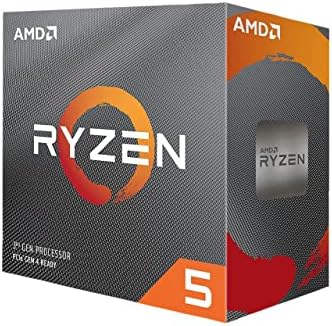
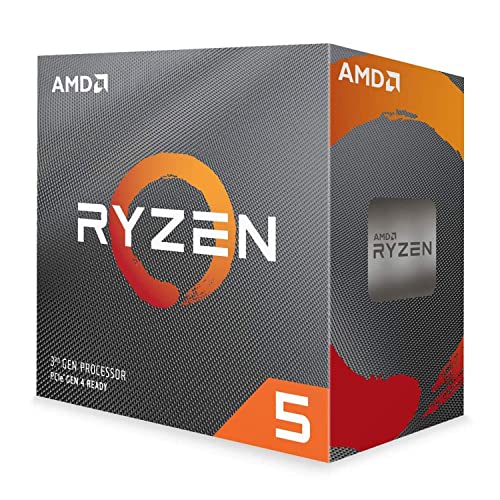
| CPU (budget) | AMD Ryzen 5 3600, 6-core/12-thread | $81.00 | Entry-level CPU-side inference for 7B models |
| CPU (budget, retail box) | AMD Ryzen 5 3600, 6-core/12-thread | $209.99 | Same silicon, boxed retail pricing |
| CPU (Zen 3 value) | AMD Ryzen 5 5600X, 6-core/12-thread | $180.00 | Better single-thread throughput for prompt processing |
| CPU (higher core count) | AMD Ryzen 7 3700X, 8-core/16-thread | $314.37 | More threads for CPU-bound batching |
| CPU (previous gen, lowest cost) | AMD Ryzen 5 2600 | $245.00 | Best paired with a discrete GPU rather than run CPU-only |
| RAM (16GB kit) | Crucial 16GB DDR4 (2x8GB), 3200MHz | $125.00 | Minimum viable pool for 7B-class quantized models |
| RAM (8GB single stick) | Crucial 8GB DDR4, 3200MHz | $71.98 | Stack two for a 16GB pool, or add headroom to an existing kit |
None of these desktop chips ship with an NPU or the unified-memory pool that defines Ryzen AI Max, and CPU-only inference on any of them runs meaningfully slower token-for-token than a modern discrete GPU or a unified-memory NPU/iGPU combo. The point of listing them isn't to claim parity — it's that a 6-core Zen 2 or Zen 3 chip plus 16-32GB of RAM is still a legitimate, low-cost way to run smaller quantized models locally before committing to a unified-memory platform purchase. Ryzen 5 5600G vs Ryzen 7 5700X for a 24/7 LLM Server and Ryzen 7 5800X vs 5700X for a Dual-Duty Gaming and Local-LLM Build both cover always-on desktop-Ryzen LLM server builds in more detail.
Worth noting for anyone eyeing one of these chips for a dual-purpose gaming-and-LLM box: a Ryzen 5 3600 platform in SpecPicks' benchmark database posts roughly 39fps in Cyberpunk 2077, 63fps in Baldur's Gate 3, and 72fps in Starfield at commonly tested settings (per public GPU benchmark aggregation) — respectable 1080p numbers for a chip that costs well under $250 either fresh or as a previous-generation part. That's a reminder that its gaming ceiling and its LLM ceiling are set by two entirely different bottlenecks: GPU compute for gaming, memory bandwidth and core count for local inference.
Choosing Between Unified Memory and a Discrete GPU
The decision mostly comes down to model size and budget rather than raw performance:
- Running 7B-13B models, budget-constrained: a desktop Ryzen build (see the CPU/RAM table above) or a mid-range discrete GPU is usually the cheaper path.
- Running 30B+ or multiple 70B-class models without multi-GPU: unified-memory Ryzen AI Max platforms have a real structural advantage — no other consumer part puts 128GB of addressable memory behind CPU, GPU, and NPU simultaneously.
- Gaming matters as much as local inference: a discrete-GPU desktop remains the stronger all-around choice, since gaming performance scales primarily with GPU compute rather than unified-memory bandwidth. Ryzen AI Max vs RTX 40 Series: Which Wins for AI and Gaming? walks through that trade-off directly.
- Coding agents and tool-use workloads: model choice matters as much as raw hardware headroom once a model fits in memory at all — Kimi K3 vs Qwen 3.8 for Local Coding Agents in 2026 compares two models commonly run on both platform types.
Bottom Line
Ryzen AI Max doesn't win on every axis — it wins on one axis, memory capacity, and that axis only matters once a model's footprint exceeds what a discrete GPU's VRAM or a desktop Ryzen build's RAM can hold. Below that threshold, the cheaper desktop-Ryzen path in the table above is the more sensible buy. Above it, unified memory is close to the only consumer option that works at all without stacking multiple GPUs.
Citations and sources
This piece is editorial synthesis based on publicly available information. No independent first-party benchmarking is reported.