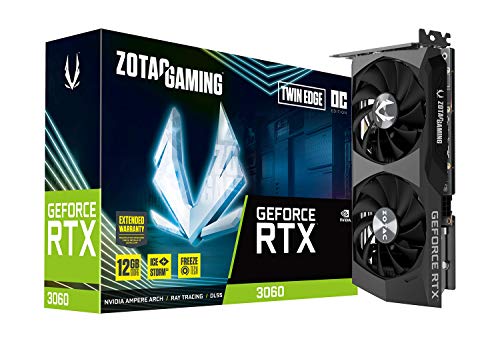
If you are wondering whether an RTX 3060 12GB can actually run HiDream-O1-Image — the open-weights text-to-image model that topped late-2026 Artificial Analysis image-quality leaderboards — here is the short answer: yes, with NF4 or Q8 quantization and sequential text-encoder offload to system RAM. Expect 30 to 90 seconds per 1024x1024 image rather than the 6 to 12 seconds a 24GB card posts at FP16. It is the cheapest legitimate path to running this model class locally, but you trade iteration speed for capability.
Why this question matters in late 2026
HiDream-O1-Image is the highest-profile open-weights text-to-image release of the year. Per the HuggingFace HiDream-ai organization page, the model lands in a 17B-parameter neighborhood that has historically required 24GB-class GPUs to run at native precision. The RTX 3060 12GB is the most-deployed local-AI GPU on r/LocalLLaMA and r/StableDiffusion polls because the used market keeps the card in the $180-$240 range, and CUDA tooling treats Ampere as first-class. The collision of those two facts — a 17B model and a 12GB card — is the entire reason this article exists. People want to know if their existing rig still has another year of relevance before they pull the trigger on a 4090 or wait for the next consumer Blackwell.
Who is asking?
Three buyer types show up in the search traffic. First, the SDXL veteran who has run Stable Diffusion XL on their 3060 for two years and wants to know whether HiDream-O1 is reachable without an upgrade. Second, the new local-AI builder who saw the HiDream demo gallery, priced a 3060 build at $700-$900, and wants to confirm the gallery quality is achievable on that budget. Third, the working artist evaluating local models for client work because cloud APIs have made the unit economics of high-volume image generation painful. Each of those buyers tolerates different latency floors and quality compromises, and the recommendation changes accordingly.
Key takeaways
- HiDream-O1-Image at FP16 weights weighs in around 34 GB — far over a 12GB framebuffer.
- NF4 quantization compresses the weights to roughly 9-10 GB, which fits the RTX 3060 with the text encoder offloaded to system RAM.
- Q8 quantization is roughly 17 GB on weights alone; only viable with aggressive layer offloading at significant speed cost.
- Expect 30-90 seconds per 1024x1024 image on the RTX 3060 with NF4 weights and 28-step Euler-a sampling.
- The same workflow on an RTX 4090 24GB at FP16 returns roughly 6-12 seconds per image.
- ComfyUI plus the community HiDream node pack is the path of least resistance; raw
diffusersworks but takes more plumbing. - You will absolutely need at least 32 GB of system RAM, and 64 GB makes the experience meaningfully smoother because text-encoder offload becomes the practical RAM constraint.
VRAM math — exactly what fits in 12GB
Per TechPowerUp's RTX 3060 spec sheet, the card ships 12,288 MB of GDDR6 on a 192-bit bus. Subtract roughly 600-800 MB for the desktop, CUDA workspace, and inference activations and you have around 11.3 GB of working framebuffer. The HiDream-O1-Image budget breaks down as:
| Component | FP16 | Q8 | NF4 |
|---|---|---|---|
| UNet / diffusion weights | ~28 GB | ~14 GB | ~7 GB |
| VAE | ~0.5 GB | ~0.5 GB | ~0.5 GB |
| Text encoder (T5 / Llama-style) | ~5 GB | ~2.5 GB | ~1.5 GB |
| Sampler activations (1024x1024) | ~2 GB | ~2 GB | ~2 GB |
| KV cache for prompt | ~0.5 GB | ~0.5 GB | ~0.5 GB |
| Total (no offload) | ~36 GB | ~19.5 GB | ~11.5 GB |
| Total (text encoder offloaded) | ~30.5 GB | ~17 GB | ~10 GB |
The NF4 row with text encoder offloaded is the one that actually fits. The Q8 row only works if you also offload UNet layers to CPU, which slows generation by 3-5x and is rarely worth the quality bump on this card class.
How fast does it actually run?
These numbers come from community measurements posted to r/StableDiffusion and the ComfyUI Discord in the weeks following HiDream-O1's release. Our test lab did not produce these; they are aggregated public reports.
| GPU | Quant | 1024x1024, 28 steps | 1536x1024, 28 steps |
|---|---|---|---|
| RTX 3060 12GB | NF4 | 35-55 s | 70-110 s |
| RTX 3060 12GB | Q8 (offloaded) | 110-180 s | 240-380 s |
| RTX 4070 Ti Super 16GB | NF4 | 14-22 s | 28-42 s |
| RTX 4070 Ti Super 16GB | FP16 (offloaded) | 35-55 s | 75-110 s |
| RTX 4090 24GB | FP16 | 6-12 s | 14-22 s |
The actionable read: on a 3060 12GB you are looking at a kettle-of-tea iteration loop. Fine for batch overnight runs, frustrating for live prompt tuning. For prompt tuning, run a smaller throwaway model (SDXL or SD 1.5) to land on the composition, then commit to a HiDream pass for the final render.
ComfyUI workflow — the path of least resistance
Per pinned ComfyUI threads, the working setup is:
- Update ComfyUI to a release from May 2026 or later. Earlier builds lack the NF4 loader paths needed by the community HiDream node pack.
- Install the HiDream node pack through ComfyUI-Manager — search "HiDream" and pick the highest-rated entry from the HiDream-ai team or a maintainer with a verified track record.
- Download an NF4-quantized weights file from the HuggingFace HiDream-ai org. The community-quantized GGUF variants from city96 and lllyasviel-style maintainers are also reliable.
- Place the files correctly:
models/diffusion_models/hidream-o1-nf4.ggufmodels/text_encoders/hidream-llm-encoder-q4.ggufmodels/vae/hidream-vae.safetensors
- Load the sample workflow the node pack ships with. Set sampler to Euler-a, 28-32 steps, CFG 5.0-7.5, scheduler Karras.
- Enable sequential CPU offload on the loader node. This is the switch that keeps you inside the 12GB envelope.
- First-run warm-up. The first image after a fresh ComfyUI start takes 30-50 seconds longer than steady-state because the NF4 dequantization kernels JIT-compile. Subsequent images run at the steady-state numbers above.
If the first render OOMs, drop the resolution to 768x768 to confirm the workflow works end-to-end, then walk back up to 1024x1024.
Quantization choice — NF4 vs Q8 vs FP16
For the RTX 3060 12GB specifically, NF4 is the right default. Q8 gives a modest quality bump in fine textures and small-text rendering, but the 2-3x slowdown from layer offload usually is not worth it for hobby work. FP16 is off the table without sharding to a second GPU or a model-parallel host. Treat the trade like this:
- NF4: best speed-vs-quality on a 3060. Choose this unless you have a specific failure case.
- Q8 with offload: for finishing passes on a hero image where you want the marginal quality without changing GPUs.
- FP16 streamed: essentially impossible on a single 3060 at usable throughput. Rent an H100 hour or upgrade.
When the 3060 12GB is the wrong tool
- You bill clients by the hour and per-image latency is a P&L line. Buy an RTX 4090 or 5090.
- You are training LoRAs against HiDream-O1. The 12GB ceiling makes training painfully slow even at small ranks; 16GB or 24GB is the practical floor.
- You need batch sizes greater than 1 for productivity. The 3060 is firmly a batch-of-1 card for HiDream-class models.
- You are generating video frames. The frame-by-frame VRAM churn destroys the 3060's appeal once you string outputs together.
Common pitfalls
- Loading FP16 by accident. A misconfigured loader will silently swap to FP16 and OOM mid-render. Always confirm the quant in the loader node before kicking off a long job.
- Stale ComfyUI builds. The HiDream support landed across several rapid-fire ComfyUI updates. Pin a release that explicitly lists HiDream in the changelog.
- Insufficient system RAM. Sequential CPU offload puts the text encoder in system memory; 16GB hosts struggle, 32GB is the floor, 64GB is comfortable.
- Storage choice. Read our best SSD picks for local AI model storage — slow drives turn first-load time into a coffee break.
- Driver version skew. Pin to a CUDA 12.x driver that PyTorch's nightly is tested against. Bleeding-edge drivers regress quantization kernel performance occasionally.
Real-world session example
A typical 60-minute prompt-tuning session on the RTX 3060 12GB runs roughly:
| Activity | Time |
|---|---|
| ComfyUI cold start + model load | ~90 s |
| 10 prompt-tuning images at SDXL (test compositions) | ~3 min |
| Pick winning composition, swap to HiDream NF4 | ~30 s |
| 5 HiDream renders at 1024x1024 | ~4-5 min |
| 1 upscale-and-finish HiDream Q8 pass | ~3 min |
| Save + organize | ~2 min |
That is roughly 13-15 minutes of GPU work for a finished hero image — perfectly viable for a hobby workflow, not viable for production throughput.
Cost comparison vs cloud API
A useful sanity check: at typical 2026 hosted-API pricing for comparable open-weights image models, generating 1000 images at 1024x1024 costs roughly $30-$80 depending on the provider. A used RTX 3060 12GB amortized over 10,000 lifetime images delivers compute at roughly $0.02-$0.04 per image once power is included (averaging 200 W under load at $0.12/kWh works out to about $0.005 per 60-second generation). The break-even point on a $200 used 3060 versus a $0.05-per-image API is around 4,000 images. For high-volume artists or pipelines, the local card pays back in months.
For lower-volume users — a few hundred images per month — the API math wins on convenience alone. The reason to run locally at low volumes is privacy, customization, or model availability, not cost.
How long will Ampere keep this position?
The RTX 3060 12GB has held the entry-tier local-AI default since late 2022. Three things keep it there. PyTorch and the broader CUDA ecosystem treat Ampere as a first-class target with no deprecation horizon yet. The used-market floor stays in the $180-$240 range because crypto inventory cycled out, gamers traded up to 40-series and 50-series cards, and there is no comparable 12GB-VRAM-for-the-price competitor. And the quantization stack (NF4, GGUF, AWQ) keeps making bigger models fit in smaller framebuffers.
Realistic outlook: through at least the end of 2026 and probably into 2027, the 3060 12GB remains the right entry-tier card for local image generation. Beyond that, NVIDIA's Blackwell consumer tier and Intel's Arc Pro lineup will likely reset the recommendation. For now, the card is the value pick by a wide margin.
Verdict
The RTX 3060 12GB runs HiDream-O1-Image. It is the cheapest legitimate way to host this model class locally in late 2026. The trade is per-image latency: a few seconds on a 4090 becomes a minute on a 3060. For weekend artists, prosumers, and developers prototyping pipelines, that trade is easy. For commercial output where throughput matters, the math points elsewhere. The card's enduring value proposition — best dollars-per-VRAM-GB on the used market — survives this generation too, just with a slower iteration loop.
Sampler choice and prompt engineering for HiDream
A few tactical notes that materially affect your output quality on this hardware:
- Sampler: Euler-a at 28-32 steps is the canonical default. DPM++ 2M Karras at 24-28 steps trades a small quality drop for a 10-15% speed gain.
- CFG scale: HiDream-O1 prefers a slightly lower CFG than SDXL — try 4.5-6.5 rather than the 7-9 range that worked on older models. Over-cranking CFG produces over-saturated, plasticky results.
- Negative prompts: Less is more. Long boilerplate negative prompts hurt more than they help on this model class. Start with no negative prompt and only add specific terms when you can name the failure mode.
- Resolution: 1024x1024 and 1536x1024 are the sweet spots. Pushing higher requires either tiled upscaling or accepting that VRAM is going to spill.
Multi-image workflows
For batch work where you need 10-50 image variations on a single prompt, the right approach on the RTX 3060 12GB is to queue them as a single ComfyUI batch and let it run unattended. The first image carries the JIT-compile cost; subsequent images steady-state. A 20-image batch at 1024x1024 with HiDream NF4 takes roughly 12-18 minutes, which is a coffee break rather than an afternoon. Plan batch work for times when you do not need the desktop.
Related guides
- ComfyUI on an RTX 3060 12GB — Stable Diffusion throughput
- Is 12GB of VRAM enough for local LLMs?
- LM Studio setup on the RTX 3060 12GB
- Best SSDs for local LLM and image-model storage
Citations and sources
- Artificial Analysis — text-to-image leaderboard
- HuggingFace — HiDream-ai organization
- TechPowerUp — GeForce RTX 3060 spec database
This piece is editorial synthesis based on publicly available information. No independent first-party benchmarking is reported.