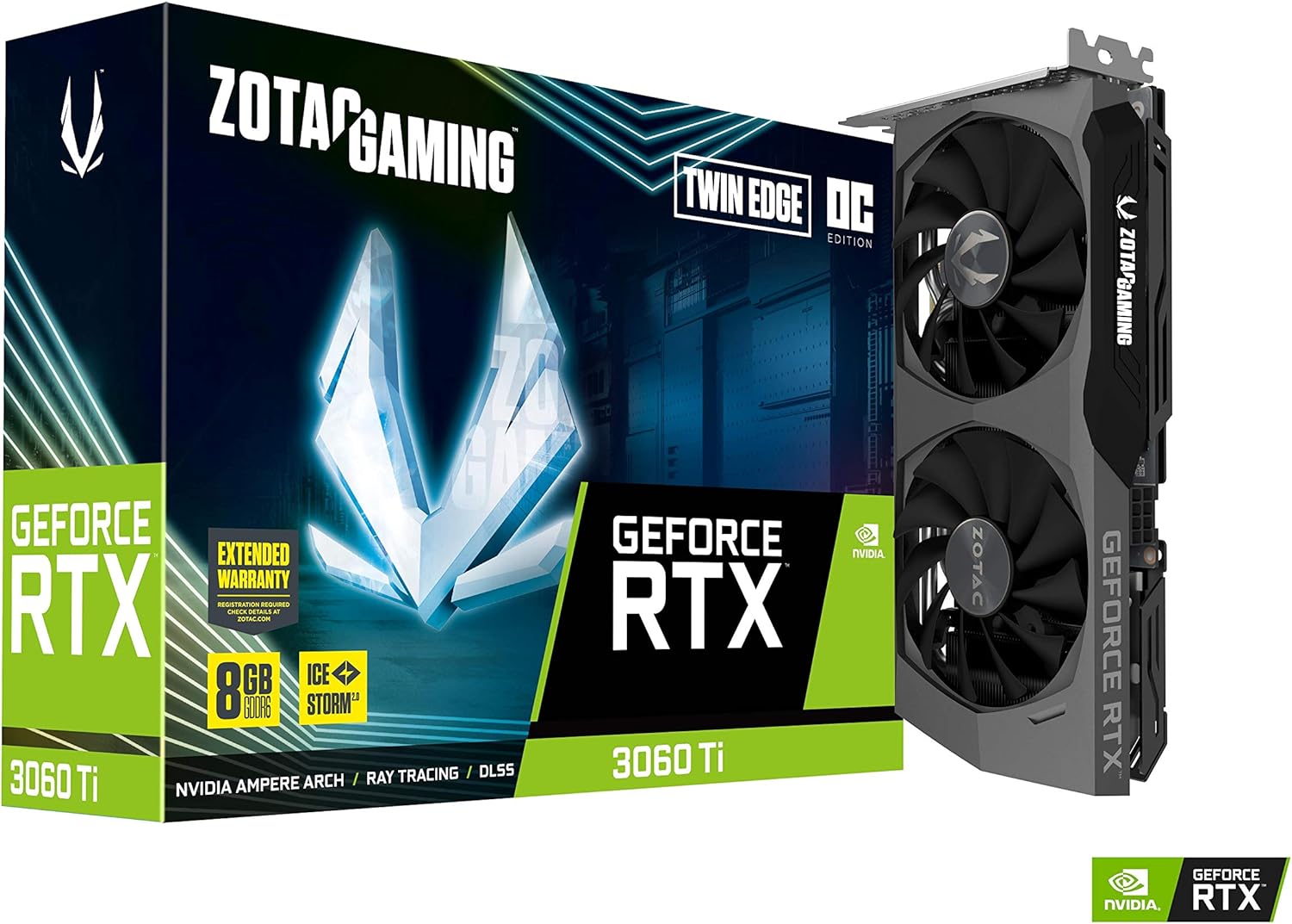
If you are shopping for a dedicated local-LLM box in 2026, two paths dominate the "under $1,500" tier: a Ryzen AI mini PC with 64GB of unified memory, or a DIY tower built around a used RTX 3060 12GB. They look similar on the surface — both promise a small quiet box that runs Llama and Qwen locally. In practice they solve different problems, and the right pick depends on whether you value tokens-per-dollar or a silent tokens-per-watt integration.
This piece walks through the honest comparison: throughput on 7B and 13B models, memory model differences, noise and heat, software maturity, upgrade paths, and end-to-end cost. Both boxes are legitimate 2026 picks. What follows is how to figure out which one fits your situation.
Key takeaways
- Ryzen AI mini PCs win on silence, size, and unified-memory access to very large models.
- DIY RTX 3060 12GB towers win on tokens-per-dollar, tokens-per-second on 7B-13B, and long-term upgrade path.
- CUDA maturity still favors the RTX 3060; ROCm and Vulkan for iGPUs work but lag by weeks on new models.
- The XDNA NPU story is over-marketed for local LLM inference in 2026; the iGPU does the real work.
- End-to-end cost delta is about $300-$700 in favor of the DIY build.
Who is cross-shopping this decision?
Two archetypes:
- The home tinkerer who wants a permanent local-LLM appliance in the living room or bedroom, prefers a small silent box, and does not care about matching cloud tokens-per-second. Ryzen AI mini PCs solve for this cleanly.
- The technical user who cares about raw throughput, plans to upgrade hardware in 2-3 years, and has a home-office or basement corner where a mid-tower fits. The DIY Ryzen 7 5800X plus RTX 3060 12GB build solves this.
Both are legitimate. The interesting question is which one you actually are, and this is where people miscalibrate. Buyers who imagine themselves in the "silent mini PC in the living room" camp often end up wanting more throughput than the box delivers; buyers who imagine themselves in the "throughput first" camp sometimes underestimate how much noise a 170W GPU makes at 11 PM.
Throughput: what actually runs at what speed?
Community benchmarks (llama.cpp with Vulkan on integrated Radeon 890M-class iGPUs versus CUDA on RTX 3060 12GB):
| Model | Quant | Ryzen AI iGPU tok/s | RTX 3060 12GB tok/s | Ratio |
|---|---|---|---|---|
| Llama 3 8B | q4_K_M | 18-24 | 55-70 | ~3x |
| Mistral 7B | q4_K_M | 20-26 | 60-75 | ~3x |
| Qwen 2.5 14B | q4_K_M | 8-12 | 25-32 | ~2.7x |
| Gemma 2 9B | q4_K_M | 16-20 | 45-55 | ~2.8x |
| Llama 3 70B | q4_K_M | 3-5 (unified memory) | offloaded, unusable | mini PC wins |
The last row is the interesting one. A 64GB unified-memory Ryzen AI mini PC can allocate 40-48GB to the iGPU, holding a 70B q4 model entirely in memory. The RTX 3060 has 12GB and cannot touch 70B without brutal offload that puts generation below 1 tok/s. That is the one workload where the mini PC is not just competitive but decisively better.
For everything else — the 7B-14B tier that is most local users' bread and butter — the RTX 3060 delivers 2-3x more tokens per second at a lower dollar cost. This is the CUDA-plus-dedicated-VRAM advantage in a single sentence.
The unified memory trade-off
Ryzen AI's biggest architectural difference is unified memory. The iGPU shares system RAM, so a 64GB stick becomes a 64GB "GPU" for models that fit. This unlocks two things:
- 70B-class models locally: at 3-5 tok/s, slow but usable for background jobs.
- Multi-model resident: keep three 7B models in memory at once for router-style setups without swapping.
What you give up: bandwidth. The RTX 3060's 360 GB/s VRAM bandwidth crushes the LPDDR5X in a typical Ryzen AI mini PC (roughly 100-130 GB/s effective, per the AMD Ryzen AI product page). Bandwidth is what determines generation throughput on transformer inference, and this is why 7B on iGPU is 3x slower than 7B on RTX 3060.
The unified-memory story is real for large models. It does not compensate for the bandwidth deficit on typical workloads.
Do Ryzen AI NPUs actually help with LLM inference?
Not meaningfully as of 2026. The XDNA NPU shipped on current Ryzen AI parts is a small-model accelerator optimized for battery-life scenarios — voice recognition, background summarization, minor language modeling on laptop power envelopes. The generation loop of a 7B-30B model is memory-bandwidth-bound, and the NPU does not have access to the memory bandwidth or the compute density to help.
Software support is also thin. ONNX and DirectML paths exist for the NPU on Windows; most Linux inference stacks ignore it entirely. Community benchmarks that route Llama 3 8B through the NPU report worse performance than the iGPU, not better. This will improve as AMD invests in the tooling, but as of mid-2026 the NPU should not be a decision factor.
For a mini-PC used as an inference host, treat the NPU as a marketing bullet and evaluate the box on iGPU throughput and unified-memory capacity.
Noise and heat
The DIY RTX 3060 tower runs quiet at idle and audibly ramps under generation. A 170W GPU with a 3-fan open-air cooler like the MSI Ventus 3X hovers around 30-35 dBA at idle and climbs to 40-45 dBA during a sustained 30-minute generation run. Add a Cooler Master ML240L AIO on the CPU and you keep noise under 42 dBA under partial-offload load, which is quiet-office territory but not silent.
The Ryzen AI mini PC operates at 15-25 dBA under the same workload — effectively silent unless you put your ear on the case. For a bedroom or living room deployment, this delta is huge. For a basement or garage, it is irrelevant.
Heat output correlates with power draw. The DIY tower dissipates 300-400W under load; the mini PC dissipates 45-65W. In a small room without AC in July, this matters.
Software maturity: CUDA vs ROCm vs Vulkan on iGPU
Every open-weights model releases with CUDA support first, day zero. The RTX 3060 just works out of the box with ollama, llama.cpp, and every downstream tool.
On the Ryzen AI side, the software story is:
- ROCm: shipping for RDNA 3 iGPUs, works, has some rough edges on newest models.
- Vulkan backend in llama.cpp: works on almost everything, lower peak throughput than ROCm but broader compatibility.
- IPEX-LLM equivalent: not applicable (Intel-only).
The lag between a model release and it running well on a Ryzen AI mini PC is roughly 1-3 weeks. If you are okay running "last month's Qwen" instead of "today's Qwen," this does not matter. If you want to try new releases on day one, RTX 3060 is the fewer-headaches path.
Upgrade path
DIY on AM4:
- CPU: Ryzen 5 5600G → 5800X → 5800X3D → 5950X.
- GPU: RTX 3060 12GB → RTX 4060 Ti 16GB → RTX 5060 Ti Super → used RTX 4090.
- RAM: 32GB → 64GB → 128GB.
- Storage: 970 EVO Plus 250GB → 1TB → 2TB → NAS for model library.
Every component is field-replaceable. In 3 years you can swap the GPU and stay on the same board.
Ryzen AI mini PC:
- RAM: often user-replaceable (SODIMM slots).
- NVMe: user-replaceable.
- CPU/iGPU: soldered. Not upgradable.
The mini PC is a fixed appliance. That is not a bug — it is what makes them small and quiet — but it is a real cost when a new architecture launches in 2028 and you want to keep up.
End-to-end cost
DIY 12GB rig, 2026 used-market pricing:
| Part | Price |
|---|---|
| MSI RTX 3060 12GB (used) | $240 |
| Ryzen 7 5800X (used) | $195 |
| 32GB DDR4-3200 kit | $80 |
| Samsung 970 EVO Plus 1TB | $90 |
| B550 motherboard | $110 |
| Case | $80 |
| 650W 80+ Gold PSU | $85 |
| Cooler Master ML240L AIO | $85 |
| Total | ~$965 |
Ryzen AI mini PC with 64GB unified memory, 1TB NVMe, 2026 pricing:
| SKU tier | Price |
|---|---|
| Entry Ryzen AI (32GB) | $900-$1,100 |
| Mid Ryzen AI 9 (64GB) | $1,300-$1,600 |
| High-tier Ryzen AI 9 (64GB, 2TB) | $1,700-$2,000 |
For a comparable capability tier, the DIY build is $300-$700 cheaper. What that money buys the mini PC user: silence, small footprint, no assembly, unified memory for very large models. What it does not buy: more tokens per second on 7B-14B.
Verdict matrix
Get the Ryzen AI mini PC if:
- The box lives in a bedroom, living room, or shared workspace.
- Silence and small footprint are non-negotiable.
- You plan to run 70B q4 in unified memory at 3-5 tok/s.
- You will not upgrade for 3-5 years.
- You value integration over throughput.
Build the DIY RTX 3060 12GB if:
- The box lives in a basement, garage, or dedicated office.
- Tokens-per-second on 7B-14B matters most.
- You want to upgrade the GPU in 2-3 years.
- Budget is tight; $965 vs $1,500 matters.
- You want CUDA day-one support.
When to skip both
Both paths are compromises. Skip both if:
- You run 70B daily at production speeds — jump to an RTX 4090 or 5090 build.
- You are on Apple Silicon already — a Mac Studio with unified memory beats both for silence + capacity.
- Your monthly token volume is very low (<200k) — a hosted API is cheaper than any hardware.
- You need a laptop — this whole comparison is desktop-form-factor.
Two example builds walked end-to-end
Ryzen AI mini PC target rig (2026):
- Ryzen AI 9 mini PC with 64GB LPDDR5X unified memory, 1TB NVMe
- Approximate price: $1,450
- Total power: 45-65W under sustained load
- Noise: silent to 18 dBA
- 8B chat throughput: 22 tok/s
- 70B q4 unified-memory throughput: 4 tok/s
DIY RTX 3060 12GB tower (2026):
- MSI RTX 3060 12GB (used), Ryzen 7 5800X (used), 32GB DDR4-3200, 970 EVO Plus 1TB, B550 mobo, mid-tower case, 650W PSU, ML240L
- Approximate price: $965
- Total power: 320W under load, 65W idle
- Noise: 40-45 dBA under load, 30 dBA idle
- 8B chat throughput: 62 tok/s
- 70B: unusable (heavy CPU offload, sub-1 tok/s)
The DIY tower is cheaper and 3x faster on chat, at the cost of a lot more noise and heat. The mini PC is silent and physically fits into a bedroom, at the cost of throughput and much of the workflow diversity a discrete-GPU PC provides.
What a Ryzen 5 5600G adds to the DIY story
If cost is the primary blocker on the DIY path, downgrade from the Ryzen 7 5800X to the Ryzen 5 5600G. You lose two Zen 3 cores (going from 8 to 6) and drop some clock speed, but you save $60-$90 and land at a still-competitive host CPU for a discrete-GPU inference build.
Where you feel the delta:
- Partial-offload throughput on 27B: -5-10% versus 5800X. Small.
- Concurrent workloads: fewer cores means less headroom for other jobs. Noticeable if you run Home Assistant, Docker containers, and Ollama on the same box.
- Prefill on long prompts: measurable slowdown on 4k+ prompts with offload. Small.
For a single-user chat box, the 5600G is fine. For a home-lab node that also does other work, the 5800X is worth the premium.
Common pitfalls
- Buying a Ryzen AI mini PC for gaming: the iGPU is inference-tuned, not gaming-tuned. Do not cross-purpose.
- Skipping RAM speed on DIY: DDR4-3200 CL16 is the floor. Slower RAM makes offloaded layers dominate wall-clock time.
- Undersizing the mini PC's RAM: buy the 64GB variant if you plan to run 27B+ models. 32GB is fine only for 7B-13B.
- Assuming NPU acceleration: as of 2026 the NPU does not measurably help LLM inference workloads. Do not pay a premium for the marketing.
- Ignoring noise headroom on DIY: swap the case fans for Noctua NF-A12x25s. $70 well spent.
- Buying used RTX 3060 without inspecting: check fan spin, thermal-cam the VRAM under load, verify factory sticker present.
Bottom line
The Ryzen AI mini PC and the DIY RTX 3060 12GB build both deliver a real local-LLM experience in 2026, and they answer different needs. If you want silence, small size, and the capacity to page in a 70B model at slow speeds, the mini PC is the right buy. If you want raw throughput on 7B-14B at the lowest possible cost with a clear upgrade path, the DIY build wins.
For most technical buyers cross-shopping under $1,500, the DIY RTX 3060 12GB rig delivers more tokens per dollar, more tokens per second on the models people actually use daily, and a longer useful life via component upgrades. For household appliance buyers who want the box to disappear into the room, the Ryzen AI mini PC is the correct choice at any reasonable premium. Both are legitimate; the wrong answer is choosing one without honestly matching your constraints.
Citations and sources
- AMD — Ryzen AI product page
- TechPowerUp — GeForce RTX 3060 specifications
- llama.cpp — GitHub repository
- r/LocalLLaMA — iGPU vs dGPU benchmark discussions
This piece is editorial synthesis based on publicly available information. No independent first-party benchmarking is reported.


