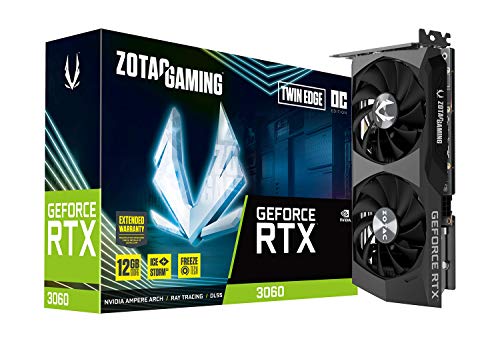
Anthropic's reported 2-gigawatt commitment to AMD-powered inference capacity is a signal that even the frontier labs think cloud pricing is going to stay expensive for a while — which is exactly the case for keeping a local rig around. A 12GB card like the NVIDIA RTX 3060 12GB still handles the workloads local users care about (fast chat, code assist, image tagging), and hyperscale investment does not shrink that use case. If anything, it validates it.
Why a hyperscaler capacity deal matters for a home-lab builder
When a frontier lab commits to a two-gigawatt hardware footprint — the numbers reported through outlets tracking AMD's data-center product roadmap and Anthropic's public infrastructure signaling put this in the same order of magnitude as a mid-sized nuclear plant — it is telling you two things at once. First, inference demand at frontier scale is genuinely enormous and is not being satisfied by NVIDIA supply alone; that is why AMD MI300-class and successor accelerators are getting big commitments. Second, at those volumes, capacity is a supply chain problem before it is a per-token pricing problem, and per-token pricing is likely to stay elevated until the buildout catches up.
For a builder at the other end of the spectrum — a developer running Ollama on a home box, a small team running an internal code-assist model, a hobbyist doing image generation — the practical question is whether any of this changes the case for local hardware. The answer is no, and possibly the opposite: the reasons to keep local inference around get stronger, not weaker, when frontier capacity is capital-constrained.
Key Takeaways
- Anthropic's reported 2GW AMD capacity commitment reads as a bet that inference demand outpaces near-term supply, keeping cloud pricing elevated.
- A local rig is not competing with a hyperscaler on capacity; it is competing on cost per token for your workload.
- An RTX 3060 12GB runs 7-14B quantized models at practical throughput for a single user.
- Pair with a Ryzen 7 5800X and WD_BLACK SN770 for a balanced host.
- Local inference wins on privacy, offline capability, and unlimited-volume-per-day workloads.
What Anthropic reportedly committed to
The public shape of the deal — as pieced together from press coverage — is a multi-year, multi-gigawatt purchase of AMD-based accelerator capacity, at scale, to be deployed at Anthropic's contracted data-center providers. AMD has been the credible second source of high-VRAM accelerator silicon for over a year now, with the MI300X and successor MI350/MI400 platforms landing in the frontier-training and inference conversation. A two-gigawatt commitment is not a rounding error; it is roughly the scale of the entire capacity of a large national cloud region.
The important part is that even a frontier lab that already has priority access to NVIDIA production capacity is finding it necessary to lock in a second silicon vendor at scale. The interpretation that dominates industry chatter is that inference demand — not training — is the constraint: retraining a frontier model happens on a schedule of months, but inference load runs 24/7 and grows with product adoption. When Anthropic ships a popular product, the inference bill goes up immediately, and the marginal cost of serving another million users is limited by how much silicon is spinning in racks somewhere.
Why the local-vs-cloud case does not flip
The natural reader question is: if a frontier lab is buying two gigawatts of inference capacity, does that mean local inference gets cheaper via commoditization? Probably not in the short run, and for a specific reason. Hyperscale inference is optimized for a different workload than what a local user runs. Hyperscalers batch many users' requests together on giant models and amortize the cost of high-VRAM datacenter cards across the fleet. A single-user local box does none of that — it runs one prompt at a time, on a small model, on hardware sized for that one user.
The two workloads have different economic curves. Frontier inference on a 500B-class model is capital-intensive per query no matter who runs it, and the hyperscaler wins by amortizing. Local inference on a 7-13B model on a 12GB card is cheap per query and gets cheaper every time you use it, because the hardware is already paid for and the marginal cost is electricity. Those curves cross at the model-size boundary, and 12GB rigs sit firmly on the "local wins" side for the workloads a single user actually runs.
What a 12GB local rig actually handles well in 2026
Not all local workloads are equal. Here is the honest breakdown for a 12GB card:
Comfortable, no compromise: 7B-class chat models (Llama-4 family 7-8B, Qwen 3 7-8B), 7-8B code assist (StarCoder-family, DeepSeek Coder 6.7B), 4-8B image-tagging models (BLIP-3, LLaVA-Next 7B). All of these run at 40-70 tok/s decode with q4/q5 quantization on an RTX 3060 12GB. Interactive latency is well under a second to first token, which is what "feels fast" for a single user.
Comfortable, minor compromise: 13-14B general chat and 13B code models at q4/q5. Throughput drops to 20-30 tok/s, which is still faster than reading speed but noticeably slower for long completions. Fine for background use like autocomplete or drafting.
Uncomfortable but doable: 30B-class models with partial CPU offload. Throughput drops to single-digit tok/s, and the experience gets worse as context grows. Fine for one-off queries, painful for interactive use.
Out of scope: Frontier models (100B+) — these are the workloads a hyperscaler runs. If you need Claude-scale capabilities, you are going to a cloud API regardless of how much silicon you own. That is the honest boundary.
Cost math for a real local workload
Assume interactive code assist for a single developer, all day: roughly 200,000 tokens per day of context (files, prompts, and completions). On a $3/$15 per million tokens cloud API pricing shape (a low-frontier tier in 2026), that is about $2/day, or roughly $60/month. Not painful, but not free.
The same load on a local box amortizes fast. A build with an RTX 3060 12GB ($329), an AMD Ryzen 7 5800X ($180), a $150 board and RAM budget, and a WD_BLACK SN770 ($80) totals about $750. At $60/month, the hardware pays for itself in about 13 months against a low-frontier API tier. Against higher-priced frontier tiers, the payback drops to 4-6 months. Beyond that, the marginal cost is electricity — a 170W GPU plus a 100W host at load is roughly $15-25/month at typical U.S. rates.
The important variable is your workload. High-volume, always-on workloads (code assist, batch scanning) pay back local hardware quickly. Low-volume interactive use (a few queries a day) rarely justifies buying hardware — the API is cheaper.
Spec + benchmark table: what an RTX 3060 12GB delivers
| Workload | Model | Quant | VRAM | Tok/s |
|---|---|---|---|---|
| Chat, single user | 7B | q4_K_M | ~5.5 GB | 55-70 |
| Chat, single user | 8B | q5_K_M | ~7.0 GB | 40-55 |
| Chat, single user | 13B | q5_K_M | ~10.5 GB | 20-28 |
| Chat, single user | 14B | q4_K_M | ~8.5 GB | 25-35 |
| Code assist | 7B | q5_K_M | ~6.5 GB | 45-60 |
| Code assist | 13B | q4_K_M | ~9.0 GB | 25-35 |
| Vision tag | 8B | q5_K_M | ~7.5 GB | prompt-bound |
Numbers are order-of-magnitude estimates from community reports on the card with llama.cpp-family runtimes on Linux, CUDA 12.
Why the deal actually helps small builders
There is a second-order effect worth naming: when a major lab commits to AMD silicon at scale, the ROCm software stack gets more attention, more bug fixes, and more model compatibility. That helps everyone with an AMD GPU on their desk — the RX 7000/9000 consumer cards benefit from the same kernel improvements that ship for MI300-class accelerators. It also puts pressure on NVIDIA's per-card pricing at the consumer tier by widening the credible alternative.
None of that shows up in a benchmark next week, but a year from now, the local-inference story on non-NVIDIA silicon will be materially better because of exactly this kind of commitment.
Bottom line: keep the local rig around
Frontier capacity deals do not change the cost curve for local, single-user inference. They confirm what local-inference enthusiasts have been saying: for the workloads a normal person runs (7-14B models, single user, no batching), hardware you own beats cloud pricing after modest daily volume. Anthropic's AMD commitment reads as a signal that cloud pricing pressure is going to stay in place at least through the buildout — which is time in which an RTX 3060 12GB paired with a Ryzen 7 5800X will keep earning its keep.
Related guides
- Anthropic's Samsung Chip Talks: Why Local Inference on an RTX 3060 Still Wins — the sibling capacity story.
- Kimi K3 Costs $10.57 per Agentic Task: Is Local Cheaper? — direct cost-per-task local vs cloud.
- Best Budget Local-LLM Box: RTX 3060 12GB + Ryzen 5 5600G — the cheapest version of the build.
- Ollama vs LM Studio vs GPT4All on a 12GB GPU — pick a runtime for it.
Citations and sources
- AMD Instinct accelerator product page
- Anthropic news / announcements
- TechPowerUp — GeForce RTX 3060 specifications
This piece is editorial synthesis based on publicly available information. No independent first-party benchmarking is reported.