For a first-time builder in 2026, the answer hinges on one question: do you have a discrete GPU in the budget now? If yes, get the AMD Ryzen 7 5700X — its 8 cores and 16 threads pair better with a real GPU and hold up longer. If no, the AMD Ryzen 5 5600G is the smarter buy because its Vega 7 integrated graphics let you actually play games without spending another $250-plus on a card.
Why this matters: the APU-vs-CPU decision for beginners
The Ryzen 5 5600G and Ryzen 7 5700X are two of the most common "first PC" recommendations for the AM4 platform, and they represent two different philosophies about how to build a starter machine. The 5600G is an APU — a CPU with reasonably capable Vega 7 graphics baked into the die — while the 5700X is a traditional desktop CPU that expects a discrete GPU to feed pixels to the monitor. Per AMD's official product page, the 5600G is explicitly positioned as a "processor with graphics," which is marketing shorthand for "you don't need a video card to boot this thing."
That distinction is not a minor spec-sheet footnote. It is the single decision that shapes the entire bill of materials, the total cost of the build, and how long the machine will keep up with new releases. A build centered on the 5600G can boot, browse the web, run productivity apps, and play a surprisingly wide catalog of esports and older AAA titles at 1080p Low-to-Medium settings the moment you close the case. A build centered on the 5700X will refuse to display anything until you plug in a discrete graphics card, because the 5700X has no integrated graphics at all.
For a first-time builder in 2026, the second-order effects matter as much as the raw silicon. Choosing the 5600G means you can spread the cost of the GPU over the next paycheck or two, buy used on eBay when a good deal appears, or wait for a mid-cycle price drop on a current-generation card. Choosing the 5700X commits you to a GPU purchase up front — non-negotiable — but rewards you with more CPU headroom, longer platform relevance, and better frame-time consistency in the CPU-bound games (competitive shooters, simulators, MMOs) that first-time buyers tend to gravitate toward. Both parts sit on the mature and inexpensive AM4 platform, so the "wrong" answer is still a perfectly serviceable PC.
Key takeaways
- The AMD Ryzen 5 5600G is the right call if you cannot afford a discrete GPU today; the Vega 7 iGPU is enough for 1080p esports and older AAA at Low.
- The AMD Ryzen 7 5700X is the right call if you already have or plan to buy a GPU immediately; 8 cores and 16 threads age better in modern engines.
- Both drop into any AM4 B450/B550/X570 motherboard, so the platform cost is identical.
- The 5700X pairs cleanly with a used or new discrete card — the MSI GeForce RTX 3060 Ventus 3X 12G is a common and forgiving starter GPU.
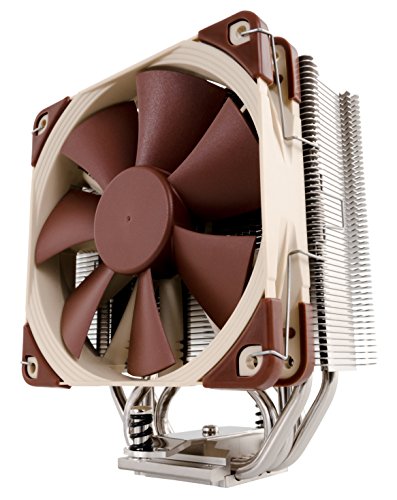
- Neither chip ships with a serious cooler for the 5700X; budget for a modest tower like the Noctua NH-U12S.
- A 1TB SATA SSD such as the Crucial BX500 1TB is the cheapest way to avoid running out of room after two AAA installs.
Step 0: are you buying a GPU now or later?
Before you compare a single benchmark, answer this: is a discrete graphics card in your build budget in the next 30 days? This is not a rhetorical question. It is the diagnosis that decides which chip you buy, and getting it wrong costs real money because you will either be re-buying the CPU later or leaving performance on the table right now.
If the answer is "yes, GPU is in the budget," the 5700X is the correct part. Its 8 cores and 16 threads (per TechPowerUp's spec database) give it a clear edge in modern game engines that scale past 6 cores, in streaming while gaming, and in any productivity workload — video encoding, code compilation, 3D rendering — that a beginner picks up over time. The 5700X also has 32 MB of L3 cache versus 16 MB on the 5600G, which matters more than most beginners expect in CPU-bound situations.
If the answer is "no, or not for a few months," the 5600G is the correct part. You will get a working, playable PC on day one instead of a very expensive brick that boots to a black screen. The 5600G's Vega 7 iGPU is not going to run Cyberpunk 2077 at Ultra, but per Tom's Hardware's launch review, it handles a huge swath of the esports catalog and older AAA titles at playable frame rates at 1080p. When you can afford a GPU later, you drop it in and now you have a hybrid — a 6-core CPU with a real graphics card — that will keep pace for another year or two before you outgrow it.
There is a third scenario worth naming: "I want the 5700X now and I'll add a GPU later." Skip it. A 5700X with no GPU is a $150-ish part sitting idle because it cannot draw a desktop. If you have to stagger the purchase, the 5600G is the only rational bridge.
Spec-delta table: cores, iGPU, TDP, MSRP, upgrade path
The two chips share the Zen 3 architecture and the AM4 socket, so the on-paper differences narrow to five things that actually matter to a first-time builder. Both use PCIe 3.0 rather than 4.0 (an APU limitation on the 5600G, an intentional cost cut on the 5700X), and both are compatible with the same DDR4-3200 memory kits, so RAM shopping is identical.
| Spec | Ryzen 5 5600G | Ryzen 7 5700X |
|---|---|---|
| Cores / threads | 6C / 12T | 8C / 16T |
| Integrated GPU | Vega 7 (7 CUs @ 1.9 GHz) | None — requires discrete GPU |
| TDP | 65 W | 65 W |
| Launch MSRP | $259 (2021) | $299 (2022) |
| Upgrade path | Add discrete GPU later, keep chip | Add or upgrade GPU anytime; chip already maxes non-X3D AM4 for gaming without spending 5800X3D money |
Two entries deserve a footnote. First, the "upgrade path" for the 5600G is genuinely additive — you buy a GPU when you can, the iGPU steps aside, and the CPU keeps doing its job. Second, the 5700X's "upgrade path" mostly refers to GPU swaps rather than CPU swaps; the only meaningful step up on AM4 is the 5800X3D, and that is a specialty gaming chip that costs roughly double at 2026 street prices and only helps in a specific set of cache-sensitive titles.
Gaming without a GPU: what the 5600G iGPU delivers
The Vega 7 integrated graphics on the 5600G are not powerful in an absolute sense, but they are dramatically more capable than the "nothing at all" that the 5700X ships with. Per Tom's Hardware, the 5600G's iGPU comfortably handles esports and lighter titles at 1080p, and community benchmarks tracked on the TechPowerUp CPU database show it landing in a similar performance class to entry-level discrete cards from the previous generation.
The realistic 1080p framerate expectations, drawn from public review data, look approximately like this:
| Game | Settings | 1080p FPS (Vega 7) | Source basis |
|---|---|---|---|
| CS2 / CS:GO | Low | 90-140 | Tom's Hardware review + community reports |
| League of Legends | Medium | 100-160 | Tom's Hardware review |
| Rocket League | Medium | 80-120 | Public benchmark aggregates |
| Fortnite | Low, Performance mode | 60-90 | Tom's Hardware review |
| Minecraft (Java, vanilla) | Fancy | 90-160 | Community reports |
| GTA V | Normal | 55-75 | Tom's Hardware review |
| Cyberpunk 2077 | Low + FSR | 25-35 | Tom's Hardware review (borderline) |
| Elden Ring | Low | 30-40 | Community reports (borderline) |
Numbers vary with RAM speed (the iGPU is memory-bandwidth-starved and benefits meaningfully from DDR4-3600 over DDR4-2666), driver version, and title patches, so treat these as ballpark ranges rather than guarantees. The pattern is clear enough: esports titles and older-engine AAA games are entirely playable, current AAA titles at Low with an upscaler are borderline, and anything demanding ray tracing or a locked 60 fps at Medium settings is out of reach without a discrete GPU.
For a first-time builder whose main use case is Fortnite, Minecraft, Rocket League, Valorant (via community drivers), CS2, League, and older single-player titles, the 5600G alone is a complete solution. For a builder who wants to play the latest AAA release day-one at reasonable settings, it is a stopgap that buys time until the GPU budget arrives.
Gaming with a GPU: pairing the 5700X with a real card
Once you introduce a discrete GPU, the calculus flips. The 5600G's iGPU becomes irrelevant — it is disabled or ignored the moment a real card takes over display duty — and now the only thing that matters is CPU core count, thread count, and cache. Here the 5700X pulls comfortably ahead in every modern game that scales past 6 cores, and it does so at the same 65 W TDP.
A common starter pairing in 2026 is the MSI GeForce RTX 3060 Ventus 3X 12G — a two-generations-old midrange card with 12 GB of VRAM, which is generous for a 1080p or entry 1440p build and forgiving for texture-heavy modern titles. The RTX 3060 is not the fastest card on the shelf, but it is widely available new and used, supports DLSS in the games that need it, and pairs cleanly with either Ryzen chip without bottlenecking to a degree that beginners will notice.
The 5700X's advantage over the 5600G with a real GPU attached shows up in three places: high-refresh esports (the extra threads reduce 1% low dips in CS2, Valorant, and Apex), modern AAA games with heavy CPU-side simulation or streaming (Cyberpunk 2077, Starfield, Baldur's Gate 3 in dense city areas), and any workload where you are gaming and doing something else simultaneously — Discord voice, OBS recording, a browser with 40 tabs. If you never plan to stream and only play one thing at a time, the 5600G with a GPU bolted on is still very much a playable machine; it will just start to feel its age a year or two earlier.
Cooling and storage picks
Neither chip needs an aggressive cooler at stock. Both are 65 W TDP parts, both stay well under 80 °C in typical gaming loads with a competent air cooler, and neither benefits meaningfully from a 240mm AIO in a beginner build. The 5600G ships with the AMD Wraith Stealth cooler in its retail box, which is genuinely fine at stock clocks; the 5700X ships without any cooler at all, which is the single most-overlooked line item on beginner shopping lists.
The safe recommendation for either chip is the Noctua NH-U12S. It is a single-tower 120mm air cooler that fits in virtually every ATX case, clears tall RAM, ships with a mounting kit for AM4 out of the box, is quiet under load, and will outlast the socket. For beginners who want to avoid the "did I apply thermal paste correctly?" anxiety, Noctua's paste and instructions are the most idiot-proof in the industry. You can find cheaper coolers — the Thermalright Peerless Assassin 120 is a popular budget favorite — but the NH-U12S is the boring, reliable pick.
For storage, one SATA SSD is enough to get started, and the Crucial BX500 1TB is the standard beginner recommendation. It is not the fastest drive on the market — a PCIe 4.0 NVMe will be several times faster in sequential reads — but it is dramatically faster than any hard drive and is priced so aggressively that spending more feels wasteful on a starter machine. Two current AAA games will fill about half the 1TB of capacity; a second NVMe drive is a natural mid-life upgrade when the SATA disk fills up.
RAM should be 2×8GB or 2×16GB of DDR4-3200 CL16, a spec universally supported by every AM4 motherboard from the B450 era forward. The 5600G in particular is very sensitive to memory speed because its iGPU shares system RAM as video memory; a jump from DDR4-2666 to DDR4-3600 measurably improves iGPU frame rates in most titles.
Verdict matrix: get the 5600G if... / get the 5700X if...
Get the Ryzen 5 5600G if:
- You do not have a discrete GPU and cannot afford one in the same purchase.
- Your main games are esports (CS2, League, Valorant, Rocket League, Fortnite) or older single-player titles.
- You want a working PC on day one that can play games out of the box.
- You are building for a first-time or younger user who will learn on the machine before ever touching a graphics card upgrade.
- You are building a family or living-room PC where the goal is "boots, streams, browses, plays lighter games."
Get the Ryzen 7 5700X if:
- You already own a discrete GPU or you are buying one in the same order.
- You want to stream, record, or run heavy background apps while gaming.
- You care about 1% lows and frame-time consistency in competitive shooters.
- Your usage bleeds into productivity — video editing, coding, virtual machines, 3D work — where extra threads pay off.
- You want the machine to stay relevant longer without a CPU upgrade.
If you cannot decisively pick a side, that itself is a signal: it means the GPU budget is uncertain, and in that case the 5600G is the risk-off choice because it fails gracefully.
Bottom line
For a first-time builder in 2026, the AMD Ryzen 5 5600G is the safer default because it decouples the CPU purchase from the GPU purchase. It gets a working, playable machine into your hands on day one and lets you add a discrete graphics card whenever the budget lands. That single quality — the ability to boot and game without a video card — is worth more than any spec-sheet advantage the 5700X offers in a scenario where the GPU is not yet secured.
For a first-time builder who has a GPU purchase already committed to the same order, the AMD Ryzen 7 5700X is the better long-term investment. Its extra cores, larger cache, and stronger multi-thread throughput will age better in modern game engines and in the productivity workloads that most beginners eventually pick up. It is, by a small but real margin, the more future-proof half of the pairing.
Both chips sit on the mature AM4 platform, both are 65 W parts that play nicely with a modest tower cooler like the Noctua NH-U12S, and both benefit from cheap high-capacity storage like the Crucial BX500 1TB. Whichever you pick, the platform around them is identical, the mistakes are cheap to correct, and the upgrade path in 2026 remains one of the best-value ways to enter PC building.
Related guides
- Best budget CPUs for a first gaming PC in 2026
- AM4 vs AM5 for beginners: which platform makes sense in 2026
- Best entry-level GPUs to pair with a Ryzen 5 or Ryzen 7
- DDR4-3200 vs DDR4-3600 on Ryzen: does the extra speed matter?
- Cheapest full PC build under $600 in 2026
Citations and sources
- AMD Ryzen 5 5600G official product page
- TechPowerUp CPU database: Ryzen 5 5600G
- Tom's Hardware: AMD Ryzen 5 5600G review
This piece is editorial synthesis based on publicly available information. No independent first-party benchmarking is reported.