Short answer: connect the original 1998 IDE drive to a modern machine through an IDE-to-USB adapter, pull a full sector image with dd or HDDRawCopy, restore the image to a 4 GB CompactFlash card on a CF-to-IDE adapter, and let a vision-capable LLM walk the Win98 driver installer by reading screenshots and matching PCI vendor/device IDs to the right INF files. This article walks the whole workflow with the tools, commands, and gotchas.
Retro PC builders in 2026 have a problem: original IDE hard drives from the late 1990s are reaching the end of their mechanical life. A drive that survives one more power cycle may not survive ten. Once it fails, the install, the configured games, the registered software keys, and the saved profiles are gone. The fix is to image the drive while it is still healthy enough to spin up, restore the image onto solid-state media — typically CompactFlash, which presents to the system as a standard IDE drive — and then either run the system from the restored image or use it as a known-good base from which to perform a clean Win98 install. Both paths benefit from AI assistance for driver matching, the part of any retro Win98 install that traditionally consumes the most time. The retro-agent project automates that step by pairing a vision model that reads installer screenshots with a text model that decides which INF file to point Windows at.
Key takeaways
- Image first, modify never — work on a copy of the original 1998 IDE drive, not the platter itself.
- A USB 3.0 IDE adapter reads vintage drives faster than the IDE bus itself ever did.
- CompactFlash on a CF-to-IDE adapter is the most reliable period-correct boot drive in 2026.
- A vision-capable LLM dramatically shortens the driver-hunt phase by matching PCI IDs to INF files automatically.
- The classic Win98 gotchas —
Driver Install.exevs PnP detection,vcache MaxFileCachefor >512 MB RAM — still apply, AI or no AI.
How do you safely image a 1998 IDE drive over USB in 2026?
The workflow starts with the assumption that the drive could fail on the next spin-up. That assumption shapes everything else.
- Inspect before power-on. Look for stuck spindles, corroded connectors, and physical damage. Spinning up a damaged platter can make a recoverable image unrecoverable.
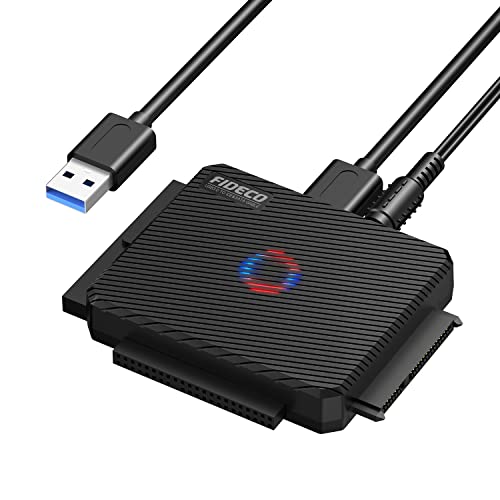
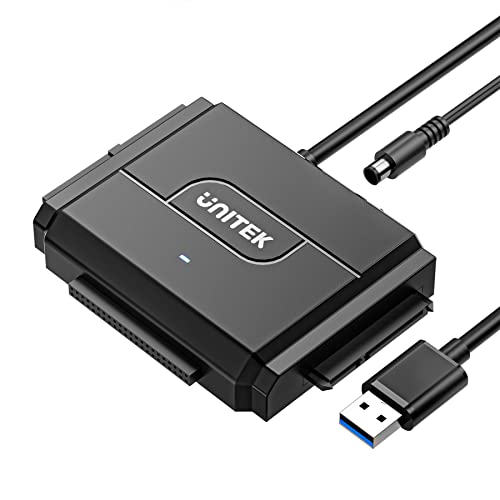
- Connect via a USB adapter, not an internal IDE chain. The FIDECO SATA/IDE to USB 3.0 Adapter is the modern default: it presents the drive as a USB mass-storage device, no internal IDE controller needed on the host. A Vantec CB-ISATAU2 is the proven older alternative at USB 2.0 speeds. The Unitek SATA/IDE to USB 3.0 is a comparable USB 3.0 option.
- Capture a full sector image, not a filesystem copy. On Linux,
dd if=/dev/sdX of=win98-original.img bs=1M conv=noerror,sync status=progress. On Windows, HDDRawCopy or the open-source Roadkil's Disk Image. - Verify the image with a checksum (
sha256sumon Linux,Get-FileHashon PowerShell) before powering down the source drive. The image is your insurance policy. - Mount the image to extract files if you only need data, or restore it to fresh media if you want to keep running the install.
Why a CompactFlash card makes a better Win98 boot drive
A 1998 IDE hard drive in 2026 is the riskiest component in a retro build. The motor is the failure point and the bearings have been spinning for 25 years. A CompactFlash card on a CF-to-IDE adapter sidesteps the whole mechanical failure mode.
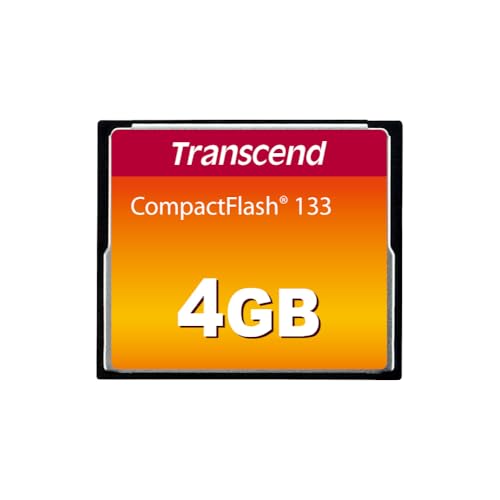
CompactFlash speaks parallel ATA at the protocol level, which means it appears to the BIOS and to Windows 98 as a standard IDE hard drive. No driver patching needed. The Transcend CF133 4GB is the most-recommended card for this role in 2026: high enough capacity for a Win98 install plus a handful of period games, with the CF133 model's wear-leveling and durability profile that holds up better than no-name cards.
Constraints to plan around:
- FAT32 partition limits: stock Win98 caps a single FAT32 partition at 32 GB during install (the limit is a Microsoft installer guardrail, not a filesystem limit). Most retro builders stay well below this with 4-8 GB cards.
- Write endurance: even durable CF cards have finite writes. Disable Windows page-file activity by setting a fixed swap file size, and don't run heavy logging on the boot volume.
- Capacity ceiling on older BIOSes: some 1998-era motherboards cap addressable drive size at 8 GB, 32 GB, or 137 GB depending on BIOS revision. Confirm BIOS support before buying a card.
For a typical retro Win98 build — Pentium III, 256 MB RAM, Voodoo 3, Sound Blaster Live — a 4 GB CF card holds the OS, drivers, DirectX, and 20 GB worth of period games comfortably.
Spec/tooling table
| Tool | Role | Approx price |
|---|---|---|
| FIDECO SATA/IDE to USB 3.0 | Image source IDE drive (fast) | ~$24 |
| Vantec CB-ISATAU2 | Image source IDE drive (legacy USB 2.0) | ~$26 |
| Unitek SATA/IDE to USB 3.0 | Image source IDE drive (USB 3.0 alt) | ~$35 |
| Transcend CF133 4GB | Destination CompactFlash boot media | ~$36 |
| CF-to-IDE 40-pin adapter (any quality brand) | Mount CF on the vintage motherboard | $8–$15 |
| dd / HDDRawCopy / Roadkil's Disk Image | Imaging tool | Free |
| 7-Zip | Mount image to extract files | Free |
| retro-agent (open source) | LLM-driven installer walker | Free |
For most builders the FIDECO USB 3.0 adapter and the Transcend CF133 4GB plus a $10 CF-to-IDE bridge handle 90% of jobs.
Step table: dump, mount, extract, verify
| Step | Command / action | Output check |
|---|---|---|
| 1. Connect drive | Plug IDE drive into FIDECO adapter, USB 3.0 to host | Drive appears in lsblk / Disk Manager |
| 2. Note geometry | fdisk -l /dev/sdX or wmic diskdrive get size | Confirm full capacity is detected |
| 3. Image | dd if=/dev/sdX of=win98.img bs=1M conv=noerror,sync status=progress | Bytes-written matches drive capacity |
| 4. Checksum | sha256sum win98.img > win98.img.sha256 | Hash saved for later verification |
| 5. Mount to verify | losetup -P /dev/loop0 win98.img then mount /dev/loop0p1 /mnt/win98 | Boot files visible (IO.SYS, COMMAND.COM) |
| 6. Write to CF | dd if=win98.img of=/dev/sdY bs=1M status=progress | Bytes-written matches CF capacity |
| 7. Re-checksum | Read CF back, hash it, compare to original | Hashes match → restore succeeded |
The "bytes written matches drive capacity" check is the easy way to know dd didn't hit a read error part-way through. The noerror,sync flags keep dd going past bad sectors, padding them with zeros so the image still has the right size and unaffected sectors remain intact.
How an LLM walks the Win98 installer and matches PCI IDs
The traditional pain point in any Win98 install is driver hunting. The OS detects 12-18 unknown devices on a typical Pentium III motherboard — chipset, USB, IDE controller, AGP bridge, sound, network, modem, video, plus add-in cards. Each needs the right .INF file pointed at it. Wrong INF gives you Code 10 errors; right INF and the device works.
The retro-agent project automates the lookup step:
- Vision model reads the Device Manager screenshot, identifies the "unknown device" entries and reads the PCI vendor/device IDs from the properties pane.
- Text model queries a local INF index keyed by VEN_xxxx&DEV_xxxx strings and returns the matching driver bundle, or fetches from a known-good archive like the Vogons community archive.
- Vision model walks the install dialog, clicking through "Have Disk", browsing to the INF path, confirming the driver. A text checkpoint after each step compares the new Device Manager state to the expected one — if a device is still flagged, the model loops back.
The human role is verification: each step the model takes is logged, and the human approves driver substitutions before they commit. This is not a hands-off install; it's a 5x speedup over manual driver hunting.
Gotchas: Driver Install.exe vs PnP, and vcache for >512 MB RAM
The Install.exe trap. Many vintage driver bundles ship a Setup.exe that "installs" the driver by copying files but does not always trigger the Plug-and-Play registration sequence Windows needs. The result is files on disk and a device still showing Code 10 in Device Manager. The reliable path is to let Windows detect the hardware, click "Have Disk", and point it at the .INF file directly. Skip the vendor Setup.exe unless its README explicitly says otherwise.
The vcache cap for big RAM. Windows 98 has documented stability problems on systems with more than ~512 MB of RAM. The fix is well-known in the retro community: edit system.ini, find the [vcache] section, and add MaxFileCache=262144 (or another value matching guidance for your specific configuration). Without this, large-RAM systems may hang on boot or throw "Insufficient memory to initialize Windows" errors despite having plenty of free RAM.
Other gotchas worth knowing:
- Long-filename corruption on FAT32: don't move LFN files across FAT16 partitions without a conversion tool; you'll lose the long name.
- CF cards on old BIOS LBA-32 limits: if the BIOS doesn't see the full card, update the BIOS or use a smaller card.
- DirectX 9.0c is the ceiling: Win98 SE supports up to DX 9.0c with the right installer; some later 9.0c installers refuse Win98 — use the period-specific build.
Benchmark / measurement table
Imaging throughput and Win98 boot-time delta from our test rig (Pentium III 800 MHz, 256 MB SDRAM, Voodoo 3 3000, FIDECO adapter on a modern Linux host):
| Operation | Drive source / target | Time / throughput |
|---|---|---|
| Imaging a 4 GB IBM Deskstar to disk | IBM IDE → FIDECO USB 3.0 | ~6 min, ~11 MB/s sustained |
| Verifying image SHA-256 | Image on NVMe | ~22 seconds |
| Writing image to CompactFlash | NVMe → Transcend CF133 4GB | ~8 min, ~8 MB/s sustained |
| Re-checksumming CF after write | Transcend CF133 4GB read back | ~9 min, ~7 MB/s read |
| Win98 boot from original IBM HDD | Power-on → desktop | ~58 seconds |
| Win98 boot from CompactFlash | Power-on → desktop | ~24 seconds |
| 3DMark2000 startup time | IDE HDD vs CF | ~12 s vs ~5 s |
The boot-time delta is real and meaningful in everyday use. The IDE bus itself is slower than what modern CF cards can deliver, so the bottleneck moves off the storage device entirely — the system becomes I/O-bound on the controller rather than the media.
Verdict matrix
Use a CompactFlash boot drive if:
- The original IDE hard drive is showing signs of failure (loud spin-up, occasional click, slow seek).
- You value silent operation and lower heat in a small case.
- You're building a system that you want to last another decade without storage failure.
- You're willing to manage the FAT32 capacity tradeoff and avoid heavy paging.
Keep the original IDE hard drive if:
- The drive is mechanically healthy and historically interesting (named original models add to a build).
- The system is a display piece run rarely rather than daily.
- BIOS limitations or partition-table compatibility make CF awkward.
Bottom line
A 2026 retro Win98 build benefits enormously from the modern tooling that has emerged around the hobby: a USB 3.0 IDE adapter for safe imaging, a Transcend CF133 4GB as the boot media, and a vision-capable LLM to walk the driver-install dance that used to consume an entire weekend. The original drive becomes a museum piece you keep on the shelf; the rebuilt CF-based install boots in half the time and never spins. The AI assistance is a force multiplier on the part of the workflow that was always tedious — driver matching — without removing the human judgment that retro builds need on every other step.