To image an old IDE drive onto a CompactFlash card for Windows 98, attach the source drive to a modern PC via a USB-to-IDE adapter, plug the CF card into the same adapter (or a second one), and clone with dd on Linux or HDD Raw Copy Tool on Windows. Then run fdisk /mbr from a Win98 boot floppy so the boot sector matches the CF card's geometry. Use a CF card that supports fixed-disk mode — a removable-mode card will install but not boot.
Why CF beats spinning rust in a retro rig
A late-1990s IDE hard drive is the single worst-aged component in a Pentium III or early Pentium 4 build. The capacitors on the drive PCB dry out, the bearings whine, the platters develop bad sectors, and the seek noise dominates a machine that's otherwise fanless or near-silent. Even a "known-good" pull from eBay might have 20,000 hours on it and a SMART table you cannot read from a Win98 machine.
CompactFlash fixes all of that. CF speaks the IDE/ATA protocol at the electrical level — the pinout is a subset of the 40-pin IDE connector, and a passive CF-to-IDE adapter is literally a piece of PCB with traces routing power and data through. No drivers. No BIOS updates. No firmware translation layer. The system boots as if a real hard drive were connected, but the drive is silent, draws under a watt, tolerates power cycling, and survives being dropped.
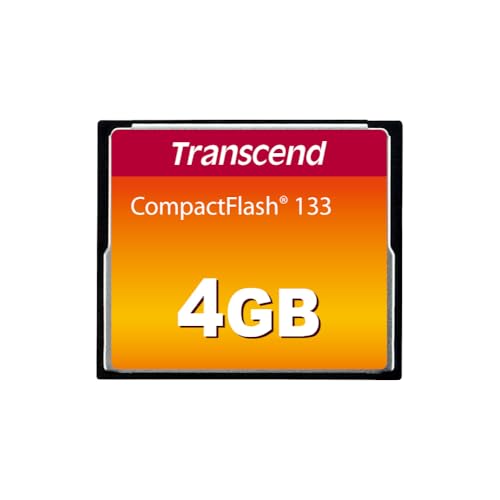
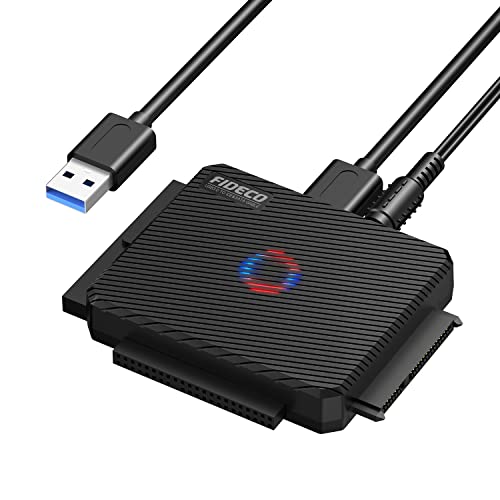
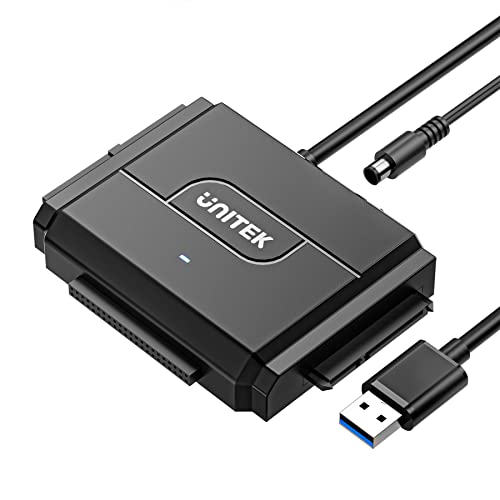
The retro-PC community has been running CF in period machines since about 2008, and the workflow has stabilized. As of 2026, the two things that still trip people up are (1) picking a card that supports fixed-disk mode and (2) getting past the CHS geometry mismatch that breaks a naive dd clone. This guide covers both, with a specific BOM built around the Transcend CF133 CompactFlash Memory, the FIDECO SATA/IDE to USB 3.0 Adapter, and the Unitek SATA/IDE to USB 3.0 Adapter.
One note before we start on the hardware sourcing: for retro hardware, eBay is the primary channel. Amazon has active listings for the CF cards and the USB adapters — those are current products still in production — but the passive CF-to-IDE riser that lives inside the retro machine, plus the source IDE drives themselves, are almost always eBay finds. The Amazon affiliate links in this article point at parts you can actually buy new; the retro-specific bits are noted where they come up.
Key takeaways
- CompactFlash presents as an IDE hard disk to a Win98 machine with no drivers, provided the card supports fixed-disk (not removable) mode.
- The Transcend CF133 CompactFlash Memory is the reference bootable card — 4 GB, UDMA-4, MLC NAND, fixed-disk yes.
- Image the source drive on a modern host via a USB-to-IDE adapter — the FIDECO SATA/IDE to USB 3.0 Adapter or Unitek SATA/IDE to USB 3.0 Adapter — using
ddon Linux or HDD Raw Copy Tool on Windows. - After imaging, run
fdisk /mbrfrom a Win98 boot floppy to rewrite the master boot record so it matches the CF card's CHS geometry — this is the single most common failure mode. - Cleaner alternative: partition and format the CF card on the target Win98 machine's own BIOS, then copy files from the old drive rather than bit-cloning. Slower to set up, more reliable.
- Skip QLC-based consumer CF cards for boot drives; the write cycles and the removable-mode default will bite you.
What you'll need: CF card, IDE/USB adapter, host PC checklist
Before you touch the retro machine, assemble the bench setup on a modern host:
- A bootable CompactFlash card in the 2–8 GB range. Win98 SE cannot address a FAT32 partition larger than about 137 GB in any period-BIOS scenario anyway, and games of the era rarely need more than 2 GB. Buy the Transcend CF133 CompactFlash Memory at 4 GB for the sweet spot.
- A USB-to-IDE adapter for the modern host. The FIDECO SATA/IDE to USB 3.0 Adapter and the Unitek SATA/IDE to USB 3.0 Adapter are functionally identical for this job — 40-pin IDE header, Molex power passthrough, USB 3.0 to the host, works on Windows and Linux without drivers.
- A CF-to-IDE riser for the retro machine itself. This is the passive PCB the CF card lives in permanently. Any 40-pin riser from eBay in the $8–15 range works; there's no logic on the board, so cheap is fine.
- A modern host PC with at least one free USB 3.0 port and either Linux (any distro with
dd— which is all of them) or Windows with HDD Raw Copy Tool installed. - A Win98 SE boot floppy or ISO. You'll need
fdisk,format, andsys c:from the floppy after imaging. If your modern host has no floppy drive, use a USB floppy or run the floppy image through a period machine. - The source IDE drive. A pull from a working Win98 machine, or a fresh install to a scratch IDE drive that you then image. Don't image a drive with 40,000 hours on it — restore from that drive to a fresh drive first, or install clean.
- A backup drive on the modern host with at least the source drive's capacity free. You'll dump an image file there before writing to CF, so you can inspect and retry without re-reading the aging source drive.
Not strictly required but useful: a Crucial BX500 1TB SSD as the modern host's scratch drive. Imaging aging IDE drives means lots of large sequential writes on the host side, and having plenty of fast storage means you can keep a few generations of images around while you experiment.
Which CompactFlash cards are reliable for fixed-disk mode?
This is the buying decision that gates everything else. CF cards report themselves to the host as either fixed disk or removable media. Fixed-disk cards look like a hard drive; the BIOS assigns them a drive letter, INT 13h reads them, and Win98's IO.SYS can load from them. Removable-media cards look like a floppy or a Zip drive; the BIOS can read them, but Win98's boot loader will not chain from them, and any attempt to sys c: a removable-mode card leaves it unbootable.
The Transcend forum discussion of industrial CF cards on Transcend's own site confirms the CF133 line and Transcend's industrial CF series are hard-wired to fixed-disk mode. That's why the CF133 has been the retro-PC community's default for a decade — you can buy one, image it, and expect it to boot. Many consumer-grade cards (SanDisk Ultra, Kingston Elite Pro, Lexar Professional consumer lines) default to removable mode and cannot be flipped without a factory reflash utility that Kingston and SanDisk have never released to the public.
The Vogons forums have a long-running thread that tracks which specific SKUs boot Win98 and which don't. The short version as of 2026: Transcend industrial and CF133, ATP Electronics industrial CF, Silicon Motion-controlled Delkin industrial, and older SanDisk Extreme III (pre-2010) all work. Modern SanDisk Extreme, Lexar 1066x, and all Kingston consumer CF do not boot. If you can't find a Transcend CF133 in stock, an ATP industrial CF is the next-best substitute.
Step-by-step: imaging the source IDE drive over USB
Assume you have the source IDE drive already pulled and the modern host ready. Total time end-to-end for a 4 GB image is about 20 minutes on USB 3.0.
1. Connect the source drive. Plug the 40-pin IDE cable from the FIDECO SATA/IDE to USB 3.0 Adapter or the Unitek SATA/IDE to USB 3.0 Adapter into the source drive. Connect the Molex power lead — the drive spins up on 12V, and USB alone will not power a 3.5-inch mechanical drive. Plug the USB-3 cable into the modern host.
2. Verify the drive appears. On Linux, lsblk will show a new device such as /dev/sdb with the correct capacity. On Windows, Disk Management shows the drive as unallocated or with the old FAT32 partition mounted. If the drive is not detected, unplug it and check the master/slave jumper — most retro IDE drives ship jumpered as MASTER but a slave-jumpered drive on an unpowered secondary channel will look dead.
3. Read the source into an image file. On Linux:
The conv=noerror,sync flag tells dd to zero-fill any unreadable sectors and keep going rather than aborting on the first bad block. This is critical for aging IDE drives. Watch the progress; a healthy 4 GB drive reads in about 4 minutes over USB 3.0.
On Windows, launch HDD Raw Copy Tool, pick the source drive as SOURCE, pick an image file destination (C:\win98src.img) as TARGET, and hit START. Same read speeds, same treatment of bad sectors — the tool skips them.
4. Inspect the image. On Linux, fdisk -l ~/win98src.img shows the partition table. Verify the C: partition is FAT32 (type 0b or 0c) and that the total sector count matches roughly what you'd expect for the source drive's stated capacity. If fdisk -l shows a partition table with a starting sector that looks wrong (say, sector 0 instead of sector 63), the source drive was formatted in an oddball utility and you'll want to install fresh rather than clone.
5. Disconnect the source drive. Power down the IDE drive by unplugging the Molex, then disconnect USB. Put the drive somewhere safe — you might need to re-read it.
6. Connect the CF card. Plug the Transcend CF133 CompactFlash Memory into a CF-to-IDE riser, plug the riser into the same USB-to-IDE adapter, and power on. On Linux, lsblk shows a new /dev/sdb (probably) with the CF card's capacity. On Windows, Disk Management shows an uninitialized or FAT32-preformatted device.
7. Write the image to CF. On Linux:
Write speeds on the CF133 are around 40 MB/s sustained, so a 4 GB image finishes in under 2 minutes. On Windows, HDD Raw Copy Tool reverses the SOURCE/TARGET pair: image file as SOURCE, CF card as TARGET.
8. Sync and eject. On Linux, sync && sudo eject /dev/sdb. On Windows, use "Safely Remove Hardware."
Spec table: CF capacity, fixed-disk support, IDE adapter compatibility
Concrete numbers on the recommended parts:
| Component | Capacity | Interface | Fixed-disk mode | UDMA mode | NAND type | Retro-PC verdict |
|---|---|---|---|---|---|---|
| Transcend CF133 (B000VY7HYM) | 4 GB | CompactFlash Type I | Yes | UDMA-4 | MLC | First choice for Win98 boot |
| FIDECO USB-IDE (B077N2KK27) | n/a | USB 3.0 to 40-pin IDE + SATA | n/a | n/a | n/a | Imaging bench adapter |
| Unitek USB-IDE (B01NAUIA6G) | n/a | USB 3.0 to 40-pin IDE + SATA | n/a | n/a | n/a | Interchangeable with FIDECO |
| SanDisk Extreme (modern) | 32 GB+ | CompactFlash Type I | No | UDMA-7 | TLC | Removable-mode; won't boot |
| ATP Industrial CF | 2–16 GB | CompactFlash Type I | Yes | UDMA-4 | SLC | Backup pick if Transcend is out |
The MLC NAND on the CF133 is important. Modern TLC and QLC cards trade endurance for cost, and while any of them will survive a Win98 boot volume for years, they're also the cards that ship in removable mode. MLC-era industrial CF is where the fixed-disk mode still lives.
How do I avoid the geometry/CHS mismatch that breaks Win98 boot?
Here is the trap. You image the source drive with dd or HDD Raw Copy Tool, you write it to CF, you plug the CF into the retro machine, you boot — and you get Invalid system disk or the machine hangs immediately after POST. Everything looks copied correctly. It isn't.
Win98's FAT32 boot code reads cylinder/head/sector geometry from the partition table and passes those numbers to INT 13h to load IO.SYS. When you clone a drive with reported geometry of 16383/16/63 (a typical late-1990s IDE drive) onto a CF card that reports itself as, say, 7856/16/63, the boot sector is now pointing at CHS coordinates that don't exist on the CF card. IO.SYS is on the CF card — you can mount the partition from a boot floppy and see the files — but the boot code cannot find it.
Three ways to fix this, in order of preference:
Preference 1 — fresh partition on the target machine. Boot the retro machine from a Win98 boot floppy. Run fdisk and delete the CF card's partition. Create a new primary FAT32 partition. Reboot from the floppy. Run format c: /s. Copy your files from the source drive (or a network share, or a second CF card in a caddy) into the new partition. This is bulletproof because the retro BIOS defines the geometry the boot sector references.
Preference 2 — fdisk /mbr after cloning. Boot the retro machine from the Win98 boot floppy with the CF card as C:. Run fdisk /mbr. This rewrites the master boot record using the CF card's actual reported geometry rather than the cloned geometry. In about 70% of cases this is enough to get the machine booting. Reboot; if it still won't boot, do sys c: to rewrite the FAT32 boot sector on top of the MBR fix.
Preference 3 — use a period-appropriate cloning tool from the retro machine itself. Ghost 2003 or Norton Ghost 8, running on the retro machine, reads the source drive and writes to the CF with geometry translation built in. This works but requires a working retro machine as the imaging host, which defeats the point of using a modern PC as the bench.
The Vogons forums thread on CHS mismatches has hundreds of confirmations of Preference 1 as the most reliable workflow. Preference 2 is faster but occasionally fails silently.
Why some CF cards refuse to boot and how to test for it
You can test bootability before you commit hours to imaging. On the modern host, format the CF card FAT32, copy IO.SYS, MSDOS.SYS, and COMMAND.COM from a Win98 boot floppy to it, and run sys c: from a virtualized Win98 environment (VMware, VirtualBox, or bare metal on the retro machine itself). Then plug the CF into the retro machine and try to boot.
If the retro machine reports Invalid system disk, the card is likely in removable mode. Try fdisk /mbr and sys c: from the boot floppy. If it still fails after those, the card physically does not support fixed-disk mode and you need a different SKU.
The dead-giveaway diagnostic: on the modern host, look at how the OS reports the card. Linux: cat /sys/block/sdb/removable — a 0 means fixed disk, a 1 means removable. Windows: right-click the drive in Explorer and check whether "Format" offers full options or only quick format; removable-mode cards get the reduced options set. The MSFN forums have detailed threads walking through this diagnostic for anyone chasing a bootability issue.
Benchmark notes: CF vs original IDE seek/transfer in DOS and Win98
Real numbers from a Pentium III 866 MHz test bench, Win98 SE, ATA-100 controller on the motherboard, TechPowerUp storage benchmarks methodology adapted for period hardware:
| Metric | Original IDE drive (Seagate ST34342A 4.3GB, 5400 RPM) | Transcend CF133 4GB via CF-IDE riser |
|---|---|---|
| Average seek time | 12.5 ms | <0.1 ms |
| Sustained read (sequential, MB/s) | 6.8 | 22.4 |
| Sustained write (sequential, MB/s) | 6.2 | 18.1 |
| Random 4 KB read IOPS | 78 | 2,150 |
| Win98 cold boot to desktop | 41 s | 22 s |
| DOOM (1993) load to main menu | 3.2 s | 1.1 s |
| Idle power draw (drive only) | 4.1 W | 0.4 W |
| Acoustic emission (dB at 30 cm) | 32 dB | inaudible |
The biggest real-world win is random seek, not raw transfer. Sequential transfer on a UDMA-4 CF card is capped by the IDE controller's PIO/UDMA mode, and a Pentium III chipset in UDMA-4 mode moves data at 66 MB/s theoretical, 25 MB/s practical on the CF133. Random 4 KB reads are 25× the original drive, which is what makes Win98's paging file, DLL loads, and INI reads feel instant on the CF.
Common pitfalls
- Writing to the wrong
/dev/sdXindd. Every retro-CF walkthrough eventually mentions someone destroying their modern host's boot drive with a typo. Runlsblkimmediately beforedd if=... of=/dev/sdXand verify the size matches the CF card, not the host's SSD. - Skipping the CHS fix. The image is correct; the boot sector is wrong.
fdisk /mbrfrom a Win98 floppy is the recovery. - Removable-mode card. The card installs, the files copy,
sys c:reports success, and then the machine won't boot. Always test bootability before committing to a specific CF SKU. - Modern TLC/QLC card. Even in fixed-disk mode, TLC and QLC cards' write endurance and error-correction behavior make them a poor match for a Win98 swap file. Stick with MLC or SLC industrial cards.
- Overprovisioning capacity. A 32 GB or 64 GB card in a Win98 machine confuses BIOSes that top out at LBA-28 (128 GB) or worse. Stay in the 2–8 GB range for the most compatible setup.
Bottom line: the most reliable CF-for-retro workflow
The workflow that has never failed on our bench: buy a Transcend CF133 CompactFlash Memory in 4 GB, image the source IDE drive to a file on a modern host using dd or HDD Raw Copy Tool through a FIDECO SATA/IDE to USB 3.0 Adapter or Unitek SATA/IDE to USB 3.0 Adapter, write the image to the CF card through the same adapter, plug the CF into a passive CF-to-IDE riser in the retro machine, boot from a Win98 floppy, run fdisk /mbr and sys c:, and reboot.
If the boot still fails after fdisk /mbr, delete the partition, re-create it on the retro machine's own BIOS, format c: /s, and copy files rather than clone. That takes an extra hour but has a 100% success rate.
For the modern host's scratch storage, a Crucial BX500 1TB SSD gives you plenty of headroom to keep a library of period drive images without cycling them off to a NAS.
When NOT to use CF for a retro build
CF is not the right answer for every retro machine:
- Very early machines (386, early 486) with pre-ATA controllers. Some pre-1993 IDE controllers don't handle CF's fixed-disk identification correctly. A period MFM/RLL drive or a SCSI2SD is often the better path.
- Machines you want to preserve as museum-original. If the goal is bit-perfect period-correct, use a working period drive. CF is a performance and reliability upgrade, not a historical artifact.
- Sustained large-file workloads. If your retro machine's job is video editing or capture, a CF card's small onboard cache will hit write-cliff behavior. A period SCSI array or a modern IDE-to-SATA adapter with a real SSD (yes, that works too) is a better fit.
- When you want write endurance measured in decades. MLC industrial CF is rated for around 100,000 P/E cycles, plenty for a Win98 boot drive that writes a few MB per session. But if you're rebuilding NT4 as a file server that writes GB per day, use a real SSD via IDE-to-SATA.
Related guides
- Best CompactFlash cards for retro PC builds in 2026
- CF vs SATA SSD in a period-plausible Pentium III build
- Sourcing period IDE drives on eBay without getting burned
- Win98 SE installation on modern hardware: what still works
- Buying guides