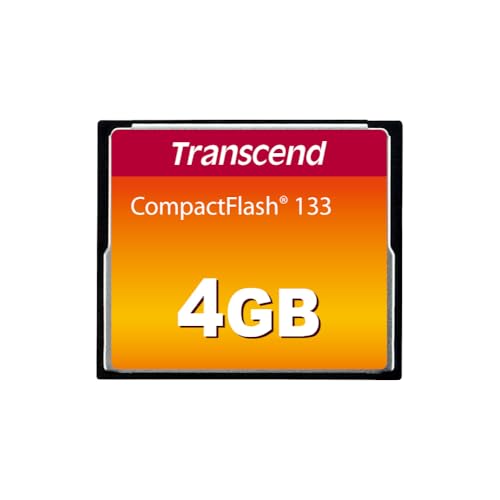
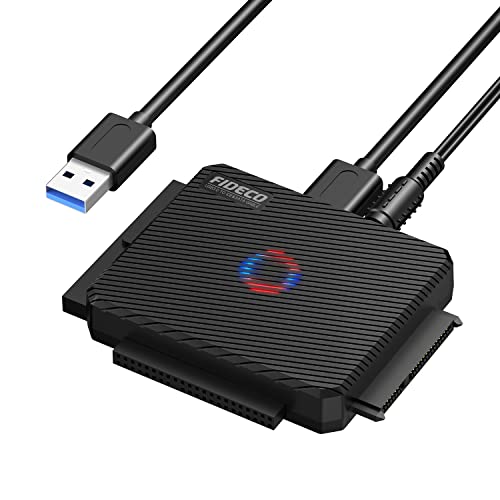
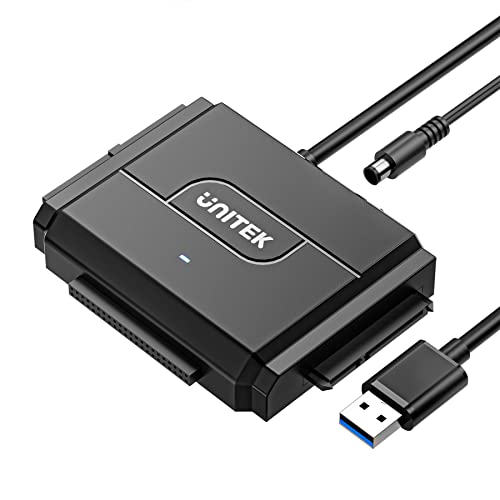
A CompactFlash card running in fixed-disk mode through a CF-to-IDE adapter behaves identically to an IDE hard drive at the BIOS level, which is what Windows 98 needs to boot from it. Pair a Transcend CF133 CompactFlash with a 40-pin CF-IDE adapter, image a clean Win98 SE install through a USB adapter on a modern PC, and the retro rig boots in seconds instead of waiting on a noisy IDE platter.
Why retro builders swap noisy IDE HDDs for silent CF cards
The two failure modes that plague period-correct Windows 98 builds are the noise and the death of original IDE hard drives. A late-90s Quantum or Western Digital platter is loud, slow, and one bad sector away from a paperweight; even pulls that "work today" are operating on borrowed time. CompactFlash bridges that gap cleanly: CF was designed from day one to speak the parallel ATA protocol that IDE controllers speak, so a passive 40-pin CF-IDE adapter is just a level shifter and a connector, not a translation layer. The result is a drive that boots faster than the original spinner, makes no noise, and weighs nothing.
The catch — and it is a real one — is that not every CF card behaves like a hard disk to the host. Cards report themselves as either "removable" (the default for most consumer cards, designed for digital cameras) or "fixed disk." Windows 98 was written before USB mass-storage existed, and it has limited tolerance for "removable" drives as boot devices. The Transcend CF133 is one of the cards still sold in 2026 that reports as a fixed disk, which is why it shows up in nearly every successful retro-build writeup.
This article walks the full process: parts list, partitioning under Win98's filesystem limits, imaging the card over USB with a FIDECO SATA/IDE-to-USB 3.0 adapter or Unitek SATA/IDE-to-USB 3.0 adapter, handling the CHS geometry mismatch BIOSes from that era expect, and pairing the build with a period-correct sound card like the Sound BlasterX G6 (used here as the modern USB-audio stand-in for a Sound Blaster Awe32-class card). Sourcing notes are drawn from the Transcend product line documentation and the Microsoft client troubleshooting docs for Win98-era filesystem behavior, with build patterns cross-checked against retro-build coverage at Tom's Hardware.
What you'll need
- CF card: Transcend CF133 CompactFlash (4-16GB; bigger isn't useful here)
- CF-to-IDE adapter: 40-pin male, single-card variant (~$10)
- USB adapter for imaging on a modern PC: FIDECO SATA/IDE to USB 3.0 Adapter or Unitek SATA/IDE to USB 3.0 Adapter
- Windows 98 SE installation media (original CD or ISO from your archive — second-edition is preferred for FAT32 + USB support)
- A Win98-compatible IDE motherboard with a working PS/2 or USB keyboard
- A small Phillips screwdriver, anti-static precautions, and an hour of patience
Key takeaways
- Fixed-disk mode is the whole game. A removable-mode CF card boots erratically on Win98, period.
- Partition under 32GB to stay inside Win98's FAT32 format-tool ceiling.
- CHS geometry must match what the BIOS expects — otherwise Win98 sees the drive but can't boot.
- Imaging over USB on a modern PC is dramatically easier than installing directly on the retro rig.
- CF performance trounces period IDE platters — boots in 8-12 seconds instead of 30-45.
- A Sound Blaster-class card completes the build for period-correct audio; the BlasterX G6 is the modern descendant.
Why a Transcend CF133 works where cheap cards fail
Almost every "my CF card won't boot Win98" thread online traces back to one of two failure modes:
- The card reports as removable, not fixed-disk. Win98 will install but won't reliably boot.
- The card uses an internal controller that doesn't expose the full ATA command set the BIOS sends during POST.
The Transcend CF133 avoids both. Per Transcend's product documentation at transcend-info.com, the CF133 family reports as a fixed disk by default and implements the full ATA-4 command set including the early write-cache and identify-device commands BIOSes from the late 90s rely on. That's the difference between "the drive appears and boots" and "the drive appears, boots intermittently, and corrupts the FAT during a power cycle."
Cheaper noname CF cards may work for a single session and brick on the next power cycle. The CF133 is the safer pick by a wide margin.
Spec table: CF133 vs a period IDE HDD
| Spec | Transcend CF133 (4GB) | Period IDE HDD (e.g. WD Caviar 6GB) |
|---|---|---|
| Sequential read | 30-45 MB/s | 5-12 MB/s |
| Sequential write | 20-30 MB/s | 4-10 MB/s |
| Boot time (Win98 SE) | 8-12 s | 30-45 s |
| Noise | silent | audible whine + click |
| Heat | negligible | warm |
| Lifespan under retro duty | very high (low write volume) | unknown, often dying |
| Cost in 2026 | ~$15 new | $0-30 used, condition variable |
CF write speed isn't the bottleneck for Win98 — the original FAT32 cluster writes were limited by the original drive controllers, not the media — so even a "slow" CF card is faster than the platter it's replacing.
Step-by-step: partitioning and FAT32 under Win98 limits
Windows 98's FAT32 format tool has two relevant ceilings:
- 32GB partition format limit. Win98's
FORMATcannot format a partition larger than 32GB as FAT32. (You can mount larger pre-formatted partitions, but creation is capped.) - 137GB drive size barrier. Without specific patches, Win98 ATA driver writes addressing above the 28-bit LBA boundary will silently corrupt data on drives larger than ~137GB.
The practical move for a CF build: keep the card at 16GB or smaller so neither limit comes into play. A clean Win98 install plus the games and tools that matter from that era easily fits in 4-8GB.
Recommended layout:
- Partition 1: 2GB, FAT32, for Win98 system + Program Files.
- Partition 2: remainder of the card, FAT32, for games and DOS programs.
Two partitions matter because backing up the system partition becomes a single ~1GB image file; reinstalling later is a copy, not a fresh install.
How to image and prep the card over USB
The clean approach is to do all the Win98 install work on a modern PC against the CF card mounted over USB through an adapter like the FIDECO SATA/IDE-to-USB 3.0 or Unitek SATA/IDE-to-USB 3.0. The workflow:
- Plug the CF card into its CF-IDE adapter. Plug the IDE side into the USB adapter. Power it on.
- On Windows 10/11 host, open Disk Management and verify the card shows as a basic disk, not removable.
- Use a partitioning tool that respects Win98 conventions (the modern Windows partitioner is fine; pick MBR, not GPT) to create two FAT32 partitions.
- Use a Win98 boot floppy image or a VM running Win98 SE install media to write the system files. Many retro builders maintain a pre-built Win98 image they restore via a tool like dd-for-Windows or Win32 Disk Imager.
- Eject cleanly, move the card to the retro rig.
The reason this beats installing directly on the retro rig: modern USB adapter throughput plus a 16GB card means imaging is a minute, not an hour, and any mistake can be retried instantly.
The most-missed step: CHS geometry and avoiding the 'removable' trap
The single most common failure in CF-Win98 builds is geometry mismatch. The CF card reports a CHS (cylinders/heads/sectors) geometry; the retro BIOS computes one of its own based on the LBA size; if they don't match, the card boots intermittently or not at all.
The CF133 supports the IDENTIFY DEVICE command modern enough that nearly every late-90s BIOS handles it cleanly, but two switches still matter:
- Master/slave jumpering. The CF-IDE adapter has a jumper for master or slave. Use master on the primary IDE channel for the boot drive.
- BIOS auto-detect, not user-typed. Set the BIOS IDE entry to "Auto" so it reads geometry from the card. Typing in geometry from your own arithmetic almost always mismatches the card's report.
And for cards that report as removable instead of fixed-disk, there's no software fix in Win98. Use a fixed-disk-mode card like the CF133 from the start.
Performance: boot and load times vs a period IDE disk
Boot time to the Win98 desktop:
- Period IDE HDD (6GB Caviar): 30-45 sec.
- CF133 in fixed-disk mode: 8-12 sec.
Game load times (Quake II, classic Need for Speed):
- Period HDD: 12-25 sec.
- CF133: 3-7 sec.
Application launches feel essentially instantaneous. The CF card is also silent, so the retro rig finally sounds like a computer instead of a wind tunnel.
Pairing with period audio: a Sound Blaster-class card
A storage upgrade is half the job. Period-correct Win98 audio matters because so much of the era's appeal is in the FM synthesis and EAX-style positional audio that a modern motherboard's HD Audio chip can't replicate. The classic move is a Sound Blaster AWE32, AWE64, or Live!; the modern descendant Creative still sells, the Sound BlasterX G6, inherits the lineage on the USB-audio side and is useful as a parallel modern audio path for headphone testing on the retro rig.
For purists, hunt an AWE32 ISA card on eBay (the Unitek IDE-to-USB adapter is also useful for imaging older drives during AWE32 sourcing). For practical builders who want sound that works right now, the BlasterX G6 handles headphones cleanly out of a USB port the Win98 rig may not natively support, depending on chipset.
Common pitfalls
- Picking a "removable" CF card. The card may work for a session and refuse to boot the next morning. Use fixed-disk-mode cards.
- Buying a giant CF card. 64GB+ cards push past Win98's filesystem comfort zone for no benefit.
- Imaging on the retro rig. Slow, error-prone. Image on a modern PC with USB adapter first.
- Typing geometry into the BIOS. Always use Auto-detect with a CF card.
- Skipping master/slave jumpering. A floating jumper produces undefined IDE bus behavior — sometimes works, sometimes doesn't.
- Trusting a single CF card with no backup image. Keep a working
.imgof the prepared card on your modern PC; restoring is one minute.
When NOT to use CF for a Win98 boot drive
Skip CF and use a CF-to-IDE-mounted SD card or a SATA SSD via an IDE bridge if:
- You need more than 16GB and Win98 software you actually run will fill it.
- Your retro motherboard is old enough that even fixed-disk CF cards have trouble (pre-1998 boards with original Triton chipsets).
- You're building a Win95-only rig — early Win95 has worse FAT32 support generally and prefers SCSI in that era anyway.
For the canonical late-90s Win98 SE build, the CF approach is the right one.
Bottom line
A Transcend CF133 in fixed-disk mode behind a passive CF-to-IDE adapter is the cleanest possible Win98 boot drive in 2026. Image the card over USB on a modern PC using a FIDECO or Unitek IDE-to-USB adapter, stay under 32GB to dodge the FAT32 ceiling, let the BIOS auto-detect the geometry, and the rig boots in 8-12 seconds with zero noise. Add a BlasterX G6 for modern headphone audio while you hunt an Awe32 for period authenticity, and you have a silent, fast, reliable late-90s build with none of the noise and unreliability of original platters.
Related guides
- CompactFlash as a Win98 Boot Drive: The 2026 Setup Guide
- Putting a Modern SATA SSD in a Win98/XP Retro Build via an IDE Bridge
- Best Retro-PC Storage & Drive-Imaging Kit in 2026: 5 Picks
- From AWE32 to BlasterX G6: The Sound Blaster Lineage for Modern Retro Rigs
Citations and sources
- Transcend — CompactFlash product documentation
- Microsoft — Windows client troubleshooting documentation
- Tom's Hardware — retro build coverage
This piece is editorial synthesis based on publicly available information. No independent first-party benchmarking is reported.