You automatically fall back to a local model when your API limit is hit by running a router — most commonly LiteLLM — in front of your assistant, chat client, or agent. The router treats a rate-limit error, 5xx, or timeout as a signal to try the next model in an ordered list, ending on an Ollama instance on your own machine that is always available. Your workflow keeps running; only the answer quality changes.
Tagline
A single OpenAI-compatible endpoint that quietly swaps Claude for GPT for a local 7B model whenever the cloud says no, so your terminal never blocks on someone else's outage.
Step 0: decide what must never fail
Before you touch a config file, write down the two or three workflows that are worth engineering around an outage. For most people it is exactly one of: shell autocomplete and short code completions, commit-message generation, or a long-running agent loop that should not die halfway through. Everything else — a deep architectural chat, a one-off refactor, a research question — can and should just fail visibly and wait for the cloud to recover. Router work is only worth doing for the requests where a "please try again in five minutes" message actually costs you something, either in flow state or in a queue backing up behind you.
If you cannot name a workflow that meets that bar, you do not need a router yet. Come back when you have hit a limit during work you could not pause. The rest of this piece assumes you have, and that you would rather receive a degraded answer than none.
Editorial intro: why every heavy assistant user ends up building this
As of 2026, the pattern of "primary frontier model, fallback to something local" has moved from a curiosity to a default for anyone whose day depends on an assistant. The immediate trigger was the mid-2026 tightening of consumer LLM plans — shorter windows, harder ceilings, and enforcement that arrives without warning inside a working session. The deeper reason is structural: any single provider will occasionally throttle you, degrade a model version overnight, or ship a change that breaks tool-calling for a week. If a chunk of your daily work depends on one API being healthy, you have accepted a single point of failure whose failure modes you do not control.
A fallback router is the smallest possible answer to that. You still send your normal requests to your preferred model — Claude, GPT-4-class, Gemini, whatever your work leans on — but you funnel them through a local proxy that speaks the OpenAI API on port 4000 or similar. When the upstream returns a rate-limit code, a 5xx, or a timeout, the proxy transparently retries against the next provider in an ordered chain. The last link in that chain is a local model running on your own GPU through Ollama, which cannot rate-limit you because it is a process on your desk. The result is that the failure mode you see becomes "answer quality dropped for a few minutes" instead of "editor is red, cannot ship."
That reframing is the whole value proposition. You are not building an alternative to Claude. You are buying an insurance policy whose premium is a fraction of a second of proxy overhead and whose payout is that you finish your afternoon.
Key takeaways
- A fallback router is one process on localhost that presents an OpenAI-compatible endpoint and forwards to a prioritised list of providers.
- The LiteLLM docs describe an OpenAI-compatible proxy that fronts more than 100 providers, which is why it has become the default choice for this pattern.
- Fallback is only useful for tasks that degrade gracefully — short completions, commit messages, formatting fixes, classification. Multi-step reasoning should fail loudly instead.
- A 12 GB desktop GPU such as the MSI GeForce RTX 3060 Ventus 3X 12G OC is the entry-level card that makes the local leg fast enough to be useful rather than punishing.
- Observability matters more than the router itself: if you do not log which leg served each request, you cannot explain your own system's behaviour when quality wobbles.
- Skip the whole exercise if you have never actually been rate-limited during work you could not pause.
What does a router actually do that a client-side retry does not?
Any HTTP client can retry on failure. The reason you use a router instead is that retries alone do not solve the interesting problems. A client retry against a rate-limited provider just fails again, because you are still throttled — waiting three seconds and asking the same server the same question is not a fallback, it is a delay. To recover, the caller has to know about the other providers, hold credentials for each of them, and translate its request into whichever schema that provider expects. That logic accumulates in every application you write.
A router centralises it. Your application knows only one endpoint: http://localhost:4000/v1. The router owns the list of upstream providers, the credentials for each, the mapping of your model name to each provider's canonical model id, and the rules for when a failure on one triggers a try on the next. It also owns the tool-calling schema translation, streaming translation, and — importantly — the request log that tells you which leg actually served each call. When you swap a provider, deprecate a model, or add a new local instance, you change one config file and every client benefits.
Configuration walkthrough
A minimum viable failover chain has three legs: your preferred frontier model, a second cloud provider as a like-for-like backup, and a local model as the always-available floor. The config below is illustrative of how a LiteLLM proxy is usually laid out for this use case — you would place credentials in environment variables rather than in the file itself.
Three details are worth calling out. First, all three legs share the same model_name, which is how LiteLLM knows they are alternatives for one another; the router will iterate them in order on failure. Second, drop_params: true silently discards parameters that a given provider does not understand — this is the setting that lets the same client request survive the swap from Anthropic to OpenAI to Ollama without hand-editing headers. Third, cooldown_time is what stops the router from hammering a rate-limited provider immediately after it has already rejected you; a minute of quiet is usually enough to let a per-minute bucket refill.
Point your assistant, editor plugin, or agent at http://localhost:4000/v1 with any string as the API key, and the failover is invisible to it. Ollama's own OpenAI-compatible endpoint is described on port 11434 in the Ollama repository, which is what the third leg targets.
Which requests should fall back, and which should fail loudly?
Not every request is a candidate for silent downgrade. A commit message written by an 8B-class model is fine; a security review is not. The following mapping is a reasonable default — adjust it once you have watched a week of your own logs.
| Request type | Fallback safe? | Why |
|---|---|---|
| Commit / PR messages | Yes | Short output, human reviews it anyway |
| Autocomplete / next-line | Yes | You accept or reject each suggestion |
| Classification / labelling | Yes | Small models handle this well |
| Summarising short docs | Yes | Quality drop is visible in the summary |
| Formatting / lint fixes | Yes | Deterministic, easy to check |
| Multi-step agent plan | No | A wrong plan costs an hour of tool calls |
| Architecture / design chat | No | You want the best model or none |
| Security or legal review | No | Silent downgrade is dangerous |
| Long-context refactor | No | Local context windows are usually smaller |
| Novel research / synthesis | No | You cannot spot a subtle degradation |
What quality drop should you expect on the local leg?
Frontier models trained through 2026 still lead 8B-class local models on hard reasoning, long-context recall, and instruction-following on unusual formats. The gap is much narrower on the everyday tasks that dominate a developer's requests. A rough working expectation:
| Task | Frontier model | 8B-class local | Acceptable as fallback? |
|---|---|---|---|
| One-line code completion | Excellent | Very good | Yes |
| Commit message | Excellent | Good | Yes |
| Bash one-liner | Excellent | Good | Yes |
| Refactor a 200-line file | Excellent | Mixed | Sometimes |
| Explain a stack trace | Excellent | Good | Yes |
| Design a new API surface | Excellent | Weak | No |
| Multi-file agent loop | Excellent | Weak | No |
| Long-context document QA | Excellent | Weak | No |
| Structured JSON extraction | Excellent | Good with schema | Yes |
| Tool calling with 10+ tools | Excellent | Mixed | Sometimes |
The hardware the local leg runs on
The local leg is the part that gets skipped in write-ups because it is the least glamorous, and yet it is the whole reason the router works. You need a build that is quiet enough to sit on a desk, cheap enough that it is not an argument, and capable enough that a 7B-class coder model responds without an awkward pause. As of 2026, the sweet spot is still built around a 12 GB Ampere-class GPU because the used and refurb market is thick, the driver stack is mature, and the VRAM headroom is enough for the models you actually want to run.
The MSI GeForce RTX 3060 Ventus 3X 12G OC remains the reference part for this role. Its 12 GB of VRAM comfortably holds a Q6_K-quantised 7B coder model with room for context, which is the specific workload the fallback leg is being asked to do. The TechPowerUp specification page for the RTX 3060 12 GB documents the 192-bit memory bus and the 360 GB/s memory bandwidth that dominates local inference speed once the model is resident; prefill on a long prompt is bandwidth-bound, so the number that matters is not FP32 TFLOPS but how quickly the card can walk the weights.
Pair the GPU with the AMD Ryzen 7 5700X. Eight Zen 3 cores are plenty to handle the router process, Ollama's server, and whatever editor and shell you are running while the GPU does the actual math. AM4 keeps the platform cheap and mature; you do not need DDR5 or a current-generation chipset for a machine whose job is to serve one user's fallback traffic.
Model storage wants speed on cold-load. A WD_BLACK 250GB SN770 NVMe is enough for two or three quantised 7B models plus a couple of larger ones you rotate in. NVMe matters because loading a 5 GB weights file from a SATA SSD adds seconds to the first request after a swap; PCIe 4.0 NVMe cuts that to a barely-perceptible pause.
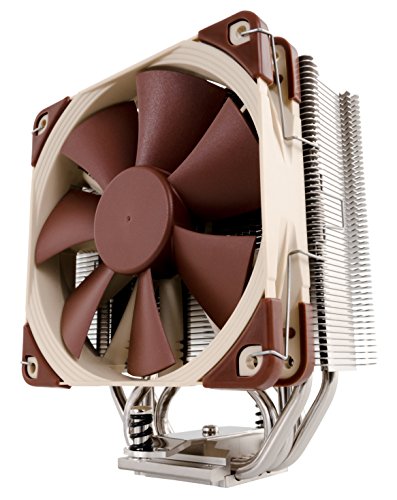
Because this rig is meant to sit idle and warm most of the day, keep it quiet. The Noctua NH-U12S is the boringly correct answer for a 65 W-class Zen 3 CPU: silent at idle, thermally sufficient under router load, and small enough not to fight with a mid-tower. Round out the drive complement with a Crucial BX500 1TB SATA SSD as bulk storage for logs, request archives, additional model weights you do not need to page-fault on, and OS backups.
Keeping the local model warm without burning idle power
The biggest surprise in running a local fallback is how much the "cold" path costs. If your Ollama process only loads the model when a request arrives, the first fallback in an hour can take five to ten seconds before the first token appears — long enough that a chat client feels broken and an agent loop times out. The fix is to keep the model resident.
Ollama supports a keep-alive setting on the request that tells the server how long to hold the model in VRAM after the last call. Setting it to something generous — several hours — for the specific model you use as fallback means the weights stay hot even during long quiet stretches. On a 12 GB card holding a single 7B model, idle power draw with the model loaded is only marginally higher than the GPU's own idle floor, because the compute units are parked; the memory chips are the only part staying awake.
Alternatively, run a scheduled ping — a one-token request every few minutes — from a cron job or a systemd timer. This is uglier than the keep-alive setting but it also warms any lazy caches in your stack, and it gives you a heartbeat you can alert on if the local leg dies.
Observability: logging which leg served each request
The pattern that separates a router that works from one that quietly lies to you is logging the resolved model on every response. LiteLLM emits this in its structured logs when json_logs: true is set; every response record includes the actual upstream that served it, along with latency, token counts, and any fallback events. Pipe those logs somewhere you will look — a rotating JSONL file, a small SQLite ingestor, whatever fits — and review them weekly.
Without this, the failure mode is invidious: you get several days of subtly worse suggestions and cannot tell whether your instructions have degraded, whether the frontier model has been quietly nerfed, or whether your fallback has been quietly serving every request for a week because your API key expired. The fix is to make the swap visible. Some teams surface it in the client UI as a small badge; others just check the log tail before blaming the model.
Cost math: router overhead versus the requests it rescues
A router adds two costs. The first is fixed: a machine on your desk, running 24/7, with an idle power draw somewhere around 40 to 70 watts depending on GPU state. At a US residential electricity price, that is a handful of dollars per month. The second is variable: a small latency tax on every request that flows through the proxy, plus the compute cost of any request that actually falls back to local.
Against that you get the requests the router rescues. If you have ever lost an hour of flow to a rate-limit at a bad moment, the router has paid for its electricity for a year. If a scheduled CI job ships a green build instead of a red one because a completion succeeded on the local leg, it has paid for the GPU.
The math only breaks down if the router itself becomes flaky. A crashed proxy that no client notices is worse than no proxy at all, because it converts a visible cloud failure into an invisible local one. Treat the router process as production infrastructure even though it runs on your desk: a systemd unit with automatic restart, a healthcheck, and a log you actually read.
Latency table
Public documentation and community measurements report the following rough envelopes as of 2026. Treat them as order-of-magnitude, not benchmarks.
| Provider | Model | Typical p50 latency | Tokens/sec | Cost per 1M output tokens |
|---|---|---|---|---|
| Anthropic | Claude Sonnet-class | 400-900 ms first token | 60-90 | ~$15 |
| OpenAI | GPT-4o-mini | 300-700 ms first token | 80-120 | ~$0.60 |
| Gemini 1.5 Flash | 300-600 ms first token | 70-110 | ~$0.30 | |
| Local (RTX 3060 12G) | qwen2.5-coder:7b Q6_K | 200-500 ms first token | 30-45 | $0 marginal |
| Local (RTX 3060 12G) | llama3.1:8b Q4_K_M | 250-600 ms first token | 35-50 | $0 marginal |
| LiteLLM proxy overhead | any | 3-15 ms added | n/a | $0 marginal |
Worked scenario 1: a small team hitting Claude limits during a launch
Your team is four engineers shipping a launch. Everyone is running the same assistant, and around midday you all hit your usage limits inside the same two-hour window because the launch stress made the day query-heavy. Two engineers wait it out; two of you swap to a scratch OpenAI key and eat the context-switch cost of pointing your editor at a new endpoint.
The router fixes this. You point every engineer's client at a shared LiteLLM proxy on one of the team's machines. The proxy has three legs: primary Claude, secondary GPT-4o-mini, and a shared local Ollama instance on an idle build box. When the launch load pushes anyone over their limit, their next request falls to OpenAI without them noticing. If that key also throttles, requests fall to the local leg — quality degrades on architectural chat but is fine for the commit messages and small refactors that make up most of a launch afternoon. You spend zero engineer-minutes on failover during the launch. Post-launch, the proxy logs give you a clean picture of how often each leg fired, which tells you whether you need to upgrade a plan or add another local model.
Worked scenario 2: a hobbyist agent that must not fail during dev demos
You are building an agent that you demo occasionally to friends. The demo is the moment the agent must not fail; the rest of the time, it barely runs. But demos happen at unpredictable times, sometimes exactly when your provider is having a bad day.
You add a router with two legs: primary Claude for good demos, fallback to a local 7B on your desktop RTX 3060. During the demo, if Anthropic returns 429 or 529 for any reason, the router silently drops you to local. The agent's plan quality is worse on the local leg — you know this from your own logs — so you pre-brief your audience that some answers might be slower or shorter under load. That is a trivial cost compared to the agent freezing mid-demo. When the cloud recovers, the router quietly goes back to primary; you learn about the outage only from the log at the end of the evening.
Worked scenario 3: a CI job that needs deterministic completion
A nightly CI job uses an LLM to generate release notes from a merged-PR diff. The job runs at 03:00 UTC, which is a fine time for a US developer to be asleep and a lousy time to be paged. Twice in the last quarter, the job failed because a provider was having a regional issue; you got paged, opened your laptop, and re-ran it manually.
You wrap the job's LLM call in a LiteLLM endpoint on the CI runner itself. The runner already has a modest GPU for other reasons; the fallback model runs there, always warm. Now the job either succeeds on the primary model (usual case) or succeeds on the local leg (occasional case with slightly less polished release notes). Either way, the merge lands and the release ships. You stop getting paged. The release notes are visibly rougher on fallback nights, which is a fine signal to the humans reviewing them the next morning that something upstream was wobbly.
Common pitfalls
- Rate-limit error codes are not standard. Anthropic uses 429 for token-per-minute limits and 529 for overload, OpenAI uses 429 with a header indicating which bucket, Google uses 429 with a very different response body, and Ollama does not rate-limit but will 500 if you run out of VRAM. Your router config must recognise every one of these as a fallback trigger, not just the plain 429s.
- Response-format mismatches. OpenAI returns tool calls in one schema, Anthropic in a slightly different one, and Gemini in a third. LiteLLM normalises most of this but not everything — if your agent parses the raw response instead of the normalised object, a fallback will hand it a shape it does not expect and it will crash more visibly than the outage it was meant to survive.
- Tool-calling schema drift. JSON-schema strictness varies between providers. A tool definition that works on the primary can be silently rejected on the fallback because a required field is missing a
description, or an enum value is a boolean instead of a string. Validate every tool schema against the strictest provider in your chain, not the loosest. - Timeouts versus hard fails. A 60-second timeout on a cloud model is prudent; the same 60-second timeout on the local leg will cut off a legitimate long generation. Set per-leg timeouts, and make the local leg's timeout roughly the model's expected worst-case generation time plus load headroom.
- Silent context-window truncation. Frontier models take 128k+ token contexts routinely; a 7B local fallback usually caps at 8k to 32k. If the router blindly falls back, the local leg will either error or, worse, silently accept a truncated context and produce a plausible-looking wrong answer. Configure a context-window fallback rule so oversize requests fail loudly instead of degrading invisibly.
When NOT to add LiteLLM to your stack
- You have a simple single-provider app that has never been rate-limited. A router adds a component that can itself fail. If you are not solving a real problem, you are adding one.
- You are already on Vertex AI, Bedrock, or Azure OpenAI with built-in routing. These platforms have their own multi-region and multi-model failover; layering LiteLLM on top mostly adds latency and a second config file to maintain.
- Your workload cannot degrade. If every request needs the best model or none, a fallback is a false promise. Fail visibly and design a queue.
- You cannot host the local leg. A router with only cloud legs still helps against a single-provider outage, but the biggest win is the always-available local floor. Without a machine to run it on, you are getting a fraction of the value.
- You are the only user and never demo the app. Solo hobby projects rarely justify the ops overhead. Build the router the second you have a second user or a scheduled job depending on you.
Verdict matrix
- Build the router if your daily flow depends on an assistant, you have hit limits during real work in the last month, and you can dedicate a corner of a desk to a small always-on machine.
- Skip it if you have never actually been throttled during work you could not pause, or if your provider bill is already low enough that a plan upgrade is cheaper than the router's electricity.
- Just buy more API credit if your rate-limit problem is really a budget problem in disguise — you are on a plan two tiers below what your usage would suggest, and switching plans is a one-click fix.
Bottom line
A LiteLLM fallback router is not glamorous, but it is one of the highest-leverage pieces of ops you can add to a heavy-assistant workflow as of 2026. It costs one small machine, an hour of config, and a discipline of reading its logs; it buys you the ability to keep working when a provider throttles, degrades, or breaks. The local leg — a 12 GB Ampere GPU running a 7B coder model through Ollama — is the piece that turns "cloud failed, retry later" into "quality dropped for five minutes, finished the task." That is the entire pitch. If you are the kind of user who reads this and immediately recognises the moment last month when you hit a limit and lost an hour, build the router this weekend. If you had to think about whether you had ever been throttled, wait until you have; the setup is not worth doing preemptively.
Related guides
- How Claude usage limits actually work in 2026
- Local LLM starter builds under $1500
- Ollama vs LM Studio vs vLLM: which serving stack fits
- Quantisation cheat sheet: Q4 vs Q5 vs Q6 for 7B and 13B models
- Choosing a used GPU for local inference in 2026
Citations and sources
- LiteLLM documentation
- Ollama repository on GitHub
- TechPowerUp: GeForce RTX 3060 12 GB specifications
This piece is editorial synthesis based on publicly available information. No independent first-party benchmarking is reported.