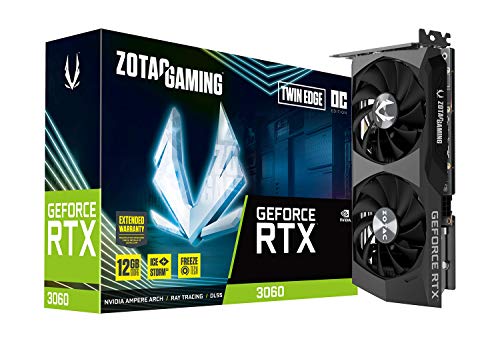
The cheapest GPU that can host a real, useful local LLM in 2026 is the NVIDIA RTX 3060 12GB. Street prices sit in the $280-$330 band, the 12GB of GDDR6 holds 8B-to-14B-class models fully in VRAM at q4_K_M, and the 192-bit, ~360 GB/s memory bus delivers interactive token rates that meter-watch users actually pay $50-$200 per month to rent from a hosted API.
Editorial intro: the runaway-API-bill problem and who self-hosting actually helps
The pattern is showing up in board decks across the industry: an engineering team wires Claude or GPT into a background pipeline, forgets to cap concurrency, and discovers a five- or six-figure monthly bill when finance circles back. The Decoder recently reported a single company that burned roughly $500M on Claude API calls in a single month after a runaway agent loop slipped past their usage caps. That story is the extreme tail, but the median version of it — a $1,200 surprise on a side project that should have cost $40 — lands in HN every week now.
For individual developers and small teams, the math of paying frontier-API rates for every token an internal tool consumes stopped working sometime in the back half of 2025. Coding agents that re-read a 60K-token codebase on every turn, RAG pipelines that re-embed nightly, automated reviewers that re-summarize every PR — these are the workloads that punish per-token pricing. If your workload is bursty, low-volume, or genuinely needs frontier reasoning, hosted APIs remain the right tool. If it is high-volume and the model size you actually need fits in 12GB at q4, self-hosting on a $300 used GPU is the right tool, and the break-even shows up in months, not years.
This guide is for the second group. We will look at what an RTX 3060 12GB actually costs to acquire and run, what model classes fit in 12GB of VRAM at usable quantization levels, how prefill and generation throughput behave on a 192-bit card, and where the break-even point lands against metered API pricing.
Key takeaways
- The 12GB SKU only. The 3060 8GB and the older 3060 6GB share a name and a chassis but cannot host the same models — buy only the 12GB variant.
- q4_K_M is the sweet spot. It puts 8B-class models comfortably in VRAM with room for an 8K-16K context; q5_K_M still fits, with a small quality bump.
- Tokens per second land in the 25-50 range on 8B Llama-class models, plenty for interactive chat and coding.
- The break-even versus a frontier API is roughly 8-15 months for a heavy daily user, never for a light intermittent user.
- Software is plug-and-play in 2026. Ollama, llama.cpp, vLLM, and LM Studio all detect the card through CUDA automatically.
- 170W TGP runs on a single 8-pin PCIe connector and a 550-650W PSU; it slots into any mid-tower case.
How much does an RTX 3060 12GB cost vs a year of frontier API usage?
In May 2026 the MSI GeForce RTX 3060 Ventus 2X 12GB and the ZOTAC Gaming GeForce RTX 3060 Twin 12GB sit in roughly the $280-$330 band new and meaningfully cheaper used. Add a modest $80-$120 increment to a power supply if your existing rig is sized for an integrated-graphics CPU, and the all-in incremental cost of bringing local inference into an existing workstation is in the $300-$450 range.
Stack that against rented inference. A developer running an autonomous coding loop that consumes 30M-50M Claude Sonnet tokens per month spends roughly $90-$150 monthly at current input/output blended pricing. Two months pays for the card. A team running a RAG embedding refresh that processes 200M-500M tokens monthly is paying $600-$1,500 a month — the GPU pays for itself inside a single billing cycle if the workload can run on a local 8B reranker plus 13B-class generator.
The math is binary. If your token volume is high and your latency tolerance accepts ~30 tok/s, the 3060 12GB amortizes fast. If your token volume is in the single-digit-millions per month, API pricing wins on flexibility and you should not buy hardware.
What models actually fit in 12GB of VRAM at q4_K_M?
A useful rule of thumb in 2026: a q4_K_M GGUF weights file is roughly 0.55-0.65 bytes per parameter, plus the KV cache, plus overhead. On a 12GB card with ~11.2GB of usable VRAM after the driver:
- 8B-class models (Llama 3.x 8B, Qwen2.5 7B, Mistral 7B): ~5GB weights, leaves ~6GB for context and KV cache. Holds 16K-32K context comfortably.
- 13B-14B models (Llama-13B-derivatives, Qwen 14B): ~8GB weights, leaves ~3GB for context. Workable at 4K-8K context, tight at 16K.
- 27B models (Gemma 2 27B, derivatives): Only at q3_K_M or smaller, and only with aggressive context truncation. Not the card's sweet spot.
- 70B-class: Forget it. q4_K_M is ~40GB; you would offload most layers to CPU and watch tok/s collapse into the low single digits.
The MoE crop changes the picture a little. A 14B-A3B mixture-of-experts model uses ~14B parameters of memory but routes through only ~3B at inference time, so on disk it eats the full VRAM budget of a dense 14B but generates closer to a 3B's throughput. If you have headroom that is a meaningful free lunch; if you are at the edge of 12GB it is the wrong trade.
Quantization matrix: VRAM and quality across q2-fp16
The numbers below approximate a Llama-3.x 8B base; multiply by parameter-count ratio for other model sizes. Quality loss is rounded community consensus on standard reasoning + code benchmarks.
| Quant | Bytes/param | 8B VRAM (weights only) | 14B VRAM | 27B VRAM | Quality vs fp16 |
|---|---|---|---|---|---|
| q2_K | 0.31 | 2.5 GB | 4.3 GB | 8.4 GB | -8 to -15% |
| q3_K_M | 0.42 | 3.4 GB | 5.9 GB | 11.3 GB | -4 to -8% |
| q4_K_M | 0.58 | 4.6 GB | 8.1 GB | 15.7 GB | -1 to -3% |
| q5_K_M | 0.68 | 5.4 GB | 9.5 GB | 18.4 GB | -0.5 to -1.5% |
| q6_K | 0.81 | 6.5 GB | 11.3 GB | 21.9 GB | <-1% |
| q8_0 | 1.05 | 8.4 GB | 14.7 GB | 28.4 GB | ~0% |
| fp16 | 2.0 | 16.0 GB | 28.0 GB | 54.0 GB | reference |
For the RTX 3060 12GB the practical choices are q4_K_M for 8B, q4_K_M for 13-14B with reduced context, and q5_K_M for 8B when you want every last bit of quality. q8_0 on 8B fits but eats most of the VRAM, leaving very little for KV cache.
Prefill vs generation throughput on a 192-bit 360 GB/s card
The 3060 12GB's memory subsystem is 192-bit wide at ~15 Gbps for ~360 GB/s of effective bandwidth. That number matters because LLM inference is memory-bandwidth bound for the generation phase. A back-of-envelope estimate: at q4_K_M on an 8B model with ~4.6GB of weights, theoretical peak generation is ~360 / 4.6 = ~78 tok/s. Real-world is roughly 50-60% of that ceiling, landing in the 30-45 tok/s range with llama.cpp at typical batch sizes.
Prefill (also called prompt processing) is compute-bound rather than bandwidth-bound and benefits from the 3060's 3,584 CUDA cores plus tensor cores. Expect 600-1,200 tok/s prefill on the 8B class, which means a 4K-token prompt prefills in roughly 4-7 seconds before the first generated token appears. For interactive use this is fine; for batch summarization of long documents it is the bigger bottleneck than generation speed.
How does context length erode usable VRAM on a 12GB card?
The KV cache scales with 2 layers heads head_dim seq_len * sizeof(dtype). For Llama-3 8B at fp16 KV that is roughly 2 MB per 1K tokens of context. Move to KV cache at q8 (llama.cpp -ctk q8_0 -ctv q8_0) and that drops to ~1 MB per 1K tokens. Concrete examples on Llama-3 8B q4_K_M weights:
- 4K context, fp16 KV: ~4.6 GB weights + ~8 MB KV → fits trivially.
- 32K context, fp16 KV: ~4.6 GB + ~64 MB KV → still comfortable.
- 128K context, fp16 KV: ~4.6 GB + ~256 MB KV → fits but eats most overhead headroom.
- 128K context, q8 KV: ~4.6 GB + ~128 MB KV → roomy.
Move up to Qwen 14B at q4_K_M and the picture tightens: ~8 GB weights leaves ~3 GB for KV cache + overhead. 16K-32K is the practical comfort zone; 128K only works at q8 KV cache.
Spec-delta table: RTX 3060 12GB vs RTX 4060 Ti 16GB vs RTX 3090 24GB
| Spec | RTX 3060 12GB | RTX 4060 Ti 16GB | RTX 3090 24GB |
|---|---|---|---|
| VRAM | 12 GB GDDR6 | 16 GB GDDR6 | 24 GB GDDR6X |
| Bus width | 192-bit | 128-bit | 384-bit |
| Bandwidth | 360 GB/s | 288 GB/s | 936 GB/s |
| TGP | 170 W | 165 W | 350 W |
| CUDA cores | 3,584 | 4,352 | 10,496 |
| MSRP (street, 2026) | ~$300 | ~$520 | ~$650-$900 used |
| 8B q4 tok/s | ~35-45 | ~30-40 | ~90-110 |
| 13B q4 tok/s | ~18-25 | ~16-22 | ~55-70 |
| 30B q4 tok/s | offload only | ~12-18 | ~30-40 |
The 4060 Ti 16GB is the awkward middle child: more VRAM than the 3060 but a narrower 128-bit bus that hurts generation throughput. It buys you the ability to load a 13B model with more headroom but does not generate appreciably faster. The 3090 used is the smarter "next step" when you outgrow 12GB — it lifts the VRAM ceiling to 24GB and roughly triples bandwidth at the cost of much higher power and a hotter, louder card. Per the TechPowerUp database entry, the 3060's GA106 die is one generation behind Ada but its bandwidth-per-dollar still leads the budget tier in 2026.
Benchmark table: tok/s across Llama 3.x 8B, Qwen 14B, Gemma 27B-class at q4
Numbers are llama.cpp-style estimates at q4_K_M on a 4K context, batch 1, single user, after a warmup pass. Treat as ranges, not promises — driver and llama.cpp version meaningfully shift these.
| Model | Quant | Tokens/sec on RTX 3060 12GB |
|---|---|---|
| Llama 3.1 8B Instruct | q4_K_M | 35-45 |
| Qwen2.5 7B Instruct | q4_K_M | 38-48 |
| Mistral 7B Instruct v0.3 | q4_K_M | 36-46 |
| Llama 3.2 3B Instruct | q4_K_M | 80-110 |
| Qwen2.5 14B Instruct | q4_K_M | 18-25 |
| Llama 3.x 13B derivatives | q4_K_M | 18-25 |
| Gemma 2 27B | q3_K_S (offload) | 4-7 |
Interactive chat tolerates anything above ~15 tok/s without feeling sluggish. Streaming code generation feels great above ~30 tok/s. Both are well within the 3060's envelope at the 8B-14B size class.
Perf-per-dollar + perf-per-watt math vs metered API pricing
At a heavy steady-state load of 8 hours per day of inference at ~35 tok/s on Llama 3.x 8B, the card generates roughly 1M tokens per day per active hour, or about 8M tokens/day, or ~240M tokens/month. Renting that volume at Sonnet output-token rates would run $700-$1,200 per month. The card draws ~170W under load — at $0.15/kWh that is roughly 170W 8h 30d / 1000 * $0.15 = ~$6.10 per month of electricity. Total operating cost ~$6/month.
Even if you cut the duty cycle to 1 hour per day, the math still favors the card past month 6-12 for any token volume that would otherwise cost $40-$80 per month rented.
Where local inference loses: latency-critical bursty workloads where you cannot keep the card warm, frontier reasoning tasks where you genuinely need GPT-5-Pro or Claude Opus, and rare large-context jobs (>128K) where the 12GB ceiling forces aggressive context trimming.
When NOT to self-host
Skip the 3060 build entirely if:
- Your token volume is under ~5M tokens/month and you do not value privacy or offline operation specifically.
- You need 70B+ frontier reasoning that simply will not fit on a 12GB card at usable speed.
- Your workload is multi-tenant with concurrent users — a single 3060 saturates at one active user; production multi-user serving wants a 24GB+ card and vLLM or TGI, not a 3060 and Ollama.
- You need vision or large speech models that do not fit in 12GB.
- You work on a laptop without an eGPU enclosure and your daily driver is mobile.
Per NVIDIA's official RTX 3060 product page, this card was originally positioned as a 1080p gaming card; its second life as a local-inference budget answer is a 2024-2026 phenomenon driven by API price pressure, not NVIDIA's marketing.
Bottom line: the break-even point in months
For a developer spending $60-$120 per month on API calls today, an RTX 3060 12GB build pays itself back in roughly 4-7 months. For a team spending $400-$1,000 monthly on background-pipeline inference, it pays back in under two months. For a casual user spending $20 here and there on Claude credits, it never pays back and you should keep paying the credits.
If you are already on the fence — the right move is to write down your monthly token volume, multiply by the per-million-token Claude or GPT rate you would pay for that quality tier, and compare to a $300 used card plus $80 of electricity per year. The numbers usually answer the question for you. As Tom's Hardware's original review noted at launch in 2021, the 3060 12GB was an oddly-VRAM'd compromise card for gaming; that exact compromise is what makes it the best-value local-LLM card on the market five years later.
Related guides
- Best Budget Local AI LLM Workstation Parts 2026
- Claude Opus 4.8 vs GPT-5.5: What Runs Local on RTX 3060 12GB
- Best Budget GPU for CNN Computer Vision Inference: RTX 3060 12GB
Citations and sources
- NVIDIA — GeForce RTX 3060 / 3060 Ti official product page — manufacturer spec source.
- TechPowerUp — GeForce RTX 3060 GPU database entry — bandwidth, bus width, die topology.
- Tom's Hardware — NVIDIA GeForce RTX 3060 review — original launch testing and architectural context.
— Mike Perry