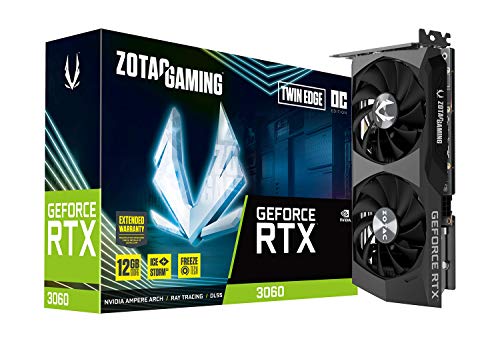
A used NVIDIA RTX 3060 12GB rig running an 8B-to-14B model locally on Ollama usually beats steady cloud API spend somewhere in the tens of millions of tokens per month, with break-even arriving fastest for batch and chat workloads that keep the GPU saturated. Spiky use, frontier-tier reasoning, and very long-context jobs still tilt back toward the cloud — but for a lot of working developers, repatriating to a single $300 card is a real escape valve from runaway bills in 2026.
The bill that keeps growing
If you have spent any time in startup or enterprise AI Slack channels in 2026, you have probably watched the same conversation play out twice a week: a team turned on an agent, forgot to cap usage, and burned through more in monthly API spend than the rest of their infrastructure put together. The Decoder reported one company that reportedly spent around $500 million on Claude in a single month after failing to set sensible limits (The Decoder). That is an extreme, but the long tail underneath it is more common than anyone wants to admit: $20K here, $80K there, a six-figure surprise at the end of the quarter, all because token consumption scaled with how much the team actually used the tool.
The cloud price per million tokens has been falling for two years, and the major providers genuinely have made it cheaper than self-hosted equivalents for most occasional users. The problem is that the math flips fast when consumption is steady. A team that runs continuous indexing, batch summarization, agentic loops, or any workflow that keeps a model busy more or less around the clock starts to look at a $300 used GPU and a $0.12/kWh power bill and asks the obvious question: why are we still paying per token?
This article is the buyer's-guide-for-spreadsheets version of that question. We are going to look at what a used MSI RTX 3060 Ventus 2X 12G or a ZOTAC RTX 3060 Twin Edge OC 12GB actually runs in 2026, what models fit in 12GB at usable quality, where the break-even token volume sits against blended cloud rates, and where the cloud still wins. The hardware is intentionally cheap — these are the cards you can find under $300 used today, paired with a Ryzen 7 5700X or a Ryzen 7 5800X on AM4 — because the whole point is that you do not need a flagship build to take a meaningful chunk of cloud spend off the board.
Key takeaways
- A used 12GB RTX 3060 sits in the $260–$320 range in 2026; the card plus a basic AM4 build comes in under $700 all-in.
- An 8B model at q4_K_M to q6 is comfortable, with room for 8K context; a 13–14B coder model fits at q4_K_M with a shorter window.
- At a blended cloud rate of about $2–$5 per million tokens, break-even arrives between roughly 30M and 80M generated tokens per month for a 3060 running a quantized 8B model.
- The cloud still wins for frontier-tier reasoning, very long context (64K+), bursty load, and teams without ops capacity to babysit a runtime.
- KV-cache VRAM is the silent killer — at 16K context an 8B model can spend nearly as much VRAM on cache as on weights.
How much does a cloud API bill actually cost per million tokens?
The 2026 picture for blended input + output pricing across the popular tiers looks roughly like the table below. Generated (output) tokens are typically the cost driver; input tokens are cheaper but not free. Treat these as rounded reference values — actual contracts vary, and frontier models keep moving — and read the Anthropic pricing page or your provider's current rates before you build a real model.
| Tier | Example | $/1M input | $/1M output |
|---|---|---|---|
| Frontier reasoning | Claude Opus 4.7 | ~15 | ~75 |
| Strong general | Claude Sonnet 4.6, GPT-4.1 | ~3 | ~15 |
| Cheap-and-cheerful | Haiku 4.5, GPT-4.1-mini | ~0.80 | ~4 |
| Open-source on cloud | Llama 3.1 70B hosted | ~0.50 | ~0.80 |
If your traffic is mostly cheap-and-cheerful — short chat, summarization, classification — you are already paying close to the cheapest cloud tier and the break-even against local is harder to hit. If you are hitting strong-general for agentic loops with thousands of tokens of context per turn, the math changes quickly. The $500M figure that made headlines was almost certainly a frontier-tier bill driven by agent runs that recursively re-ingested context, which is exactly the workload local hardware now handles cleanly if you accept a more modest model.
What can an RTX 3060 12GB realistically run locally?
The 12GB RTX 3060 has 12 GB GDDR6, 192-bit memory bus, and roughly 360 GB/s of memory bandwidth, with 3,584 CUDA cores and a 170W TGP (TechPowerUp). For decoder-only LLM inference, the bottleneck on this card is almost always memory bandwidth and VRAM capacity, not raw compute, which is why a midrange Ampere card with 12GB outperforms its launch reputation here.
What that means in practice:
- 7B models at q4_K_M to q6 run comfortably with a 4K–8K context window and plenty of headroom.
- 8B models at q4_K_M to q5 are similar — they comfortably fit in VRAM with usable context.
- 13B and 14B models fit at q4_K_M and a shorter context window (4K is fine; 8K starts to squeeze).
- 27B and 32B class models do not fit in 12GB at any quality you would call usable; that is RTX 4090 / 5090 / used 3090 24GB territory.
For most repatriation cases — chat, summarization, classification, code edits in a single file, retrieval-augmented Q&A — the 7B–14B band covers the workload. Beyond that you are paying for either the next card up or for the cloud's frontier tier.
Spec table: RTX 3060 12GB vs cloud tiers
| Tier | VRAM (or context) | Typical tok/s (8B/14B) | Approx $/1M output | Latency (first token) |
|---|---|---|---|---|
| RTX 3060 12GB local | 12 GB GDDR6 | ~45 / ~22 | amortized | 80–150 ms |
| Cheap-and-cheerful cloud | — | (api) | ~4 | 200–500 ms |
| Strong general cloud | — | (api) | ~15 | 300–700 ms |
| Frontier reasoning cloud | — | (api) | ~75 | 600 ms–2 s |
| Used 3090 24GB local | 24 GB | ~80 / ~50 | amortized | 60–120 ms |
The tok/s numbers are typical aggregate figures for q4_K_M quantization on a single 3060 with prompts in the low-thousands-of-tokens range. They scale down with context length and up with shorter prompts. The cloud latency numbers include network round-trip, which a local card sidesteps.
Quantization matrix: what costs you what
Quantization is the single biggest lever for getting a useful model into 12GB. The table below pairs common GGUF quantization levels with rough VRAM footprint for an 8B and a 14B model, and a note on quality loss versus fp16. Numbers are approximate and depend on the specific model file.
| Quant | 8B VRAM | 8B tok/s | 14B VRAM | 14B tok/s | Quality vs fp16 |
|---|---|---|---|---|---|
| q2_K | ~3.5 GB | ~55 | ~5.5 GB | ~32 | noticeable degradation |
| q3_K_M | ~4.3 GB | ~52 | ~7.0 GB | ~28 | small but visible |
| q4_K_M | ~5.0 GB | ~48 | ~8.3 GB | ~24 | sweet spot |
| q5_K_M | ~5.8 GB | ~44 | ~9.6 GB | ~21 | near-lossless on most tasks |
| q6_K | ~6.7 GB | ~40 | ~11.1 GB | ~18 | very close to fp16 |
| q8_0 | ~8.6 GB | ~33 | does not fit | — | essentially fp16 |
| fp16 | ~16 GB | does not fit | — | — | reference |
The line you want to draw on this table is q4_K_M for production-style use. It is the level most teams settle on, the one most benchmarks treat as the realistic "local" baseline, and the one that leaves enough headroom for a useful context window.
Prefill vs generation: the throughput you actually feel
Token-per-second numbers usually report generation throughput, which is what the model spits out after it has finished reading the prompt. Prefill — ingesting the prompt itself — is a separate, often-overlooked cost. On a 3060 prefill is roughly 6–10× the speed of generation per token, but you pay it once per turn against the entire input.
For interactive chat with short prompts you barely notice. For agentic coding loops or retrieval-augmented setups that stuff a 4K–8K-token prompt into every turn, prefill becomes the dominant latency. A 3060 chugging through 6K tokens of context before it starts generating can feel sluggish even when the steady-state tok/s looks fine. This is why "I ran the same model on a 3060 and a 4090, the 3060 felt twice as slow even though the tok/s gap was 1.4×" reports are so common in r/LocalLLaMA — the prefill gap was the real difference.
Context-length impact: KV-cache eats VRAM
The KV-cache cost on a 12GB card is the constraint everyone discovers the hard way. For an 8B model at q4_K_M, rough KV-cache VRAM at fp16 cache works out to:
| Context | KV-cache VRAM | Weights VRAM | Total |
|---|---|---|---|
| 2K | ~0.5 GB | ~5.0 GB | ~5.5 GB |
| 4K | ~1.0 GB | ~5.0 GB | ~6.0 GB |
| 8K | ~2.0 GB | ~5.0 GB | ~7.0 GB |
| 16K | ~4.0 GB | ~5.0 GB | ~9.0 GB |
| 32K | ~8.0 GB | ~5.0 GB | ~13.0 GB (overflows 12GB) |
Two practical implications. First, an 8B model at 16K context fits comfortably with headroom; 32K starts to spill. Second, switching to a quantized KV cache (e.g., q8_0 cache) roughly halves these numbers and lets you push to 32K on a 12GB card with a small but real quality cost. For the kinds of workloads that are easiest to repatriate, 8K is usually plenty.
Break-even math: how many tokens before local wins?
Build a simple model. Fixed cost: $300 used 3060 + ~$200 of donor PC parts amortized over 36 months = roughly $14/month. Variable cost: 170W board power at $0.12/kWh = $0.0204/h, or about $14.70/month if the card is busy 24/7. So call it $25–$30/month all-in for steady use, before any cooling overhead.
At $3/1M output tokens (cheap-and-cheerful cloud), $30/month buys you 10M output tokens. A 3060 generating at ~45 tok/s for an 8B q4_K_M model produces roughly 0.16M tokens/hour or ~3.9M tokens/day if saturated — so the card hits 10M tokens in about 60 hours of effective use per month. That is not many. Push to a $15/1M output rate (strong-general cloud) and break-even falls under 12 hours/month of effective use.
The honest answer for most repatriation candidates: if your team has any workload where a single model is generating output most of the working day, the 3060 has already broken even on cloud cost. The savings are largest when the cloud bill is being driven by strong-general or frontier-tier traffic that locally fits within an 8B–14B quantized model.
Perf-per-dollar and perf-per-watt
The 3060 is not the fastest card per watt — Ada Lovelace cards win that one — but per dollar it is excellent. A 3090 24GB used at ~$650 doubles VRAM and roughly doubles tok/s, so its $/tok at steady-state is close. An RTX 5060 Ti 16GB is a cleaner new-card pick at higher cost. The 3060 wins when your decision is "do I want to escape cloud bills cheaply?" rather than "do I want the best perf-per-watt on the market?"
For a single card on a desk, 170W is well within what any midrange PSU and AM4 build can deliver — no rewiring or 12VHPWR adapter drama. A Ryzen 7 5700X or Ryzen 7 5800X at ~65–105W TDP with 32 GB of system RAM rounds out a workable host without breaking the budget.
When NOT to repatriate
Self-hosting is not free even when the hardware is. Some honest no-go cases:
- Frontier reasoning — chain-of-thought heavy work that genuinely needs Opus-class or Gemini-Pro-class output quality is not going to come out of a quantized 14B model.
- Spiky load you cannot keep saturated — if your real demand is 10 minutes of burst per day, you will not amortize the hardware against the cloud bill.
- Very large context windows — beyond ~16K on a 12GB card you are juggling KV-cache quantization tradeoffs that most teams should not own.
- No ops time — somebody has to keep the runtime, drivers, and models updated. If that hour per week does not exist, the cloud is paying for itself in convenience.
- Compliance and DR — a single card on a desk is not a disaster-recovery story; the cloud's redundancy is real.
The strongest case for local is the boring one: a steady, mid-tier workload that you understand well, that you want to keep private, and that is currently consuming most of a working day on a metered API. Cut into that with a $300 card and a quantized 8B and the bill drops to electricity.
Bottom line
The repatriation case in 2026 is not about getting frontier quality on the cheap. It is about recognizing that for a large class of real workloads — chat, summarization, code edits, classification, retrieval-augmented Q&A — a quantized 8B–14B model on a used 12GB RTX 3060 produces output you can actually ship, at a marginal cost of electricity. If your cloud bill is driven by steady token volume rather than burst frontier requests, a single card on a desk pays back in months. If your bill is driven by Opus-tier reasoning, keep paying the cloud and use the local card for everything that does not need it.
Related guides
- Best Parts for a Budget Ryzen + RTX 3060 Gaming PC Build in 2026
- Ollama vs llama.cpp vs vLLM on an RTX 3060 12GB: Fastest Runtime?
- Claude Opus 4.8 Tops the Intelligence Index — How Close Can a $300 RTX 3060 Get Locally?
- Best GPU for Running 27B-32B Local LLMs in 2026