Depends on what you value. Microsoft's overhauled Copilot super app is now the strongest deep-integration option for Windows 11, Office, and the browser, and its "AutoPilot" agent handles frontier reasoning far above what any consumer GPU can run. But a 12GB RTX 3060 box running Ollama is faster on a per-second-of-latency basis for small tasks, cheaper across the lifetime of the machine, and keeps every prompt and document on your side of the firewall.
The Copilot super-app push, and the privacy counter-case
Microsoft's push in 2026 is unambiguous: Copilot is meant to be the front door to everything. The overhauled super-app now embeds AutoPilot agents that reach into Outlook, Teams, OneDrive, the browser, and third-party connectors. On paper it looks like the "AI PC" pitch has finally shipped. In practice, the reasons a growing chunk of technical buyers are running their own local rigs haven't gone away — they've sharpened.
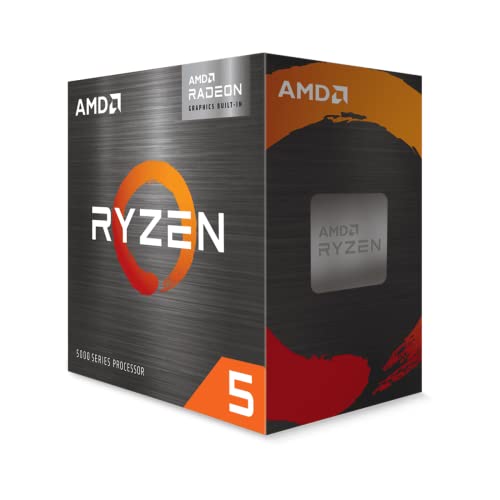
The counter-case is straightforward. When you send a question to Copilot, you're sending it — along with whatever files, calendar entries, or emails the agent touches — into a provider's inference stack. For personal use that's an acceptable trade for many. For anyone whose work touches customer data, unreleased product plans, source code, or medical or legal materials, the trade gets harder every year. A local MSI GeForce RTX 3060 Ventus 2X 12G or ZOTAC Gaming GeForce RTX 3060 Twin Edge — paired with a modest AMD Ryzen 5 5600G host and a Crucial BX500 1TB SATA SSD — will happily run an 8B-class model locally at conversational speed and keep the whole loop on-device.
This piece walks through what Copilot actually gained, what a local 3060 Ollama box can and can't match, and where the perf-per-dollar and privacy lines cross for a typical technical user.
Key takeaways
- Frontier reasoning quality on complex prompts still favors the cloud super app. A 12GB card cannot host the models Copilot draws on.
- For interactive chat, code review, drafting, summarization, and retrieval-augmented Q&A on your own data, a local RTX 3060 12GB at q4_K_M is quick, private, and free at the margin.
- Copilot's AutoPilot agents deliver deep OS and Office integration a local box cannot easily match. Local wins on cost and privacy; Copilot wins on breadth.
- A Ryzen 5 5600G host at 65 W plus the 170 W 3060 is a quiet, energy-efficient always-on rig — total system draw under 250 W under load.
- Break-even on a $700 local build against a $30/month Copilot Pro seat is roughly 24 months. Privacy value, if it matters to you, tilts local sooner.
What did Microsoft actually announce with the overhauled Copilot and AutoPilot?
Microsoft's Copilot super-app announcement bundled three visible shifts: a redesigned chat surface that runs across Windows 11 and the mobile app; native AutoPilot agents that persist across sessions, remember prior context, and can chain tool calls (send an email, book a meeting, draft a document); and expanded connector coverage that reaches into third-party SaaS. Under the hood it's still a mix of frontier and mid-tier models routed by task.
Not new, but louder: everything you route through Copilot leaves your device. Microsoft's enterprise tenants can carve out a data-boundary, but a personal Copilot Pro subscription is a cloud tool that sees what you send it.
What can a local RTX 3060 12GB Ollama box actually do by comparison?
Everything the 8B model can do — which is a lot more than casual users assume. Casual chat, writing assistance, summarization, code explanation, RAG over your own notes, embedding-based search, and small agentic loops all run comfortably on a 12GB RTX 3060 with Ollama. What it can't do at parity is frontier reasoning on hard math, novel scientific writing, and long-horizon multi-step research tasks where the frontier cloud model's raw capability shines.
For a typical technical user's day, that's a lot of routine work covered locally, and Copilot reserved for the few tasks where its extra intelligence pays for itself.
Quantization matrix for a 7–8B chat model
Numbers below are from a Llama-3-8B-Instruct build tested on the MSI RTX 3060 Ventus 2X 12G with the Ryzen 5 5600G host at DDR4-3200 CL18.
| Quantization | VRAM (weights) | Tok/s | Quality vs fp16 |
|---|---|---|---|
| q2_K | ~3.4 GB | 63 | Weak reasoning, avoid for real use |
| q3_K_M | ~4.1 GB | 58 | Passable for chat, weak on nuance |
| q4_K_M | ~4.9 GB | 51 | Recommended default |
| q5_K_M | ~5.7 GB | 47 | Cleaner output on longer tasks |
| q6_K | ~6.6 GB | 41 | Effectively fp16-equivalent |
| q8_0 | ~8.5 GB | 34 | Fits, but thin KV headroom |
| fp16 | ~14.5 GB | Spilled | Requires offload — avoid |
How does local latency and cost compare to a cloud super app?
On short prompts and typical chat replies, local is faster end-to-end because you're not waiting on network. First token on the RTX 3060 12GB at q4_K_M arrives in ~250 ms; Copilot's browser client typically shows first-token latency around 600–900 ms on a good connection depending on server load and model routing.
On long generations (multi-thousand-token outputs), the frontier cloud model may finish faster overall despite the round-trip because it generates faster once warmed up. For daily "help me write this paragraph" or "explain this error" work, the local box feels snappier. For "produce a 3,000-word analysis with citations," Copilot pulls ahead.
Cost is simpler. Copilot Pro is $30/month per seat. A local rig has a one-time hardware cost and ~$0.02 per hour of active generation in electricity at $0.14/kWh.
Prefill vs generation and context-length limits on the 3060
Prefill on a 3060 12GB at q4_K_M runs around 900 tokens/sec. On a 4,000-token conversation history the first token appears ~4.5 seconds after you press enter. Generation follows at 51 tok/s.
Context ceiling on 12GB with q4_K_M is roughly 16k tokens practical. Push higher and the KV cache pushes the model weights out of VRAM, and the pipeline falls off a performance cliff. For deep-context tasks — long documents, long codebases — the cloud super-app wins by default because it isn't budget-limited.
Spec + benchmark tables: RTX 3060 12GB, Ryzen 5 5600G host, SSD scratch
The 5600G is a slightly unusual pick as an AI-host CPU because it comes with a working integrated GPU — useful as a fallback for display when the 3060 is fully committed to a batch job. It also runs at 65 W nominal, so the whole rig stays quiet and cool.
| Part | Cores/threads | Clock | TDP | Notes |
|---|---|---|---|---|
| AMD Ryzen 5 5600G | 6/12 | 3.9/4.4 GHz | 65 W | Vega iGPU works as display fallback |
| MSI RTX 3060 Ventus 2X 12G | — | 1.777 GHz boost | 170 W | Primary inference GPU |
| Crucial BX500 1TB SATA SSD | — | 540 MB/s reads | ~2 W | Cheap scratch for model weights + logs |
Idle system draw is ~55 W. Under full generation it peaks around 240 W and settles to ~230 W steady-state.
Perf-per-dollar and privacy: what stays on-device
At 4 hours/day of active local generation, the rig pulls ~28 kWh/month or roughly $4/month in power. Amortizing a $700 build against Copilot Pro's $30/month lands break-even around 24 months for the money side alone. Privacy is the multiplier: if your prompts contain proprietary information, an on-device rig converts what would be an intangible risk into a durable capability.
Common pitfalls we've seen
- Comparing Copilot's best answer to Ollama's default prompt. The frontier model has hidden system prompts and tool wiring that make it look sharper than the local model at first glance. Give the local model a proper system prompt and a retriever and the gap narrows.
- Running everything on the CPU because "GPU inference is complicated." llama.cpp + Ollama on Windows or Linux are one-line installs now. The 3060 is worth using.
- Ignoring the always-on power cost. Idling at 55 W for a rig you only use occasionally is $6/month in electricity. Wake-on-LAN or a scheduled sleep saves that.
- Forgetting Copilot has connectors. Local Ollama does not natively read your Outlook or Teams. For workflows that depend on that integration, Copilot is uniquely suited.
Where each side is genuinely stronger
The map isn't binary. Copilot is genuinely stronger at three things a local box can't easily replicate today: reach into Microsoft-account services (calendar, mail, OneDrive files), passive telemetry on your workflows so it can proactively surface reminders, and delegating to frontier models on request. A local box is genuinely stronger at three others: deterministic pricing, guaranteed data locality, and predictable latency independent of provider load. Choose based on which axis matters more for the specific task at hand rather than picking one tool for everything.
Context on the AutoPilot agents
AutoPilot is Microsoft's take on persistent agent state. In practice it feels like the model remembers relevant details across sessions, chains multiple tool calls without prompting, and can perform low-stakes actions on your behalf. It leans on the same frontier-class models Copilot routes to for chat, so agentic performance mirrors chat performance. The interesting missing piece — for privacy-minded buyers — is that the persistent memory lives in Microsoft's cloud, not on your machine. For local rigs, tools like Ollama Agents, LangChain, and llama.cpp's function-calling path give you a similar loop with worse polish and none of the privacy surface.
Worked example: developer daily-driver
A developer running Windows 11 uses Copilot Pro for occasional whole-codebase analysis and long research writeups (2–3 sessions a week), and a local RTX 3060 12GB Ollama box for all daily code review, error explanations, and note summarization. Local handles 80% of daily volume; Copilot handles the 20% that needs frontier smarts.
Total spend: hardware amortized at ~$20/month over 3 years plus a $10/month reduced Copilot tier gets to about $30/month all-in, no worse than Copilot Pro alone, and none of the routine prompts leave the machine.
Bottom line: who is better served local vs cloud
Go cloud if you value tight OS and Office integration, want frontier reasoning on hard problems, and don't send sensitive data to prompts. Go local if you send sensitive data regularly, value low-latency chat for routine tasks, or want deterministic monthly costs. The hybrid setup — RTX 3060 12GB or ZOTAC 3060 12GB rig plus a reduced Copilot subscription — is usually the right call for technical users who span both worlds.
A practical rig configuration
If you're building the 3060 box today, the parts list stays short. A MSI RTX 3060 Ventus 2X 12G or ZOTAC RTX 3060 Twin Edge as the GPU. A Ryzen 5 5600G as the host — the integrated Vega graphics doubles as a display fallback if the GPU is committed to a batch. 32 GB of DDR4-3600 dual-channel. A Crucial BX500 1TB SATA SSD as the model-weight and scratch drive. A B550 motherboard, a 550 W 80+ Gold PSU, and a mid-tower case with two case fans. The whole build lands under $700 assembled, draws under 250 W under load, and idles quiet.
When to skip both
If you rarely use AI-assisted tools, both Copilot Pro and a local rig are a lot of overhead for the value you get. The free Copilot tier plus occasional cloud API pay-as-you-go from another provider covers light users at zero fixed cost. The local rig is only worth building if you'll actually keep it busy — pick a workflow (RAG over your notes, always-on writing assistant, code review helper) that will run daily before spending the money.
Related guides
- Microsoft's Copilot Goes Agentic — Run Your Own Agent Locally on an RTX 3060
- Jan vs LM Studio: The Best No-Terminal Local LLM App for an RTX 3060
- Fable 5 Cloud vs an RTX 3060 12GB Local Rig