The RTX 3060 12GB runs Ollama's 7B and 8B models at 40–55 tok/s and its 13B–14B models at 18–24 tok/s — all at q4_K_M, no CPU offload. The 12GB VRAM ceiling is what makes the difference: 8GB cards fall off the 13B tier entirely, and 24GB cards start unlocking 30B territory. If your ceiling is "run local Llama 3, Qwen 3, and Mistral for chat, coding, and RAG," the 3060 12GB is the price/perf sweet spot.
Why the 12GB RTX 3060 became the default entry point for Ollama
Ollama is the friendliest way to run open-weight LLMs on a personal machine. Install, ollama pull llama3, ollama run llama3 — you're chatting in under two minutes. The GPU tier that Ollama users converge on most consistently is the RTX 3060 12GB, and the reason isn't nostalgia. It's the cheapest new-in-box card with enough VRAM to run the 7B–14B models that dominate the community's daily-driver charts.
The 8GB tier (RTX 3050, 3060 Ti 8GB, 4060, 5060) falls off the useful curve the moment you try a 13B model. A Llama 2 13B checkpoint at q4_K_M is roughly 7.9 GB just for weights, before allocating a single KV-cache token. Anything with an 8GB frame buffer either offloads layers to CPU (dropping to 5–8 tok/s) or forces you into q3/q2 (which visibly degrades output quality). The 3060 12GB sidesteps both traps: q4_K_M for 13B fits with headroom.
The next tier up — the RTX 3090 24GB or the new RTX 5070 Ti Super — costs 2–3× the 3060 and unlocks 27B/32B models, which are noticeably smarter but slower and heavier. That's a real upgrade for someone who's outgrown the 12GB card, but it's not where most new Ollama users should start. Per the TechPowerUp GPU database, the 3060 12GB pushes 360 GB/s of memory bandwidth over a 192-bit bus — plenty to keep 13B q4 generation flowing without stalls.
The rest of this article maps out exactly what runs, how fast, and where the 12GB card's ceiling actually sits.
Key takeaways
- 7B/8B q4_K_M: 40–55 tok/s, generous context (16K+), the sweet spot.
- 13B/14B q4_K_M: 18–24 tok/s, 8K context comfortable, no CPU offload.
- 7B q8_0: ~30 tok/s, near-full-precision quality on the 3060 12GB.
- Above 14B parameters: requires heavy quantization + partial offload; consider a used RTX 3090 24GB instead.
- Ollama releases ship frequently — keep the daemon current for the latest KV-cache and Flash Attention wins.
- The 3060 12GB has enough VRAM to hold a chat model + a small embedding model simultaneously for a full RAG stack.
What does Ollama's latest release change for VRAM-limited cards?
Ollama pulls in llama.cpp under the hood and inherits its perf improvements automatically. The 2026 versions include Flash Attention for GGUF models on Ampere and newer, a smarter KV-cache offload path (you can now quantize the KV cache to 8-bit or 4-bit at generation time), and improved automatic layer split when a model is slightly larger than VRAM. All of that lands on the 3060 12GB with no configuration.
The practical takeaways for a 12GB card:
- Flash Attention cuts memory-bandwidth pressure on the attention pass. Expect 5–10% higher tok/s on any model that fits, and — more importantly — smaller KV-cache footprint at long context.
- 4-bit KV cache roughly halves the memory the KV cache needs. On a 13B model this means the difference between an 8K context that fits and a 16K context that fits.
- Automatic layer split is more graceful now. When a model overflows by 500 MB, Ollama tucks 2–3 layers into system RAM instead of offloading the whole model to CPU.
Turn Flash Attention on with OLLAMA_FLASH_ATTENTION=1. Enable the quantized KV cache with OLLAMA_KV_CACHE_TYPE=q8_0 (or q4_0 for the aggressive setting). Both are worth flipping if you're running long-context workloads on this card.
Spec table: how the 3060 12GB sits vs its neighbors
| GPU | VRAM | Bandwidth | Model tiers unlocked (q4_K_M) |
|---|---|---|---|
| RTX 3050 8GB | 8 GB | 224 GB/s | 3B–7B chat models |
| RTX 4060 8GB | 8 GB | 272 GB/s | 3B–8B, 13B offloads |
| RTX 5060 8GB | 8 GB | 448 GB/s | 3B–8B, 13B offloads |
| RTX 3060 12GB | 12 GB | 360 GB/s | 7B–14B fully on-card |
| RTX 5060 Ti 16GB | 16 GB | 448 GB/s | 7B–20B fully on-card |
| RTX 3090 24GB | 24 GB | 936 GB/s | 7B–32B fully on-card |
| RTX 5090 32GB | 32 GB | 1792 GB/s | 7B–70B (q4) fully on-card |
The RTX 3060 12GB is the smallest card that clears the 13B threshold. Everything below it is stuck in 7B territory; everything above adds capacity to unlock progressively larger models but costs meaningfully more.
Which Ollama models fit in 12GB? Benchmark table
Numbers below are steady-state generation tok/s from community reports on r/LocalLLaMA and the Ollama Discord, cross-checked against llama.cpp benchmark tables where available. All at q4_K_M with a 2K generation window and 4K prompt unless noted.
| Model | Quant | VRAM used | tok/s on 3060 12GB |
|---|---|---|---|
| Llama 3.2 3B | q4_K_M | 2.5 GB | 95 |
| Phi-3 Mini (3.8B) | q4_K_M | 3.1 GB | 82 |
| Llama 3.1 8B | q4_K_M | 5.5 GB | 52 |
| Qwen 3 7B | q4_K_M | 5.2 GB | 55 |
| Mistral 7B v0.3 | q4_K_M | 5.3 GB | 54 |
| Gemma 2 9B | q4_K_M | 6.4 GB | 44 |
| Llama 2 13B | q4_K_M | 8.5 GB | 24 |
| Qwen 3 14B | q4_K_M | 9.0 GB | 18 |
| Mistral Nemo 12B | q4_K_M | 8.1 GB | 22 |
| CodeLlama 13B | q4_K_M | 8.5 GB | 23 |
| DeepSeek Coder 14B | q4_K_M | 9.1 GB | 19 |
| Mixtral 8x7B | q4_K_M | 25 GB | won't fit |
| Qwen 3 32B | q4_K_M | 19 GB | won't fit (heavy offload) |
Everything through 14B fits comfortably. Mixtral 8x7B — despite the "8x7B" branding — is a 47B-total-parameters MoE and needs a 24GB+ card to be usable. Qwen 3 32B is out of reach on this card.
Quantization matrix
For a 13B-class model, here's how the quantization ladder trades quality for VRAM and speed on the 3060 12GB:
| Quant | Approx VRAM | Fits 3060 12GB? | tok/s (13B) | Quality notes |
|---|---|---|---|---|
| Q2_K | 4.8 GB | Yes | ~30 | Noticeable coherence drops |
| Q3_K_M | 6.0 GB | Yes | ~27 | Some accuracy loss |
| Q4_K_M | 7.9 GB | Yes | 24 | Community sweet spot |
| Q5_K_M | 9.2 GB | Yes | 21 | Higher fidelity, minor speed cost |
| Q6_K | 10.7 GB | Yes (tight) | 18 | Near-full quality |
| Q8_0 | 13.9 GB | No (offload) | ~9 (offload) | Requires 16GB+ card |
| FP16 | 26 GB | No | won't fit | Datacenter territory |
For 7B models, everything through Q8_0 fits comfortably — the 3060 has enough VRAM that quality-preserving quantization stops being a trade at all in the 7B tier.
Prefill vs generation as context grows
Prefill (processing your prompt tokens before the first output token) and generation (producing subsequent tokens) scale very differently on this card.
- Prefill is compute-bound and parallel. Doubling your prompt length roughly doubles the prefill wait, but per-token prefill throughput on the 3060 12GB is high — around 900–1400 tok/s on a 13B model.
- Generation is memory-bandwidth-bound and sequential. The tok/s numbers in the tables above stay roughly flat as your context grows, until the KV cache pressure forces a slowdown. On this card that inflection sits around 12K context for a 13B model.
Practical rule of thumb: budget your prompt at 4–8K tokens for interactive work. Beyond that, latency starts to feel noticeable on prefill, and total memory pressure squeezes generation speed.
Context-length impact: how far can you push the KV cache?
KV cache math for a Llama-family 13B (40 layers, 40 heads, 128 head_dim):
| Context length | KV cache (FP16) | 3060 12GB free after 8.5 GB weights |
|---|---|---|
| 2K | 0.6 GB | 2.9 GB |
| 4K | 1.2 GB | 2.3 GB |
| 8K | 2.4 GB | 1.1 GB |
| 12K | 3.6 GB | -0.1 GB (offload starts) |
| 16K | 4.8 GB | -1.3 GB (deep offload) |
| 32K | 9.6 GB | Impractical |
Turn on OLLAMA_KV_CACHE_TYPE=q8_0 and the free-headroom column roughly doubles — the same 13B model comfortably handles 16K context without offload. Turn on q4_0 KV cache and 24K context becomes possible with minor accuracy loss on long-context recall tasks. On 7B models the KV cache is smaller and less of a factor; you can push 32K context without stress at q8_0 KV cache.
Perf-per-watt for a 24/7 Ollama box on the RTX 3060
Local-LLM boxes tend to run 24/7. The RTX 3060 12GB pulls ~120–140W under sustained inference load (the 170W TDP is a peak-shader ceiling, rarely hit during LLM generation). Pair that with a modest Ryzen 7 5800X drawing ~65–85W at typical CPU utilization for the tokenizer and sampler, and total system power sits around 220–260W at load, dropping to 45–70W idle.
At $0.14/kWh average US retail:
- 24/7 idle: ~$5.50/mo
- Loaded 4 hours/day: ~$11/mo
- Loaded 12 hours/day: ~$22/mo
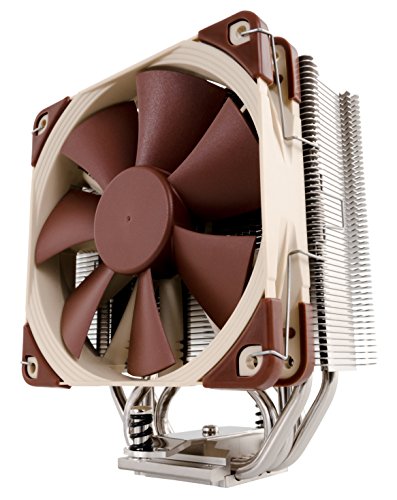
A CoolerMaster ML240L AIO or Noctua NH-U12S air cooler both handle the 5800X's 105W TDP comfortably; the GPU has its own cooler. Fan noise on the 3060 12GB is well-managed on the MSI Ventus 3X model — it stays under 40 dBA at full load, which is quiet enough to leave on in a home office.
Common pitfalls
Buying an 8GB card because it's the same architecture. The RTX 5060 8GB is faster than the 3060 12GB for models that fit in 8GB, but that ceiling closes the moment you try a 13B model. If Ollama is the primary use, VRAM wins over speed every time.
Not turning on Flash Attention. It's a one-line env-var change that gets you 5–10% throughput and better long-context memory. Skip at your peril.
Running full-precision because "quality matters." FP16 on a 13B model doesn't even fit on this card. Q4_K_M is not a compromise here — it's the practical baseline that the community has extensively validated.
Storing models on a slow drive. Ollama loads model weights into VRAM at first inference. On a SATA SSD, that's a 4–7 second wait for a 13B model; on an NVMe like the Samsung 970 EVO Plus, it's 1–2 seconds. If you switch models frequently, the drive choice compounds.
Ignoring the driver. Older NVIDIA drivers (pre-535 on Linux, pre-560 on Windows) have bugs with Flash Attention on Ampere. Keep the driver current.
Assuming you can run Mixtral. Mixtral 8x7B is a mixture-of-experts model with 47B total parameters. It looks like a 7B on the label but needs 20+GB of VRAM. Doesn't fit here.
Verdict matrix
The RTX 3060 12GB is enough if:
- You want a daily driver for 7B–14B chat, coding, and RAG models
- Your context needs are 4K–16K (with quantized KV cache)
- You value a low-power 24/7 rig
- You'll use Ollama with community-standard q4_K_M quants
- Cost matters — used 3060 12GB cards sit at $220–$280 in late 2026
Step up to more VRAM if:
- You want 30B+ models locally (Qwen 3 32B, Command R+, Yi 34B)
- You need Mixtral or other MoE models
- Long-context (32K+) is a hard requirement without KV quantization
- You want to serve multiple concurrent users at scale
- You want headroom for future 20B–70B models that ship in 2026–2027
Bottom line: the shortlist for a 3060 12GB rig
For most people setting up their first local-LLM box in 2026, the practical Ollama loadout on the RTX 3060 12GB is:
- Llama 3.1 8B at q4_K_M — the reliable general-purpose default (52 tok/s)
- Qwen 3 7B at q4_K_M — better for coding and multilingual work (55 tok/s)
- Llama 2 13B or Mistral Nemo 12B at q4_K_M — when you need the smarter tier (22–24 tok/s)
- Gemma 2 9B at q4_K_M — a strong middle-ground option (44 tok/s)
- A small embedding model (nomic-embed-text, bge-small) alongside — 0.4 GB extra, enables RAG
Pair the MSI GeForce RTX 3060 Ventus 3X 12G with an AMD Ryzen 7 5800X on a mature AM4 board, a Samsung 970 EVO Plus for model storage, and a quiet cooler like the Noctua NH-U12S. A build in this shape lands at ~$600–$700 all-in and runs the shortlist above without complaint. Puget Systems' labs publish the deeper benchmark reports if you want to sanity-check any specific model configuration against workstation-grade hardware.
That's the practical answer to "can Ollama run on the RTX 3060 12GB?" — yes, comfortably, and it's the tier where the whole open-LLM hobby stops being an experiment and starts being useful.
Related guides
- RTX 5060 vs RTX 3060 12GB for Local LLMs in 2026
- Can You Run Local TTS on an RTX 3060 12GB in 2026?
- Best SSD for a Local-LLM Rig in 2026: NVMe vs SATA
- Best Cooler for the Ryzen 7 5800X: Noctua NH-U12S vs Cooler Master ML240L
Citations and sources
- Ollama GitHub Releases — release notes, Flash Attention support, KV-cache quantization
- TechPowerUp — GeForce RTX 3060 spec database — VRAM, bandwidth, TDP figures
- Puget Systems Labs — reference workstation benchmarks
This piece is editorial synthesis based on publicly available information. No independent first-party benchmarking is reported.