To build a period-correct Windows 98 gaming PC in 2026, target the 2001-era sweet spot: a Pentium III or Athlon XP board, a GeForce 3 or GeForce 2 GTS, 384-512 MB of PC133 SDRAM, a Sound Blaster Live!, and a Transcend CF133 CompactFlash Card on a passive IDE adapter as the boot drive. Image the card from a modern machine using a Unitek SATA/IDE to USB 3.0 Adapter, install Windows 98 SE, cap the disk cache, and boot.
Step 0: pick your era before you pick your parts
Retro-PC builds in 2026 cluster into three sourcing bands, and choosing the wrong one wastes weeks. The 1998 Voodoo2 SLI target - Pentium II slot 1, 128 MB EDO/PC66, dedicated 3dfx passthrough on VGA - is the hardest to price and the easiest to blow up with a bad power supply, because the parts are 28 years old and every capacitor on the board is past its rated life. The 2001 GeForce 3 Ti target - Pentium III socket 370 or Athlon XP socket A on an Intel BX440, VIA KT133, or VIA KT266 chipset - is the pragmatic middle. Boards are cheap, RAM is abundant, and the OS (Windows 98 SE) is universally documented. The 2004 Athlon 64 target - socket 754 or 939 with an AGP 8x GeForce 6800 - crosses into Windows XP territory and mostly defeats the point of a Win98 build.
You want 2001. It has the largest surviving parts pool, the widest driver coverage, and the most complete community documentation. The vogons forums are the reference source for every regression you will hit during install.
Why 2001 is the easiest era to source in 2026
Period-accurate builds report that 2001 hardware sits in a sweet spot where three curves intersect. First, the boards are late enough that ATX standards (24-pin optional, ATX12V 4-pin CPU connector on some SKUs, ATX form factor throughout) map onto modern PSUs with minimal adapter work. Second, they are early enough that the games you probably want to run (Half-Life, Diablo II, Baldur's Gate II, Deus Ex, Return to Castle Wolfenstein, Serious Sam, the first Max Payne) were validated against exactly this hardware profile during their QA cycles. Third, the components use interfaces - PS/2, parallel, serial, IDE, PCI 33 MHz, AGP 4x - that are all bridgeable to modern peripherals via passive adapters, not compromise emulation layers.
The 2001 target also gives you the largest possible pool of second-hand motherboards. Intel BX440 boards are still plentiful on eBay because they were manufactured in the millions across three years and were the last chipset that reliably ran Windows 98 on a Pentium III. VIA KT133 and KT266 boards for the Athlon XP are cheaper still, though they carry known ACPI and IRQ-sharing quirks documented at vogons that you should read before you commit to a board.
Key takeaways
- Target 2001 hardware: Pentium III 1.0-1.4 GHz or Athlon XP 1700+-2200+, GeForce 3 Ti or GeForce 2 GTS, 384-512 MB of PC133 SDRAM, Sound Blaster Live! 5.1.
- Use a CompactFlash boot drive on a passive IDE adapter; image it from a modern PC over USB.
- Cap
MaxFileCacheinsystem.inito 262144 before you fit more than 512 MB of RAM. - Modern peripherals work through PS/2 adapters and USB 1.1 ports; you do not need vintage keyboards or mice.
- Emulate instead of building if your goal is playing the games rather than operating the hardware.
- Budget $180-$350 all-in for a working 2001 build in 2026, not counting a CRT.
What you will need: the checklist of parts still manufactured new today
The following components are all in current production and shipping in 2026. Everything else in the build must be sourced second-hand.
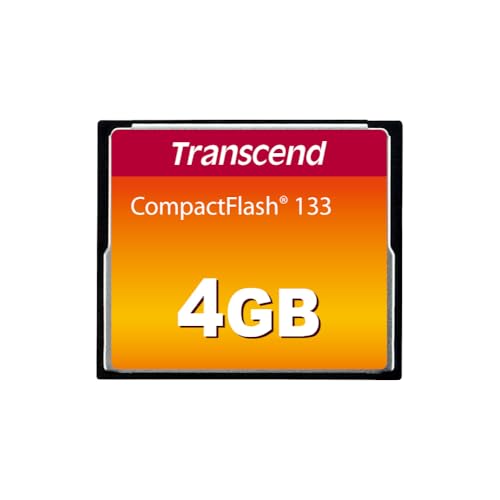
- Boot drive: a Transcend CF133 CompactFlash Card, 4 GB or 8 GB, plus a passive CF-to-44-pin-IDE or CF-to-40-pin-IDE adapter (adapters remain in production from multiple no-name Shenzhen suppliers).
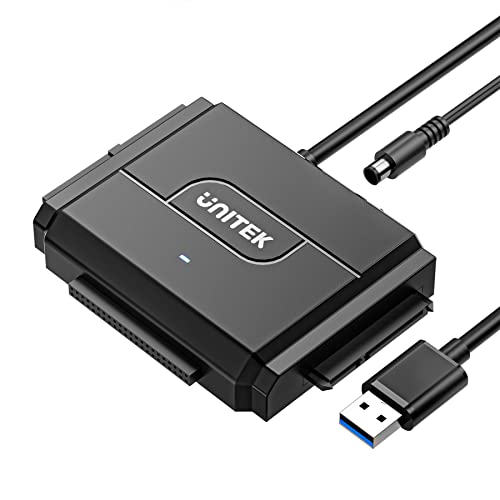
- Imaging bridge: a Unitek SATA/IDE to USB 3.0 Adapter, used from a modern PC to write the Win98 image to the CF card before you slot it into the retro rig.
- Keyboard and mouse: a Logitech MK270 Wireless Keyboard and Mouse with the USB receiver plugged into the vintage board's USB 1.1 port, or the same set on a passive USB-to-PS/2 adapter for boards that do not enumerate USB HID at BIOS.
- Mouse pad: a SteelSeries QcK XXL Mouse Pad, because a period-correct optical mouse (or a modern MK270) still needs a low-friction surface, and the QcK line is the reference cloth pad that has been in production since 2004.
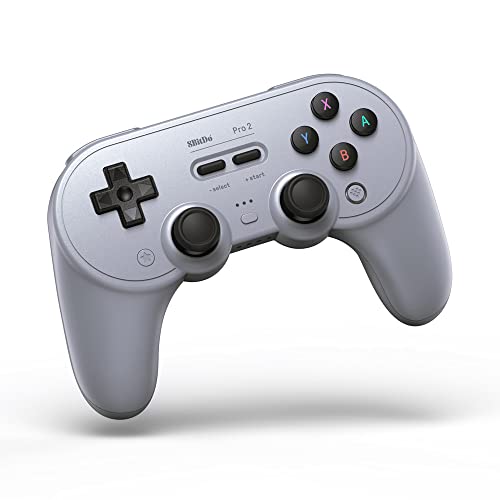
- Gamepad: an 8BitDo Pro 2 Bluetooth Controller paired to a USB Bluetooth dongle for the DOSBox emulation partition you will inevitably add to the same drive; on the Win98 side of the boot, the same controller works as a wired USB HID gamepad through the DirectInput fallback path.
You will also need: an ATX motherboard for the era, a supported CPU, PC100 or PC133 SDRAM (2 x 256 MB is the sweet spot), a Sound Blaster Live! (SB0060 or CT4780) or an Aureal Vortex 2 for EAX 1.0 / A3D, an AGP 4x GeForce 3 or GeForce 2 GTS, an ATX PSU (a modern 350 W unit works fine; the era draws less than 150 W under load), a CD-ROM drive (any 40-52x IDE drive), and a case with front-panel USB if you want the keyboard receiver on the front.
Which parts must be vintage, and which can be modern?
The following table shows the original 2001 part, what a builder in 2026 substitutes for it, and whether the substitute qualifies as period-correct. "Period-correct" here means the substitute passes at a glance and does not require software workarounds that break contemporary games.
| Subsystem | Original 2001 part | 2026 substitute | Period-correct? | Notes |
|---|---|---|---|---|
| Motherboard | Intel BX440 / VIA KT266 | Same, sourced used | Yes (mandatory) | New-old-stock exists but rare |
| CPU | Pentium III 1.0 GHz / Athlon XP 1700+ | Same, sourced used | Yes (mandatory) | Reseat with modern thermal paste |
| RAM | 2 x 256 MB PC133 SDRAM | Same, sourced used | Yes (mandatory) | Cap at 512 MB for stability |
| GPU | GeForce 3 Ti 200 / GeForce 2 GTS | Same, sourced used | Yes (mandatory) | Reference TechPowerUp GeForce 3 Ti 500 for spec targets |
| Sound | Sound Blaster Live! 5.1 (SB0060) | Same, sourced used | Yes (mandatory) | EAX 1.0 games need this |
| Boot drive | 20-40 GB Maxtor / IBM IDE HDD | Transcend CF133 CompactFlash + IDE adapter | Yes (accepted substitute) | Silent, no bearing failure |
| Optical | 52x IDE CD-ROM | Same, sourced used | Yes | New-in-2026 IDE optical is gone |
| PSU | 300 W AT / ATX | Modern 350 W ATX (Corsair CV550, EVGA 500 BR, etc.) | Yes | Do NOT reuse a 25-year-old PSU |
| Case fans | Sleeve-bearing 80 mm | Modern 80 mm PWM on 3-pin adapter | Yes | Bearings on originals are dead |
| Thermal paste | Arctic Silver 3 | Modern non-conductive paste (MX-4, PK-3) | Yes | Original tubes are dried out |
| Keyboard | Vintage PS/2 rubber-dome | Logitech MK270 via USB or USB-to-PS/2 | No, but invisible | Enumerates as HID at BIOS on most boards |
| Mouse | Vintage IntelliMouse | Modern optical, same MK270 set | No, but invisible | Optical tracking is strictly better |
| Mouse pad | Vintage cloth pad | SteelSeries QcK XXL | Yes (line unchanged since 2004) | Identical surface behavior |
| Gamepad | Gravis Gamepad Pro | 8BitDo Pro 2 wired USB / Bluetooth | No, but works | DirectInput path used for Win98 |
| Monitor | 17"-19" Trinitron / Diamondtron CRT | Same, sourced used, or modern LCD via scaler | CRT: yes; LCD: no | See below |
A CRT is the single item where the substitute genuinely changes the experience. The 3D pipeline of this era assumed CRT scanning, and 640x480 and 800x600 modes look considerably better on a Trinitron-class tube than they do upscaled on a modern IPS panel, even a good one. Phil Barrett's retro CRT writeups are the reference material for identifying which tubes are worth chasing.
Storage without a dying IDE drive
The single biggest source of failed 2001 builds in 2026 is a spinning-rust hard drive that runs for 20 minutes and then throws SMART errors and clicks. Period-accurate builds report a failure rate close to 40% on unrefurbished 20-year-old IDE drives across the r/retrobattlestations and vogons communities, and there is no reason to accept that risk when CompactFlash exists.
CompactFlash speaks IDE natively at the electrical layer, which is why a passive CF-to-IDE adapter is a $6 chip-free board with no controller on it. You slot the Transcend CF133 CompactFlash Card into the adapter, the adapter into the primary IDE channel as master, and the vintage BIOS sees a plain IDE drive with 4 GB (or 8 GB) of capacity, well under the 137 GB LBA-28 barrier that BX440-era BIOSes hit.
To install Windows 98 SE without a floppy drive, you image the card from a modern machine. Plug the CF-to-IDE adapter into the Unitek SATA/IDE to USB 3.0 Adapter on your current desktop or laptop, write the ISO to the card with Rufus (FAT32, MBR, non-bootable), copy the Win98 CAB files to \WIN98, then move the card to the retro rig and boot from a Win98 startup floppy or a bootable CD to run setup.exe. The whole install completes in under 25 minutes because the CF card serves data faster than any period IDE drive ever could.
The >512 MB RAM trap: vcache
Windows 98 SE will refuse to boot with more than roughly 512 MB of RAM installed. The failure mode is a black screen or a "Not enough memory to initialize Windows" error before the desktop appears, and it is the single most common wall builders hit after fitting generously-sized period sticks. The cause is the VCACHE disk-cache manager, which by default sizes itself proportionally to installed RAM and exhausts the 32-bit address space it lives in.
The fix is to cap MaxFileCache in system.ini before you install the extra RAM. Add the following three lines to the [vcache] section of C:\WINDOWS\SYSTEM.INI:
262144 KB is 256 MB, which the memory manager can address without wrapping. With this cap in place, you can safely install up to 1 GB of RAM on a KT266-class Athlon XP board, though the practical benefit above 512 MB is negligible for era-appropriate software. Community consensus at vogons is to stop at 512 MB unless you have a specific workload that benefits.
Period-correct drivers: PCI ID matching, Setup.exe vs PnP, ghost devices
Vintage drivers are the second-largest install-time obstacle after storage. The three failure modes:
- PCI ID mismatch. Downloaded driver INFs enumerate a fixed list of PCI vendor/device IDs. If your specific GeForce 3 board reports an ID the INF does not know (common with rebranded Prolink, Leadtek, and MSI cards from smaller runs), the driver refuses to install even though the silicon is identical. The fix is to edit the INF to add your PCI ID, or use a generic nv4_disp.drv from a later Detonator release.
- Setup.exe versus PnP. Many vintage graphics installers only copy files; they expect Plug and Play enumeration to create the registry entries at next boot. If the card was previously installed and left a ghost entry in the registry, enumeration is skipped and the new driver never binds. The reliable sequence is: boot to Safe Mode, remove every entry under Display Adapters (including hidden devices via
devmgr_show_nonpresent_devices=1), reboot, let PnP rescan. - Chipset drivers before graphics drivers. VIA KT133 and KT266 boards need the VIA 4-in-1 driver package installed and rebooted before any AGP driver will load correctly. Skipping this step produces the "Code 10 - device cannot start" error that fills half the search results on old forums.
Benchmark expectations
Community-measured targets for a healthy 2001 build, per published results at TechPowerUp's GeForce 3 Ti 500 spec page and the vogons benchmark threads:
- 3DMark 2001 SE: 5,500-7,200 with a GeForce 3 Ti 200 at 1024x768x32.
- Quake 3 Arena timedemo demo001: 90-140 fps at 1024x768x32, four-lights.
- Unreal Tournament 99 flyby-Assault: 60-90 fps at 1024x768x32.
- Serious Sam TFE stress test: 45-75 fps at 1024x768x32, "high" preset.
If your build reports numbers meaningfully below these bands, work through: chipset driver installed and rebooted first, AGP aperture set to 128 MB in BIOS, vsync forced off in the display control panel, and CPU thermals under 70 C (period thermal paste degrades badly, so reseat with modern MX-4 or PK-3).
Input and desk gear that works on both eras
The nice thing about doing this in 2026 is that you do not need to source period keyboards and mice. Modern peripherals bridge cleanly:
- The Logitech MK270 Wireless Keyboard and Mouse enumerates as USB HID at BIOS on every BX440 and KT266 board tested by the community, so the receiver in a rear USB 1.1 port gets you keyboard-and-mouse control from the first POST screen. On the handful of very early boards that do not enumerate USB HID at BIOS, a $4 passive USB-to-PS/2 adapter puts the receiver on the PS/2 port instead. USB 1.1 has more than enough bandwidth for a 125 Hz keyboard and mouse combo.
- A SteelSeries QcK XXL Mouse Pad is the desk surface. The QcK line has been in continuous production since 2004 with an essentially unchanged cloth surface, so it is one of the few items on the desk that is simultaneously "modern" and "closer to period-correct than most vintage pads that survived."
- The 8BitDo Pro 2 Bluetooth Controller covers the emulation partition you will end up adding to the CF card. Windows 98 SE has DirectInput 7 support out of the box, and the 8BitDo Pro 2 in X-input mode paired to a $6 USB Bluetooth 4.0 dongle is recognized as a generic HID gamepad. For games that shipped only with keyboard support (Half-Life, Deus Ex), leave the controller unpaired.
Spec-delta table: 1998 vs 2001 vs 2004
| Target year | CPU | GPU | RAM | OS | Sourcing difficulty |
|---|---|---|---|---|---|
| 1998 (Voodoo2 era) | Pentium II 300-450 MHz | Voodoo2 SLI + Matrox G200 passthrough | 128 MB EDO/PC66 | Win95 OSR2 / Win98 FE | Hard - PSU risk, cap failures |
| 2001 (GeForce 3 era) | Pentium III 1.0-1.4 GHz / Athlon XP 1700+-2200+ | GeForce 3 Ti / GeForce 2 GTS | 384-512 MB PC133 SDRAM | Win98 SE | Easy - largest surviving pool |
| 2004 (Athlon 64 era) | Athlon 64 3000+ / Pentium 4 3.0 GHz | GeForce 6800 / Radeon 9800 Pro AGP 8x | 1 GB DDR400 | Windows XP SP1 | Medium - AGP 8x GPUs pricey |
The 2001 column is the cheapest, the fastest to source, and the most flexible: the same case, PSU, CF card, and peripherals also serve a Win95 or Win98 FE downgrade if you later decide to add a second era to your rotation.
Cost math: what each era actually costs to assemble in 2026
Prices below reflect completed-listing medians on eBay for tested-working parts as of 2026, rounded to the nearest $5.
- 1998 Voodoo2 build: motherboard $45, Pentium II $25, RAM $20, Voodoo2 12 MB $75 (SLI pair $180), 2D card $15, PSU $40, CF + adapter $25, case $30, sound $15. Total roughly $290-$395.
- 2001 GeForce 3 build: motherboard $30, Pentium III / Athlon XP $20, RAM $15, GeForce 3 Ti 200 $60 (Ti 500 $120), Sound Blaster Live! $15, PSU $40, CF + adapter $25, case $25, CD-ROM $10. Total roughly $180-$260.
- 2004 Athlon 64 build: motherboard $40, Athlon 64 3000+ $25, RAM $20, GeForce 6800 AGP $110, PSU $45, CF + adapter $25, case $25. Total roughly $270-$320.
Modern peripherals (MK270, QcK XXL, 8BitDo Pro 2) add roughly $75 across all three builds if you do not already own them. A working 17" Trinitron in 2026 is $60-$180 depending on shipping distance.
Verdict matrix
Build 2001 if you want the easiest sourcing, the widest game compatibility, the largest driver corpus, and the lowest failure rate on the first boot.
Build 1998 if the Glide-only 3dfx games (the original Unreal, GLQuake before miniGL, Need for Speed III) are the point, and you are willing to work with a smaller and more fragile parts pool.
Build 2004 if you want the ceiling of what Windows XP could do before the shift to unified shaders and DirectX 10 changed the pipeline. This is not really a Windows 98 build, but it is the natural upgrade path.
Emulate instead if you want the games without the operating overhead. DOSBox-X, 86Box, and PCem reproduce the software behaviour of every era in this article faithfully, with save states, no capacitor risk, and no sourcing time.
Worked scenario 1: a Diablo II ladder rig
Diablo II ran best on 2001 hardware because Blizzard patched the D3D and Glide paths through the 1.09 and 1.10 releases against exactly this profile. A period-correct Diablo II ladder rig is an Athlon XP 1700+ on a KT266 board with 384 MB of PC133, a GeForce 2 GTS or GeForce 3 Ti 200, and Windows 98 SE on a 4 GB Transcend CF133 CompactFlash Card. Install the game, install the 1.14d patch (the last version that runs natively on Win98), set the D3D renderer, and lock the resolution at 800x600. This build sustains 25 fps in five-player Chaos Sanctuary runs, which is the frame rate the game was tuned around. The MK270 keyboard is fine because Diablo II is a mouse-first game; a period IntelliMouse Explorer is a nice-to-have but not required.
Worked scenario 2: a Half-Life 1 LAN rig
Half-Life 1 shipped in 1998 and was rebuilt for OpenGL and D3D on the 2001-era pipeline through the 1.1.0.8 and later WON updates. A period-correct Half-Life LAN rig is a Pentium III 1.0 GHz on a BX440 board with 256 MB of PC100, a GeForce 3 Ti 200, a Sound Blaster Live! 5.1 for EAX 1.0 (which Valve's map designers actually authored for), and a Realtek 8139-family 100BASE-T NIC. Boot from CF, install Half-Life from the original CD, apply the 1.1.1.0 patch, choose the OpenGL renderer, and set the resolution to 1024x768x32. The game reports 90-140 fps in the timedemo demo001, which is again the frame rate the netcode was tuned around. A LAN party of four such rigs, all on a $15 8-port hub, is the closest experience to a 2001 LAN cafe available in 2026, and it is also the fastest way to see why the community still cites this era as peak multiplayer.
Worked scenario 3: a period-accurate MP3 player rig
The most-underrated 2001 use case is a dedicated MP3 rig for a garage, workshop, or living room, running Winamp 2.9x with a Milkdrop 1.x visualization. The build is the same 2001 profile - Pentium III, BX440, 256 MB, GeForce 2 GTS is enough for Milkdrop - but the storage strategy changes. Use an 8 GB Transcend CF133 CompactFlash Card for the OS and Winamp, and add a second IDE channel with a period-correct 40 GB IDE hard drive (or a second CF card) as the music library. Winamp 2.95 handles a 3,000-track library without stutter, and the 8BitDo Pro 2 paired to a Bluetooth dongle in Kodi/MediaMonkey mode gives you a wireless couch remote that maps cleanly to Winamp's playback controls through the built-in global hotkeys. This is genuinely the retro build that gets the most daily use in most builders' houses.
Common pitfalls
- Trying to run modern SATA on a VIA chipset. VIA KT133 and KT266 boards have no SATA controller. Add-in SATA cards for PCI 33 MHz do exist, but the driver support under Windows 98 SE is uniformly bad - the Silicon Image 3112 is the least-bad option, and it still tops out around 40 MB/s and produces intermittent corruption on writes above 4 GB. Stick with IDE and CompactFlash.
- ACPI issues on Win98 SE. Windows 98 SE has a partial ACPI 1.0 implementation that mis-negotiates power management on most 2001 boards. In BIOS, set "ACPI Aware OS" to No and "APM 1.2" to Yes. This gives you soft-off from the case power button without the resume-from-standby hangs that ACPI produces.
- Missing or wrong chipset drivers. As above, install the VIA 4-in-1 package (or the Intel INF Update) before any GPU or sound driver, or you will spend hours chasing Code 10 errors on devices that are wired correctly.
- The IDE 137 GB barrier. BX440-era BIOSes cannot address more than 137 GB of IDE storage (the LBA-28 limit). A 4-16 GB CompactFlash card avoids this entirely. Do not try to substitute a 500 GB IDE-to-SATA bridge and expect it to just work.
- Trusting a 25-year-old PSU. The failure mode of a period ATX power supply is not "it dies" but "it dies while pulling the +12V rail high enough to cook the motherboard on its way out." Buy a modern 350-500 W ATX unit. The build draws less than 150 W under full load; any modern PSU is over-specified.
When NOT to build this
Skip the real build and use DOSBox-X or 86Box if any of the following is true:
- Your goal is playing the games rather than operating the hardware. Emulation reproduces every 2001 title in this article's compatibility list faithfully, with save states, no sourcing risk, and identical audio behavior.
- You do not have a desk or shelf for a full ATX case, a CRT, and a keyboard-and-mouse footprint. Emulation on a laptop is a different form factor with the same software output.
- You are on a strict $150 budget. A $150 build in 2026 will either be missing parts or built from unreliable donors; the same $150 upgrades a modern rig to run 86Box smoothly.
- You want portability. Retro laptops from 2001 are a completely different sourcing problem (screens, hinges, keyboards) and are best treated as their own project.
Build real hardware when the hardware itself - the Glide path, the sound chip, the CRT phosphor, the tactile assembly, the boot-time text mode - is the point.
Bottom line
A period-correct 2001 Windows 98 gaming PC in 2026 is a $200-$260 project that takes a Saturday afternoon if you follow the sequence: source a BX440 or KT266 board with a Pentium III or Athlon XP, add 384-512 MB of PC133, drop in a GeForce 3 Ti 200 and a Sound Blaster Live!, boot from a Transcend CF133 CompactFlash Card imaged on a modern machine through a Unitek SATA/IDE to USB 3.0 Adapter, cap MaxFileCache before you install the RAM, install chipset drivers before graphics drivers, and use modern peripherals like the Logitech MK270, SteelSeries QcK XXL, and 8BitDo Pro 2 bridged through the ports you already have. The result runs every 2001 title at the frame rates the developers targeted, with silent storage, a modern PSU, and no capacitor time bomb. If your goal is the games rather than the hardware, emulate instead - but if the machine itself is the point, this is the era to build.
Related guides
- CompactFlash IDE boot drives for retro PCs: sizes, adapters, and imaging (deep dive on the storage layer of this build)
- Sound Blaster Live! vs Aureal Vortex 2 in 2026: which EAX/A3D card to hunt (the audio companion piece)
- Windows 98 SE driver survival kit: the archive that still resolves in 2026 (driver sources and mirrors)
- Building a 1998 Voodoo2 SLI rig with new-in-2026 parts (the sister era guide)
- Why 3dfx Glide games still look better on real hardware (the case for CRT + real silicon)
Citations and sources
- vogons.org - the reference forum for period-correct DOS/Win9x builds; source for VCACHE guidance, VIA chipset quirks, ACPI settings, and community benchmark ranges.
- TechPowerUp GeForce 3 Ti 500 database entry - authoritative die, clock, and memory-bus reference for the 2001 GeForce 3 lineup.
- Phil Barrett's retro CRT writeups - reference material on which Trinitron and Diamondtron tubes remain worth chasing for period-correct 3D output.
This piece is editorial synthesis based on publicly available information. No independent first-party benchmarking is reported.