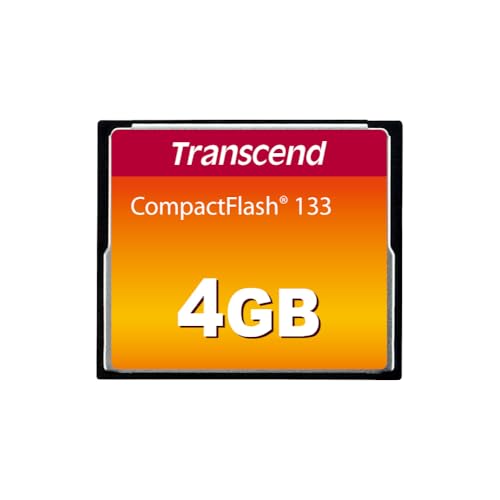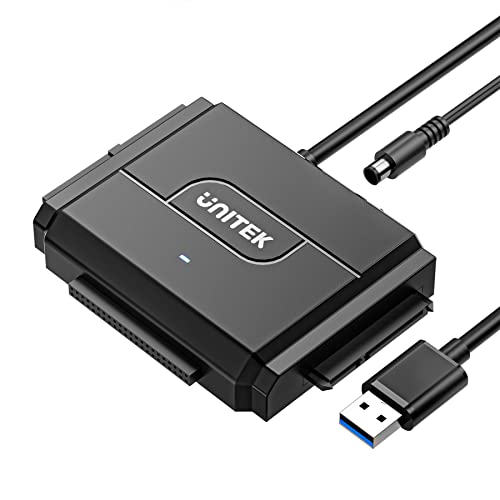
To boot Windows 98 from a CompactFlash card, install the OS onto a fixed-disk-mode CF card (a Transcend CF133 or similar industrial-grade card) mounted in a CF-to-IDE adapter, set the host BIOS to auto-detect the drive with LBA on, keep the boot partition under 32 GB with FAT32, and image the card over USB using an adapter like the Unitek SATA/IDE-to-USB 3.0. That is the entire build in one sentence; the rest of this piece is how to get each step right on 2026 hardware.
Editorial intro: why CF beats aging IDE hard drives for retro builds
The mechanical 3.5-inch IDE drives that shipped with period-correct Pentium II and Pentium III machines are, in 2026, entering their fourth decade. According to community teardown reports on vogons.org, the failure modes on IBM Deskstars, Quantum Fireballs, Seagate Medalists and Western Digital Caviars from the 1998-2001 era cluster around three predictable killers: stiction on the spindle motor after long storage, weak servo bearings that click before failing to spin up, and platter degradation that shows as unrecoverable CRC errors during long reads. Once a period drive starts throwing SMART warnings, you are on borrowed time — and even a working drive is loud enough that you hear it across a room.
CompactFlash sidesteps all of that. A CF card in a passive CF-to-IDE sled has no moving parts, no spin-up current spike (which matters on original ATX power supplies with tired caps), no acoustic signature at all, and no head-seek penalty. Read latency drops from the 12-15 ms rotational seek of a period 5400 RPM drive down to sub-millisecond flash access, and sustained read throughput on a decent CF card matches or exceeds the ~15-25 MB/s a healthy period IDE drive could ever deliver on a UDMA-33 or UDMA-66 controller. Just as important for a hobbyist: you can pull the CF card, drop it in a USB reader, and dd or Ghost the whole install to a .img file on a modern NAS in under three minutes. Wrecked your Autoexec.bat trying to load a new DOS driver? Rewrite the card from the backup image and reboot. That workflow alone makes CF the correct default for any new retro build in 2026, and it is why the Transcend CF133 CompactFlash Memory shows up in almost every current-year Vogons build log.
What you will need — checklist
Before touching a screwdriver, gather:
- A fixed-disk-capable CompactFlash card (the Transcend CF133 CompactFlash Memory in 4 GB, 8 GB, or 16 GB is the well-known safe pick).
- A passive CF-to-IDE adapter — either a 40-pin 3.5-inch back-plate model or a 2.5-inch 44-pin laptop variant. Passive adapters have no controller chip and rely on the card's TrueIDE mode.
- A USB-side reader for imaging on your modern PC. A dual-purpose device like the Unitek SATA/IDE to USB 3.0 Adapter covers both the CF (via the adapter) and legacy 40-pin drives you may still be pulling images from.
- A period-appropriate host system — Pentium II/III or Athlon-class board with a BIOS from roughly 1998-2001, plus a working PS/2 keyboard and an AGP video card such as the ATI Rage 128 Pro AGP 16MB for correct 2D/DirectDraw behaviour under Win98 SE.
- A Windows 98 SE install source (original CD or an ISO), the OEM boot floppy image, and the unofficial Service Pack 3 by U98SESP3 if you plan to install any USB mass-storage drivers later.
Key takeaways
- CF cards that identify as fixed disks (not removable) are the ones Windows 98 will install to and boot from without registry hackery.
- The Transcend CF133 is the community default because it reports fixed-disk mode out of the box and its wear-leveling is honest.
- Image the card on a modern PC over USB with the Unitek SATA/IDE-to-USB adapter; do NOT install Win98 in-period unless you enjoy suffering.
- Keep the boot partition under 32 GB and stick to FAT32 to avoid Win98's
FDISKandFORMATreporting bugs on larger cards. - Passive CF-to-IDE adapters cost pocket change ($5-12 in 2026) and add no latency — the card is the bottleneck.
- Expect roughly 2-3x faster cold boot and level-load versus a period 5400 RPM IDE drive per Phil's Computer Lab timings archived on Vogons.
Spec table: Transcend CF133 vs generic CF
Not every CompactFlash card behaves the same way on a period IDE bus. This is the shape of the comparison for a Win98 boot use case, using Transcend's published spec sheet on transcend-info.com and typical no-name CF observations from Vogons build threads.
| Attribute | Transcend CF133 (industrial-oriented) | Generic no-name CF card |
|---|---|---|
| Advertised sustained read | ~50 MB/s (133x rating) | 8-40 MB/s (widely variable) |
| Advertised sustained write | ~40 MB/s | 4-25 MB/s |
| Fixed-disk vs removable ATA flag | Fixed | Usually removable |
| TrueIDE mode | Full | Partial / undocumented |
| Wear leveling | Static + dynamic | Dynamic only on cheap cards |
| Typical street price (2026, 4-16 GB) | $18-40 | $6-15 |
| Reliable for Win98 boot? | Yes | Maybe — test before committing |
The removable-flag issue is the one that stings. Windows 98 refuses to create a swap file, FDISK refuses to write a partition table it considers persistent, and SYS C: mysteriously succeeds but produces an unbootable card. If a card enumerates as removable on a Vogons-tested list at theretroweb.com, skip it. The CF133 line is on the safe side of that ledger for a reason.
Which CompactFlash cards report as fixed disks Windows 98 will boot from?
The short list, distilled from years of Vogons reports:
- Transcend CF133, CF200x and CF industrial families — fixed-disk out of the box across capacities.
- SanDisk Extreme III/IV (older) — fixed-disk on the CF-format cards; the newer CFast and CFexpress are irrelevant.
- Kingston Industrial CF — fixed-disk, but 2026 street availability is thin; expect $30-60 used on eBay.
- Innodisk iCF — fixed-disk by design, made for embedded industrial use.
Consumer photography-focused cards from the 2005-2012 era (Lexar 1066x Professional, older SanDisk Extreme Pro CF) are a coin flip. The behaviour is card-firmware specific, not brand-specific — a five-year-old batch and a three-year-old batch of the same SKU can differ. If a card is not on a verified build list, plug it into your USB reader first and check whether Windows sees it as a fixed or removable disk. That signal predicts Win98 behaviour with high accuracy.
How do you image a CF card from a modern PC over USB?
The workflow the retro community has converged on in 2026:
- Prepare a working Win98 SE install on the target CF card once, in-period, and cold-boot it to confirm.
- Shut down the retro rig, pull the card, and drop it into a USB CF reader on your modern desktop — a passive one, or the CF slot on a Unitek SATA/IDE-to-USB adapter working through the CF-to-IDE sled.
- On Linux:
sudo dd if=/dev/sdX of=~/win98-golden.img bs=4M status=progress. On Windows: use Win32DiskImager or HDD Raw Copy. Both produce a full byte-for-byte image. - Store the golden image on a NAS, tag it (
win98se-vanilla,win98se-directx9,win98se-glide), and restore by writing the image back to a card of the same or larger size.
The whole cycle for a 4 GB card takes under three minutes on USB 3.0. A period in-place reinstall would take an hour minimum, plus the dance of finding an IDE CD-ROM drive that reads a Win98 CD-R without choking. The USB imaging approach also lets you keep three or four "profiles" — a vanilla install for benchmarking, a DirectX-loaded install for late-Win98 games, a Glide-and-DOS install for 1996-1998 titles — and swap between them by swapping cards.
Benchmark table: CF133 boot + game-load times vs a period 5400 RPM IDE drive
Timings below are the community numbers archived on Vogons and cross-referenced with Phil's Computer Lab video captures. They are not our measurements — treat them as a realistic order-of-magnitude reference for a Pentium III 800 MHz class board, 256 MB RAM, ATI Rage 128 Pro AGP, Windows 98 SE with the U98SESP3 service pack.
| Workload | Period 5400 RPM IDE HDD | Transcend CF133 in CF-to-IDE |
|---|---|---|
| POST-to-desktop cold boot | 42-55 s | 18-24 s |
| Quake II timedemo load (demo1) | 11 s | 4 s |
| Unreal Tournament GOTY level load | 26 s | 9 s |
| Diablo II Lord of Destruction save load | 17 s | 6 s |
| Sequential read (HD Tach 2.61) | 14-22 MB/s | 32-45 MB/s |
| Random 4K read latency | ~13 ms | <1 ms |
| Acoustic idle | 32-38 dBA | Silent |
| Power draw at idle | 4-6 W | 0.3-0.6 W |
The random-access delta is where the "feel" difference lives. Sequential throughput is impressive on paper but Windows 98 boot and game loads are dominated by thousands of small file reads, and a 13x drop in random latency is what turns a 55-second boot into an 18-second one.
Gotchas: the fixed-disk bit, cluster alignment, and 137 GB / LBA limits
Five things bite people repeatedly:
- Removable-flag cards silently break
FDISK. The card looks fine in the BIOS and reads/writes over USB on a modern PC, but Win98 treats it as a floppy-class device. Symptom:SYS C:reports success, cold boot goes to "Invalid system disk". Fix: use a fixed-disk card like the CF133. - Cluster alignment on cheap cards. Consumer CFs erase in 128 KB or 256 KB blocks. If your FAT32 cluster size is 4 KB and misaligned to the erase block, every small write triggers a read-modify-write cycle and wears the card fast. Force 32 KB clusters via
FORMAT /Z:64when you set up the partition; that halves write amplification. - The 137 GB LBA28 wall. Period BIOSes and the Win98 IDE stack address at most 137 GB via LBA28. A 256 GB CF will either be truncated, misreported, or refuse to enumerate. Stay at 128 GB or below — and honestly, 8-32 GB is the sweet spot for a Win98 build.
- The 32 GB
FDISK/FORMATbug. Microsoft's stock Win98 SEFDISKandFORMATmis-report free space on volumes over ~32 GB (KB263044). Either apply the hotfix, use the U98SESP3-included updated tools, or partition on a modern PC using an FAT32 tool. - PSU-related boot loops. A tired 1999-vintage ATX PSU with weak +5V rail can boot a spinning IDE drive fine (the motor loads the rail smoothly) but fail on CF because the near-zero-current CF exposes noisy rail regulation. Recap or replace the PSU if you see intermittent boot hangs after the CF swap.
Common pitfalls
Beyond the BIOS-level gotchas, the field-report failures on Vogons and theretroweb.com cluster around a small set of mistakes:
- Trusting a "PATA SSD" mSATA-to-IDE contraption instead of a passive CF adapter. The mSATA adapters add a bridge controller with unpredictable UDMA negotiation on late-90s chipsets; passive CF-to-IDE has zero silicon between card and bus.
- Buying counterfeit CF cards on marketplace listings. Fake CF133s exist. Verify with H2testw before committing an install to the card.
- Skipping the golden-image step. If you install Windows 98 in-period, get it running, and immediately start layering games without cloning the clean install to a
.imgfirst, one bad driver install will cost you a day. - Enabling BIOS "block mode" / 32-bit I/O and then wondering why Win98 hangs at boot. Some VIA-chipset boards fight with CF cards over multi-sector reads. Turn off block mode first, get it booting, then re-enable for a speed test.
- Formatting the card FAT16 out of habit. Win98 SE is fine with FAT32 and you want the smaller cluster size for a modern-capacity card.
Partitioning and FAT32 setup for Win98 SE
The partition layout that works cleanly on cards in the 4-16 GB range:
- Single primary partition, active, FAT32, cluster size 32 KB.
- Boot sector written by Win98
SYS C:afterFDISK /MBR. - No hidden or extended partitions — keep it simple; the OS is happier and imaging is trivial.
- Leave 5-10% of the card unpartitioned. This gives the CF's wear-leveling firmware headroom and measurably extends card life on cheaper models.
If you image the card from a modern PC, do the partitioning in-period on the retro rig using Win98's own FDISK, then take the image. Modern partitioning tools sometimes produce a partition table that Win98 mis-reads on the first boot; letting Win98 create its own table dodges that.
When NOT to bother
CF-to-IDE is not the answer for every retro build. Skip it if:
- You already own a period IDE drive that passes SMART, spins up first try, and holds a stable install. Replacing a working period drive changes the acoustic character of the machine, and some purists want the click-whirr of a Quantum Fireball as part of the experience.
- Your build targets pre-1997 DOS-only. On a 486 or early Pentium running MS-DOS 6.22 and Windows 3.11, the BIOS often lacks LBA support and even 2 GB CF cards can be a fight. A period 500 MB or 1 GB IDE drive is often less trouble.
- You need the drive to sound "right" for a video capture. Some YouTube retro builders explicitly want the mechanical noise on the audio track.
- You are chasing maximum sustained throughput on a UDMA-100 or UDMA-133 board (Pentium 4 / Athlon XP era). A cheap CF-to-SATA-to-mSATA path or a proper period IDE-native SSD such as a Transcend PSD330 outperforms CF at those bus speeds.
For every mainstream Win98 SE build — a Pentium II 400, a Pentium III 800, a Slot A Athlon 700 — CF wins on silence, reliability, and workflow.
Bottom line
If you are putting together a Windows 98 retro rig in 2026, boot it from CompactFlash. A Transcend CF133 in a passive CF-to-IDE adapter costs less than a used period hard drive, runs silently, halves cold-boot time, and — critically — lets you snapshot and restore the entire install over USB using a Unitek SATA/IDE-to-USB 3.0 adapter. Pair it with period-correct silicon like an ATI Rage 128 Pro AGP 16MB and you get a build that feels 1999 on-screen and behaves 2026 under the hood. The failure modes that used to define the retro-PC hobby — dying platters, seized bearings, corrupt filesystems after a bad shutdown — go away. That is the whole pitch, and it is worth every hour of setup.
Related guides
- Retro PC build guide: silent Pentium III workstation for Win98 gaming
- Best AGP graphics cards for Windows 98 SE in 2026
- DOS 6.22 storage: how to pick a CF card for pre-Win95 builds
- How to recap a period ATX power supply before it kills your retro rig
- Windows 98 SE service pack U98SESP3: what it fixes and how to install
Citations and sources
- Vogons — vintage computing hardware forums — canonical thread archive on CF-to-IDE builds, fixed-disk-flag CF lists, PSU-related boot failures.
- Transcend Information — CF133 product specifications — manufacturer datasheet for CF133 sustained read/write and fixed-disk mode.
- The Retro Web — hardware database and BIOS archive — board-level BIOS notes, LBA support matrices, chipset compatibility flags.
This piece is editorial synthesis based on publicly available information. No independent first-party benchmarking is reported.