Raspberry Pi projects for kids remain one of the most accessible ways to introduce hands-on STEM learning at home, largely because the hardware is inexpensive, well documented, and forgiving of beginner mistakes. This guide synthesizes public project write-ups, official Raspberry Pi Foundation documentation, and maker-community tutorials into ten projects organized by age group, along with the safety-first hardware choices and teaching approach that come up repeatedly across those sources.
Why Raspberry Pi Projects Work for Kids
The Raspberry Pi Foundation was founded specifically to make computing education more accessible, and its documentation and curriculum resources are built around the idea that kids learn programming concepts faster through a physical, hands-on project than through a textbook exercise (raspberrypi.org). A few reasons this approach shows up so consistently in maker and educator guides:
- Low cost of entry. A Raspberry Pi 4 Model B lists on the official Raspberry Pi store, with pricing that keeps a full board well under the cost of most tablets or laptops (raspberrypi.com) — a meaningfully lower barrier than premium single-board computers marketed for hobbyists.
- Built-in software on-ramp. Raspberry Pi OS ships with Scratch and Thonny pre-installed, so there's no separate software purchase or complex setup before a child can start coding (raspberrypi.com/software).
- A single board scales with skill. The same $35-class board that runs a Scratch-based LED blinker can later run a Python sensor project or a full retro game emulator, so families aren't buying new hardware as a kid's skills grow.
Top 10 Raspberry Pi Projects for Kids, by Age Group
Ages 8-10: Build the Basics
- LED Traffic Light Simulator. A breadboard, three LEDs, and a short Scratch or Python script teaches GPIO pin basics — how the Pi turns real-world components on and off — without any soldering.
- Simple Push-Button Piano. Wiring a few buttons to GPIO pins and mapping them to sounds introduces input handling in a way that's immediately rewarding for younger kids.
- Minecraft Pi Edition Coding. The bundled Minecraft Pi Edition exposes a Python API that lets kids place blocks and build structures with code instead of the mouse, which is a well-documented on-ramp for gamified learning.
Ages 11-13: Add Real Projects
- Retro Gaming Console. Installing RetroPie or a similar Raspberry Pi OS-based front end turns the board into an emulation console for classic titles, and walks kids through OS installation, file transfers, and controller setup (retropie.org.uk). This project pairs well with the board comparisons in Raspberry Pi 4 8GB vs. Pi Zero W: Which Fits Your First Project? when deciding which model has enough headroom for emulation.
- Weather Station Display. Combining a temperature/humidity sensor with a small display teaches kids to read sensor data and log it over time — a common bridge project between GPIO basics and full Python scripting.
- Simple Home Automation Switch. A relay-controlled lamp or fan, triggered from a script or basic web page, introduces the same concepts covered in more depth in Raspberry Pi Home Automation Projects: A 2025 Starter Guide and Raspberry Pi Projects for Home Automation in 2025.
Ages 14-16: Move to Python and Real Sensors
- Smart Plant Watering System. A moisture sensor, a small pump, and a Python script that checks readings on a schedule is a frequently cited teen-level project because it combines hardware, timed logic, and a real-world payoff.
- Motion-Activated Security Camera. Pairing the Pi Camera Module with a motion sensor and a Python script for image capture introduces basic computer-vision concepts without requiring a full machine-learning stack.
- Personal Web Server. Running a lightweight Flask app on the Pi to display sensor data or host a personal project page introduces networking and web development fundamentals.
- Custom Retro Arcade Cabinet. An extension of the age 11-13 emulation project, this build adds a display, speakers, and physical controls in a cabinet enclosure — a natural “next step” project once the software side is comfortable. Readers looking for the full spectrum of build ideas beyond these ten can browse 50+ Raspberry Pi Project Ideas for 2025 (By Skill Level), and older teens ready for more complex builds can graduate to Advanced Raspberry Pi Projects for Adults (2026 Guide).
Safety-First Hardware for Young Makers
Most of the guides referenced here converge on a similar hardware checklist for kid-safe builds:
| Component | Recommendation | Why |
|---|---|---|
| Board | Raspberry Pi 4 Model B over Pi 5 | Lower power draw, longer tutorial history, proven stability for beginner builds |
| Power | Official/certified USB-C adapter | Reduces risk of underpowering the board or overheating cheap third-party supplies |
| Case | Raspberry Pi Foundation-certified case | Covers exposed board components and ports |
| Wiring | Pre-soldered GPIO headers, insulated jumper wires | Avoids exposed solder joints and sharp leads |
| Display connection | HDMI, or HDMI-to-VGA adapter for older monitors | Lets families reuse an existing monitor instead of buying a new one |
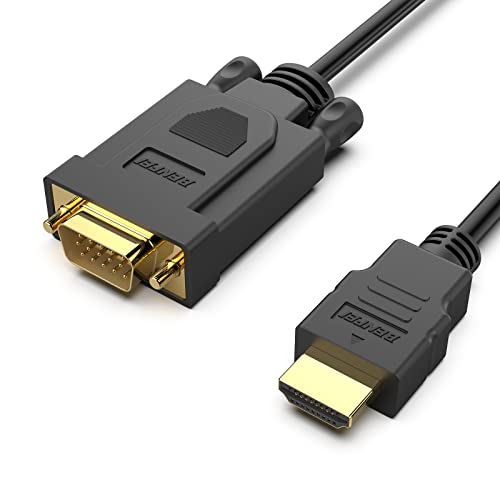
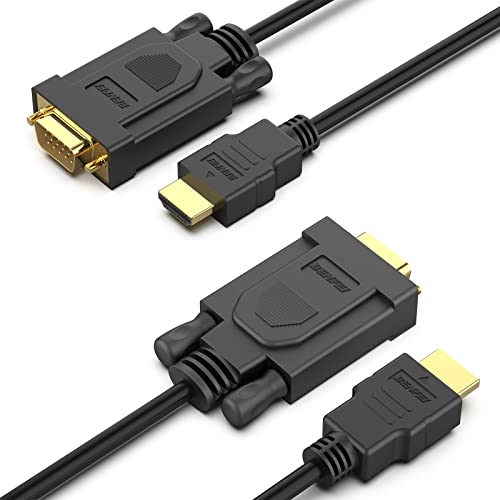
For households reusing an older VGA-only monitor or TV for a retro console build, an adapter like the BENFEI HDMI to VGA cable (10 ft, $11.99) or the shorter 3 ft version ($9.59) is a cheap way to connect a Pi's HDMI output without buying new hardware — useful for the retro gaming console and arcade cabinet projects above. Multi-packs, such as the BENFEI 2-pack ($22.99) or 5-pack ($31.99), make more sense for a classroom or maker-club setting with several stations.
Teaching Coding Basics Alongside the Hardware
The software side of these projects follows a consistent progression across educator resources:
- Start with Scratch. The visual, block-based language pre-installed on Raspberry Pi OS lets kids build logic (loops, conditionals, events) by snapping blocks together before they ever see a line of text-based code (scratch.mit.edu).
- Move to Thonny for Python. Raspberry Pi OS bundles the Thonny IDE, which has a simplified debugger designed for beginners moving from Scratch into Python (raspberrypi.com/documentation).
- Use Minecraft Pi Edition as a bridge. Because it exposes a Python API for manipulating the game world, it's a commonly cited way to make the jump from visual to text-based coding feel like an extension of a game kids already enjoy, rather than a separate lesson.
Cost Breakdown: Budget vs. Premium Starter Kits
Starter kit pricing varies mainly by what's bundled beyond the board itself:
| Kit tier | Typical inclusions | Approximate range |
|---|---|---|
| Budget | Board, case, power adapter, SD card | ~$50-70 |
| Mid-range | Adds breadboard, jumper wires, basic sensor pack | ~$70-100 |
| Premium | Adds camera module, larger sensor kit, project book | ~$100-120 |
Families can trim costs further by reusing household items — push buttons, small DC motors, and simple switches — instead of buying pre-packaged sensor kits, and by pulling free project walkthroughs directly from the Raspberry Pi Foundation and Adafruit's learning resources (adafruit.com) instead of paid course bundles. Families deciding between a full Pi 4 kit and a cheaper single-board alternative for a first project may also want to compare options in Best Raspberry Pi Alternative in 2025: Full Buying Guide or the budget-focused Best Cheap Raspberry Pi Alternatives in 2025, and anyone building specifically for emulation should check Best Raspberry Pi Alternative for Emulation (2025) before committing to hardware.
Getting Started This Weekend
For a first session, most guides recommend the same rough sequence: unbox and set up the Pi with the official imager tool, boot into Raspberry Pi OS, open Scratch and complete one small block-based project (like the LED blinker), then decide as a family whether the next project moves toward Python scripting or straight into a retro gaming console build. Either path uses the same board, so nothing bought for the first weekend project goes to waste as the skill level increases.
Citations and sources
- https://www.raspberrypi.com/products/raspberry-pi-4-model-b/
- https://www.raspberrypi.org/
- https://www.raspberrypi.com/documentation/computers/getting-started.html
- https://scratch.mit.edu/
- https://www.raspberrypi.com/software/
- https://www.adafruit.com/
- https://www.retropie.org.uk/
This piece is editorial synthesis based on publicly available information. No independent first-party benchmarking is reported.