Not every Raspberry Pi project needs new silicon to feel new in 2025. The Pi 5's PCIe interface has matured to the point where NVMe storage, real neural-accelerator HATs, and genuinely useful homelab roles are all plug-and-play — no soldering, no janky eGPU drivers. Below are ten builds that are actually worth the desk space this year, roughly ordered from "weekend project" to "replaces a server rack."
Quick answer: the best Raspberry Pi projects for 2025
| Project | Board | Key add-on | Why it's worth it |
|---|---|---|---|
| Edge AI / object detection | Pi 5 | Official AI HAT+ (Hailo) | Dedicated neural accelerator, no GPU needed |
| Homelab NAS / media server | Pi 5 | PCIe M.2 NVMe HAT | Real SSD speeds instead of microSD |
| Whole-home ad blocking | Pi Zero 2 W or Pi 5 | None | Runs on the cheapest board you own |
| Smart-home hub | Pi 5 (4GB+) | None | Home Assistant scales with RAM |
| Retro gaming cabinet | Pi 5 or Pi 4 | RetroArch / RetroPie | Emulates decades of consoles cleanly |
| Driverless USB WiFi dongle | Pico W | None | Turns a $6 board into a WiFi adapter for another PC |
The common thread: every one of these leans on the Raspberry Pi Foundation's own hardware line — the Raspberry Pi 5, AI HAT+, Pico, and Zero 2 W — rather than third-party GPU bridges, which remain a fragile, driver-poor path on Pi hardware.
1. Edge AI with the official AI HAT+
The Raspberry Pi 5's PCIe connector unlocked something the Pi 4 never had: a proper accelerator slot. The official AI HAT+ ships in two tiers built around Hailo's neural processing silicon — a 13 TOPS variant and a 26 TOPS variant — and plugs straight into the Pi 5's PCIe FPC connector rather than requiring a USB dongle. That makes it the supported, driver-stable path for on-device inference: object detection, pose estimation, and lightweight vision models that would otherwise choke a Pi's CPU.
For readers weighing whether this is enough accelerator or whether they need a full local LLM box, see our AI HAT+ 26 TOPS review and the broader hardware comparison in local AI server LLM setups for 2025 — the Pi + AI HAT+ combo is squarely an edge-inference tool, not a training rig or a chat-model host.
2. NVMe-backed homelab and NAS
The Pi 5 exposes a single-lane PCIe 2.0 interface, which is enough to run a compact NVMe SSD through a PCIe M.2 HAT instead of booting from microSD. Community measurements consistently show single-lane PCIe 2.0 capping realistic throughput well below what the drive itself is rated for — but even a fraction of NVMe bandwidth is a large step up over microSD for boot times, database I/O, and file-serving workloads, and drives run cooler and last longer than SD cards under sustained write loads.
Our best SSDs for a Raspberry Pi homelab NAS in 2026 roundup covers which M.2 drives and HATs actually fit the Pi 5's PCIe FPC connector without clearance issues. If you're starting from an older Pi 4 board instead, Raspberry Pi 4 8GB homelab in 2026 covers the microSD-bound version of the same Jellyfin/Pi-hole/Home Assistant stack.
3. Whole-home ad blocking with Pi-hole
Pi-hole remains the single best return-on-effort project on this list: a network-wide DNS sinkhole that blocks ads and trackers for every device on the LAN, not just one browser. It's light enough to run on a Pi Zero 2 W alongside other services, and setup is a single installer script. If you already run a Pi 5 for something heavier, Pi-hole runs comfortably as a secondary service on the same board with room to spare.
4. A real smart-home hub with Home Assistant
Home Assistant has become the default open-source hub for tying together smart bulbs, thermostats, cameras, and sensors from different vendors without routing everything through each brand's own cloud app. It's more RAM-hungry than Pi-hole, which is where the Pi 5's higher memory configurations pay off — the Raspberry Pi 4 8GB homelab guide is a useful reference for how much headroom Home Assistant plus a couple of add-ons actually needs in practice.
5. A RetroArch/RetroPie retro gaming cabinet
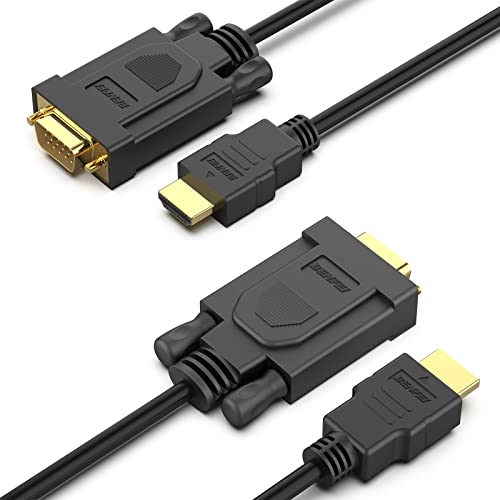
Retro emulation is still one of the most satisfying uses of Pi hardware, and the tooling has only gotten more polished. RetroPie bundles RetroArch with per-console cores for a turnkey emulation front end, while our RetroArch cores download guide walks through sourcing cores safely instead of from sketchy ROM sites. Older CRT and VGA-only displays are common in retro builds — a HDMI-to-VGA adapter like the BENFEI HDMI to VGA cable or the 2-pack version bridges a modern Pi output to a vintage monitor without needing a new display.
If the goal is portable retro and modern gaming in one device rather than a fixed cabinet, best SteamOS handheld gaming PCs in 2025 is the non-Pi alternative worth comparing against.
6. A driverless USB WiFi adapter from a $6 Pico W
One of the more inventive community projects of the past year turns a Raspberry Pi Pico W into a USB WiFi adapter for a different, wifi-less computer — without requiring a custom kernel driver on the host. Full setup details are in Raspberry Pi Pico W becomes a driverless USB WiFi adapter. It's a good example of what makes the Pi ecosystem's low-end boards worth keeping around even after you've upgraded your main project to a Pi 5.
Which board fits which project
| Board | Approx. RAM | PCIe | Best for |
|---|---|---|---|
| Pi 5 | up to 8GB | Single-lane PCIe 2.0 | AI HAT+, NVMe homelab, Home Assistant |
| Pi 4 | up to 8GB | None | Budget homelab, retro gaming |
| Pi Zero 2 W | 512MB | None | Pi-hole, single-purpose IoT |
| Pico W | N/A (microcontroller) | None | USB peripheral hacks, sensors |
Specs sourced from the Raspberry Pi 5 specification page and the Zero 2 W product page.
Cost and where to start
Budgets vary by retailer and region, so exact totals aren't reproduced here — but the shape of the spend is consistent: a Pi 5 board is the largest line item, the AI HAT+ or M.2 PCIe HAT roughly doubles that, and a case plus power supply add a modest fixed cost on top. The cheapest entry points on this list — Pi-hole and the Pico W WiFi trick — need no accessories at all beyond the board itself.
For a broader menu of community-maintained builds beyond this list, Raspberry Pi projects on GitHub: 2025 guide is a good next stop.
Citations and sources
- Raspberry Pi 5 specifications
- Raspberry Pi AI HAT+ product page
- Raspberry Pi Pico product page
- Raspberry Pi Zero 2 W product page
- Home Assistant
- Pi-hole
- RetroPie
- RetroArch documentation
This piece is editorial synthesis based on publicly available information. No independent first-party benchmarking is reported.