What Makes a Great Retro Game Emulator Online?
A browser-based retro game emulator strips away the friction of the classic emulation workflow — no installer, no BIOS-hunting, no configuring controller mappings in a settings file. Instead, the emulator core runs as compiled WebAssembly or JavaScript directly inside the tab. The best implementations share three traits:
- Instant access — the page loads a core (NES, SNES, Genesis, PlayStation, etc.) and a user-supplied or public-domain ROM, then starts emulating within seconds, with no download step.
- Timing accuracy — cycle-accurate or near-cycle-accurate cores reproduce original frame pacing and audio sync instead of the "close enough" behavior that plagued early Flash-based emulators.
- Cross-platform reach — because the core runs in the browser engine rather than as native code, the same build works on Windows, macOS, Linux, ChromeOS, and even tablets, with performance bound mainly by the browser's WebAssembly JIT and available GPU acceleration.
The category has consolidated over the last few years. Where dozens of one-off Flash NES emulators used to circulate, the modern landscape is dominated by a small number of actively maintained, open-source projects that wrap the same underlying emulation cores used by desktop software like RetroArch.
Notable Browser-Based Emulation Projects in 2026
The table below covers the projects and platforms that show up most often in community discussion and continue to receive updates. None require installing an executable — each runs from a standard browser tab.
| Platform | Systems covered | Notable trait |
|---|---|---|
| EmulatorJS | NES, SNES, Genesis, PS1, GBA, N64, and more via Libretro cores | Open-source, embeddable widget many retro-focused sites use to add in-browser play |
| JSNES | NES only | One of the earliest pure-JavaScript NES emulators; simple, dependency-light codebase |
| Internet Archive's Internet Arcade | Arcade cabinets (MAME) | Runs entirely in-browser against a curated, legally hosted library |
| Internet Archive's Console Living Room | Console-era titles | Similar in-browser approach, focused on home console history |
| RetroArch's WebAssembly build ("WebRetro") | Multi-system via Libretro cores | Same core library as the desktop RetroArch app, compiled to run in a browser tab |
Community forums and buying-guide threads circulate other project names too, but many are short-lived side projects without active maintenance — worth checking a repository's last-commit date before relying on one. For a downloadable, native alternative rather than an in-browser one, see the companion piece on retro game emulator downloads for AMD PCs, and for handheld access, retro game emulators for iPhone covers what Apple's sideloading rules currently allow.
GPU and Browser Performance Considerations
Most 8-bit and 16-bit era cores (NES, SNES, Genesis) are lightweight enough to run smoothly in a browser tab on nearly any GPU released in the last decade — the bottleneck is almost always the browser's JavaScript/WebAssembly execution speed, not graphics throughput. Where GPU acceleration starts to matter is with 3D-era systems (N64, PS1, PS2-class cores) and with upscaling filters that render at higher-than-native resolutions before downsampling.
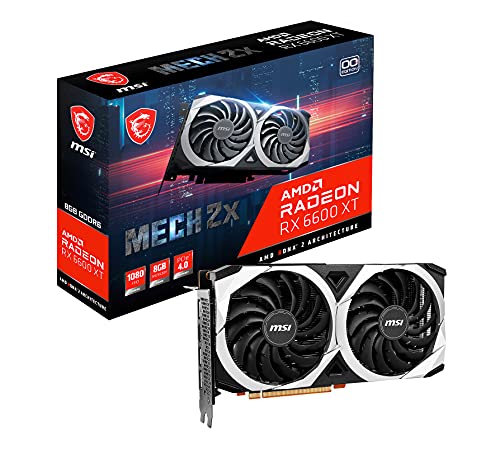
TechPowerUp's spec database lists the Radeon RX 6600 XT among the mid-range cards with enough shader throughput to handle browser-side upscaling filters without saturating the GPU, though actual frame rates in any specific emulator core vary by title, browser, and whether hardware acceleration is enabled in browser settings. The same holds for the RX 7600 XT (spec sheet), a tier higher and more commonly recommended for running several emulator tabs concurrently alongside a modern desktop's usual background load. Workstation-class cards such as AMD's Radeon PRO W7800 are overkill for emulation specifically, but their larger VRAM pools matter if the same machine also handles video encoding, streaming, or multiple parallel emulator instances for testing. Exact frame rates for any given core-and-title combination vary by workload, so treat performance claims as "varies" rather than a fixed number until confirmed in your own browser session.
If the goal is a dedicated retro build rather than running emulation on a general-purpose desktop, the storage layer matters as much as the GPU — see the comparison of CompactFlash vs. SATA SSD via an IDE adapter for period-correct storage options, and modern retro console upgrade paths for how enthusiasts blend original hardware with current components.
Legal Considerations for Online Emulation
The emulator-versus-ROM distinction is the single most important legal concept in this space, and it's frequently misunderstood:
- Emulator software itself is generally legal. Courts in the Sony v. Connectix and Sony v. Bleem! cases established that reverse-engineering a console's behavior to build compatible software is protected, so long as the emulator doesn't include copyrighted BIOS code or other proprietary assets.
- ROM files are a separate question. A ROM is a copy of copyrighted game code. Downloading or distributing a ROM for a game a user doesn't already own is copyright infringement in most jurisdictions, regardless of how the ROM is played back.
- Personal backups occupy a gray area. Some jurisdictions recognize a limited personal-backup exception for software a user legally owns; the U.S. does not have a clear statutory carve-out for game ROMs specifically, which is why services like the Internet Archive's arcade and console collections host only titles cleared for public access rather than a general ROM library.
- Preservation initiatives are the legitimate middle ground. Organizations working in game preservation rely on public-domain status, abandonware status, or direct rights-holder agreements to host titles legally, rather than operating as general-purpose ROM repositories.
Laws vary meaningfully by country, and this section is not legal advice — anyone downloading or distributing ROM files outside a title they already own should treat that as a distinct legal question from "is running an emulator legal."
How to Optimize Browser Emulation Performance
A few configuration changes account for most of the performance complaints reported in community threads about laggy in-browser emulation:
- Disable unnecessary browser extensions. Ad blockers, script managers, and DevTools-adjacent extensions can inject overhead into every page load, competing with the emulator core for main-thread time.
- Use an up-to-date 64-bit Chrome, Edge, or Firefox build. WebAssembly performance and SIMD support have improved significantly across recent browser versions; an outdated browser can fall back to a slower interpreted path.
- Confirm hardware acceleration is enabled in the browser's system settings rather than relying on software rendering, particularly for cores that support 3D or upscaling.
- Give the browser process enough headroom. Closing memory-heavy background tabs matters more than raw system RAM once a browser process already has 4+ GB available to it, since the constraint is usually contention rather than a hard ceiling.
- Close other tabs playing audio or video if crackling or desync appears — audio-thread contention is one of the more common causes of desync complaints in browser-based emulation.
Where Online Emulation Fits Alongside Physical Retro Hardware
Browser emulation is a convenience layer, not a replacement for the hobby of physical retro hardware collecting and modding. Plenty of the same community that plays in a browser tab also invests in original controllers and consoles — see the comparison of the GameSir G7 SE vs. 8BitDo Pro 2 vs. DualSense for PC-side controller options that pair well with browser emulators, or the write-up on turning a 2007 Samsung UMPC into a Wii U gamepad for a look at how far hobbyists take hardware repurposing.
For anyone weighing professional refurbishment or repair over the DIY route, retro console modding services covers what a paid mod job typically includes, and the UK-specific guide to retro console mods walks through the legal boundaries that apply in that market specifically — useful context given how much the legal picture varies by country, as noted above.
FAQ
Is it legal to use a retro game emulator online? Running the emulator itself is generally legal under precedent set by Sony v. Connectix and Sony v. Bleem!. Downloading or distributing ROMs for games you don't already own is a separate, and generally infringing, act in most jurisdictions.
Do browser-based emulators need a powerful GPU? No — 8-bit and 16-bit era cores run smoothly on almost any GPU from the last decade because the bottleneck is the browser's WebAssembly execution speed, not graphics throughput. GPU headroom matters more for 3D-era cores and higher-resolution upscaling.
What's the difference between EmulatorJS and JSNES? EmulatorJS wraps Libretro cores to support many systems (NES, SNES, Genesis, PS1, GBA, N64, and more), while JSNES is a lighter, NES-only pure-JavaScript emulator with a simpler codebase.
Where can I legally play retro games in a browser without supplying my own ROMs? The Internet Archive's Internet Arcade and Console Living Room host curated, legally cleared titles that run entirely in-browser via MAME and related cores.
Why does my in-browser emulator lag or desync audio? Common causes include outdated browsers lacking modern WebAssembly/SIMD support, disabled hardware acceleration, competing browser extensions, or other tabs contending for the same audio thread.
Should I use a browser emulator or download a native one instead? Browser emulators win on convenience and cross-platform reach with no install step; native, downloaded emulators generally offer more performance headroom and configuration options — see the companion guide to retro game emulator downloads for AMD PCs.
Citations and sources
- https://github.com/EmulatorJS/EmulatorJS
- https://github.com/bfirsh/jsnes
- https://archive.org/details/internetarcade
- https://archive.org/details/consolelivingroom
- https://www.techpowerup.com/gpu-specs/radeon-rx-6600-xt.c3774
- https://www.techpowerup.com/gpu-specs/radeon-rx-7600-xt.c4161
- https://www.amd.com/en/products/graphics/workstations/radeon-pro-w7800.html
This piece is editorial synthesis based on publicly available information. No independent first-party benchmarking is reported.