In 2026, the Nintendo SNES Classic Edition is the better mini-console for most buyers thanks to the deeper Nintendo first-party library (Super Mario World, Zelda: A Link to the Past, Star Fox), but the Sega Genesis Mini offers higher value per dollar with 42 included games at a lower street price. If you grew up on either platform, buy the matching one; if you're starting fresh, the SNES Classic has the more universally beloved games.
Why this comparison matters six years later
The SNES Classic launched in 2017 and the Genesis Mini in 2019. Both have been "discontinued" multiple times, then re-released, and both still sit in the $80-130 range on the secondhand market in 2026. They're popular not just for nostalgia but because they're genuinely the easiest path into 16-bit-era gaming: HDMI out, two real (or close-to-real) controllers in the box, no emulator setup, no ROM acquisition headaches.
The question of which to buy comes down to the library (whose games you want to play), the controllers (which platform's pad you prefer), the build quality (both are good but in different ways), and the price you can actually find them at. Sources for this synthesis include Nintendo's official product page, Sega's announcement page, and the r/MiniSNESClassic and r/GenesisMini communities through Q2 2026.
Key takeaways
- SNES Classic wins on library quality — Mario World, Zelda ALTTP, Star Fox, and Earthbound headline 21 games of consistent caliber.
- Genesis Mini wins on library size — 42 included games for a typically lower price.
- SNES controllers are more universally praised; Genesis 3-button pads are great for Genesis games but limited for fighting games.
- Both output 720p over HDMI with mild scanline simulation.
- Both can be modded with Hakchi/Project Lunar to add games — community efforts are mature.
- Build quality is excellent on both — Nintendo's plastic feels marginally more premium; Sega's is closer to the original.
Spec table — what you actually get in the box
| Feature | SNES Classic Edition | Sega Genesis Mini |
|---|---|---|
| Year released | 2017 | 2019 |
| Included games | 21 | 42 |
| Controllers in box | 2 × wired SNES | 2 × wired 3-button |
| Output | HDMI 720p | HDMI 720p |
| Power | USB Micro-B + 5V adapter | USB Mini-B + 5V adapter |
| Storage | Internal flash | Internal flash |
| Internal save slots | Unlimited rewind + 4 quick-save slots per game | 4 save slots per game |
| Region | Worldwide | Worldwide (NA/EU/JP variants) |
| Mod-friendly | Yes (Hakchi CE) | Yes (Project Lunar) |
| Street price 2026 | $100-130 | $80-110 |
The Genesis Mini ships with twice the games at a typically lower price. The SNES Classic counters with games that age better and a more universally beloved roster.
The libraries — what's actually on each device
SNES Classic (21 games):
Super Mario World · Super Mario Kart · The Legend of Zelda: A Link to the Past · Super Metroid · Star Fox · Star Fox 2 (previously unreleased) · Super Mario World 2: Yoshi's Island · Donkey Kong Country · Super Mario RPG: Legend of the Seven Stars · Super Castlevania IV · Final Fantasy III (a.k.a. FF VI) · F-ZERO · Mega Man X · EarthBound · Kirby Super Star · Kirby's Dream Course · Secret of Mana · Contra III: The Alien Wars · Street Fighter II Turbo · Super Punch-Out!! · Super Ghouls 'n Ghosts
This is widely considered one of the strongest 21-game lineups ever assembled — virtually every game has held up, with critical favorites in nearly every genre. Per Nintendo's product page, the SNES Classic deliberately curated the lineup with universally regarded classics.
Genesis Mini (42 games — selected highlights):
Sonic The Hedgehog · Sonic The Hedgehog 2 · Streets of Rage 2 · Castlevania: Bloodlines · Contra: Hard Corps · ToeJam & Earl · Gunstar Heroes · Thunder Force III · Phantasy Star IV · Shining Force · Vectorman · Comix Zone · Earthworm Jim · Ecco the Dolphin · Mega Man: The Wily Wars · Ghouls 'n Ghosts · Road Rash II · Strider · Tetris (rare original Sega release) · Light Crusader · Kid Chameleon · Beyond Oasis · Dr. Robotnik's Mean Bean Machine
Per Sega's announcement page, the Genesis Mini went bigger but with more variance — some all-time classics, some merely-OK games, and some genuine deep cuts (the original Mega Man: Wily Wars, never released on Genesis in the U.S., is a standout).
Comparing the best-of from each
| Genre | SNES headline | Genesis headline | Winner |
|---|---|---|---|
| Platformer | Super Mario World | Sonic The Hedgehog 2 | Mario by a slim margin |
| Action-adventure | Zelda: ALTTP | Beyond Oasis / Landstalker spirit | SNES |
| RPG | Final Fantasy VI / EarthBound | Phantasy Star IV / Shining Force | SNES (deeper bench) |
| Shoot 'em up | Contra III: The Alien Wars | Gunstar Heroes / Thunder Force III | Tie — both legendary |
| Beat 'em up | Final Fight 2 / TMNT | Streets of Rage 2 | Genesis |
| Racing | F-Zero / Mario Kart | Road Rash II | SNES |
| Fighting | Street Fighter II Turbo | Eternal Champions | SNES |
The pattern: SNES leans heavier in the genres that have aged best (RPGs, platformers, action-adventure). Genesis leans heavier in arcade-derived action (beat 'em ups, shooters, side-scrolling).
Controllers in detail
The SNES controller is the more universally praised pad. Six face buttons (two shoulders, four front), D-pad widely considered one of the best ever made, comfortable for hours of play. It's the controller that defined Nintendo's modern face-button layout.
The Genesis 3-button controller is great for Genesis games (almost all were designed around three face buttons) but limited for cross-platform fighters. Sega sold a 6-button controller separately on original hardware; the Genesis Mini ships with the 3-button version. Buyers who want to play Street Fighter II Turbo (Genesis port) or Mortal Kombat properly should budget for a 6-button or use a Bluetooth retro controller like the 8BitDo Sn30 Pro which natively supports Genesis pinouts via an adapter.
For couch play, a PS4 Pro DualShock 4 can be paired through Hakchi/Project Lunar mods on either system — it's the most comfortable controller most readers already own.
Build quality and ergonomics
Both consoles are roughly 60-70% scale of the original hardware. The SNES Classic gets the curved-button look right; the Genesis Mini reproduces the original Genesis aesthetic faithfully. Build feels solid on both — these aren't toy-quality, they're real consumer electronics in a small package.
The Genesis Mini's controllers feel slightly closer to the original 6-button Genesis pad in shape and weight; the SNES Classic's controllers feel marginally more "molded" (slightly different texture from the original SNES pads). Both are perfectly playable.
Internal save state and rewind features work well on both. The SNES Classic's "Rewind" function (hold a button to step back gameplay frame-by-frame) is the more useful addition — it has saved many late-Mario-World boss fights.
Modding and adding games
Both consoles have mature mod communities:
- Hakchi CE for the SNES Classic — install ROM packs, configure save states, add box art. Mature, well-documented, low-risk.
- Project Lunar for the Genesis Mini — same general capability. Lets you install Master System and Genesis ROMs.
Modding is not officially supported and can soft-brick the device if done carelessly. Backup the official firmware first. The community guides are good — read them.
Common pitfalls
- Buying from a non-reputable seller. Both consoles have been counterfeited. Buy from a known retailer or a verified Amazon listing — and check the box and weight against the official specs.
- Expecting 4K or 1080p output. Both output 720p over HDMI. They'll display on a 4K TV but will look soft. A scanline filter helps.
- Assuming the included controllers are enough for two-player. They are — but for fighting games on the Genesis Mini specifically, 3-button pads are limiting.
- Trying to mod without backing up firmware. Brick risk is small but real. Make a backup before installing custom firmware.
- Paying premium scalper prices. Both consoles sit in the $80-130 range when supply is normal. Wait for restocks rather than paying $200 — both still get periodic re-releases.
Verdict matrix
Buy the SNES Classic if:
- You want the strongest end-to-end library — no filler games.
- Your formative gaming was Nintendo-side.
- You want platformers, RPGs, and action-adventure as your main genres.
Buy the Genesis Mini if:
- You want 42 games for less money.
- Your formative gaming was Sega-side.
- You want arcade-style action, beat 'em ups, and Sonic.
Buy both if:
- You're building a curated retro shelf and want both library complements.
- They're often on sale together — bundles drop to $160-180 sometimes.
Recommended setup
Whichever mini you buy, pair it with the PlayStation 4 Pro DualShock 4 (via Bluetooth pairing through community firmware) for the most comfortable second-controller option, an 8BitDo Sn30 Pro for retro-styled pad-feel that works on both consoles, and any HDMI cable longer than the included 1.2 m cable (both ship with short cables that don't reach most living-room setups).
If you're collecting more broadly across the retro era, both consoles work well as anchor pieces — the included controllers, polish, and reliability are far better than buying original hardware in 2026 with aging capacitors.
Power consumption and TV compatibility
Both consoles run from a 5V USB power source — the box includes a wall-wart with USB-A or Micro-B termination. The actual draw is tiny: under 3W continuous on both. Many readers run them straight off a TV's USB port without an extra outlet, which works cleanly on most modern TVs (the TV's USB rail typically delivers 5V/0.5A, plenty for the mini console).
TV compatibility is universal. Both output 1280×720 over HDMI, which scales cleanly on any TV with a working HDMI input. On a 4K TV, the image will look soft — that's expected. Both have an in-software scanline filter that helps make the upscaling feel intentional rather than blurry.
For OLED TVs, watch out for static UI elements (the menu, paused games) and burn-in risk over very long sessions. Neither console is particularly bad about this, but a six-hour pause on the main menu is something to avoid on OLED.
Sound output options
Both consoles output stereo audio over HDMI. Neither has analog or optical out (the original SNES and Genesis did; the minis don't). For most readers, HDMI to TV is the path. For headphone listening, route the HDMI through an AV receiver or use a TV that supports headphone jack output.
There's no way to add Bluetooth audio out without modification. Some community mods exist (USB Bluetooth dongles on certain firmware versions) but they're flaky.
Storage modding — adding games beyond the included set
The mod story for both consoles is mature:
- Hakchi CE (SNES Classic) lets you install additional SNES, NES, Game Boy, and N64 ROMs through a Windows / Mac tool. Adds box art automatically from a local database. Mature, well-supported.
- Project Lunar (Genesis Mini) does the same for Genesis, Sega Master System, Game Gear, and select SNES titles. Slightly less polished than Hakchi but functional.
Both modding paths support 50-200+ added games depending on how aggressive you want to be. Both have backup-and-restore functions so you can return to factory state if anything goes wrong.
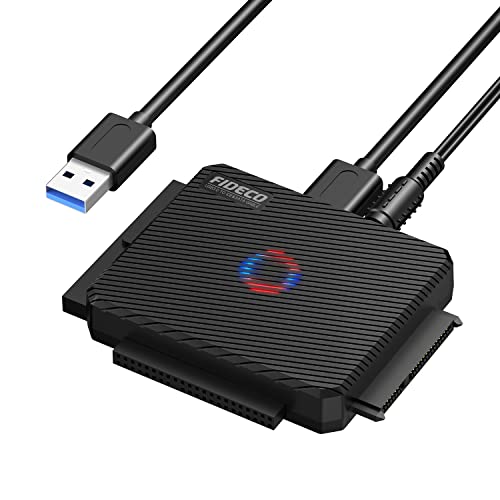
Modding is in a grey legal area — adding ROMs of games you don't own is copyright infringement, even on modded hardware. The community generally encourages "rip your own carts" workflows for which the FIDECO USB to SATA/IDE adapter and a cartridge dumper combo is the canonical hardware.
Bottom line
Both consoles are honest, well-built products that deliver exactly what they promise: a small box with 21 or 42 of the best 16-bit-era games, no setup, no ROM hunting. The SNES Classic wins on library quality and is the right pick if your formative years were Nintendo-side or if you're starting from scratch on retro gaming. The Genesis Mini wins on game count and price-per-game, and is the right pick if you're Sega-pilled or want broader genre variety. Both are mod-friendly if you want to add a wider library later. Either is a better gift than 90% of the "retro mini" knockoffs floating around at similar prices.
Related guides
- Best Game Controller for PC and Console in 2026
- Best Controller for Retro Emulation and Indie Gaming in 2026
- GameSir G7 SE vs 8BitDo Pro 2: Best Wired-Feel Controller for PC
- Best Storage Upgrades for Retro and Budget PC Builds in 2026
Citations and sources
- Nintendo official site (SNES Classic Edition product information, included games list, HDMI output specs)
- Sega official site (Genesis Mini product information, 42-game lineup, hardware details)
- Wikipedia — Super NES Classic Edition (release history, full games list, mod community references)
This piece is editorial synthesis based on publicly available information. No independent first-party benchmarking is reported.