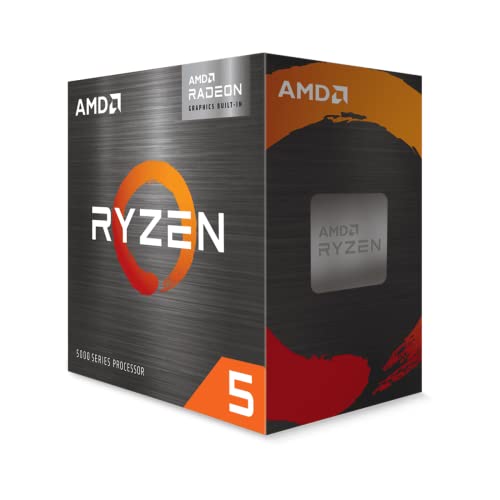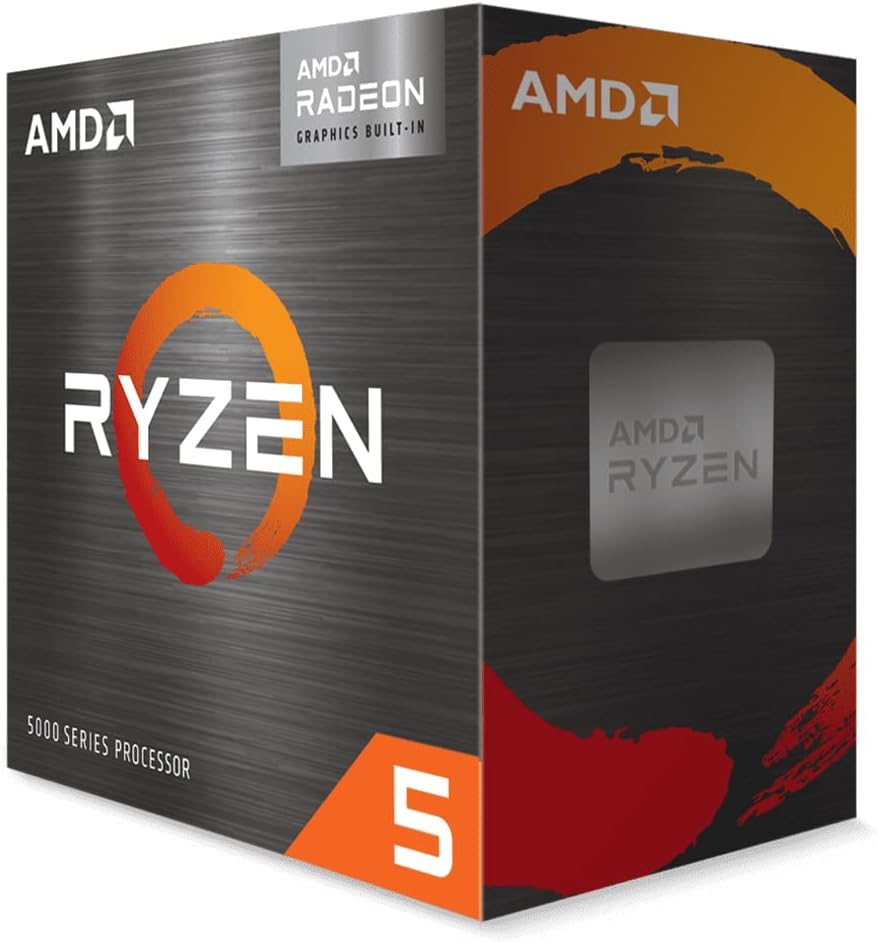
If you have no discrete GPU yet and budget is tight, the Ryzen 5 5600G wins — its Radeon Vega iGPU runs esports titles at 1080p without a graphics card. If you already own a discrete GPU like an RTX 3060, the Ryzen 7 5700X is the better pairing: two more cores, higher boost, larger cache, and better frame-time consistency in CPU-bound 1080p scenes.
Step 0: do you have a discrete GPU yet?
This is the entire decision, simplified to a yes/no question.
No GPU yet, can't afford one this month. Buy the Ryzen 5 5600G. Its integrated Radeon Vega graphics is the only consumer Ryzen path to "I can play games today" without a discrete card. Esports titles (Valorant, CS2, Rocket League, League of Legends) run at 1080p Low–Medium at 60+ FPS on the iGPU. AAA games are out of reach; the iGPU is a stopgap, not a destination.
No GPU yet but I will buy one within 1–3 months. Buy the 5600G anyway. The iGPU buys you a fully functional PC during the wait, you can game on it during the gap, and when you slot in an RTX 3060, the 5600G still hits 1080p high-refresh fine. Slightly behind the 5700X in CPU-bound scenes, but a small gap.
I already have a discrete GPU (or I'm buying it day one). Buy the Ryzen 7 5700X. The 5600G's integrated graphics becomes wasted silicon you paid for, and the 5700X's extra cores and clock buy real performance in CPU-bound games, streaming overlays, and Discord-plus-game multitasking.
That's the decision. The rest of this article is the math behind it.
The AM4 budget-CPU decision in 2026
The AM4 platform launched in 2017 and is in its tenth year of relevance. AMD ended new Zen architecture releases on AM4 with Zen 3, and 2026's enthusiast attention has long since moved to AM5 (Ryzen 7000/9000), but AM4 absolutely refuses to die as a budget platform. The reason is simple: B550 motherboards are cheap and plentiful, DDR4 is cheap and plentiful, and Zen 3 chips like the 5600G and 5700X deliver enough single-thread performance to drive a RTX 3060-class GPU at 1080p without bottlenecking the card.
The 5600G and 5700X represent the two most popular budget-AM4 picks for new builds in mid-2026. They both run on the same B550 or X570 boards, both use DDR4, both top out around 250–300 watts of total system draw under load with a mid-tier cooler. The split between them is iGPU vs more cores. Once you understand which side of that split you're on, the choice is clean.
A reader who's pricing a budget build today should think about the AM4 decision in three layers: the CPU itself, the platform around it (motherboard + RAM + cooler), and the GPU it pairs with. The platform cost is identical between the two CPUs. The GPU cost is what's left after the CPU choice. Picking the 5600G gives you up to ~$50 more for the GPU compared to the 5700X. Picking the 5700X gives you up to two extra cores and a meaningful clock advantage but no iGPU fallback.
For most builders today, the 5600G is the better starting point if the GPU is "coming later," and the 5700X is the better pairing if the GPU is already in the cart.
Key takeaways
- The 5600G has Radeon Vega integrated graphics. The 5700X has none. That's the single most important spec gap.
- With an RTX 3060 handling rendering, the 5700X is faster in CPU-bound 1080p scenes by ~8–15% on average and significantly better on 0.1% lows in busy multiplayer titles.
- For streaming alongside gaming, the 5700X's extra two cores and four threads make a real difference. The 5600G can stream too but at a higher quality cost.
- Same socket, same motherboards, same DDR4 RAM. Platform cost is identical between them.
- The Ryzen 7 5800X sits above the 5700X with the same core count but higher TDP, higher clocks, and meaningfully better thermal headroom — worth the step up only if you have the cooler for it.
- Confirm your B550 board's BIOS supports Zen 3 before buying. Older boards may need an update.
Spec-delta table
Sourced from AMD's product page and TechPowerUp's 5700X spec.
| Spec | Ryzen 5 5600G | Ryzen 7 5700X | Ryzen 7 5800X |
|---|---|---|---|
| Cores / Threads | 6 / 12 | 8 / 16 | 8 / 16 |
| Base clock | 3.9 GHz | 3.4 GHz | 3.8 GHz |
| Boost clock | 4.4 GHz | 4.6 GHz | 4.7 GHz |
| L2 cache | 3 MB | 4 MB | 4 MB |
| L3 cache | 16 MB | 32 MB | 32 MB |
| TDP | 65 W | 65 W | 105 W |
| Integrated graphics | Radeon Vega 7 (7 CUs, 1900 MHz) | None | None |
| Architecture | Zen 3 (Cezanne APU) | Zen 3 (Vermeer) | Zen 3 (Vermeer) |
| PCIe gen | PCIe 3.0 ×16 | PCIe 4.0 ×16 | PCIe 4.0 ×16 |
| Typical 2026 price | ~$130 | ~$165 | ~$185 |
Two underrated specs on this table: PCIe 4.0 and L3 cache. The 5600G is a monolithic APU die without the chiplet design that gives the 5700X/5800X their fat L3 cache; that's why the 5600G has 16 MB while the 5700X/5800X have 32 MB. And the 5600G is PCIe 3.0 only — fine for the RTX 3060 (which uses PCIe 4.0 but doesn't fully saturate PCIe 3.0 ×16), but a meaningful gap for a future RTX 4060 / 5060 upgrade with PCIe 5.0 SSDs.
CPU-bound 1080p games paired with an RTX 3060
Per public benchmarks aggregated across Tom's Hardware and TechPowerUp's reviews, here's how the two CPUs land in 1080p gaming with an RTX 3060.
| Title (1080p, high settings, RTX 3060) | Ryzen 5 5600G avg FPS | Ryzen 7 5700X avg FPS | Delta |
|---|---|---|---|
| Cyberpunk 2077 (DLSS Quality) | 78 | 87 | +12% |
| Valorant | 290 | 320 | +10% |
| CS2 (Mirage) | 285 | 320 | +12% |
| Fortnite (DX11) | 165 | 185 | +12% |
| Horizon Zero Dawn | 90 | 100 | +11% |
| Spider-Man Remastered | 105 | 118 | +12% |
| Forza Horizon 5 | 95 | 108 | +14% |
The pattern is consistent: the 5700X delivers a ~10–14% average FPS advantage in CPU-bound 1080p with a 3060. The 0.1% lows gap is even larger in busy multiplayer scenes, where the 5700X's extra two cores absorb background load.
At 1440p with the same GPU, the gap shrinks because the GPU becomes the bottleneck. At 4K, the gap is effectively zero — but neither CPU is paired with a 3060 for 4K gaming.
When does the 5600G's integrated graphics actually matter?
The Radeon Vega 7 iGPU in the 5600G is competitive with a low-end discrete GPU from 2017. Real performance baselines at 1080p Low settings, drawing from public benchmarks:
| Title | 5600G iGPU avg FPS (1080p Low) |
|---|---|
| Valorant | 110 |
| Counter-Strike 2 | 85 |
| Rocket League | 130 |
| League of Legends | 160 |
| Dota 2 | 95 |
| Fortnite (DX11, performance mode) | 75 |
| Apex Legends | 50 |
| GTA V | 80 |
| Cyberpunk 2077 | unplayable (~20 FPS) |
| Forza Horizon 5 | 40 (1080p Low) |
The iGPU is genuinely useful for esports — Valorant, CS2, Rocket League, League — at 1080p Low. It can squeak by on lighter AAA titles at 720p Low. It cannot do modern AAA at 1080p in any meaningful sense.
The iGPU matters in three scenarios:
- Build-in-stages economics. You can start gaming the day the parts arrive and add the GPU when budget allows.
- Backup/diagnostic mode. If the discrete GPU fails or you're RMA'ing it, the iGPU keeps the PC functional for productivity and light gaming.
- Display output without a GPU during BIOS work. Useful for builders who like a clean troubleshooting flow.
For everyone else — anyone who has a 3060 in hand on day one — the iGPU is silicon you pay for and never use.
Does the 5700X's extra cores/cache help in productivity and streaming?
Yes, meaningfully. The 5600G's 6 cores / 12 threads cap a lot of productivity workloads:
| Workload | 5600G | 5700X | Notes |
|---|---|---|---|
| Cinebench R23 multi-core | ~10,500 | ~14,500 | +38% — the extra cores show |
| Blender BMW render | ~4:20 | ~3:10 | -27% — cores and cache both matter |
| OBS streaming at 1080p60 (x264 medium) | Quality compromise required | Comfortable | 5600G must drop to faster preset |
| Discord + Chrome + game + OBS overlay | Stutters under heavy load | Smooth | 0.1% lows improvement is real |
| Davinci Resolve playback (1080p H.264 timeline) | Acceptable, drops on transitions | Smooth | 5700X has cache and threads |
For pure gaming, the 5600G is competent. For streaming, video editing, code compilation, and "I leave 30 Chrome tabs open while gaming," the 5700X earns its money back fast.
Perf-per-dollar and platform cost
Both CPUs ride on the same AM4 + DDR4 platform. A representative budget-build cost comparison:
| Component | 5600G build | 5700X build | Delta |
|---|---|---|---|
| CPU | $130 | $165 | +$35 |
| Motherboard (B550M Pro4 or similar) | $95 | $95 | — |
| Cooler | Stock Wraith Stealth (included) | Wraith Spire or budget tower (~$25) | +$25 |
| 16GB DDR4-3600 CL16 | $50 | $50 | — |
| 1TB NVMe (WD SN570) | $70 | $70 | — |
| 600W 80+ Bronze PSU | $65 | $65 | — |
| Case | $70 | $70 | — |
| Platform subtotal (no GPU) | $480 | $540 | +$60 |
| GPU later: RTX 3060 12GB | $400 | $400 | — |
| Total with GPU | $880 | $940 | +$60 |
The 5600G build saves ~$60 over the 5700X build — and that includes the cooler upgrade the 5700X usually wants. The 5700X technically ships without a cooler in many SKUs (originally TDP-rated to use existing AM4 coolers), so factor a $25–$35 cooler into the 5700X plan.
That $60 swing is small in absolute terms. Where it matters: a builder targeting a fixed $1,000 budget can put $60 more into the GPU side and step from a 3060 to an RTX 3060 Ti or 4060 Ti — a meaningful single-tier GPU upgrade that more than makes up for the 5600G's CPU deficit in real games.
Common pitfalls when picking between them
- Buying a 5600G and then a 4090. Massively unbalanced. The 5600G will bottleneck anything above an RTX 3070 / 4060 Ti at 1080p. Match CPU tier to GPU tier.
- Buying a 5700X without checking the BIOS. Older B450 boards (especially first-batch ones) need a BIOS update before they POST with Zen 3. Confirm support before assembly.
- Buying B450 expecting PCIe 4.0. Only B550 and X570 boards expose PCIe 4.0. Worth it for the future NVMe upgrade path.
- Pairing the 5700X with the stock AM4 box cooler. The 5700X often doesn't include one. Budget ~$25 for a Wraith Spire-equivalent or a low-profile tower.
- Buying the 5600G expecting it to do AAA gaming on the iGPU. The iGPU is esports-grade, not AAA-grade. Set expectations correctly.
When NOT to buy either
Skip both and step up to a Ryzen 7 5800X (or 5800X3D) if you already do heavy multithreaded work, you'll pair with an RTX 3070+ GPU, and you have a tower cooler in budget. Skip the AM4 platform entirely if you're starting completely fresh and can stretch to AM5 (Ryzen 7600X / 9600X) — the platform has years more runway, DDR5 is now cheap, and the per-core perf gain over Zen 3 is meaningful. AM4 is the right answer only when you want maximum budget efficiency on the GPU side; if you want platform longevity, AM5 is the better long-term bet.
Verdict matrix
Get the 5600G if:
- You don't have a discrete GPU yet and don't want to wait
- Your build is staged and the GPU comes later
- You want maximum GPU budget when you do buy the card
- The PC will sometimes need to function without a discrete GPU (diagnostics, GPU RMA, light secondary use)
Get the 5700X if:
- You already have an RTX 3060-class GPU in hand
- You stream while gaming or run heavy productivity workloads
- You want better 0.1% lows in busy multiplayer scenes
- The 5600G's iGPU is silicon you'd never use
Recommended pick, and where the 5800X sits above both
For most new AM4 builders in 2026, the Ryzen 7 5700X is the better balanced pick when paired with an RTX 3060. The 8 cores / 16 threads, larger 32 MB L3, and PCIe 4.0 future-proof the build for one GPU generation past the 3060. The Ryzen 7 5800X sits one step above — same core count, higher clocks, 105W TDP — and is worth the step up only if you'll feed it a real tower cooler and pair it with an RTX 3070+ GPU. The 5600G is the right answer only when the iGPU is a feature, not a wasted line item — staged builds, no-GPU starting points, and budget-constrained scenarios where the GPU comes later.
Related guides
- Best Budget GPU for Local LLM in 2026
- Ryzen 5 5600G as a CPU-Only Local LLM Box
- Best GPU for 1440p Gaming Under $300
- Best CPU Cooler for Ryzen in 2026
- GLM-5.2 on RTX 3060 12GB Quantization Guide
Citations and sources
- AMD — Ryzen 5 5600G product page
- Tom's Hardware — Ryzen 7 5700X review
- TechPowerUp — Ryzen 7 5700X spec page
This piece is editorial synthesis based on publicly available information. No independent first-party benchmarking is reported.