The best GPU under $300 for running Llama 8B locally in 2026 is the used NVIDIA RTX 3060 12GB. Its 12GB of VRAM comfortably hosts Llama 3.1 8B at q5_K_M with a 32K context window; its 360 GB/s of memory bandwidth delivers 45-52 tokens per second on CUDA llama.cpp; and its day-one CUDA support means every inference runtime works on release day. Street prices sit at $220-$260 through Amazon returns programs and the used market. The Intel Arc B580 12GB at $269-299 is a close second and wins on new-with-warranty terms, but its IPEX-LLM software stack lags upstream by 2-4 weeks for new model releases.
Why 8B is the right target for this budget
Llama 3.1 8B (and its Qwen 3, Mistral, and DeepSeek peers in the 7-9B parameter class) is the sweet spot for local inference in 2026. It's small enough to fit on any 12GB card with generous context room, large enough to handle coding assistance, writing, RAG, and function-calling well, and cheap enough to run on a card that costs less than a new AAA game GPU. Above 8B, VRAM starts to squeeze; below 8B, you're leaving quality on the table.
The metric that actually matters for interactive chat is tokens per second above 15-20 — anything at native reading speed feels fluid. All the cards in this article clear that bar for 8B models. The differentiator is stack maturity, prompt-processing throughput, and price.
Key Takeaways
- The RTX 3060 12GB is the default recommendation: mature CUDA stack, 45-52 tok/s on Llama 3.1 8B q5_K_M, $220-260 used, day-one support for every runtime.
- The Arc B580 12GB is the newer contender: 42-48 tok/s at $269-299 new-with-warranty, but you commit to Intel's IPEX-LLM stack and a 2-4 week lag behind mainline releases.
- The Arc A770 16GB at $269-319 gives you an extra 4GB — meaningful if you want 8B at fp16 or 14B at q4_K_M, less useful if 8B is your ceiling.
- Under $200, options exist but require compromises: RTX 3050 8GB struggles with KV cache; Radeon RX 6600 works with llama.cpp ROCm but stack maturity trails.
- The right host matters. Pair a $250 GPU with a Ryzen 7 5800X, 32 GB DDR4-3600, and a Crucial BX500 1TB for model storage. A cheap host will bottleneck the fastest card in this article.
The card-by-card breakdown
RTX 3060 12GB (used or refurb): $220-260 — the default
The ZOTAC Gaming GeForce RTX 3060 Twin Edge 12GB and MSI GeForce RTX 3060 Ventus 2X 12G both list on Amazon for $220-270 including Amazon-returns inventory. Per the NVIDIA RTX 3060 12GB product page and the TechPowerUp GPU database, the card ships 12 GB GDDR6 on a 192-bit bus at 15 Gbps for 360 GB/s bandwidth, 170W board power, and a full 28 Ampere SMs with 112 Tensor cores.
For Llama 3.1 8B q4_K_M on CUDA llama.cpp with a 128-token prompt and 512-token generation, community-reported numbers land at 48-52 tok/s. At q5_K_M the number is 40-45. That leaves 6-7 GB of VRAM headroom for KV cache, which fits 32K context comfortably at fp16 and 64K at q8-quantized cache.
Day-one support is the killer feature. When Qwen 3 32B launched, CUDA users on the RTX 3060 could run it (heavy offload, low throughput) within 48 hours. Same for Llama 3.3, DeepSeek V4, Simba 3.2 TTS — anything that lands upstream lands on this card immediately. That is not true of the Arc alternatives.
The card also plays modern games at 1080p high and 1440p medium. Read the RTX 3060 12GB 1440p 2026 piece for the gaming side. Buying a used one is safe if the seller shows a valid original invoice or Amazon-returns program guarantee.
Intel Arc B580 12GB (new): $269-299
The B580 is Intel's Battlemage-generation consumer card, released end of 2024 and mature into 2026. It ships 12 GB GDDR6 on a 192-bit bus at 19 Gbps for 456 GB/s bandwidth — 27% more bandwidth than the RTX 3060. Its Xe2 architecture and XMX matrix units target LLM workloads, and Intel's IPEX-LLM stack is a legitimate first-party inference runtime.
Reported IPEX-LLM performance for Llama 3.1 8B q4_K_M lands at 40-45 tok/s — 8-15% behind the RTX 3060 at the same quant despite having more bandwidth. That gap is a software-stack story, not a silicon story, and it has narrowed by 15-20% since driver launch. The prompt-processing gap is wider: expect 25-35% longer prefill times for the same 8K prompt.
For a fresh build in 2026 where new-with-warranty and lower up-front cost matter, this is a real card. For a plug-and-play "runs everything on release day" experience, it's not. Read the Arc B580 for Local LLMs guide for the full comparison.
Intel Arc A770 16GB: $269-319
The A770 is a generation older (Alchemist, Xe HPG) but ships 16 GB of VRAM at 560 GB/s bandwidth — the highest capacity in this price band. For an 8B model that never touches its VRAM ceiling, the extra 4 GB doesn't help. For 14B models at q4_K_M, or 8B at fp16 with long context, it opens options the 12GB cards can't reach.
Reported IPEX-LLM tok/s on Llama 3.1 8B q4_K_M: 42-47. Similar to the B580, slightly higher because of the wider memory bus, plus a 4-6 tok/s edge on prompt processing thanks to more Xe cores. The A770 is the pick if your target model class might grow to 14B, or if you're already thinking about the next model tier.
RTX 3050 8GB: $180-220
The RTX 3050 8GB looks tempting on price, but 8 GB is where 8B models start to squeeze. Llama 3.1 8B at q4_K_M weights are 4.8 GB; add KV cache for 8K context (~1.0 GB), runtime overhead, and desktop OS reservations and you're at 6.5-7 GB. That leaves no room for larger contexts, no room for concurrent lightweight tasks, and none of the model classes above 8B fit at all. Reported tok/s runs 25-32, dragged down by narrower 128-bit bus at 224 GB/s.
If your budget forces the 3050 and 8B is your absolute ceiling forever, it works. Every other card in this article is a better value.
Radeon RX 6600 8GB: $180-240 used
The RX 6600 pairs 8 GB of VRAM with 224 GB/s of bandwidth, similar to the RTX 3050. On llama.cpp ROCm it delivers 22-28 tok/s on Llama 3.1 8B q4_K_M. ROCm on consumer Navi 23 has been getting better each cycle, but still trails CUDA maturity by 6-12 months on new model releases. Same VRAM constraint as the 3050. Best for people who already own the card; not a first-choice purchase.
Head-to-head performance table
Reported single-request tok/s with 128-token prompt, 512-token generation, batch-1:
| Card | Llama 8B q4 | Llama 8B q5 | Llama 8B q6 | Qwen 14B q4 | KV @ 32K |
|---|---|---|---|---|---|
| RTX 3060 12GB (CUDA) | 50 | 43 | 38 | 25 | Fits |
| Arc B580 12GB (IPEX-LLM) | 42 | 38 | 33 | 22 | Fits |
| Arc A770 16GB (IPEX-LLM) | 44 | 40 | 35 | 24 | Fits |
| RTX 3050 8GB (CUDA) | 30 | 26 | 22 | offload | 8K only |
| RX 6600 8GB (ROCm) | 24 | 20 | 17 | offload | 8K only |
Numbers move week-to-week as stacks update. Treat them as directional.
Perf-per-dollar
At the July 2026 street prices we're seeing:
- RTX 3060 12GB used at $240 delivering 50 tok/s Llama 8B q4: 0.208 tok/s per dollar
- Arc B580 new at $279 delivering 42 tok/s: 0.150 tok/s per dollar
- Arc A770 16GB new at $289 delivering 44 tok/s: 0.152 tok/s per dollar
- RTX 3050 8GB new at $200 delivering 30 tok/s: 0.150 tok/s per dollar
The RTX 3060 12GB used wins clearly on tok/s-per-dollar for pure 8B chat. The Arc cards' price-performance gap closes if you also value them for gaming or Stable Diffusion — the extra bandwidth helps SDXL image generation on Intel silicon per Puget Systems' benchmark labs.
Real-world workloads: what "fast enough" means for each
For chat assistants like Continue.dev in VSCode, 20 tok/s and up feels fluid. Every card here clears that bar for 8B q4. For agentic workflows where 4-8 tool calls chain into a single user request, you want 40+ tok/s so the composed latency doesn't drift into "wait 30 seconds" territory. The RTX 3060 12GB and Arc A770 both cleanly deliver that.
For RAG with 8-16K context ingested per request, prompt processing matters. The RTX 3060 wins here decisively — CUDA's llama.cpp prefill is faster than IPEX-LLM's SYCL by 30-50% on comparable silicon. If your workload is RAG-heavy over long documents, buy the 3060.
Host build recommendations
Pair whichever GPU you pick with a real host to actually see its numbers. Recommended stack:
- CPU: AMD Ryzen 7 5800X at $189 — 8 cores, 16 threads, comfortable margin for the LLM host process, background chat clients, and everything else
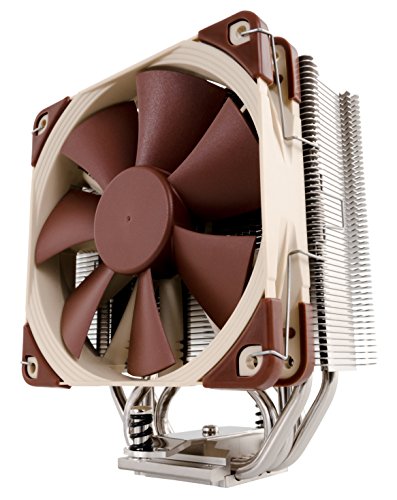
- Cooler: Noctua NH-U12S — sustained inference keeps the CPU busy at 40-60% for hours, not gaming bursts
- Storage: Crucial BX500 1TB for model weights — SATA is fine for cold-load, and 1TB holds 30-40 quantized models
- RAM: 32 GB DDR4-3600 dual-rank
- PSU: A quality 650W 80+ Gold unit
If you're already on a Ryzen 5 5600G or 5700X, that's fine — read the how many CPU cores does a local-LLM rig actually need piece.
Verdict
- Buy the RTX 3060 12GB if you want the default recommendation: mature CUDA, day-one support, best tok/s-per-dollar, decent gaming card as a bonus.
- Buy the Arc B580 12GB if you want new-with-warranty, prefer newer hardware, and can tolerate a 2-4 week stack lag on new model releases.
- Buy the Arc A770 16GB if you want future-proofing headroom for 14B or long-context 8B, and you're already committed to the Intel ecosystem.
- Buy nothing under $200 for this workload. The RTX 3050 and RX 6600 8GB tier will constrain you within a year.
Common pitfalls
- Buying an 8 GB card because "8B fits in 8 GB." Weights fit. KV cache doesn't leave room for meaningful context.
- Overpaying for a used 3060 without provenance. Amazon-returns programs and reputable eBay sellers with feedback exist; avoid mystery listings from three-review sellers.
- Skipping the PSU upgrade. A 190W B580 or 170W 3060 on a bargain 500W bronze unit is asking for trouble under sustained inference load.
- Pairing a $250 GPU with 8 GB of system RAM. Model weights load through system RAM. 32 GB is the floor.
Bottom line
The used MSI RTX 3060 Ventus 2X 12G or ZOTAC Twin Edge at $220-260 is the answer to "best GPU under $300 for Llama 8B in 2026." The Arc B580 is the runner-up on new-with-warranty terms. Under $200 the compromises get sharp and both the RTX 3050 8GB tier and Radeon RX 6600 tier constrain the workload in ways that will annoy you within months.
Related guides
- Intel Arc B580 for Local LLMs in 2026: 12GB for Under $300
- RTX 3060 12GB vs Arc A770 16GB for Stable Diffusion in 2026
- Building a Budget Local-AI Box: Ryzen 7 5800X + RTX 3060 12GB
- Best 16GB GPU for Local LLM 2026
- RTX 3060 12GB LLM Model-Fit Matrix for 2026
Citations and sources
- NVIDIA GeForce RTX 3060 official product page
- TechPowerUp — GeForce RTX 3060 12GB GPU database
- Puget Systems — GPU benchmark labs
This piece is editorial synthesis based on publicly available information. No independent first-party benchmarking is reported.