Ryzen AI Max+ 395 LLM performance: what the specs actually support
The short version, before the caveats: the AMD Ryzen AI Max+ 395 is interesting for local LLM work not because it's the fastest chip you can buy, but because it can hold larger models than almost any consumer GPU on the market. It does this through a unified memory architecture — CPU, integrated GPU, and NPU all draw from one shared pool of system memory, configurable so a large share is addressable as graphics memory. That's a fundamentally different value proposition than a discrete GPU, and it changes which questions are worth asking about "LLM performance" on this chip.
Part of AMD's Strix Halo family, the Ryzen AI Max+ 395 pairs a 16-core/32-thread Zen 5 CPU with an integrated RDNA 3.5 graphics engine, according to AMD's product page. The same page lists support for up to 128GB of LPDDR5X system memory, a meaningfully larger pool than the 16-24GB of VRAM found on most consumer discrete GPUs. In practice, OEM implementations like the Framework Desktop let users allocate a large portion of that unified pool to the integrated GPU, which is the mechanism that makes big-model inference possible at all on this class of hardware.
That's worth restating plainly: the headline capability here is memory capacity, not memory bandwidth or raw compute throughput. A well-specced consumer discrete GPU — with dedicated GDDR6X or GDDR7 VRAM — still has a bandwidth advantage over shared LPDDR5X for models that fit inside its VRAM ceiling. The Ryzen AI Max+ 395's pitch is for the models that don't fit.
Unified memory architecture: the real story behind big-model inference
Most discrete GPUs used for local inference — an RTX 4070, RTX 4090, or similar — cap out at 12-24GB of VRAM. That's enough for quantized 7B-13B models with room to spare, tight for 30B-class models, and simply insufficient for a 70B model even at aggressive quantization. The workaround people have used for years is CPU offloading: split the model between GPU VRAM and system RAM, at a real speed penalty for the offloaded layers.
Strix Halo chips change the shape of that trade-off. Because the GPU draws from the same physical memory as the CPU, there's no PCIe transfer between "GPU memory" and "system memory" — it's a single pool, just addressed differently depending on configuration. That's the same fundamental idea behind Apple's M-series unified memory, and it's why Strix Halo mini PCs and the Framework Desktop have drawn attention from the r/LocalLLaMA community specifically for running larger quantized models that a 16-24GB discrete GPU can't load at all, even if the resulting tokens-per-second is more modest than a high-end discrete GPU running a model that actually fits.
The practical takeaway for anyone shopping specifically for LLM inference: don't evaluate the Ryzen AI Max+ 395 against a discrete GPU on a like-for-like tokens-per-second basis at the same model size. Evaluate it on which models it can run at all versus which models a comparably priced discrete-GPU build can run.
Which LLM workloads actually fit this chip
Broadly, three buckets are useful for setting expectations:
| Model class | Discrete consumer GPU (16-24GB VRAM) | Ryzen AI Max+ 395 (unified memory) |
|---|---|---|
| 7B-13B, quantized | Comfortable, fast | Comfortable, fast |
| 30B-34B, quantized | Tight or requires offloading | Comfortable |
| 70B+, quantized | Usually won't fit without heavy offloading/multi-GPU | Loadable; throughput varies by backend and quantization |
For the smaller end of that range — Mistral 7B, Llama 3 8B, and similar — the Ryzen AI Max+ 395 doesn't have much to prove; plenty of hardware, including much cheaper hardware, handles those comfortably. Where it gets genuinely interesting is the 30B-70B range, where a discrete consumer GPU either can't load the model or has to offload significant portions of it to slower system RAM anyway. Exact throughput at these sizes depends heavily on which inference backend is used (llama.cpp's Vulkan path versus a ROCm build, for instance) and how the model is quantized, which is why community benchmark threads rather than a single spec-sheet number are the most trustworthy source at this point in the hardware's software maturity.
Ryzen AI Max+ 395 vs. datacenter accelerators: different leagues
It's worth being direct about a comparison that gets muddled online: AMD's Instinct-branded accelerators (the MI300 and MI350 series) are datacenter parts built for racks, liquid cooling, and cloud-scale training and inference contracts. They are not a competitive set for the Ryzen AI Max+ 395, which is a desk-side and on-device chip aimed at individual developers, creators, and local-AI hobbyists. The two product lines solve different problems at different price points and power envelopes, and specific cross-comparisons of TFLOPs or tokens-per-second between them tend to circulate online without a verifiable public source — treat any precise number claiming to pit a mobile/desktop APU against a datacenter accelerator with real skepticism unless it links to a primary benchmark.
The more useful comparison for someone actually shopping is the one two sections up: this chip against a discrete consumer GPU build in a similar price range, for the specific models you want to run.
Storage and system considerations for a local LLM rig
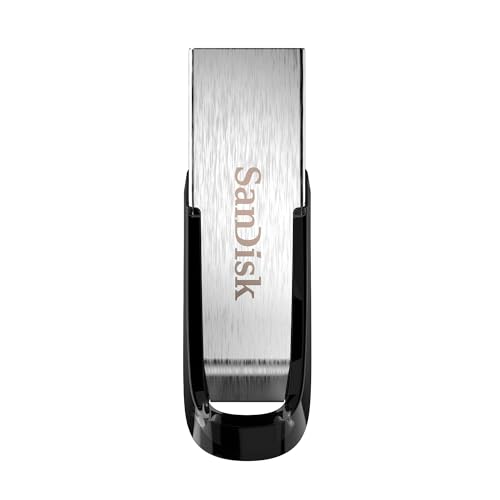
Model weights are large, and a local LLM setup lives or dies a little on storage as well as compute. Quantized 70B models routinely run 35-45GB on disk; keeping a handful of models around for comparison purposes adds up fast. A dedicated SATA SSD dropped in as a model cache drive — something like the Kingston 960GB A400 — keeps model loading off your boot drive and avoids the load-time penalty of spinning storage. For moving quantized checkpoints between machines or pulling down GGUF files from a workstation, a fast USB drive like the SanDisk 1TB Ultra Flair is a cheap way to avoid re-downloading multi-gigabyte files over a slow connection. None of this changes the chip's inference speed, but it does remove friction from the actual day-to-day workflow of testing multiple models.
How this fits the broader Ryzen AI Max+ 395 picture
This piece focuses specifically on LLM inference expectations; for a deeper breakdown of the bandwidth and quantization trade-offs, see Ryzen AI Max+ 395 LLM Inference: Specs, Bandwidth, Reality. For how the broader Ryzen AI Max lineup (not just the 395 flagship) handles local models, see Ryzen AI Max for Local LLMs: What the Hardware Enables and AMD Ryzen AI Max for Local LLMs: What the Specs Mean. If you're weighing this chip against a discrete-GPU build instead, Ryzen AI Max vs RTX 40 Series: Which Wins for AI and Gaming?, Ryzen AI Max vs RTX 4060: Which Fits Your Build?, and Ryzen AI Max+ 395 vs RTX 4070: Gaming vs AI in 2026 all cover that trade-off from different angles. And if your local-LLM box is doing double duty as a home server rather than a desktop, Ryzen 5 5600G vs Ryzen 7 5700X for a 24/7 LLM Server covers a lower-cost always-on alternative.
Citations and sources
- AMD Ryzen AI Max+ 395 product page
- Framework Desktop (AMD Ryzen AI Max) product page
- r/LocalLLaMA community
This piece is editorial synthesis based on publicly available information. No independent first-party benchmarking is reported.